


Why Pavers Sink in Cape Coral and How to Fix Them
A sinking paver usually starts as one small dip. Then the line looks crooked, water gathers in the wrong spot, and the problem gets harder to ignore.
In Cape Coral, this happens often because sandy soil moves fast, storms push water through weak spots, and irrigation can wash out the base. The good news is that most sinking pavers Cape Coral homeowners deal with can be repaired without starting from scratch.
Why Cape Coral pavers sink so often
Cape Coral soil is part of the problem from day one. Sand drains fast, but it also shifts easily. When pavers sit on a base that was not compacted well, they start to settle as soon as rain, foot traffic, or a car puts pressure on them.
Water is the other big culprit. Heavy storms, high runoff, and overwatering from sprinklers can all move the joint sand and base material. Once that support is gone, pavers begin to tilt or drop. A local concrete company sees the same issue on slabs, because water never forgives a weak base.
Edge failure makes things worse. If the border loosens, the field of pavers spreads and sinks in different spots. That is why paver edge restraints in Cape Coral matter so much.
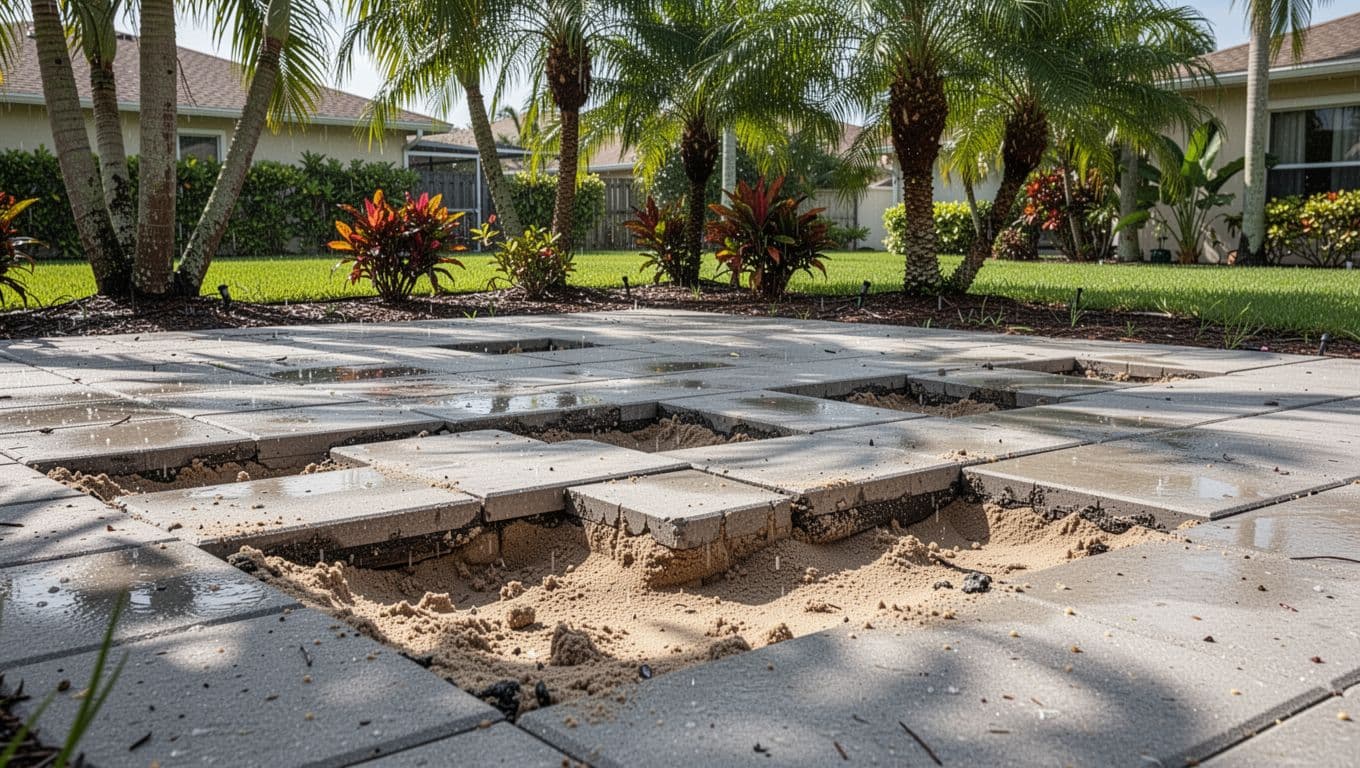
In some yards, poor grading adds another layer of trouble. If your landscaping slopes toward the patio or driveway, water keeps feeding the same low spot. Even nearby features can affect the surface, including artifical turf edges that trap runoff instead of moving it away.
How to fix sinking pavers the right way
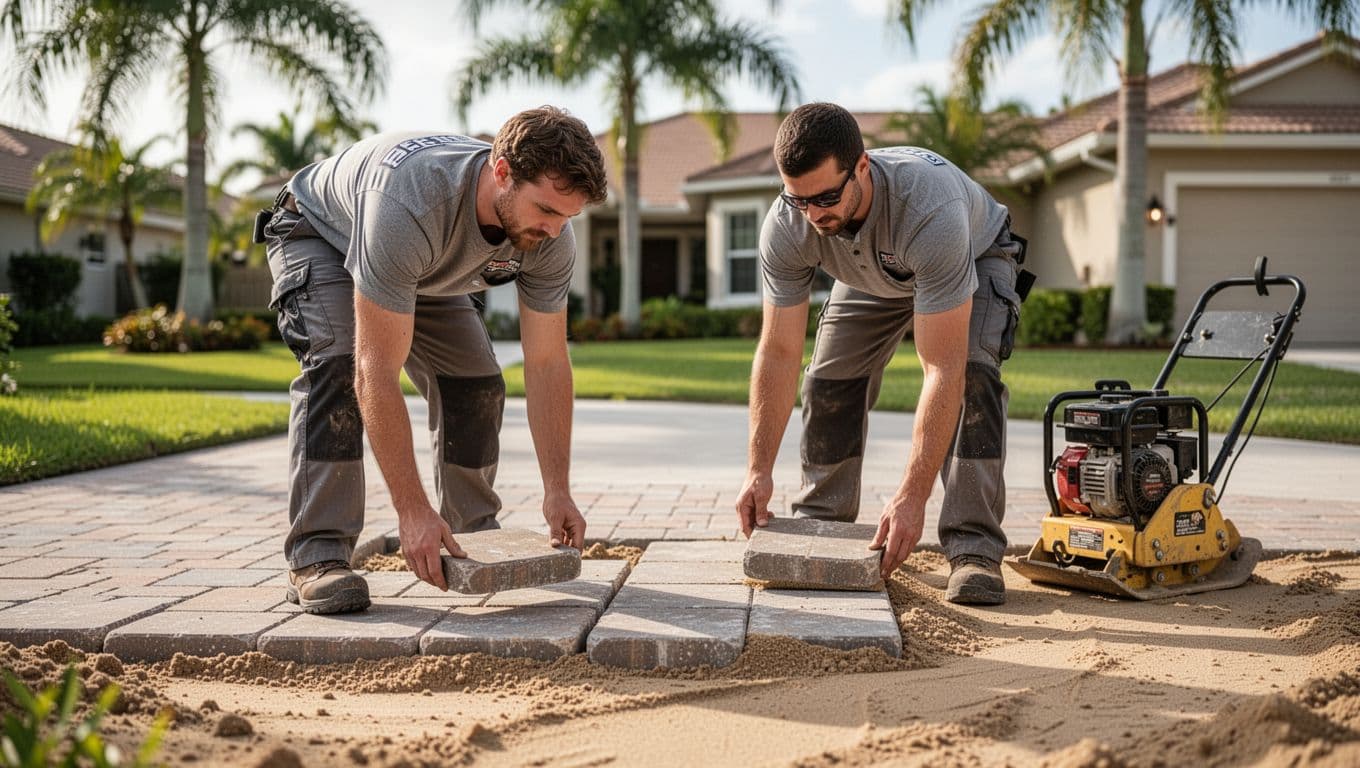
A proper repair starts by lifting the sunken pavers, not just filling the gap on top. If the base underneath is still weak, the repair will fail again. That is why good professional paver repairs in Cape Coral always start below the surface.
The repair process usually follows four steps:
- Remove the sunken pavers carefully so they can be reused.
- Dig out soft or washed-out base material.
- Add fresh base stone or sand, then compact it in layers.
- Reset the pavers at the right height, re-level the surface, and refill the joints.
If the base is wrong, fresh sand alone will only hide the problem for a short time.
This is where experience matters. A small dip beside a pool deck is one thing. A driveway section that sank after a storm may need more base repair and tighter edge support.
If the area is open and the problem is isolated, a reset is often enough. If the pavers were installed over thin base material, the fix takes more time, but it still follows the same basic pattern.
When a full reset makes more sense
Some repairs are bigger than a quick lift and re-set. If the same area keeps sinking, the base may be too thin, the soil below may be unstable, or drainage may be sending too much water under the pavers.
A full reset also makes sense when several sections have moved, not just one. The cost of patching the same area again and again adds up fast. If you want a local benchmark before deciding, local costs for fixing pavers in Cape Coral can help set expectations.
A reset is often the better choice when you see:
- repeated settling after each rainy season
- loose edges across a long stretch
- pavers that rock in more than one spot
- joint sand that disappears right after storms
- low areas tied to irrigation overspray or drainage problems
A good crew will tell you when a spot repair is enough and when it is not. That honesty saves money later.
How to keep pavers from sinking again
Prevention starts with water control. Keep sprinklers aimed away from paved areas, and check that downspouts and yard drains move water out, not back under the surface. Good drainage is just as important as the pavers themselves.
Regular care helps too. Simple paver cleaning and resealing costs in Cape Coral are worth understanding because clean joints hold up better, and sealed surfaces resist washout and staining. That does not fix bad base work, but it does help the system last.
For long-term results, keep these habits in place:
- Sweep and rinse pavers after heavy storms.
- Watch for joint sand loss after rain.
- Re-check low spots near irrigation heads.
- Keep landscaping slopes moving away from patios and driveways.
- Plan service before weeds, algae, and sand loss get ahead of you.
Conclusion
Cape Coral pavers sink for a few clear reasons, sandy soil, water movement, and weak base support. Once you spot the first low area, the best fix is to correct the base, re-level the pavers, and compact everything properly.
That is why paver cleaning , drainage control, and solid installation all matter. A quick patch can help for a while, but a real repair starts below the surface.