


Why Newly Planted Palms Turn Brown in Southwest Florida
A palm can look healthy at the nursery, then develop brown fronds soon after installation. In most Southwest Florida yards, newly planted palms turning brown are showing transplant stress, watering problems, or damage from the planting site.
Brown leaves don't always mean the palm is dying. The condition of the center spear, the newest frond, and the trunk base gives you a better answer. Start by checking those areas before cutting anything or adding fertilizer.
Key Takeaways
- Brown older fronds often result from normal transplant stress after root disturbance.
- Water the root ball consistently, but don't keep Southwest Florida soil saturated.
- Planting depth, compacted soil, irrigation damage, salt, cold, and nearby construction can all cause browning.
- A dead spear, one-sided canopy loss, foul odor, or rapid decline requires prompt attention.
- Palm species matter. Queen, foxtail, pygmy date, coconut, and sabal palms respond differently to cold, moisture, and nutrient problems.
Transplant Stress Often Causes Early Browning
Moving a palm removes part of the root system that supplied water to its fronds. Even when the palm was installed correctly, the remaining roots may need time to grow into the surrounding soil. During that period, the leaves can lose moisture faster than the roots can replace it.
The palm usually sacrifices older fronds first. They may turn pale green, yellow, tan, or brown while the center spear stays firm and green. This pattern often appears within the first several weeks after planting, especially after a hot, windy installation period.
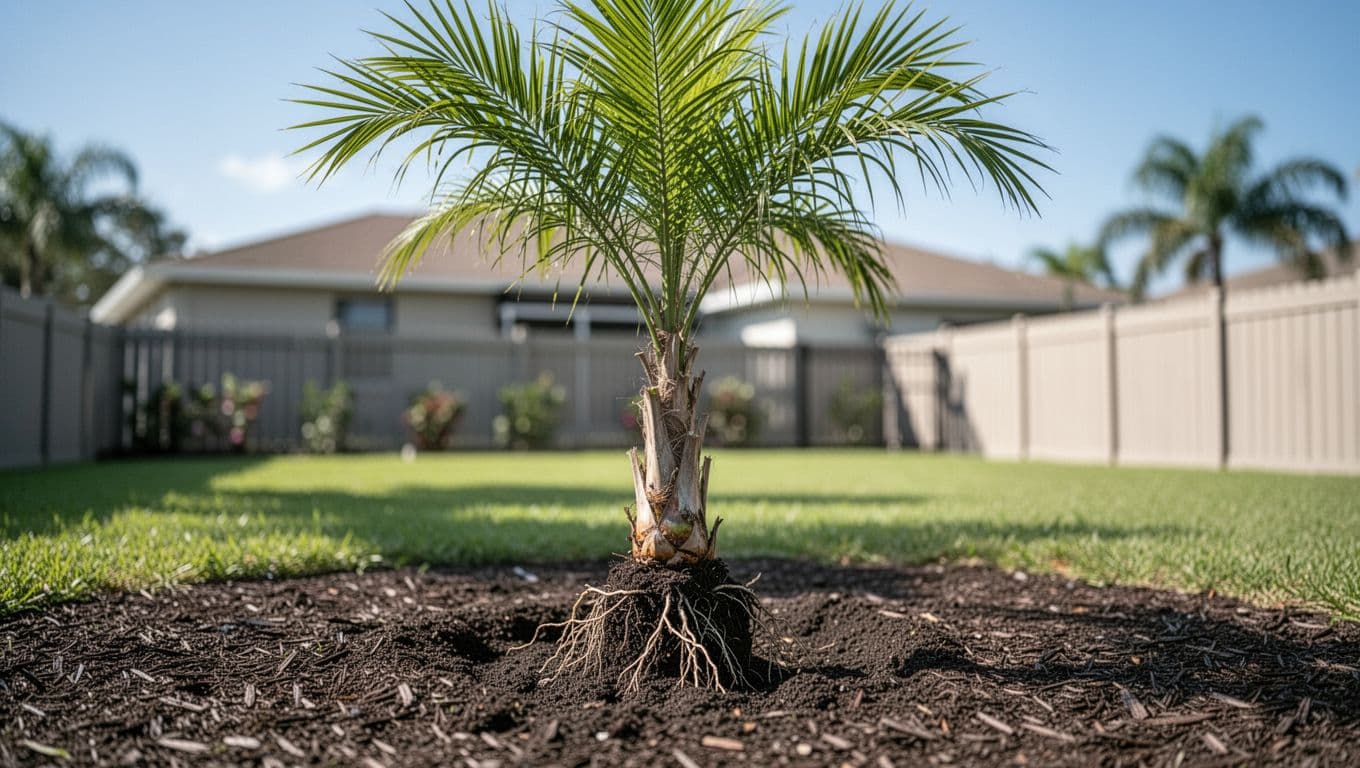
A healthy center spear is a good sign, but it doesn't guarantee an easy recovery. Palms need stable moisture while new roots develop. They also need time to adjust to changes in sunlight, wind exposure, soil texture, and temperature.
Don't expect brown fronds to turn green again. Palm leaves that have fully dried out won't recover. The goal is to protect the growing point and support new growth. If the newest spear opens normally and the crown remains firm, the palm may continue developing even after losing several older leaves.
Avoid removing every brown frond immediately. A partially green frond still moves nutrients to the rest of the palm. Remove a frond when it is fully brown, hangs low, or creates a safety concern. Use clean cutting tools, and avoid cutting into the trunk or the emerging spear.
Watering Problems Are Common in Florida Yards
New palms need regular irrigation, but more water isn't always better. Southwest Florida's sandy soils drain quickly in some locations and hold water in others, especially where fill soil, clay pockets, or construction debris sits below the planting bed.
A dry root ball can cause crisp brown leaf tips and entire fronds that fade quickly. Overwatering can create a different problem by limiting oxygen around the roots. Waterlogged roots may stop functioning, leaving the crown wilted even though the soil appears wet.
Check the soil near the root ball instead of relying only on an irrigation timer. A soil probe or hand trowel can show whether the root zone is moist several inches below the surface. Water slowly enough to soak the root ball and nearby soil without creating standing water.
Many new installations need more frequent watering during the first week, followed by a gradual reduction as roots spread. The right schedule depends on the palm's size, soil, season, rainfall, and irrigation system. During a rainy summer, turn down irrigation when the root zone remains wet. During a dry, windy period, inspect the soil more often.
Water at the base of the palm. Spraying the trunk or foliage doesn't replace deep root-zone irrigation. Also, keep mulch two to three inches deep and several inches away from the trunk. Mulch piled against the trunk holds moisture against sensitive tissue and can encourage decay.
A damaged irrigation line can create browning on one side of a newly planted palm. This happens often after grading, paver installation, fence work, or other yard projects. Have each irrigation zone run while you inspect the spray pattern and confirm that the palm receives water.
Planting Depth, Soil, and Nearby Improvements Matter
A palm planted too deeply can decline even with a perfect watering schedule. The trunk base should sit at the proper grade, with the root initiation area exposed as intended for that species. Soil against the lower trunk can trap moisture and interfere with oxygen exchange.
Settling can also bury a palm after installation. Check the trunk base after heavy rain or irrigation. If water collects around it, the planting bed may need correction rather than more water.
Compacted soil creates another common problem. Equipment used during construction can compress the area around a new planting hole. Roots then struggle to move through the soil, and water may run off the surface instead of reaching the root ball.
Nearby improvements can change drainage and heat exposure. If a concrete company recently poured a patio, driveway, or walkway, runoff may flow toward the palm. Pavers can create reflected heat, while compacted base material can block normal drainage. A new artifical turf area may also alter how water moves through the yard, especially where the base was heavily compacted.
Cleaning products deserve attention as well. During paver cleaning, runoff should stay away from planting beds. Some cleaners can injure leaves or roots when they collect around a palm. Rinse accidental splashes with clean water, but don't flood the root zone.
A professional custom residential landscaping service can review grade, irrigation, soil, mulch, and plant placement together. Treating only the leaves won't solve a palm that sits in a drainage pocket or receives water from one side.
Palm Species Respond Differently to Stress
The type of palm helps narrow down the likely cause. A sabal palm may handle heat, salt, and dry periods well after establishment, but a newly moved specimen still needs careful watering. Severe root disturbance can produce brown fronds even in a hardy native species.
Queen palms often show nutrient-related discoloration and can suffer during cold snaps. Their fronds may develop yellowing, orange-brown patches, or weak new growth when potassium or other nutrients are low. Fertilizer burn can create similar damage, so adding more fertilizer without identifying the pattern may make the problem worse.
Foxtail palms prefer good drainage and can show stress after cold weather, root disturbance, or prolonged wet soil. Pygmy date palms are also sensitive to poor drainage and cold. Brown tips on an areca palm may relate to dry soil, direct sun after a shaded nursery location, or low humidity around the leaves.
Coconut palms need warm conditions and can decline after a cold event. A palm that looked fine during installation may brown after a winter night, especially in inland areas or exposed lots. Salt spray, salty irrigation water, and salt buildup in sandy soil can also burn foliage near the coast.
Choose plants according to the exact conditions at the property. The sunniest spot beside a pool deck may not suit a palm that came from partial shade. Likewise, a palm installed under a roof edge may receive little rainfall and depend entirely on irrigation.
If you plan to fill the bed beneath an established palm, review plants for under palm trees in Cape Coral before adding soil or digging around the roots. Keep new beds shallow, and don't bury exposed roots or disturb the palm's root zone.
Know Which Brown Symptoms Need Prompt Action
Normal transplant stress usually affects older outer fronds first. The newest spear remains upright, and the crown continues to produce fresh growth. Browning that progresses slowly may improve as the palm establishes, although damaged leaves will remain damaged.
Contact a qualified palm or landscaping professional promptly when you notice any of these signs:
- The center spear pulls out easily or collapses.
- New growth turns brown before older fronds.
- The entire crown declines within a short period.
- Browning affects one side of the canopy, especially with a reddish-brown stripe along a leaf stem.
- The trunk base stays wet, soft, cracked, or foul-smelling.
- Several nearby palms develop similar symptoms.
- Leaf bases show insects, heavy scale, webbing, or unusual spotting.
A loose or dead spear can indicate bud rot or another serious growing-point problem. One-sided canopy death and streaking can occur with vascular diseases such as Fusarium wilt. Lethal bronzing is another concern in Florida palms, particularly when older fronds bronze quickly and the spear dies afterward. These problems won't improve through routine watering alone.
Don't move a declining palm again without a clear reason. Extra root disturbance can add stress. Instead, document the timing, take clear photos of the crown and trunk, and note recent fertilizer, herbicide, irrigation, construction, or weather events. That information helps identify whether the issue began with transplanting, water, cold, disease, or site changes.
Fertilize carefully. Newly installed palms often need time to establish roots before receiving additional nutrients. When feeding becomes appropriate, use a controlled-release palm fertilizer with magnesium and other micronutrients according to the label and the palm species. Keep granules away from the trunk, and water as directed.
A Simple Care Routine for the First Months
Inspect the palm twice each week during the first month. Look at the soil, irrigation coverage, trunk base, and center spear. After heavy rain, check for standing water. After a hot, dry stretch, check whether the root ball has dried out below the mulch.
Keep grass, weed fabric, and thick mulch away from the trunk. Don't tie landscape lights or decorations tightly around it. Avoid pruning green fronds unless they interfere with a walkway or create a hazard.
Record new growth rather than judging the palm only by old leaves. A fresh spear that opens normally shows progress. Brown outer fronds may remain visible for months, but steady new growth matters more than cosmetic damage.
If the palm sits beside a pool, driveway, seawall, or new concrete work, check for reflected heat and altered runoff. Irrigation repair, drainage correction, and bed redesign may help more than replacing the palm. Good landscaping starts with the planting site, not the plant alone.
Conclusion: Watch the Growing Point
Brown fronds after installation often come from transplant stress , especially when older leaves decline while the center spear stays healthy. Consistent root-zone moisture, correct planting depth, clean mulch placement, and species-aware care give the palm a fair chance to establish.
Fast browning, a dead spear, one-sided decline, or a damaged trunk needs prompt attention. Once you look beyond the brown leaves and inspect the roots, soil, irrigation, and newest growth, you can separate a normal adjustment period from a problem that requires immediate correction.