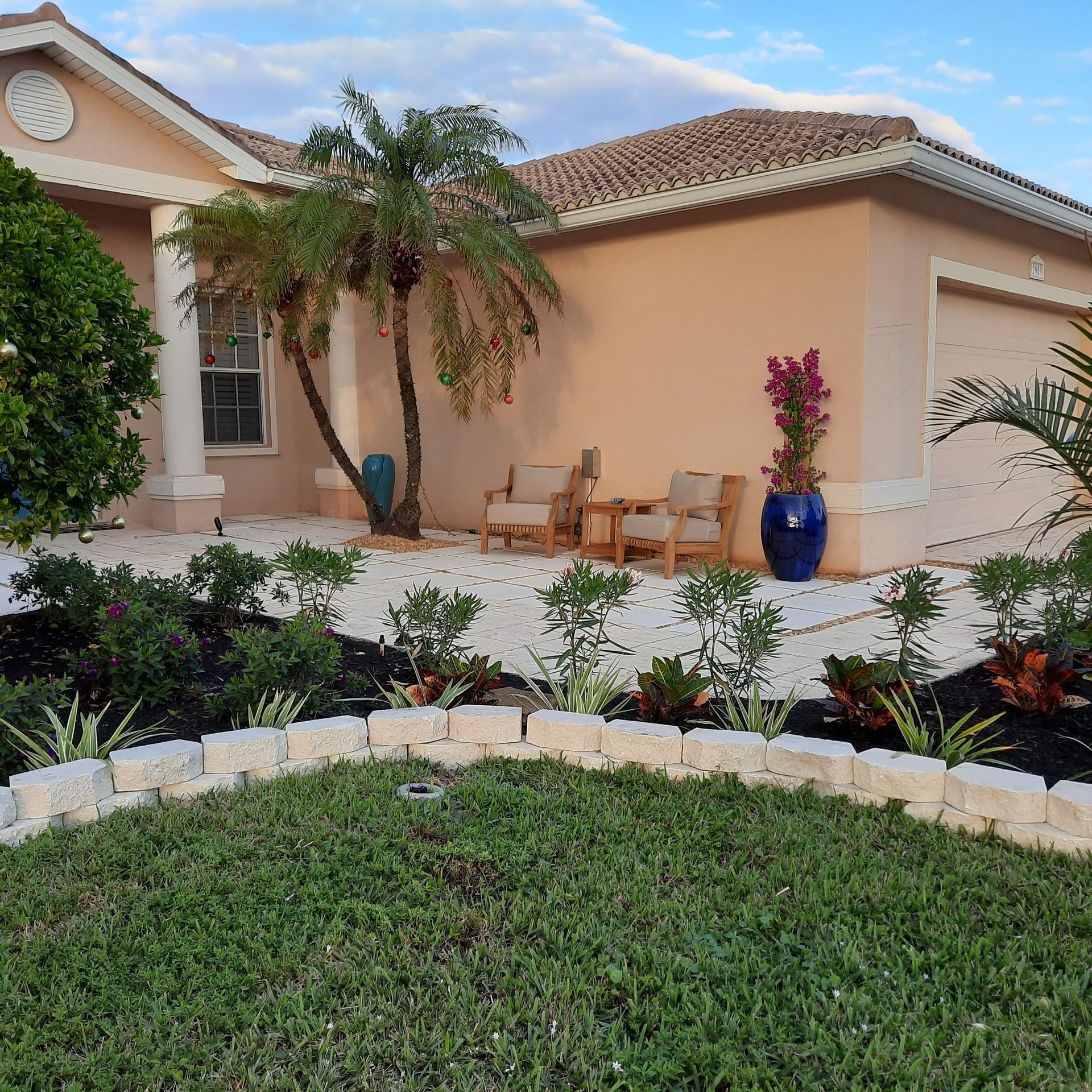



Best Cape Coral Plants for Under Palm Trees
Palm trees look simple until you try planting beneath them. In Cape Coral, that spot is often dry, shaded in patches, and packed with roots that grab water fast.
The best Cape Coral plants for under palm trees are the ones that handle heat, sandy soil, and a little neglect after they settle in. Choose well, and the bed looks finished instead of bare.
Why the space under a palm tree is so hard to plant
Palm canopies create filtered shade, but the ground below still gets hot. Fronds block some rain, so water often lands at the edge of the bed instead of the root zone. At the same time, palm roots take up space and compete for moisture.
That means most thirsty or heavy-feeding plants struggle there. Tall shrubs can also look crowded fast, especially when the palm drops old fronds.
Good landscaping in that spot starts with a simple plan. Keep the bed shallow, use mulch, and pick plants that stay compact. If you want the whole yard to feel tied together, a professional landscape design and installation plan can help the beds, irrigation, and borders work as one.
Keep the planting area wide and shallow. A high mound dries unevenly and makes root competition worse.
Cape Coral plants that do well under palms
The plants below handle filtered shade, sandy soil, and long dry stretches better than most.
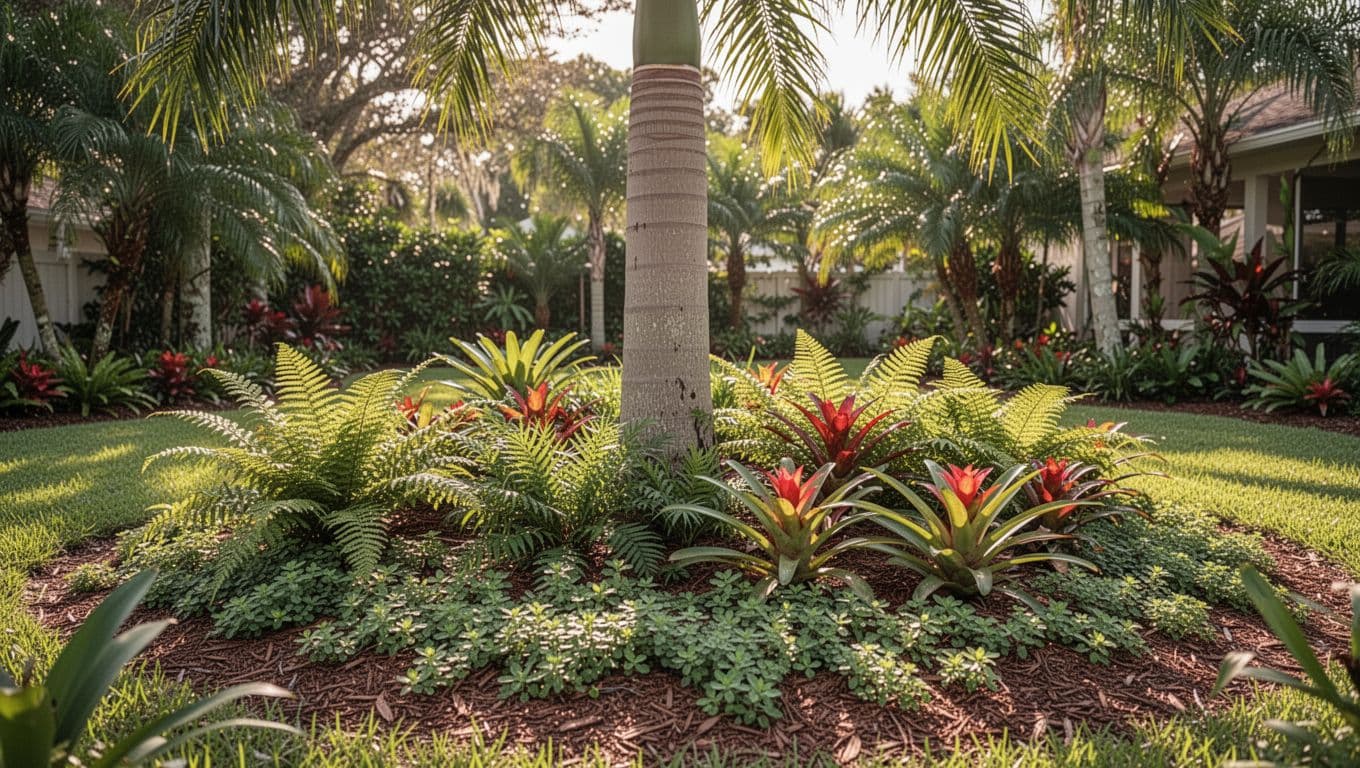
A quick comparison helps narrow the choices before you plant.
| Plant | Light | Water once established | Mature size | Why it works under palms |
|---|---|---|---|---|
| Bromeliads | Bright shade to part shade | Low | 6 to 18 inches tall, 1 to 3 feet wide | Colorful, compact, and happy in filtered light |
| Coontie | Part shade to shade | Low | 2 to 4 feet wide | Native, tough, and built for Florida heat |
| Cast iron plant | Shade to part shade | Low to moderate | 2 to 3 feet tall and wide | Handles neglect, dry shade, and root pressure |
| Asiatic jasmine | Part shade | Low | 1 to 2 feet tall, spreads wider | Covers bare soil and stays neat with trimming |
| Liriope | Shade to part shade | Low | 1 to 2 feet tall | Makes a clean border and tolerates sandy soil |
| Dwarf oyster plant | Part shade | Low to moderate | 1 to 2 feet tall and wide | Stays compact and brings color to shaded beds |
The table gives the short version. Here is what each plant brings to the yard.
Bromeliads
Bromeliads are a strong choice when you want color without a lot of upkeep. Their roots stay small, so they do not fight the palm as hard as larger plants. They also do well in bright shade, which makes them a good fit beneath high palm canopies.
Use them in groups for a clean, tropical look. Water them regularly during the first season, then reduce watering once they settle. Most types stay compact, so they work well near walkways and narrow beds.
Coontie
Coontie is one of the best Florida-friendly plants for dry shade. It is native, slow-growing, and very happy in sandy soil. That matters in Cape Coral, where many beds drain fast and still need a plant that can hold its own.
Its sturdy leaves give the bed shape without creating a bulky shrub line. Once established, coontie needs little water and almost no pruning. It is a smart choice if you want a low-maintenance base under tall palms.
Cast iron plant
Cast iron plant earned its name for a reason. It handles shade, heat, and the occasional missed watering better than many other choices. The broad leaves also soften the hard look of a trunk-only palm bed.
Give it filtered shade and space for a small clump about 2 to 3 feet wide. It grows best when the soil stays lightly moist during the first season, then it can handle dry spells. This is a good plant when you want a simple, durable look.
Asiatic jasmine
Asiatic jasmine works well when you want to cover bare sand without adding height. It spreads across the bed, which helps the area feel finished even when the palm roots take up most of the space. It also handles part shade and heat well.
Trim the edges a few times a year to keep it from creeping into nearby hardscape. It is a strong option under palms near patios, driveways, or front entry beds.
Liriope
Liriope is useful when you want a tidy border around the base of a palm. It stays low, handles filtered light, and tolerates Cape Coral's warm, sandy conditions. The clumps look clean, even when the rest of the yard feels rough after a dry stretch.
It needs light watering while it establishes, then only occasional deep watering. Cut back old blades once a year so the clumps stay fresh. Liriope is a simple pick for homeowners who want order without much work.
Dwarf oyster plant
Dwarf oyster plant gives you a bolder tropical look than many shade plants. The green leaves and purple undersides add color under a palm, where bright blooms may not last long. It also stays compact, which helps in tight beds.
This plant likes part shade and does well with moderate watering at first. After that, it can handle drier periods. It is a solid choice near entry beds, side yards, or any spot where you want a little texture.
Planting under palms without fighting the roots
The best results come from shallow planting. Dig wide, not deep, and do not bury the crown of the plant. A little compost mixed into poor sand is fine, but a big raised mound usually causes more trouble than it solves.
Water slowly after planting so moisture sinks into the sand. A short burst from a hose often runs off before it helps. Drip irrigation or a soaker line works better because it puts water where the roots need it.
Mulch also matters. Use a 2 to 3 inch layer, but keep it away from the palm trunk. That helps the bed hold moisture without trapping too much heat. Then let the plants settle before you start trimming or dividing them.
Keeping the bed neat beside pavers, concrete, and turf
Palm beds often sit near hardscape, so the edge matters as much as the plants. If a concrete company poured your patio or walkway, keep the bed line clean so soil and mulch do not spill onto the surface. The same is true around pavers and borders.
Regular paver cleaning helps the whole yard look sharp, especially when mulch dust or leaf stains start to build. Around artifical turf , low plants like coontie, liriope, or bromeliads keep the transition simple and easy to maintain.
A crisp edge also makes the plants look more intentional. Loose, crowded beds can make even good landscaping feel unfinished. Narrow borders, steady mulch, and compact plants create a cleaner result.
Simple care that fits Cape Coral weather
Palm-tree beds do best with steady, simple care. New plants need more attention at first, then less once their roots spread.
- Water new plants a few times a week during the first month, then back off as they settle.
- Check the bed after heavy rain, because sandy soil drains fast and can leave dry pockets.
- Refresh mulch once or twice a year so the bed keeps moisture and looks clean.
- Trim dead leaves, runners, and spent fronds before they collect under the palm.
During the wet season, many beds need less irrigation than people think. During dry spells, give a slow soak instead of a quick splash. That helps the water reach deeper into the root zone.
A better look under every palm
The best palm-tree beds in Cape Coral are built around plants that can handle shade, sand, and root competition. Bromeliads, coontie, cast iron plant, Asiatic jasmine, liriope, and dwarf oyster plant all fit that job well.
If you start with the right plants , the space under each palm stops looking like a problem spot. It becomes part of the yard, and it stays that way with far less fuss.