


Why Concrete Pool Deck Flaking Happens in Cape Coral
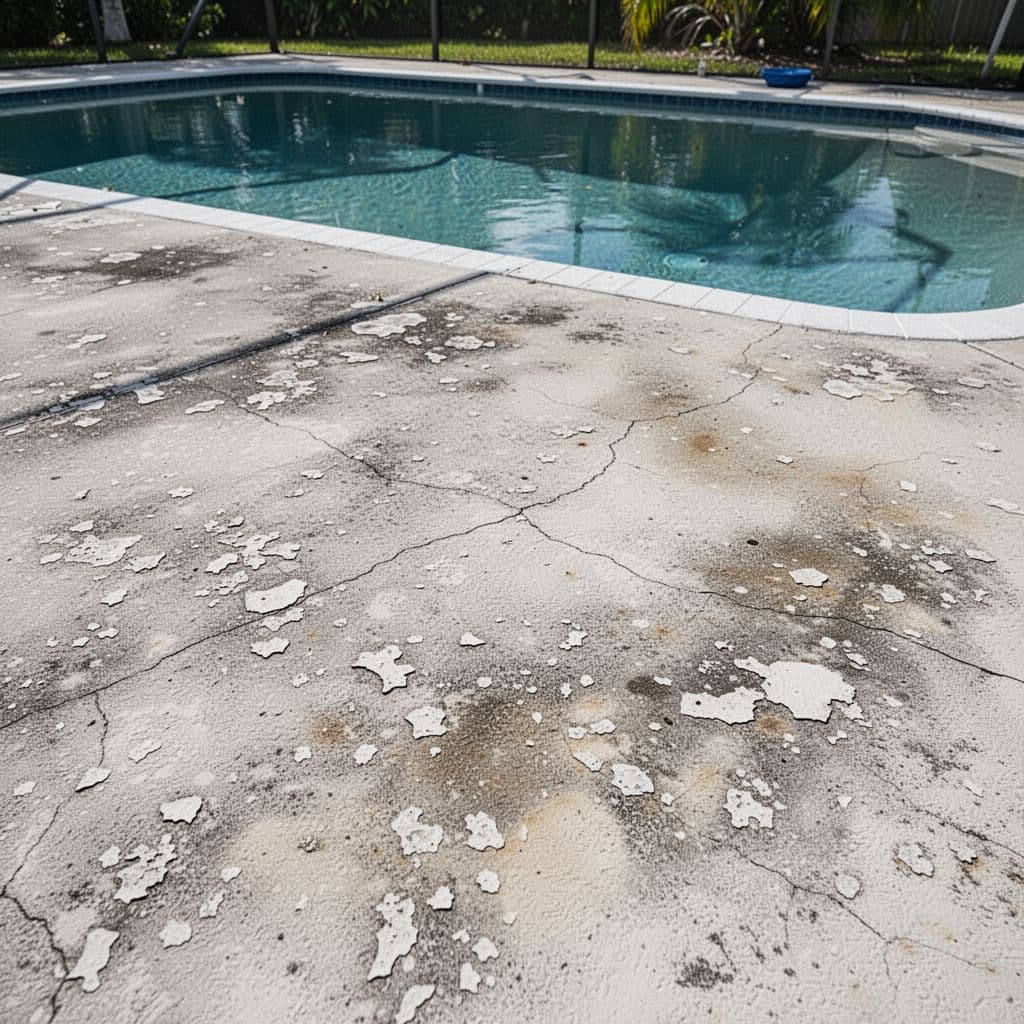
Concrete pool deck flaking in Cape Coral usually starts small. A few rough spots can look harmless, yet they often point to surface spalling , moisture stress, or a sealer that has worn out.
The good news is that not every flake means the deck is failing. Sometimes the damage stays in the top layer. Other times, it points to deeper cracks, drainage trouble, or concrete that was mixed or finished poorly.
Start with the surface itself, then work outward to the weather, water, and maintenance around it.
What flaking on a pool deck usually means
When people say a pool deck is flaking, they often mean the top layer is breaking away. In concrete terms, that is usually surface spalling. It happens when the outer skin of the slab weakens and starts to pop, chip, or peel.
That kind of damage is often cosmetic at first. The deck may still be level, solid underfoot, and safe to walk on. Even so, the rough spots can spread, collect dirt, and get worse when water keeps getting in.
Deep structural issues look different. Wide cracks, sinking sections, rust stains, hollow sounds, or edges that move under pressure are bigger concerns. Those signs mean the slab may have more than a surface problem.
If the damage is shallow, the fix may be cleaning, patching, or resurfacing. If the slab is moving or rusting, the repair gets bigger fast.
A simple way to think about it is this, a flaky top layer is the paint peeling off a wall, while structural damage is the wall itself shifting. The first needs surface work. The second needs a closer look.
Cape Coral weather puts concrete under constant stress
Cape Coral gives concrete a hard job. The area stays hot, humid, and wet for much of the year. Add heavy rain, salt air, and strong UV exposure, and the surface takes a steady beating.
Water is a big part of the problem. Concrete is porous, so it absorbs moisture over time. When rain or pool splash keeps sitting on the deck, that moisture works into the top layer and weakens it. Then the sun heats the slab back up and dries it out again. That constant cycle opens tiny paths for damage.
Pool chemicals matter too. Chlorine, salt systems, and cleaning products can leave residue on the surface. If that residue isn't rinsed away, it can break down sealers faster. Once the sealer fails, the slab has less protection against water and stains.
The sun adds another layer of stress. UV exposure dries out sealers, fades color, and makes finished surfaces brittle. In Cape Coral, that matters almost every day of the year.
Salt air can also speed up wear near the coast. It settles on surfaces, mixes with moisture, and keeps the deck from fully drying. That does not mean every pool deck near the water will fail. It does mean the margin for neglect is small.
A deck that is protected, cleaned, and sealed on schedule lasts much longer than one that is left alone. In this climate, concrete needs routine care, not occasional attention.
Small construction and yard issues can make flaking worse
Why does one deck stay smooth while another starts shedding chips after a few summers? The answer is often a mix of small issues that work together.
Poor drainage is one of the biggest. If water sits at the edge of the slab, it keeps feeding the damage. The same problem shows up when sprinklers hit the deck every day or when gutters dump runoff in the wrong place. A slab with bad slope never gets a chance to dry out.
Poor finishing can also shorten the life of the surface. If the concrete was overworked, finished too wet, or sealed too late, the top layer may never have been strong enough. Low-quality mixes and thin surface toppings are easier to wear down too.
Then there is the yard around the deck. Good landscaping helps, but the wrong setup can hold moisture close to the concrete. Dense plant beds, wet mulch, and soil that piles against the slab all keep the edge damp. If you are reworking the area, choosing plants for pool landscaping can help keep roots and runoff from working against the deck.
Some homeowners also add artifical turf to cut down on mowing and mess. That can work well, but the base still has to drain away from the slab. If water gets trapped at the edge, the concrete pays for it.
Pressure washing can make things worse when it is too aggressive. A strong tip held too close can strip sealer and loosen weak concrete. The same goes for metal scrapers, salt buildup, and dragging heavy furniture across rough spots.
Repair options depend on how deep the damage goes
The right fix depends on whether you are dealing with light spalling or a larger slab problem. A good concrete company will test the surface, check the slope, and look for signs of movement before recommending a repair. pool deck concrete restoration experts can also tell you when patching is enough and when resurfacing makes more sense.
Here is a quick way to compare the common options:
| Damage level | Best repair | What it does | Limits |
|---|---|---|---|
| Light surface flaking | Patch and seal | Fills small spots and slows more wear | Won't fix drainage or movement |
| Moderate spalling | Resurfacing | Adds a new top layer over sound concrete | Needs a stable base |
| Widespread surface wear | Full restoration | Improves look and durability across the deck | Costs more than patching |
| Cracks, settlement, or rusting | Partial replacement | Removes damaged sections and rebuilds them | More work, more disruption |
Patching works best when the slab is still solid. Resurfacing is better when the top layer is worn but the structure below is sound. Replacement becomes the smarter choice when the base has failed or the slab has settled.
The biggest mistake is spending money on a pretty surface when the real problem is under it. If drainage or movement is the issue, the new finish will fail too.
How to slow future flaking around the pool
Prevention is less expensive than repair, and it usually comes down to steady habits. A clean, sealed deck with good drainage lasts longer in Cape Coral than one that gets ignored for years.
A few practical steps help a lot:
- Rinse the deck after pool chemicals splash out or after heavy use.
- Re-seal the surface on a sensible schedule, especially if water no longer beads up.
- Keep drains, gutters, and downspouts clear so water moves away from the slab.
- Use care with pressure washing, because too much force can strip the surface.
- Watch the joint line where pavers, mulch, or stone meet the concrete.
- Schedule paver cleaning when algae or grime starts holding moisture near the deck edge.
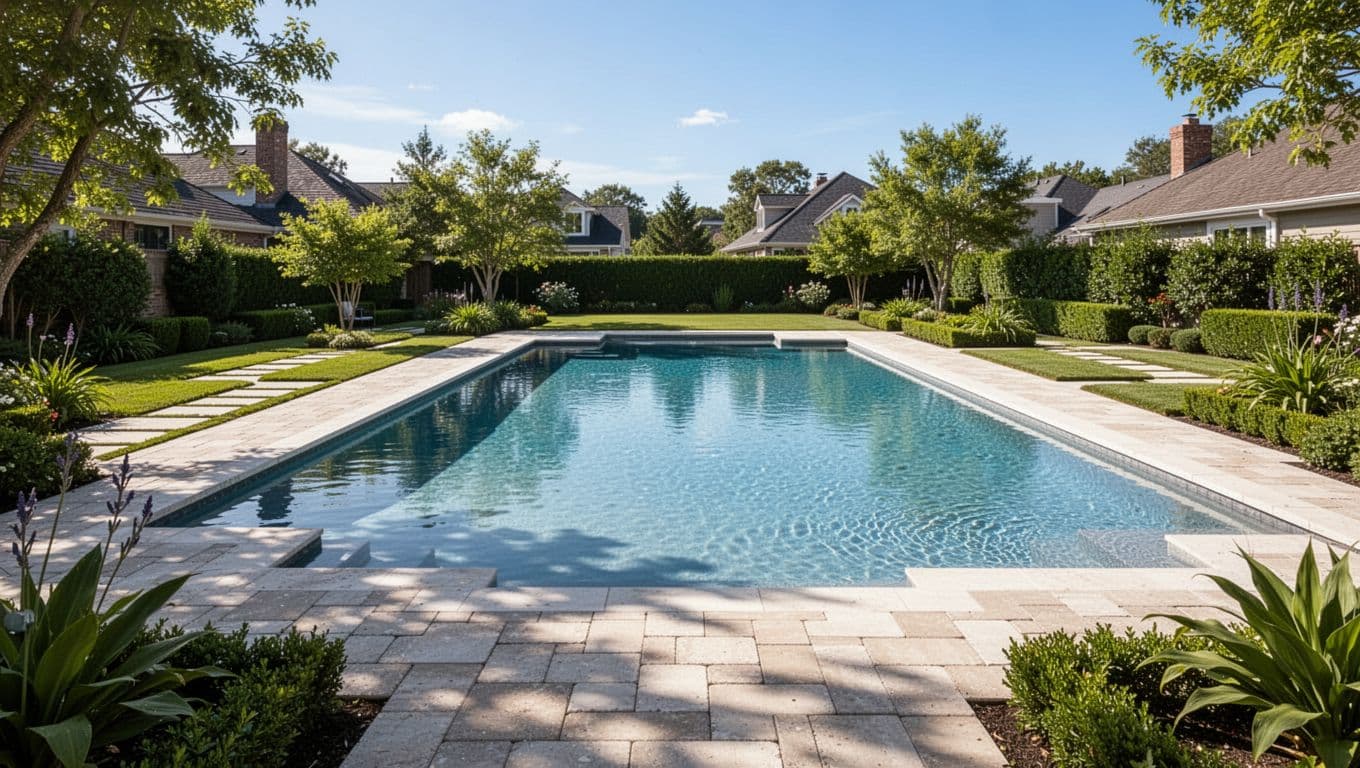
If the whole outdoor area needs work, it helps to plan the deck and yard together. budgeting for pool area landscape design can keep you from fixing one problem while creating another.
You should also look at the edge conditions around the pool. Wet mulch, crowded shrubs, and blocked runoff all keep the slab damp longer than it should be. Trim plants back, keep splash zones open, and make sure nothing traps water against the concrete.
A smooth, dry deck is easier to protect than a damp one with poor airflow. That is why drainage, cleaning, and the right materials matter more than fancy finishes.
Conclusion
Concrete pool deck flaking in Cape Coral usually starts with surface spalling, then grows when moisture, chemicals, and sun keep hitting the slab. The climate is tough, so small maintenance lapses show up faster here than they do in drier places.
The key is to figure out whether you have a cosmetic surface problem or a deeper structural one. Once you know that, the repair is easier to match to the damage, and your pool deck has a much better chance of lasting.