


Cape Coral Driveway Drainage Fixes That Actually Work (channel drains, grading, trench drains)
If your Cape Coral driveway turns into a shallow pond every time it rains, you’re not alone. Our area is flat, sandy, and the water table can sit high for long stretches of the year. That mix makes puddles stubborn and garage flooding a real headache.
The good news is most driveway drainage fixes fall into three buckets that work in Florida conditions: correct grading, a well-placed channel drain, or a full trench drain with a planned outlet and cleanouts. The trick is choosing the right one, then installing it so you can maintain it later.
Start with the water path (slopes that stop puddles)
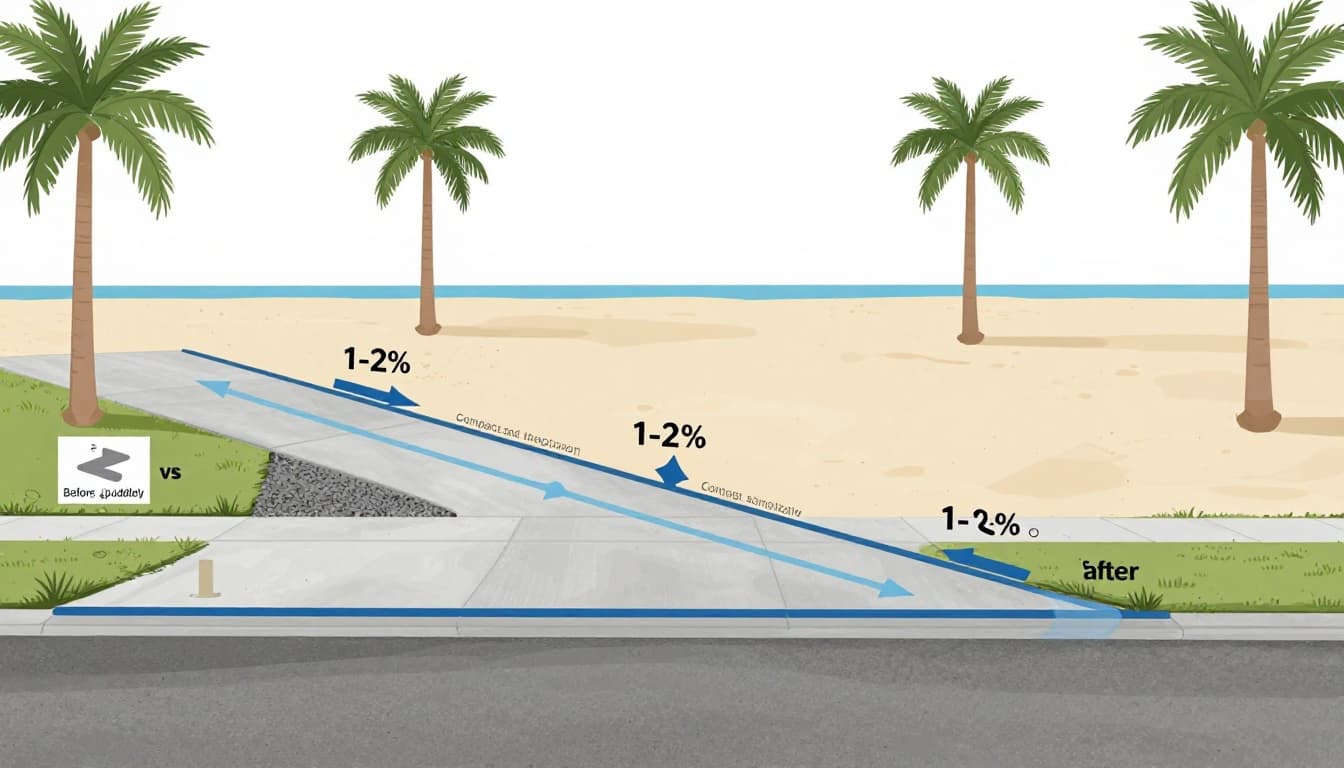 Diagram showing a driveway cross-slope and grading concept, created with AI.
Before you buy a drain, figure out where the water is supposed to go. Think of your driveway like a shallow tray. If the tray is flat, water sits. If it has even a small tilt, water moves.
For most concrete and paver driveways, a 1 to 2 percent cross-slope (about 1/8 to 1/4 inch per foot) is a practical target. That’s usually enough to move water without feeling slanted when you walk or park. In Cape Coral, it’s also common to need a slope away from the garage and house. The Florida Building Code standard many inspectors look for is a 6-inch drop within the first 10 feet away from the structure where feasible (a 5 percent grade). The city’s rules and right-of-way details can change what’s possible, so it’s smart to review Cape Coral surface water management guidance and confirm permit needs before reworking a driveway apron.
Next, plan the outlet. A drain without an outlet is like a gutter that dumps into your attic. In flat neighborhoods, the most reliable outlets are a yard swale, an approved collection point, or a permitted connection. Avoid sending runoff onto a neighbor’s lot or a public sidewalk.
Finally, don’t ignore pipe slope. If you install a drain that ties into PVC, aim for a minimum 1 percent pipe slope (roughly 1/8 inch per foot). If you can get 2 percent, even better. That slope is what keeps sand and leaf grit moving instead of settling in the line.
Grading and swales that work in Cape Coral’s flat yards
A lot of the best driveway drainage fixes don’t involve plastic grates at all. They involve shaping the soil and hardscape so water has an easy route that doesn’t fight gravity.
Start by finding the low spot. After a rain, mark puddle edges with chalk. If puddles always show up in the same place, you likely have a “dish” in the driveway surface or a yard area that’s higher than the pavement edge.
If the driveway surface is sound, small grading changes can do a lot:
- Create a shallow side swale along one edge of the drive, then steer it toward the street-side swale or a backyard collection area.
- Build up the garage side with careful transitions so water doesn’t run toward the door.
- Keep access in mind ; leave space where you can later flush a line or re-shape a small area without tearing out everything.
A swale can also double as attractive landscaping . Many homeowners turn that side channel into a planted strip or a rain-garden style area that can handle short bursts of water. For a clear explanation of how swales move and filter runoff, see this water-quality swale fact sheet.
Where yards stay soggy, consider replacing problem turf with plants that tolerate wet feet, or even artifical turf in small sections where you want a clean look and less mud tracked into the garage. If you’re comparing lawn options, sod and artificial grass installation can be a practical next read. And if your driveway is pavers, keep joint sand and surface pitch in mind before and after paver cleaning , since aggressive washing without re-sanding can make settling and low spots worse. For paver-specific settling issues, Cape Coral paver installation services can help you understand what a stable base should look like.
Channel drains and trench drains (the garage-line fixes that keep water out)
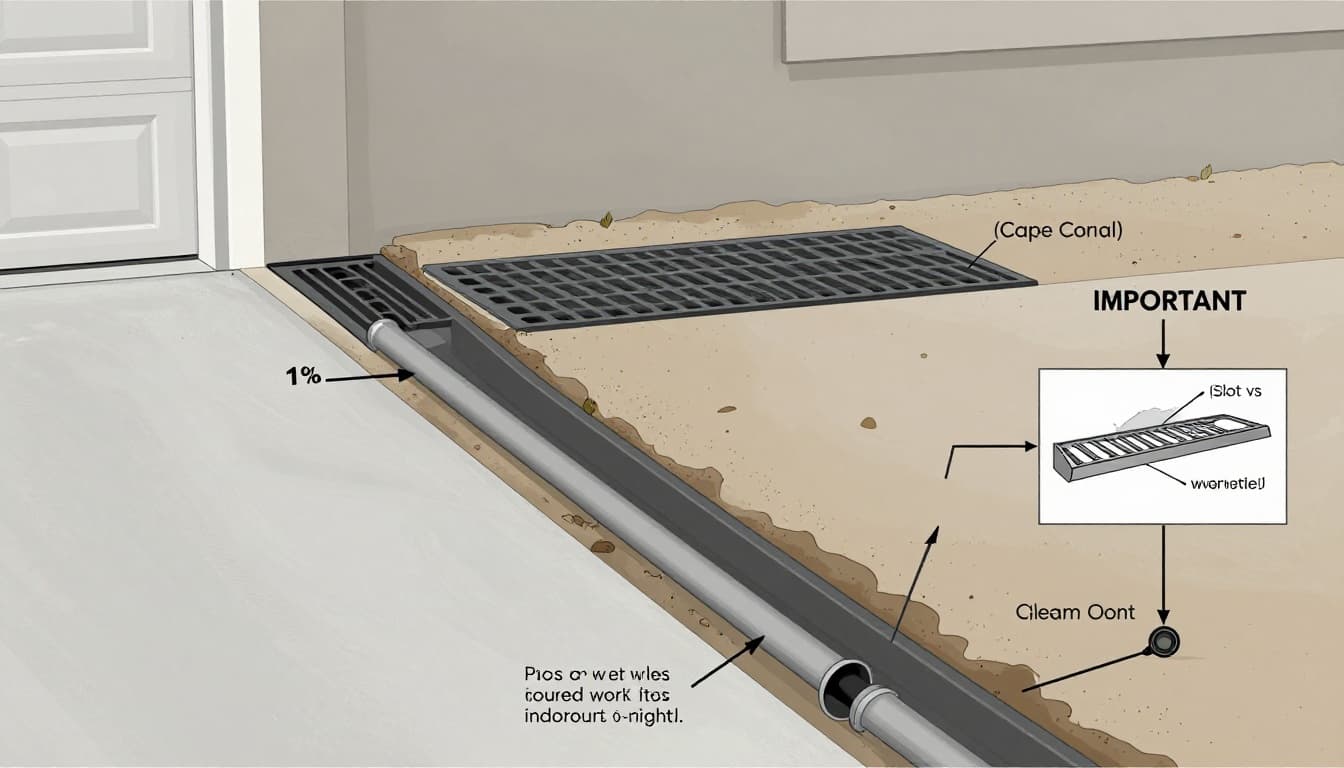 Channel drain placement at the garage interface, created with AI.
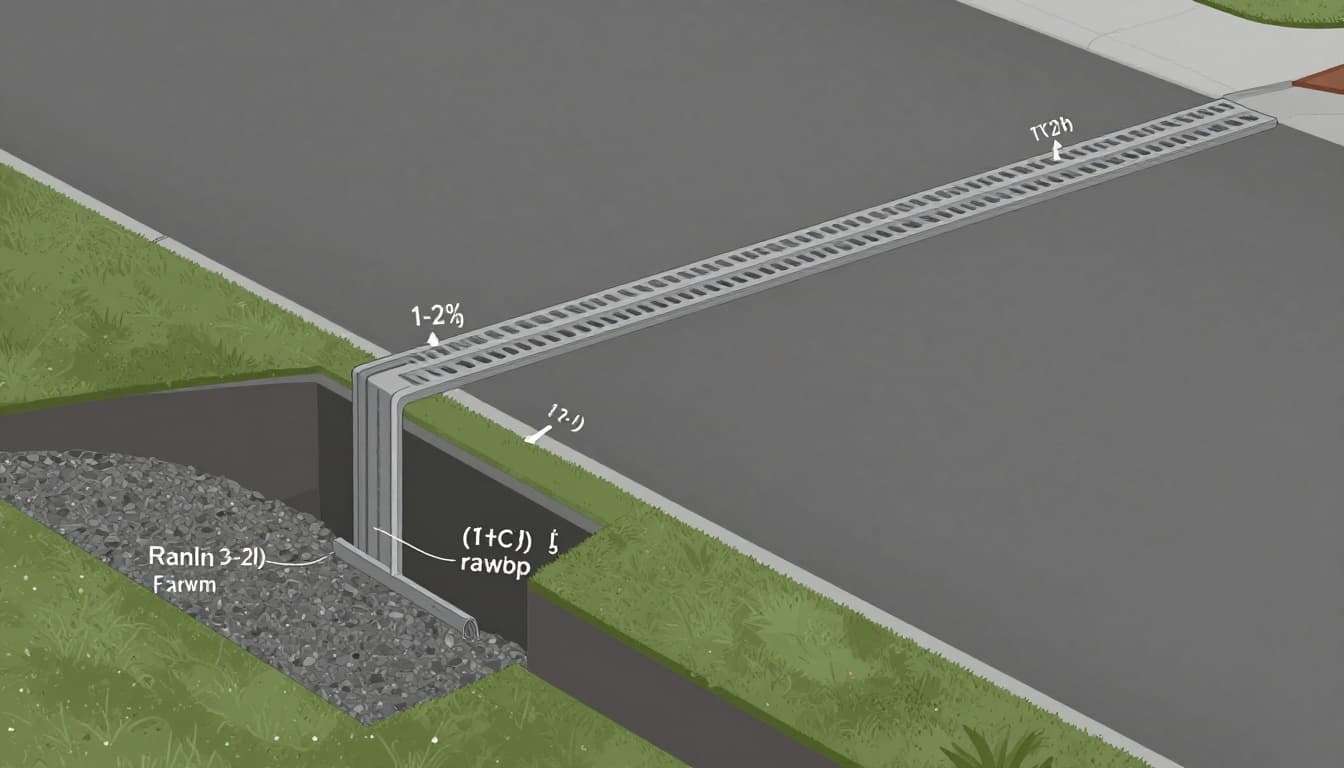 Trench drain concept with outlet piping and a discharge area, created with AI.
If water is rushing straight at the garage door, grading alone often can’t save you. That’s when a drain at the driveway and garage interface is the “catcher’s mitt” you need.
A channel drain (often called a linear drain) is typically shallower and works well when you just need to intercept sheet flow. A trench drain is deeper and better when flow is heavier, the driveway is wide, or you need more capture capacity across the full width.
Installation details are what make these actually work in Cape Coral:
- Set the drain slightly lower than the slab so water chooses the grate, not the concrete seam.
- Plan cleanouts and access . Put a cleanout at the upstream end, and add one at major direction changes. If the run is long, add access every 50 to 75 feet so you can flush sand.
- Use proper pipe slope . Keep at least 1 percent fall to the outlet so grit doesn’t settle.
- Choose a legal, sensible discharge point . A swale or on-site rain garden area is common; avoid sending water onto neighbors or sidewalks. City rules also apply if you’re working near the street, and the code language on draining away from structures is worth skimming in this drainage requirements reference.
Quick troubleshooting table (symptom → likely cause → fix)
| Symptom | Likely cause | Fix that holds up |
|---|---|---|
| Water at garage door | Drive slopes toward garage | Add channel drain and re-pitch approach |
| Puddles mid-drive | Low “dish” in slab or base | Grind and overlay, or replace section with correct pitch |
| Drain clogs with sand | No cleanout, flat pipe | Add cleanout, re-lay pipe at 1 percent slope |
| Water pops up at grate | Outlet blocked or no fall | Jet line, re-route outlet, add slope |
| Neighbor complains of runoff | Discharge aimed wrong | Redirect to on-site swale, check local requirements |
DIY vs pro: a practical decision guide
DIY is realistic if you’re doing minor grading, adding a shallow swale, or replacing a short surface section and you can confirm an acceptable outlet.
Call a pro when there’s garage flooding , signs of settling near the foundation, or you need to tie into a storm system or work in the right-of-way. A qualified concrete company can also help when the real fix is re-pouring or re-setting slabs to restore slope. If you’re looking at concrete replacement or repair, concrete contractor services Cape Coral is a good place to start.
Conclusion
Cape Coral drainage problems feel personal because they show up right where you park and walk every day. The fixes that last are the ones that respect the basics: stable grading , a drain only where it’s needed, a planned outlet, and cleanouts you can reach when sand builds up. If you’re not sure which path fits your driveway, take photos after the next heavy rain and map the flow, it’s the fastest way to choose the right solution.