


Warm White vs Cool White Outdoor Lighting for Florida Homes
Florida homes can look polished after dark, or they can feel flat and harsh. One choice does a lot of that work: outdoor lighting color temperature .
The number on the fixture box, measured in Kelvin, changes how stucco, pavers, palms, and concrete look at night. Warm white usually flatters most Florida exteriors, while cooler light has a place in a few task-heavy spots. The trick is knowing where each one belongs.
Key Takeaways
- 2700K to 3000K is warm white, and it suits most entries, patios, and architectural accents.
- 3500K to 4000K feels cooler and works better for driveways, side yards, and security lighting.
- Overly blue light can feel harsh outdoors, especially on bright stucco, concrete, and pavers.
- Many Florida homes look best with a layered plan, not one color temperature everywhere.
- Lighting should work with landscaping, paver cleaning, artifical turf, and concrete features.
What Kelvin Really Means Outside
Kelvin sounds technical, but the idea is simple. Lower numbers look warmer and softer, while higher numbers look whiter and bluer.
For outdoor use, 2700K to 3000K is usually called warm white. It has the glow of a familiar porch bulb. 3500K to 4000K looks cleaner and brighter, with a cooler edge. Once you get past that, light often starts to feel too blue for residential exteriors.
A quick comparison helps when you're choosing fixtures:
| Kelvin Range | What It Looks Like | Best Use in Florida Homes |
|---|---|---|
| 2700K to 3000K | Soft, golden white | Entries, patios, lanais, palms, façade accents |
| 3500K to 4000K | Clean white, slightly cool | Driveways, side yards, task lighting, security zones |
| 5000K and above | Very crisp, often blue | Rarely needed on a home exterior |
Warm light usually feels more natural on stucco, stone, brick, and shell or travertine pavers. Cooler light can make those same surfaces look a little flat. It also shows glare faster, which matters on bright Florida nights.
A brighter-looking light is not always a better light. Outdoors, harsh white can make a home feel less welcoming, not more secure.
Warm White for Curb Appeal and Relaxed Spaces
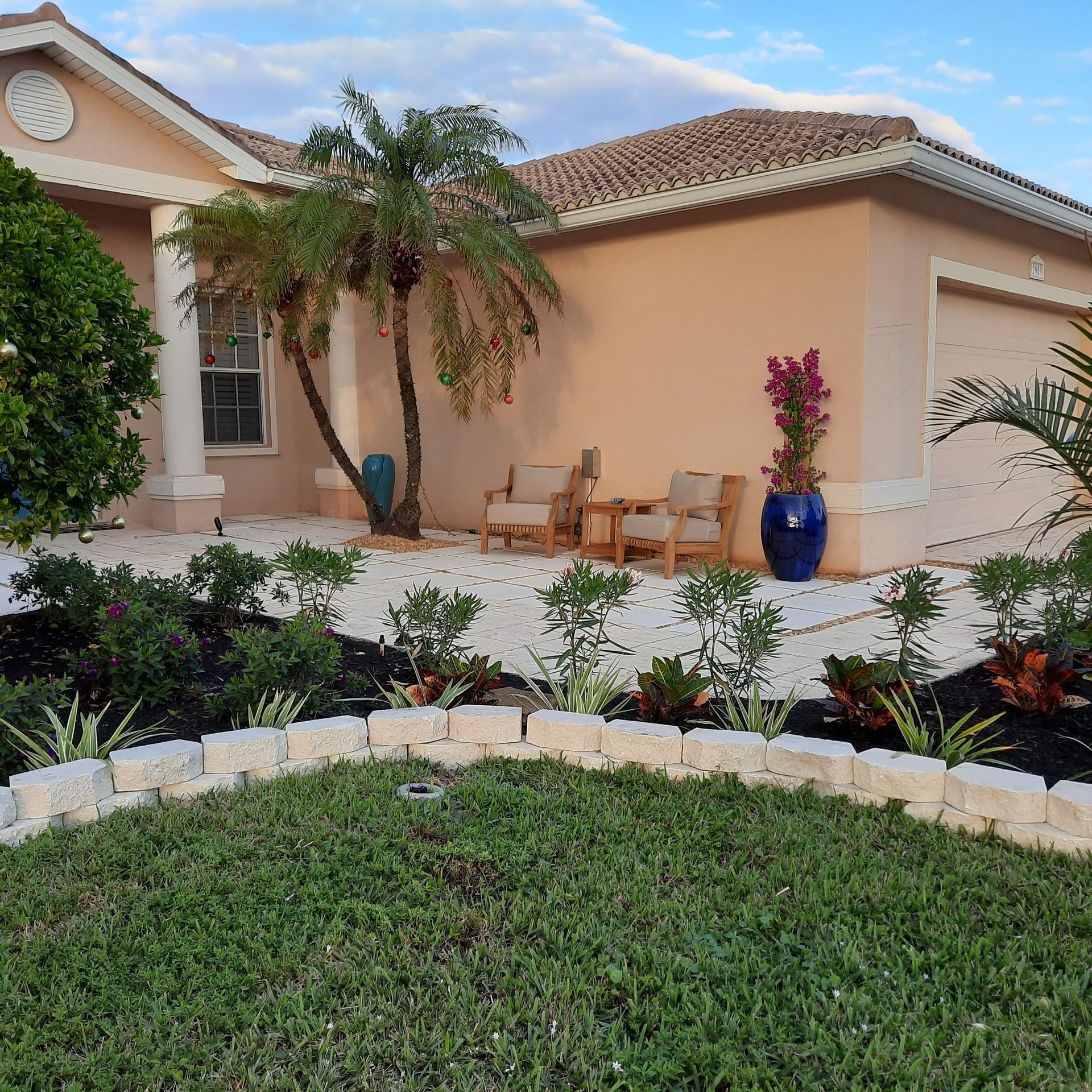
Warm white is the easy starting point for most Florida homes because it works with the way our architecture and landscaping already look. It flatters Mediterranean-style facades, coastal cottages, and newer stucco homes with clean lines. It also softens the strong reflections you get from light-colored walls, concrete, and pavers.
That matters at the front entry. A warm wash on columns, garage trim, or a stone feature gives the house depth without making it feel overlit. The same goes for palm uplighting. Warm white brings out the shape of the trunk and fronds without turning the tree into a spotlight.
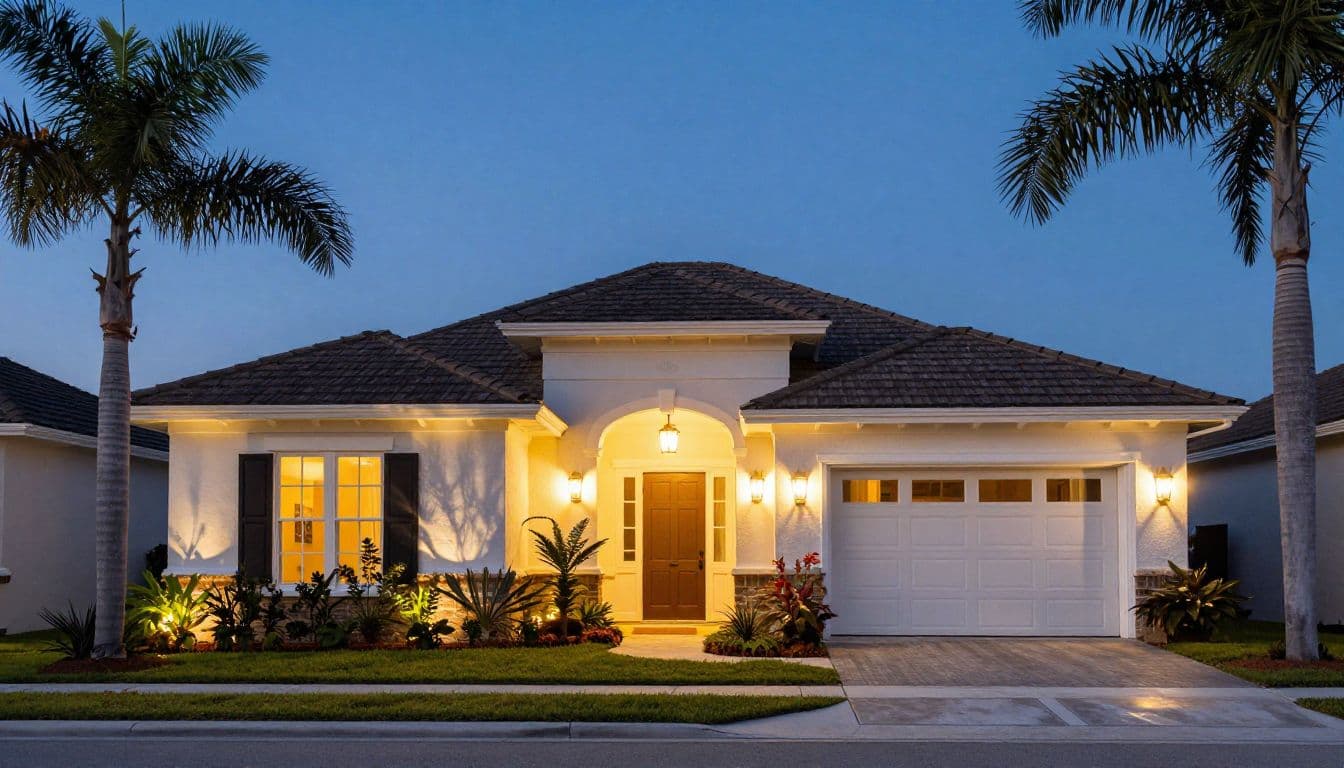
Warm white also fits the places where people actually sit and stay awhile. Patios, lanais, pool decks, and garden seating areas feel calmer when the light is soft. If you want the backyard to feel like an extension of the living room, warm white gets you there faster than a cool, blue-toned fixture ever will.
It also helps after maintenance work. After paver cleaning , for example, warm light shows the real color of the stone instead of making every shade look stark. That makes a difference on textured surfaces and older hardscapes.
Where Cool White Works Better
Cool white has a job, but it should be a specific job. Around 3500K to 4000K , light feels sharper and more task-focused, which can help in driveways, side yards, service areas, and spots where you want clearer visibility.
That range can be useful near a garage side door, a trash enclosure, or a narrow walkway that needs better definition. It can also help around cameras because the scene looks brighter and edges stand out more clearly. For safety and practical use, that matters.
Still, cooler light should be used with restraint. Very blue light, especially 5000K and above , often feels harsh outdoors. On white stucco, light concrete, and painted trim, it can create a flat look and show every little flaw. It can also make your yard feel less relaxed, which is the opposite of what most homeowners want after sunset.
If you're planning a driveway replacement or patio project, coordinate the light placement early. A concrete company can pour a great slab, but the lighting plan works better when the fixture locations are decided before the finish is set. The same idea applies to walkway edges, wall caps, and post locations.
If your outdoor work is part of a bigger update, it helps to think about the whole yard at once. Budgeting for Cape Coral outdoor projects makes more sense when lighting, planting, and hardscapes are planned together instead of one at a time.
A Layered Lighting Plan Fits Florida Landscaping
The best Florida lighting plans usually mix temperatures instead of forcing one color everywhere. Warm white can handle curb appeal and living spaces. Cooler light can stay in the background where function matters more than mood.
That layered approach works especially well with landscaping. Soft warm light on palms, hedges, and flower beds adds shape without washing out the plants. A little cooler light near a side path or utility area gives you the visibility you need without turning the whole yard into a parking lot.
It also helps if your yard has multiple surface types. Pavers, mulch beds, shell stone, concrete, and turf all reflect light differently. A single color temperature can look good on one surface and awkward on another. If you've added artificial turf installation cost in Cape Coral to your research, the same planning logic applies. Fixture placement, edge lighting, and base work all matter, especially when you're using artifical turf instead of natural grass.
The goal is balance. Warm light should carry the front of the home, the patio, and the main walkways. Cooler light can handle functional corners, but it should stay controlled and shielded. That way, the yard looks designed instead of overlit.
A good lighting plan also respects the rest of the property. If you've invested in landscaping, fresh pavers, or a concrete patio, the lights should make those choices look better, not louder. When the color temperature matches the surface and the space, the whole property feels more finished.
Choosing the Right Feel After Dark
For most Florida homes, warm white outdoor lighting is the safest and most attractive starting point. It fits the architecture, softens bright surfaces, and creates a welcoming look around entries, patios, and planted areas.
Cool white still has a role, especially for driveways, side yards, and security-focused zones. The mistake is using it everywhere. Once the light turns too blue, it starts to fight the home instead of supporting it.
The best result usually comes from a layered plan, with warm tones where you want comfort and cooler tones where you need clarity. That mix keeps your home looking inviting, practical, and well put together long after sunset.