


Palm Nutrient Deficiencies: A Southwest Florida Guide
To identify palm nutrient deficiencies, start with frond age, then compare the location and pattern of discoloration. Magnesium and potassium problems usually appear on older fronds, while manganese and iron problems affect newer growth.
Yellow leaves alone don't establish a diagnosis because irrigation trouble, root injury, and salt can produce similar damage. In Southwest Florida, begin by comparing the oldest affected frond with the newest open leaf and center spear.
Key Takeaways
- Older fronds with broad yellow margins suggest magnesium trouble; spotting and dying leaflet tips point toward potassium.
- Distorted, frizzled new growth suggests manganese trouble, while pale new leaves with relatively normal shape suggest iron.
- Evaluate drainage, planting depth, irrigation, and recent construction before adding nutrients.
- A collapsing spear, rapid canopy decline, or one-sided browning needs prompt professional attention.
Read Palm Nutrient Deficiencies by Frond Age
The position of damaged leaves helps narrow the possibilities. However, several deficiencies can occur together, so compare multiple fronds rather than selecting one yellow leaf.
Separate older leaves from newer growth
Older fronds generally sit lower and farther outside the crown. Newer leaves grow near the center, surrounding the upright, unopened spear.
Palms can move some nutrients out of older leaves to support growth. As a result, shortages of potassium or magnesium often become visible in the older canopy first.
Photograph the whole crown, an affected frond, and the newest open leaf. Record when symptoms began and whether they followed planting, heavy rain, fertilizer, or construction.
Compare patterns, not color alone
Look for uniform yellowing, yellow bands, translucent spots, dead tips, and distorted leaflets. Also note whether discoloration affects both sides of a frond similarly.
Natural leaf aging usually affects the oldest leaves gradually. Symptoms spreading through several canopy levels deserve closer attention.
Older-Frond Symptoms: Magnesium and Potassium
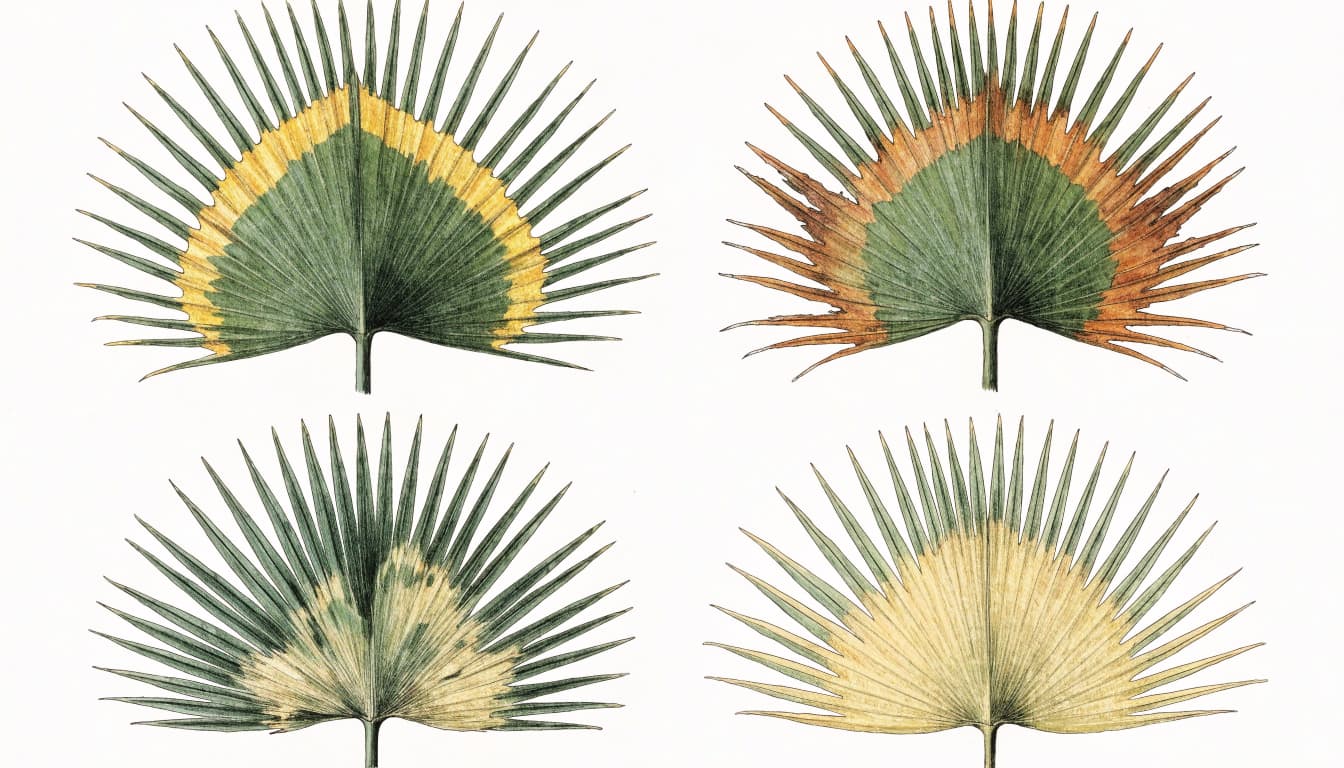
Both deficiencies can yellow the lower canopy, but their patterns differ. Don't assume every yellow older leaf needs the same supplement.
Magnesium: yellow margins with a greener center
Magnesium deficiency commonly produces broad yellow bands along the outer portions of older fronds. The central portion remains distinctly greener.
This contrast often looks more organized than drought damage or fertilizer burn. Leaflets may retain their shape even when the yellowing becomes conspicuous.
However, potassium deficiency can overlap with magnesium deficiency, adding brown tissue to an otherwise yellow-and-green pattern. Examine several leaves before drawing a conclusion.
For treatment planning, consider the palm's complete fertilizer history. Adding magnesium alone without considering potassium can upset nutrient balance, so avoid treating Epsom salts as a general palm remedy.
Potassium: spotting followed by dying leaflet tips
Potassium deficiency often begins with yellow-orange or translucent spots on older leaves. Later, leaflet tips and margins develop dead tissue, and affected leaflets may curl or look frizzled.
Damage generally becomes worse toward the end of the frond. This differs from the broad yellow marginal bands associated with magnesium shortage.
Severe symptoms can resemble salt injury, especially near coastal exposure or salty irrigation water. The distribution across the canopy and the site's watering history help separate those possibilities.
Keep partly green fronds unless they create a hazard. Removing them takes away tissue the palm still uses.
New-Frond Symptoms: Manganese and Iron
When the newest leaves look worse than the older canopy, examine their shape as closely as their color. Root conditions also matter because nutrients may be present but unavailable.
Manganese: small, streaked, or frizzled new leaves
Manganese deficiency affects emerging growth. New leaves may look yellow, unusually small, or weak, with brown streaks running along the leaflets.
As damage progresses, leaflets can wither and curl, producing the appearance commonly called frizzletop . This pattern belongs near the growing point, unlike potassium-related frizzling on older leaves.
Manganese and magnesium are different nutrients despite their similar names. Magnesium sulfate, sold as Epsom salts, doesn't supply manganese.
Distorted new growth deserves prompt assessment because the growing point supports future leaves. A nutrient problem is one possibility, but damage to the bud also needs consideration.
Iron: pale new growth that retains its shape
Iron deficiency generally appears as pale yellow or nearly white new leaves. Veins may remain greener, although the contrast varies.
Compared with manganese trouble, iron-related yellowing usually involves less leaflet distortion and less streaked dead tissue. Older leaves may remain noticeably greener.
In Southwest Florida, high-pH soil and poorly functioning roots can limit iron availability. Therefore, adding iron without addressing a saturated or damaged root zone may leave the underlying problem unchanged.
A labeled iron product may belong in a treatment plan, but product choice depends on soil conditions. Repeated applications shouldn't replace an assessment of drainage and root health.
Rule Out Root Stress Before Adding Fertilizer
Nutrient-like symptoms can begin below ground. Sandy soil may dry quickly, while compacted fill or buried debris can create wet pockets nearby.
Inspect moisture, planting depth, and salts
Look below the mulch to assess moisture around the root ball. A dry root ball and waterlogged surrounding soil can exist on the same property.
A palm planted too deeply can struggle even when its leaves initially look healthy. Our guide to proper palm planting depth explains how grade affects the root zone.
Also consider salty irrigation water, coastal spray, and fertilizer buildup. Soil testing that includes soluble salts or electrical conductivity can help distinguish salt stress from a simple nutrient shortage.
Recognize symptoms that need faster attention
Recent transplanting can cause older fronds to brown while the center continues growing. Our explanation of browning after palm installation covers that adjustment period.
However, a collapsing or loose spear, foul-smelling trunk base, rapid crown decline, or one-sided canopy death warrants professional assessment. Disease, insects, and growing-point injury won't respond to routine feeding.
Don't pull on the spear to test it or move a declining palm again without a clear reason. Instead, photograph changes and document recent irrigation, herbicide, fertilizer, and construction activity.
Treatment Starts With the Root Zone
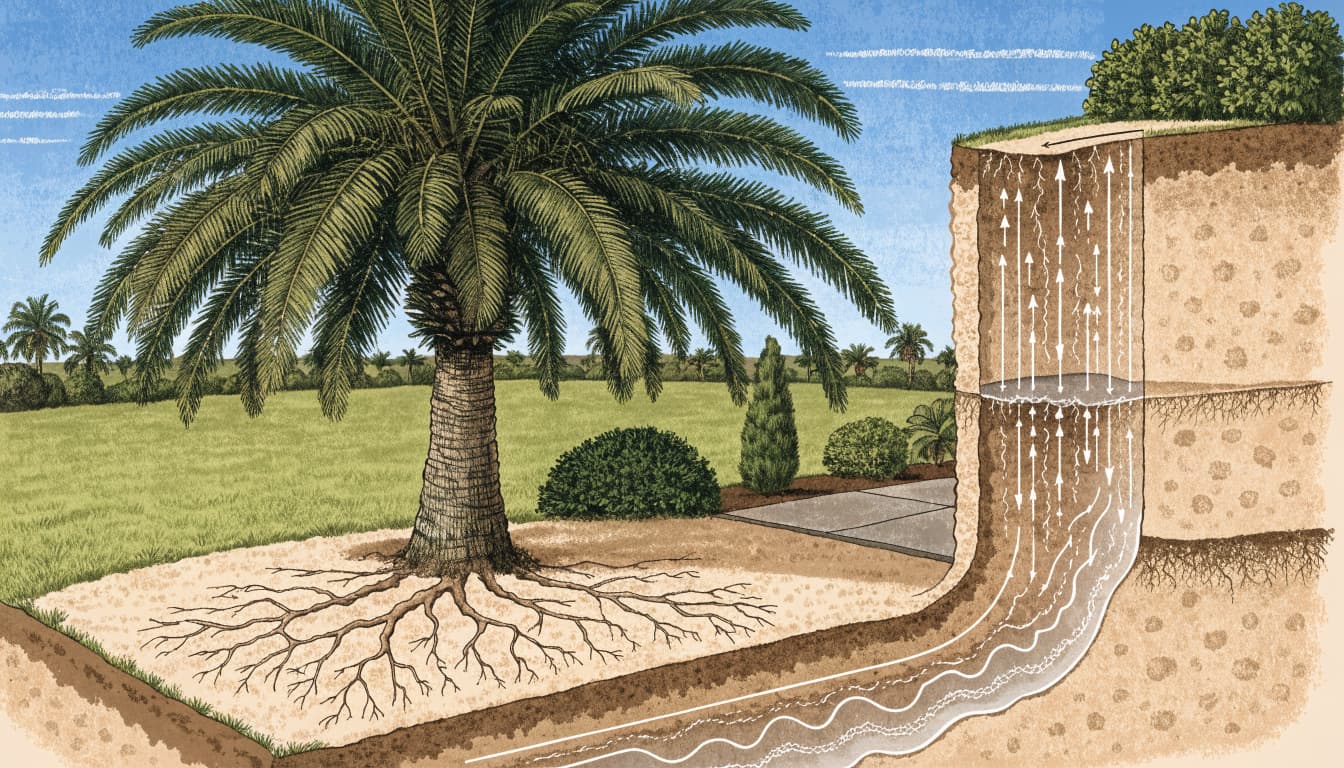
The goal is to supply needed nutrients without worsening drainage, salinity, or nutrient imbalance. Brown tissue won't repair itself, so treatment decisions should also consider developing growth.
Use testing to guide the next step
A soil test can identify pH and salt conditions that affect nutrient uptake. Our guide to soil testing in Cape Coral describes the testing process for landscape beds.
Soil results don't explain every palm symptom. A qualified palm professional may also use leaf-tissue analysis to assess nutrient status.
Meanwhile, correct obvious irrigation failures and drainage problems. Avoid aggressive digging around established roots, and don't bury the trunk with additional soil or mulch.
Choose palm nutrition rather than a quick green-up
When feeding is appropriate, use a controlled-release fertilizer formulated for palms, with magnesium and relevant micronutrients. A nitrogen-heavy lawn fertilizer doesn't provide the same nutrient balance.
Targeted magnesium, potassium, manganese, or iron products require different decisions. Follow the diagnosis and label instead of applying several supplements together.
Frizzled older leaves and frizzled new leaves point toward different problems. Frond age matters before choosing a nutrient product.
Spread fertilizer across the labeled treatment area rather than piling it against the trunk. Keep granules off pavement, and sweep spills back into the intended landscape area.
Local fertilizer restrictions still apply. Don't fertilize before heavy rain or onto saturated soil, where nutrients can move into nearby waterways.
Prevent Repeat Problems Around Patios and Lawns
Palm care needs to fit the surrounding landscaping. A healthy planting bed can deteriorate after changes to grade, irrigation coverage, or runoff.
If a concrete company installs a driveway extension or patio, protect the palm's roots from excavation and equipment traffic. The finished grade should avoid directing concentrated runoff into the planting area.
Similarly, artificial turf doesn't eliminate the palm's need for accessible soil, suitable drainage, and irrigation. Keep base materials and new edging from raising the grade against its trunk.
During paver cleaning, keep cleaners and dirty rinse water away from palm beds. Chemical injury can resemble nutrient damage, so prevent runoff from collecting around roots.
Maintain a modest mulch layer with clear space around the trunk. Also reassess sprinkler coverage after any outdoor renovation.
Southwest Florida's summer rain can move nutrients through sand, but extra fertilizer isn't automatically the answer. Consistent root-zone care and a suitable palm feeding program offer a better foundation than repeated emergency applications.
Frequently Asked Questions
Should I cut off yellow palm fronds?
Keep fronds that still contain useful green tissue unless they present a safety problem. Nutrient-deficient palms benefit from retaining functioning leaves.
Removing yellow fronds may improve appearance temporarily, but it doesn't address the cause. Also avoid aggressive pruning that leaves only a few upright leaves. Use a qualified crew when fronds are large, elevated, or near structures.
How can I tell whether the palm is improving?
Look for new leaves that open with healthier color, better size, and normal leaflet shape. Compare photographs taken from the same position so changes are easier to judge.
Dead brown tissue won't turn green again. Because recovery depends on the underlying cause and root condition, judge progress by developing growth rather than expecting damaged older fronds to look new.
Healthier Palms Start With the Right Diagnosis
Frond age and symptom pattern are your strongest starting clues. Pair them with an assessment of soil moisture, planting depth, salts, and recent site changes.
Protect the growing point , retain useful green leaves, and choose treatment only after narrowing the cause. A healthier root zone supports the palm far better than fertilizer applied to unexplained yellowing.