


Why Crape Myrtle Leaves Get White Powder in Southwest Florida
White powder on crape myrtle leaves often points to powdery mildew, a fungal disease that can coat leaves and distort new growth. Crape myrtle powdery mildew can develop in Southwest Florida when humidity, shade, and limited airflow create favorable conditions, though white residue can have other causes.
A close look at the leaves, stems, and surrounding planting area can help distinguish mildew from scale, mineral deposits, or leaf scorch. The right response starts with identifying the problem, then improving the plant's growing conditions.
Key takeaways
- Powdery mildew usually forms irregular white or gray patches on leaves and tender shoots.
- Dense shade and poor airflow can increase disease risk, even in a warm climate.
- White crust on bark, sticky leaves, or black coating may point to scale or honeydew instead.
- Sun, spacing, careful irrigation, and a resistant cultivar can help prevent repeat problems.
- Fungicides are most useful when a product is labeled for the plant and disease and applied early.
How to recognize powdery mildew on crape myrtles
Look for a powdery coating on leaves and shoots
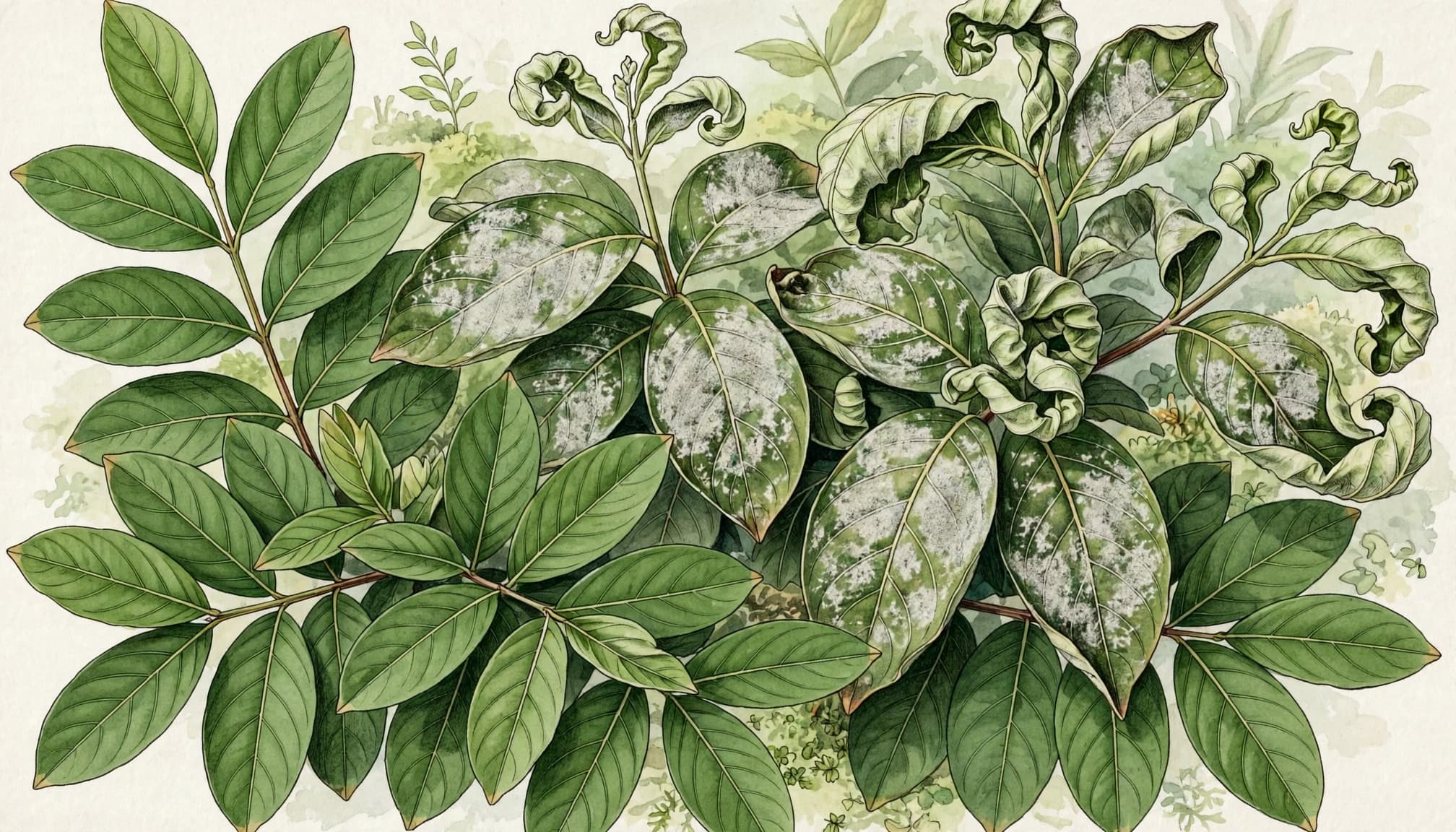
Powdery mildew often begins as small, pale patches on leaf surfaces. The spots can spread and join into a white or gray coating, especially on young leaves and tender shoot tips. Infected leaves may curl, pucker, or become distorted. Severe infections can cause leaves or flower buds to drop.
The pattern matters. Powdery growth appears in scattered areas and may show up on several leaves across the plant. A uniform layer of dust over every leaf, or residue limited to areas hit by sprinklers, suggests another cause.
Inspect more than one branch
Check both sides of several leaves, along with the newest growth and flower buds. Powdery mildew can be easier to spot on tender growth, while other problems may concentrate on older leaves, bark, or one part of the canopy.
A mild infection may leave most of the tree looking healthy. Take note of where the first spots appear and whether they spread over the next several days. That pattern gives you more useful information than a single white mark.
What else can leave white residue or damage leaves?
Separate leaf mildew from bark scale
Crape myrtle bark scale appears as white or gray waxy bumps on trunks and branches, not as a powdery coating across leaf surfaces. Scale may also produce sticky honeydew. A black, sooty film on leaves or nearby surfaces can develop where honeydew accumulates.
Look closely at the bark, especially around branch joints and crevices. If the white material is concentrated on woody stems, the issue may be scale rather than a leaf fungus.
Check for sprinkler residue, pests, and scorch
Hard-water or fertilizer deposits can dry as pale spots or crust. They often appear where irrigation spray lands and may follow a droplet or splash pattern. Powdery mildew tends to spread in irregular patches across leaf tissue.
Other clues help narrow it down. Spider mites can cause fine stippling and sometimes webbing, while leaf scorch usually produces dry brown edges or patches rather than white growth. Sticky foliage or black residue points toward honeydew-producing insects. No single clue confirms the cause, so compare several leaves and inspect the whole plant.
Why mildew can develop in Southwest Florida
Humidity matters, but so does the planting site
Southwest Florida has long warm seasons, intense summer sun, heavy rain, and occasional tropical weather. Coastal yards may also face salt exposure and strong wind. These local conditions affect how plants grow and how quickly foliage dries after rain or irrigation. How to read a Florida nursery tag can help when matching plants to local conditions.
Powdery mildew often favors humid air and shaded, crowded growth. The leaves don't need to stay wet for long periods for the disease to develop. A crape myrtle planted too close to a wall, hedge, or another tree may have less sun and airflow than it needs.
Seasonal rain can add stress to crowded beds
Rainy-season growth can fill in a landscape quickly. When shrubs and trees crowd one another, air movement drops and foliage stays humid longer. Water collecting in low areas can also contribute to broader plant-health and maintenance problems. Southwest Florida's rainy-season care needs are covered in our HOA landscaping checklist.
The aim isn't to keep a crape myrtle dry. It's to avoid a persistently shaded, dense canopy and excess moisture around the root area.
Prevent mildew with sun, space, and airflow
Give the canopy room to grow
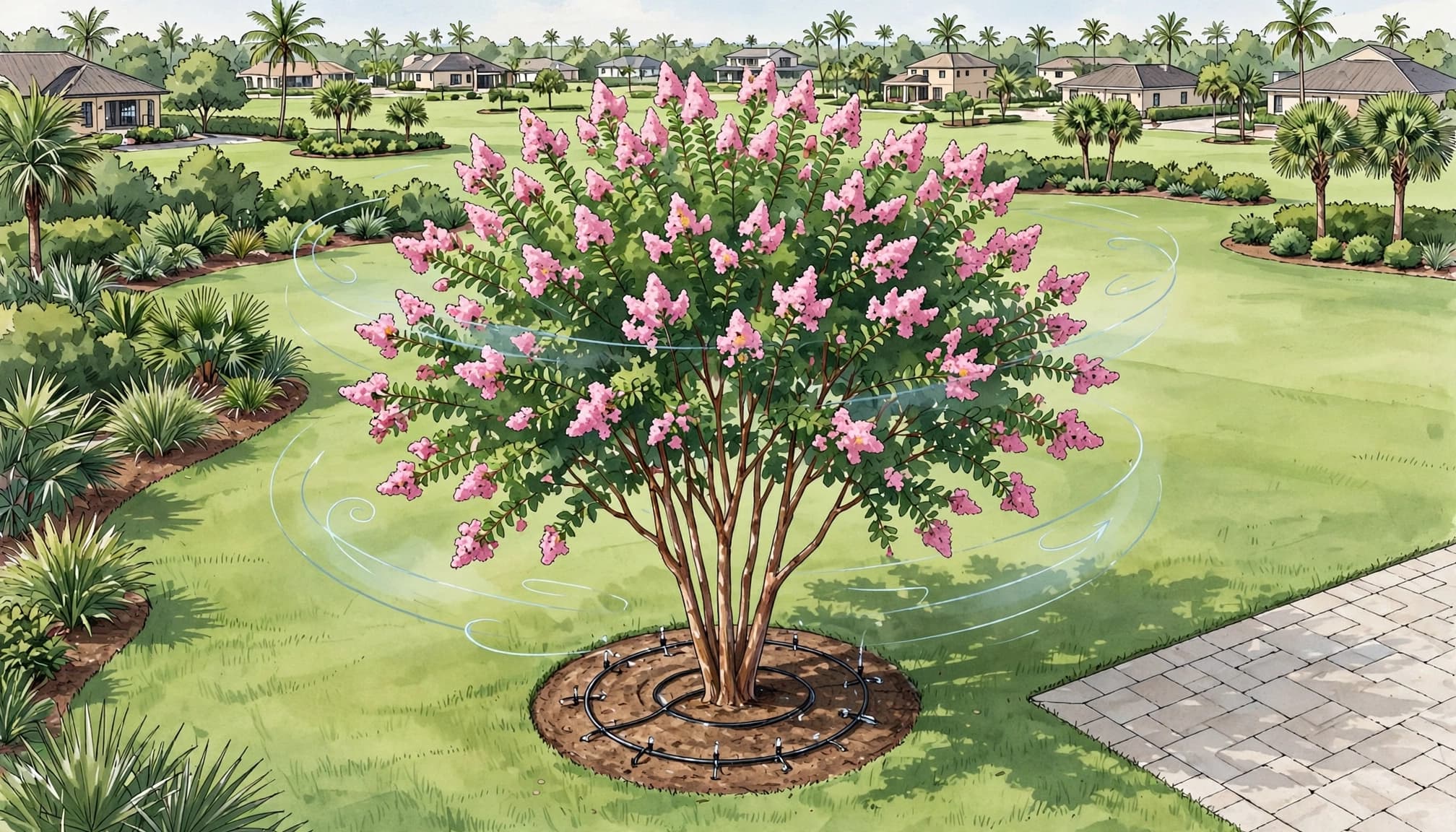
Plant crape myrtles where they receive ample sunlight and have room to reach their mature size. Avoid squeezing them between a building and a dense hedge. If branches overlap neighboring plants, selective thinning can open the canopy and improve airflow.
Before adding a new tree, consider the whole yard layout. A crape myrtle beside artificial turf, a patio, or a driveway still needs space for its roots and canopy. A concrete company's grading work or a new hardscape can also affect where water flows, so avoid directing runoff toward the trunk.
Choose a cultivar suited to the site
Some crape myrtle cultivars have better powdery mildew resistance than older, susceptible selections. When choosing a replacement or adding a new tree, ask a nursery for a resistant cultivar that fits your available space and light. Check the plant label and expected mature size before buying.
Resistant varieties can reduce the chance of recurring disease, but they still need appropriate care. Crowding, poor drainage, or heavy shade can weaken a plant and make its foliage less healthy.
Water without keeping foliage or roots overly wet
Crape myrtles need water while establishing, especially during hot, dry stretches. Once established, they generally need less frequent irrigation than newly planted trees. Avoid automatic watering that runs after substantial rain, and check soil moisture before adding another cycle.
When watering is needed, direct it toward the root zone rather than repeatedly wetting the foliage. Drip lines and micro-sprays can keep water off leaves in many planting beds, while broad overhead spray may wet foliage and nearby hard surfaces. See our advice on plants suited to reclaimed-water irrigation for local watering considerations.
Also inspect the ground after a storm or sprinkler cycle. If water sits near the trunk or flows from a patio into the bed, correct the drainage pattern instead of compensating with more watering. During paver cleaning, keep dirty rinse water and debris from collecting around the tree.
Treat powdery mildew carefully
Start with pruning and routine care
If only a few leaves or shoot tips show symptoms, remove the most affected growth and discard it. Clean pruning tools after working on infected branches. Avoid aggressive shearing, which can produce a flush of tender growth and leave the canopy crowded.
Rake up fallen infected leaves and keep the area beneath the tree clear of debris. Don't apply heavy nitrogen fertilizer to push rapid growth. Fast, soft growth can be more vulnerable, and fertilizer won't cure an existing infection.
Use fungicides when disease pressure warrants it
Fungicides may help when mildew returns each season, affects much of the canopy, or threatens flowers and new growth. They work best when applied early, before the disease becomes widespread. A fungicide won't restore leaves already damaged.
Choose only a product labeled for ornamental plants and powdery mildew, and follow its directions for timing, coverage, and reapplication. Don't spray in conditions the label excludes, such as excessive heat. If symptoms are severe or keep returning despite improved placement and care, a local plant-health professional can help identify the cause before treatment.
Frequently asked questions
Does rain wash powdery mildew away?
Rain may remove some visible powder, but it doesn't reliably eliminate the disease. New growth can still develop symptoms when conditions remain favorable. Focus on sunlight, airflow, and appropriate watering rather than relying on rain to solve the problem.
Should I remove the whole crape myrtle?
Usually, no. A few affected leaves or shoots don't mean the entire tree needs removal. Correct crowding or irrigation issues, prune only where needed, and watch the new growth. Consider replacement if the tree repeatedly declines and the site cannot provide suitable growing conditions.
Can I use a home remedy?
Avoid applying household cleaners, baking-soda mixtures, or oils without checking whether the treatment is appropriate for the plant and conditions. A poorly chosen spray can burn leaves, especially during Southwest Florida heat. Use products labeled for the intended plant and disease.
Keep the tree healthy by fixing the conditions
White powder on crape myrtle leaves deserves a closer look, but it doesn't automatically confirm mildew. Check the leaves and bark, look for signs of insects or residue, and consider how much sun and airflow the tree receives.
When mildew is the likely cause, good spacing, careful irrigation, and a resistant cultivar offer a stronger foundation than repeated spraying. A well-placed crape myrtle is easier to maintain through Southwest Florida's warm, rainy seasons.