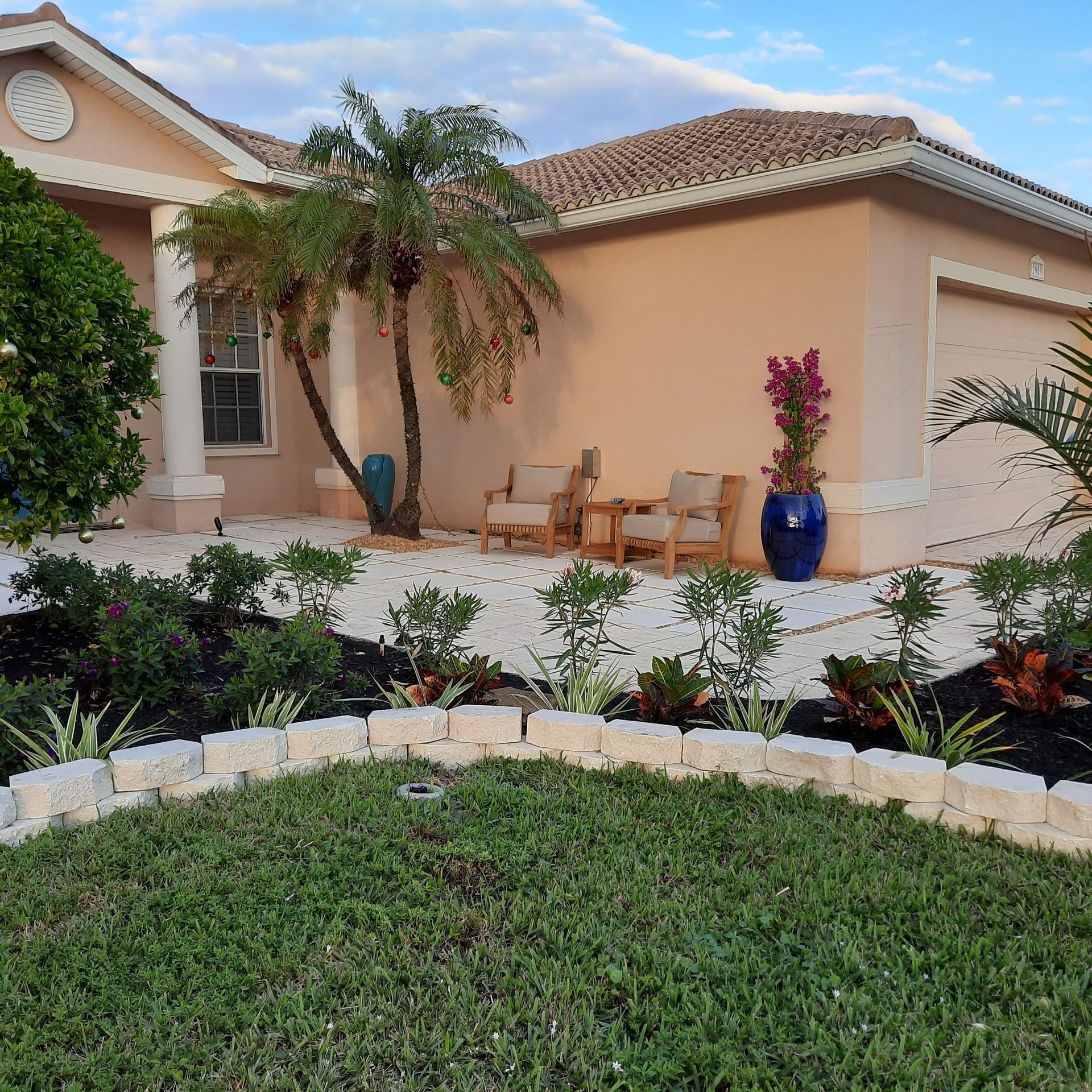



Travertine Vs Porcelain Pavers For Cape Coral Pool Decks
Barefoot at 2 p.m. shouldn't feel like a dare. For Cape Coral homeowners, a pool deck has to handle hard sun, splash-out, chlorine, rain, and daily foot traffic.
That makes travertine vs porcelain pavers more than a style choice. One usually stays cooler and looks natural, while the other fights stains and cuts down on upkeep. Before you commit, think about how the surface will feel in August, not only how it looks on a sample board.
Travertine vs porcelain pavers at a glance
If you're planning a new deck or remodel, it helps to compare materials with professional pool deck paver installers before you lock in a style. In Cape Coral, heat and slip resistance matter as much as color.
That matters because the same deck can feel great in February and punishing by July. A smart choice balances comfort, traction, cleaning needs, and the look you want around the pool.
In Cape Coral, the best-looking pool deck still loses if it gets too hot or too slick.
This quick side-by-side view helps narrow the choice.
| Factor | Travertine | Porcelain |
|---|---|---|
| Barefoot comfort | Usually cooler in direct sun | Depends on color and finish, can run hotter |
| Wet traction | Naturally grippy when textured or tumbled | Excellent if you choose slip-rated outdoor pavers |
| Stain resistance | Fair, better with sealer | Strong, low absorption |
| Sealing | Usually recommended | Usually not needed on the surface |
| Color look | Natural variation | Clean, uniform look |
| Fading | Good, but can weather softly over time | Excellent fade resistance |
| Lifespan | Decades with proper care | Decades with proper installation |
| Upfront cost | Often higher | Mid-range to premium, depending on product |
The short version is simple. Travertine usually wins on barefoot comfort and organic beauty. Porcelain usually wins on stain resistance, fading, and lower day-to-day maintenance. Neither is maintenance-free, because pool decks still collect algae, sand, and chemical residue.
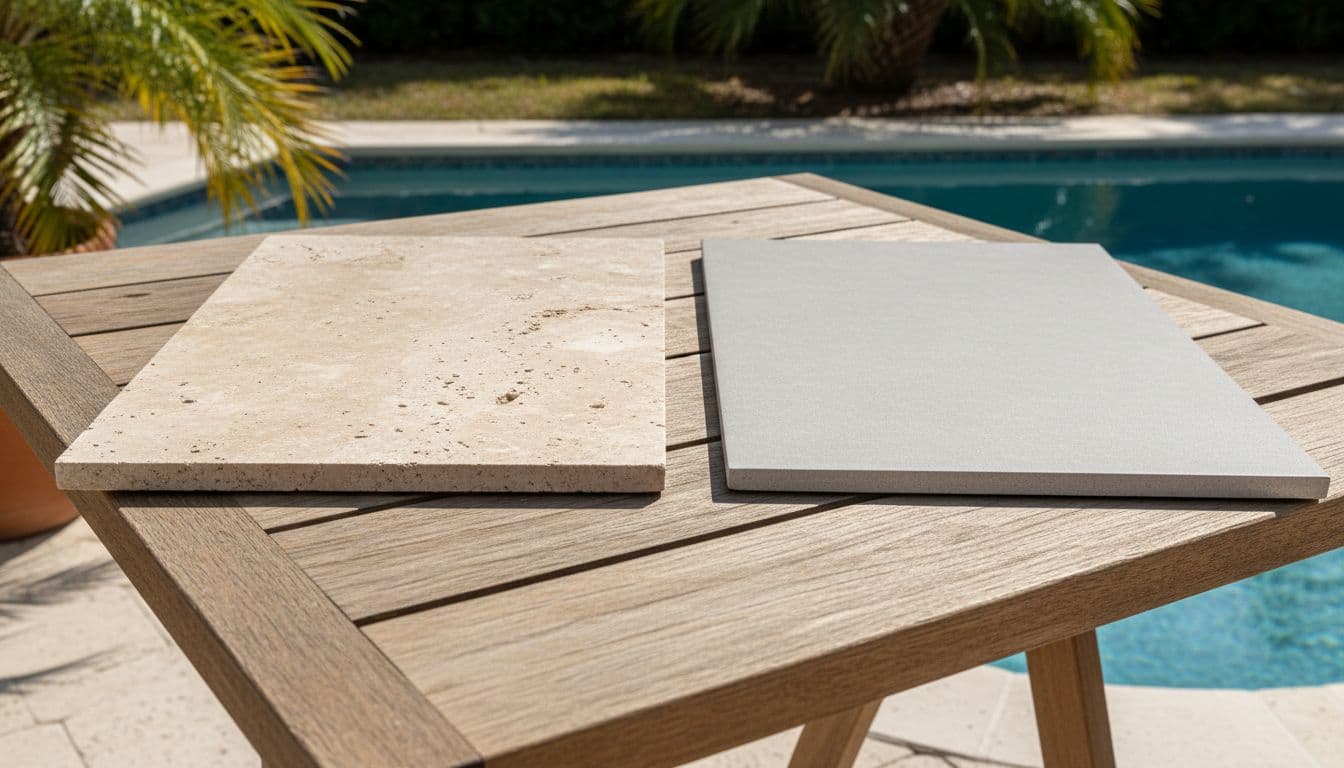
How each material handles Cape Coral heat, water, and upkeep
Cape Coral is tough on any pool deck. Sun bakes the surface, rain keeps joints wet, and salt or chlorine leaves behind residue.
Travertine feels better underfoot, but asks for more care
Travertine's biggest advantage is comfort. In direct Florida sun, light travertine usually stays cooler than many porcelain options. If your family spends time walking barefoot from the pool to the patio, that difference is easy to feel.
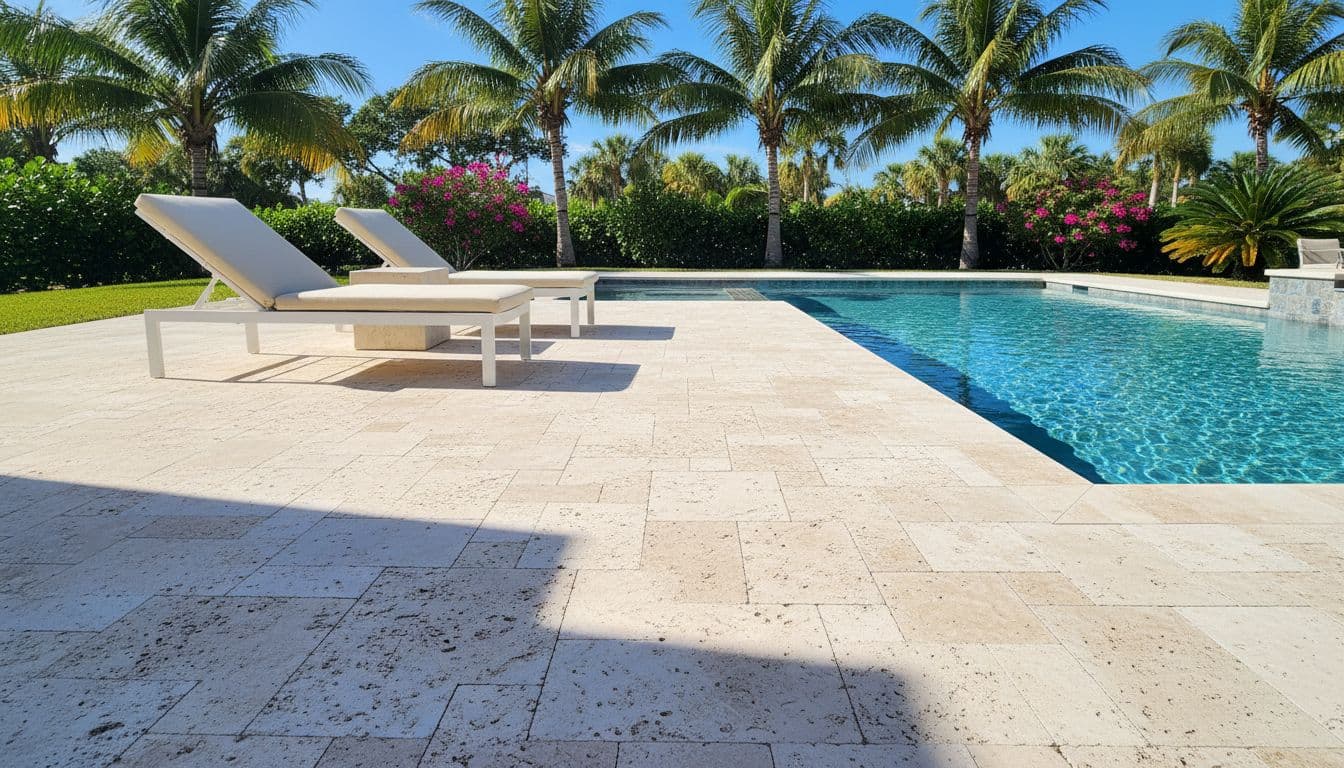
It also has a classic poolside look that works well with palms, shell accents, and softer landscaping. Because travertine is natural stone, every piece has slight color and texture shifts. Many homeowners love that relaxed, coastal look. Wet traction is also good when the stone has a textured or tumbled finish.
Still, travertine needs more attention. Its surface is more porous, so sunscreen, drink spills, rust from furniture, and leaf stains can sink in if they sit too long. A penetrating sealer helps, and routine paver cleaning keeps dirt from settling into the stone. If you want a better feel for long-term maintenance, this guide to Cape Coral paver cleaning and resealing costs 2026 is a helpful local reference. With the right care, travertine can last for decades and age in a natural way.
Porcelain keeps maintenance lower, but surface choice matters
Porcelain pavers appeal to homeowners who want a cleaner, more modern finish. They come in precise sizes and consistent colors, so the deck looks crisp and orderly. Because porcelain is dense and absorbs little moisture, it resists staining far better than travertine. That makes cleanup easier after pool parties, fertilizer splash, or everyday grime.
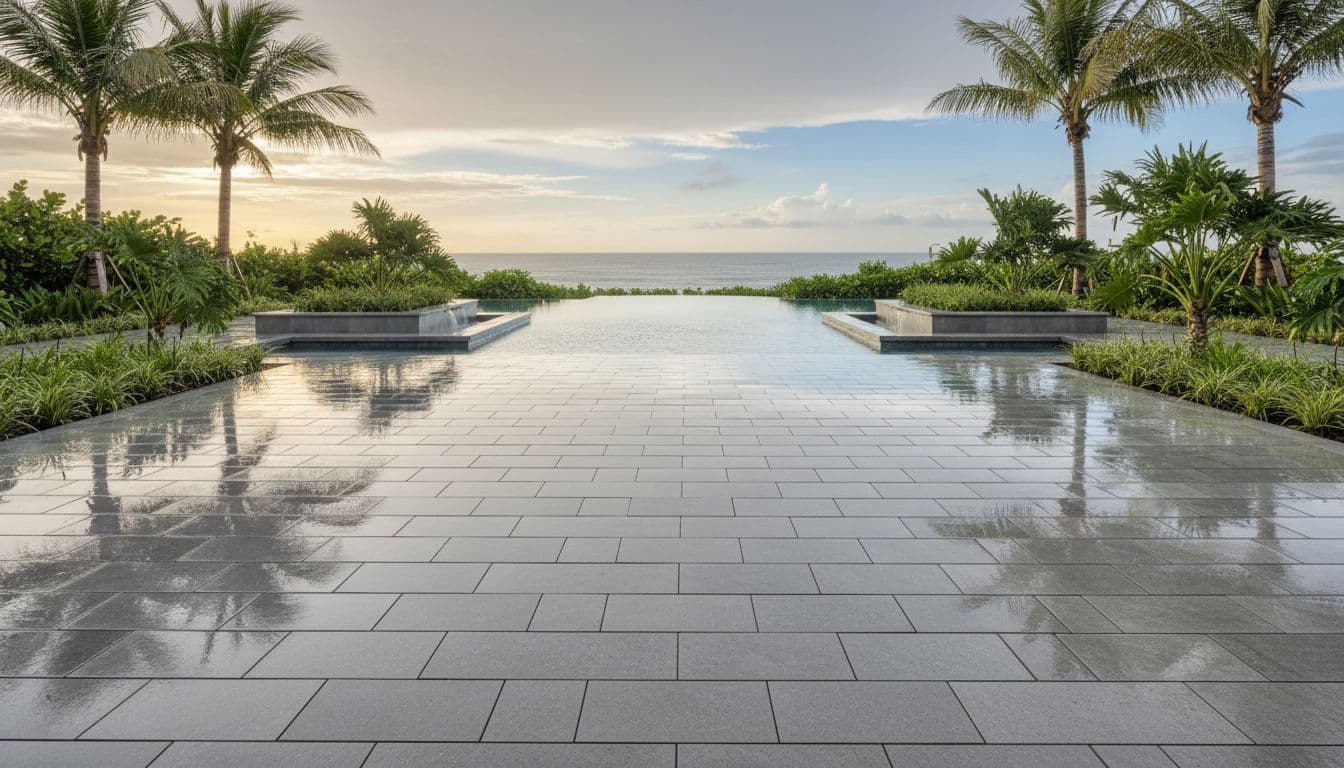
Porcelain also holds color well under UV exposure, so fading is rarely a major worry. For traction, though, product choice matters. Textured outdoor porcelain can perform well when wet, but smooth or polished material is a poor fit for a pool deck. Heat is the other tradeoff. Dark porcelain can get hot, and even lighter colors often don't match travertine for barefoot comfort. It also needs a very flat base, because uneven edges show quickly. Done right, porcelain lasts a long time and asks for less sealing and less stain management than natural stone.
Which one makes more sense for your pool deck?
If your top goal is a cool, natural-looking deck, travertine is hard to beat. It blends well with tropical planting beds, curved coping, and relaxed backyard layouts. If your home leans modern, porcelain often looks sharper and more intentional.
Budget matters too. Travertine often comes with a higher upfront cost, and it usually needs sealing over time. Porcelain may save work later because it shrugs off many stains and doesn't usually need surface sealer. Still, premium porcelain can narrow that price gap, so don't assume it's always the cheaper option.
Think about the whole yard, not only the deck. Some families pair the pool area with artifical turf in side yards or pet zones, and artificial grass installation Cape Coral can help keep muddy feet away from the water. If the project also includes drainage fixes, deck extensions, or a slab tie-in, your paver crew and concrete company should plan the grades together. Good transitions matter as much as the pavers themselves.
A simple way to decide:
- Choose travertine if cooler feet and natural stone character matter most.
- Choose porcelain if you want easier cleanup, less sealing, and a more modern look.
- Pick light colors for either material around a Cape Coral pool.
- Don't ignore installation quality , because poor slope ruins both options.
The best pool deck isn't the one that looks best in a sample rack. It's the one that stays comfortable, safe, and manageable through a long Cape Coral summer.
For many homeowners, travertine wins on comfort and classic poolside style, while porcelain wins on low upkeep and stain resistance. Get samples in direct sun, compare them next to your home's hardscape and landscaping, and choose the material that fits how you actually live.