


Best Salt-Tolerant Plants for Cape Coral Waterfront Yards
Waterfront curb appeal can disappear fast when the wrong plant meets Cape Coral salt. Leaves scorch, roots stall, and a new bed can look tired in one season.
The fix isn't luck. It's choosing salt tolerant plants Cape Coral yards can handle, then matching each plant to the kind of salt stress on your lot. That makes waterfront landscaping feel planned, not patched together.
Start with the salt itself, because not all waterfront damage comes from the same place.
Not all salt stress looks the same on a Cape Coral canal lot
On a waterfront property, salt usually shows up in three ways. Salt spray lands on leaves after windy days. Saline soil builds around roots from brackish irrigation, splash, or poor flushing after dry weather. Periodic storm surge exposure means short-term saltwater flooding during major weather.
Those are not the same problem. A plant that handles spray on its leaves may still fail if salt sits around the roots. In the same way, a plant that survives one brief surge can still rot in a bed that stays wet for weeks.
A plant that tolerates salt spray does not always tolerate salty soil.
That matters when you place plants near a seawall, pool deck, or dock path. The water-side edge needs the toughest choices. Beds closer to the house can hold softer Florida-friendly plants with lower salt tolerance.
Very few ornamental plants can live in constant inundation . For that, you move into true shoreline species and, in some cases, legal limits. Most homeowners should focus on plants that take spray, sandy soil, and the occasional storm push, not year-round standing salt water.
If you're reworking beds, sight lines, and drainage at once, a plan from custom landscaping installation can save a lot of trial and error.
Best salt tolerant plants Cape Coral homeowners can actually use
UF/IFAS guidance and Florida coastal planting advice point to a simple pattern: use natives and proven coastal plants first, then layer for color and privacy.
Here are strong picks for Cape Coral waterfront yards:
| Plant | Light, size, and key benefits | Why it works in a Cape Coral waterfront yard |
|---|---|---|
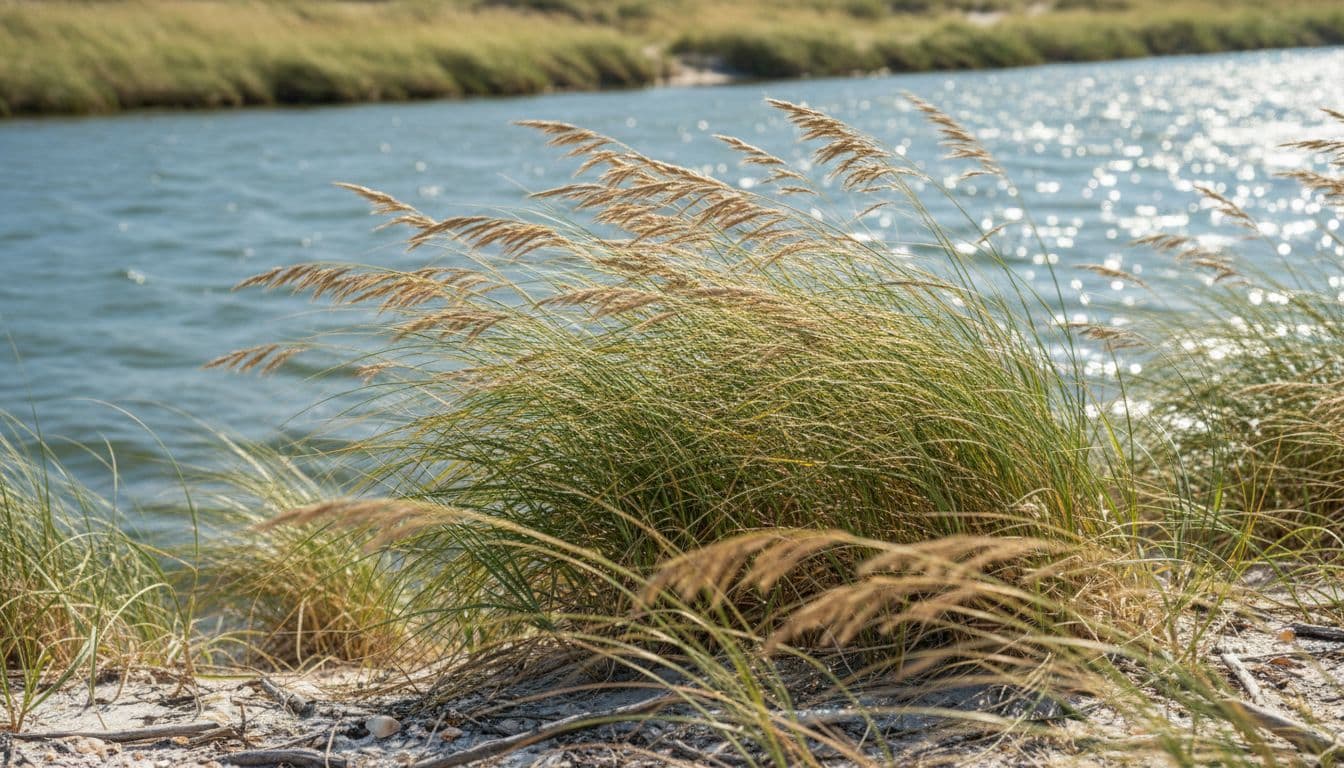
| Sea oats ( Uniola paniculata ) | Full sun; 4 to 6 feet. Native grass that holds sandy soil and takes heavy salt spray. | Excellent near canal edges and windy corners. It also handles brief surge better than most ornamentals, but not constant flooding. |
| Beach sunflower ( Helianthus debilis ) | Full sun; 1 to 2 feet tall, 3 to 4 feet wide. Native groundcover, yellow flowers, pollinator-friendly. | Great for hot bed edges where reflected heat and spray burn weaker plants. Fast color, low fuss. |
| Railroad vine ( Ipomoea pes-caprae ) | Full sun; 6 to 10 inches tall, spreads wide. Native vine that stabilizes loose, sandy soil. | Best on broad sunny slopes or open banks. It laughs at heat and salt, but it needs room. |
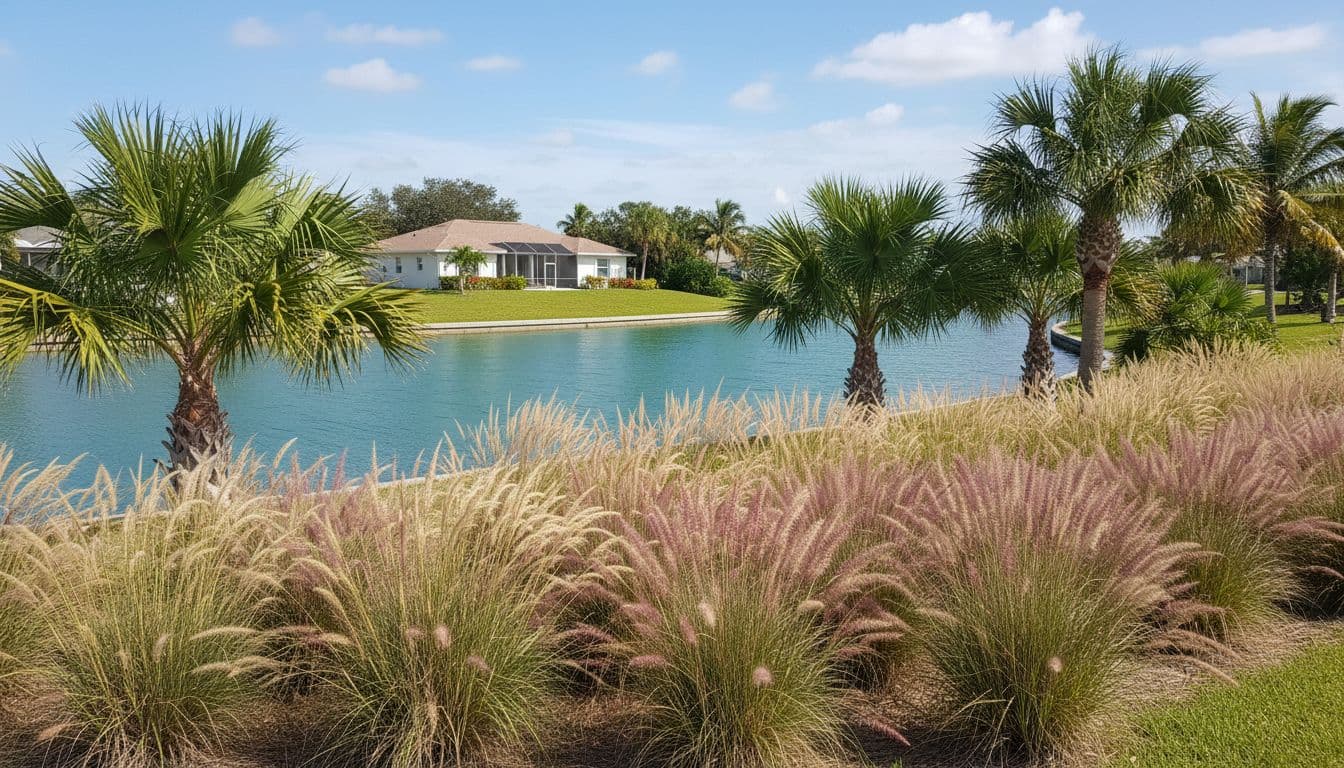
| Muhly grass ( Muhlenbergia capillaris ) | Full sun; 3 to 4 feet. Native clumping grass with soft texture and pink fall bloom. | A good middle-layer plant behind lower groundcovers. It handles spray well, but wants drainage. |
| Seagrape ( Coccoloba uvifera ) | Sun to part sun; 8 to 20 feet. Native screen plant with bold leaves and edible fruit. | Useful for privacy, filtered shade, and wind buffering on larger lots near the water. |
| Buttonwood ( Conocarpus erectus ) | Full sun; 10 to 20 feet. Native shrub or small tree, strong in salty soils, silver form adds contrast. | One of the better backbone plants where salts collect in the root zone. |
| Cabbage palm ( Sabal palmetto ) | Sun to part sun; 30 to 40 feet. Florida native palm, wind-tough, low-maintenance. | A smart vertical accent because it handles salt spray and storm winds better than many palms. |
The takeaway is simple. Put the toughest plants closest to the water, then soften the middle and house side with flowering groundcovers and airy grasses. That layered look feels natural and usually holds up longer.
How to plant and care for waterfront beds so they last
New plants need help at first, even the tough ones. Water deeply during establishment, then taper off as roots spread. In Cape Coral's sandy soil, steady early irrigation matters more than constant shallow watering.
Mulch also helps, but keep it practical. Use 2 to 3 inches of mulch and pull it a few inches back from trunks and stems. That buffers heat, slows moisture loss, and cuts weed pressure without trapping rot at the base.
Prune with a light hand. Salt wind burns fresh outer growth first, so avoid tight shearing when you can. Instead, thin shrubs and remove broken or rubbing branches before hurricane season.
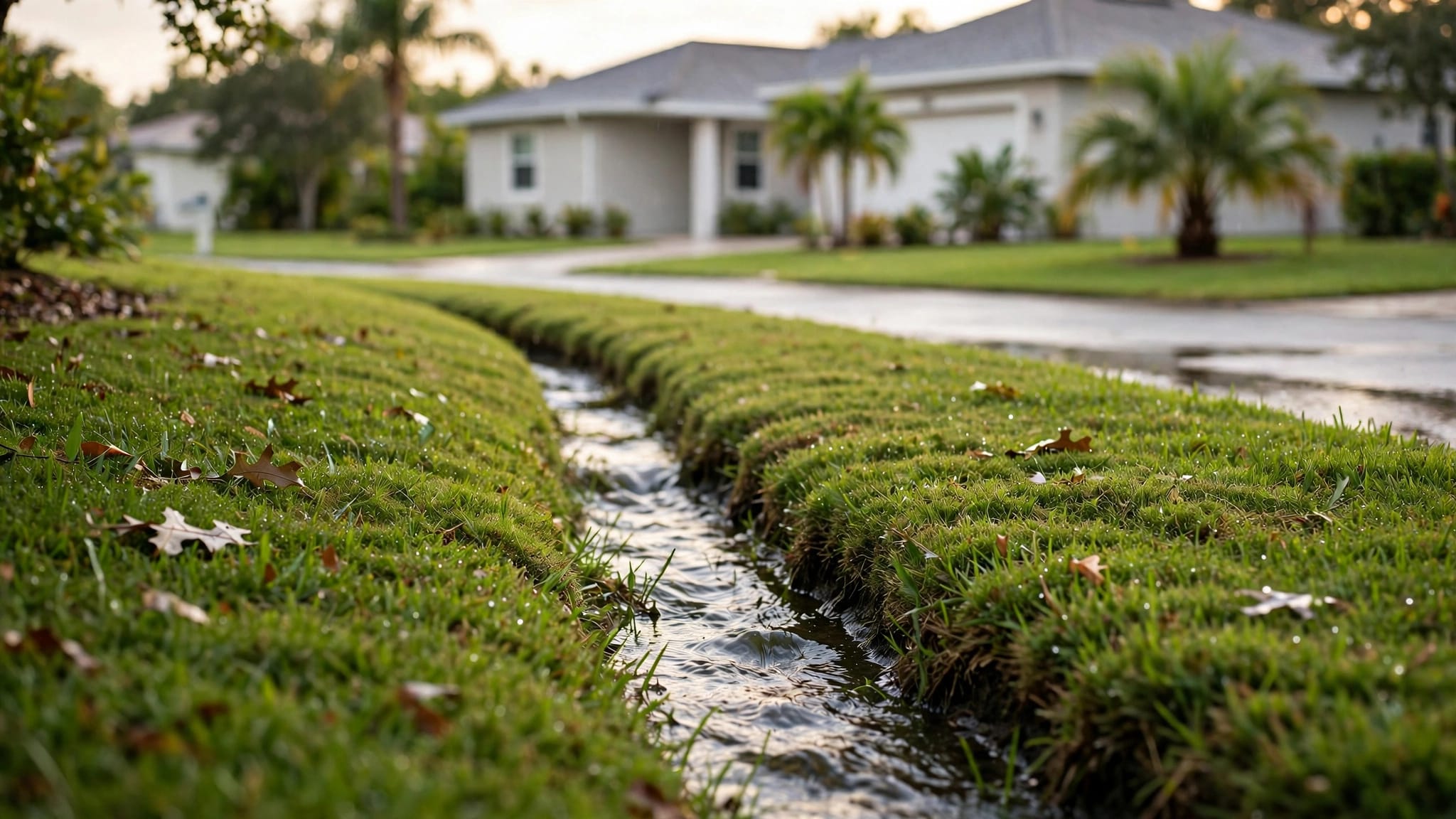
Drainage may be the hidden issue in many waterfront beds. If water sits after storms, roots suffer even when the plant is "salt tolerant." Before you plant near a dock walk or slab, a local concrete company should correct bad pitch or trapped runoff. That's where trusted concrete services in Cape Coral can fit into the bigger yard plan.
Some side yards also work better with mixed materials. A strip of salt-tolerant plants beside shell, gravel, or even artifical turf can reduce irrigation needs and keep the space neat. If you're weighing that option, look at low-maintenance turf solutions Cape Coral and make drainage part of the decision.
Near lanais and pool decks, keep mulch, soil, and fertilizer off the surface. That makes paver cleaning easier and keeps hardscapes from looking dingy after summer rain.
Waterfront yards don't need fragile tropicals to look lush. They need plants matched to the right kind of salt, the right drainage, and the right spot on the lot.
Build from the water inward, with the toughest natives first. Then your landscaping has a much better shot at looking good after dry season, storm season, and the next windy week.