


Why Pool Coping Comes Loose in Cape Coral Homes
Pool coping does more than frame the water. When it starts to move, it usually means the edge is under stress. In Cape Coral, heat, rain, sandy soil, and older deck builds can make that problem show up sooner than many homeowners expect.
A loose section is easy to ignore at first. Yet a small gap can turn into a trip hazard, a stain line, or a water path that reaches the base of the pool. The good news is that many cases are fixable if you catch them early.
Why pool coping loosens faster in Cape Coral
Cape Coral gives pool edges a tough job. The weather stays warm for long stretches, afternoon rain can be heavy, and many homes sit on sandy fill or canal-adjacent lots. That mix puts constant pressure on the bond between the coping, the deck, and the pool shell.
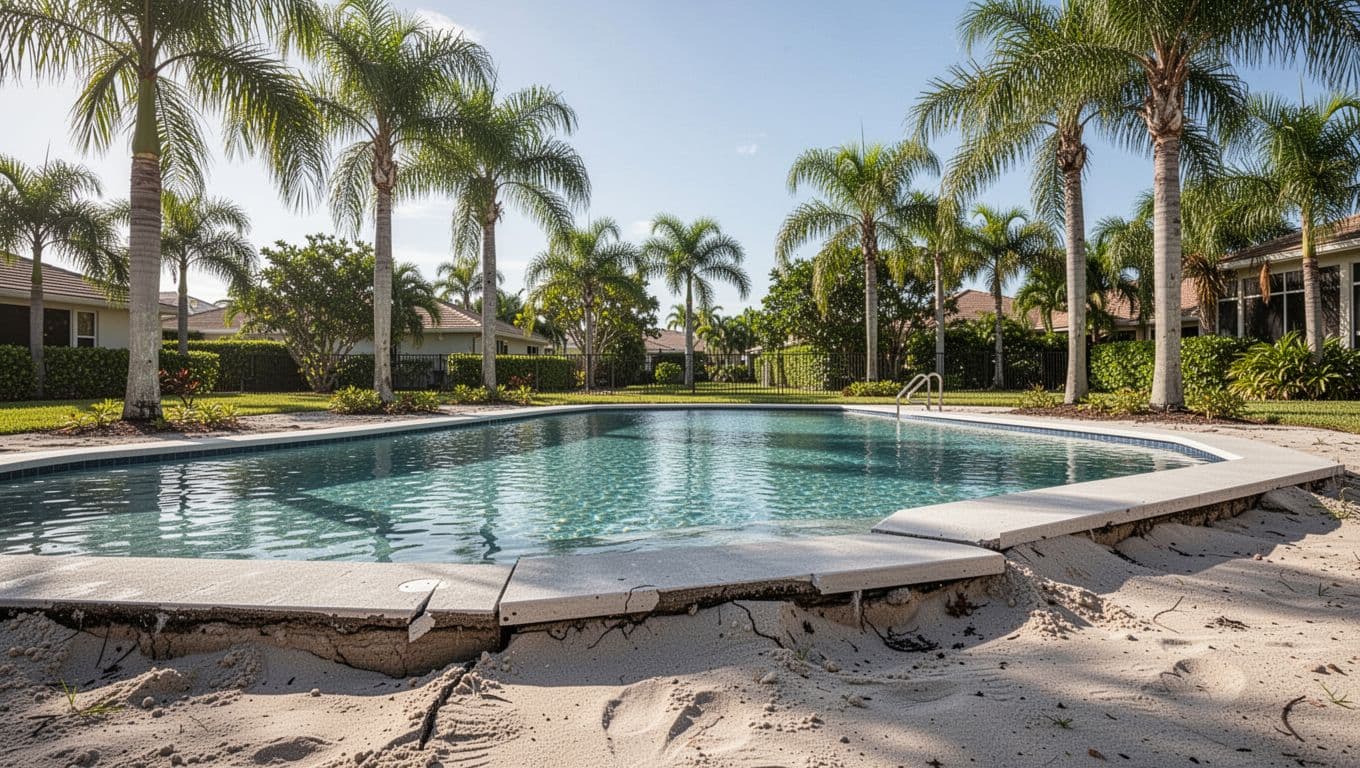
Heat makes concrete, stone, and mortar expand. Night cooling makes them contract. That movement is small, but over time it works like a slow tug on the edge. If the original install had weak mortar, thin adhesive, or poor compaction underneath, the coping can start to separate.
Water is the other big factor. Heavy rain, splash-out, and pool leaks can seep into tiny cracks. Once that water gets under the coping, it can wash out sandy base material. In other words, the surface may look fine while the support below is already failing.
Older pools often show the problem first at the edge because that is where stress gathers. If the deck was poured tightly against the coping without room for movement, the pieces may push against each other until the bond breaks. Salt air and pool chemicals can add to the wear, especially where sealers have broken down.
A loose coping stone is often a warning sign, not the whole problem. The real issue is usually movement below the edge or water that found a path under it.
The signs your coping is starting to move
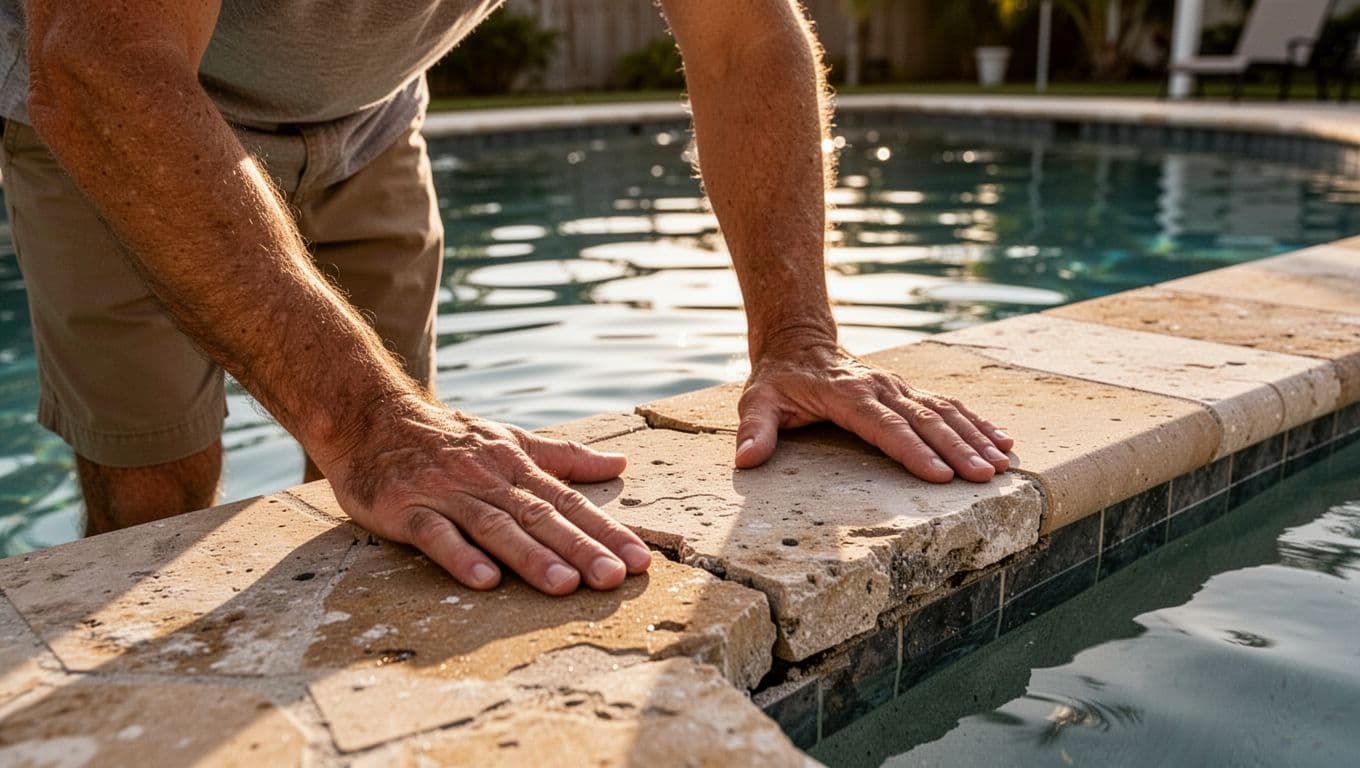
Most homeowners notice the change before they know the cause. A coping piece may rock under a foot, or a narrow gap may open between the coping and the pool shell. Sometimes the first clue is a hollow sound when you tap the edge lightly.
Watch for these signs around the pool:
- A rocking or shifting edge when you step near it
- Cracks in the mortar joint or a missing grout line
- White mineral buildup where water keeps passing through
- Uneven heights between adjacent coping pieces
- Standing water near the pool after rain
- Small chips or crumbs of mortar near the deck
A single loose section does not always mean a major failure. Still, multiple loose spots in a row usually point to settlement, drainage trouble, or a base that has started to wash out.
The biggest risk is not cosmetic. A raised edge can catch a bare foot, and a gap can trap water where it should not stay. Once water starts moving under the edge, the repair often grows.
What homeowners can check safely
A quick inspection can tell you a lot. Walk the full pool perimeter and look at the coping from several angles. Check after a hard rain if you can, because drainage issues show up faster when the ground is wet.
Use a simple, careful approach:
- Press down lightly on the coping near any visible gap.
- Look for pieces that move more than the rest.
- Check for cracks in nearby deck joints.
- Notice whether certain spots stay wet longer than others.
- Take photos so you can compare changes over time.
Do not pry up a coping piece yourself. That can break the bond beam, widen the gap, or damage the tile line. Also avoid aggressive pressure washing at the joint. High pressure can push water deeper into the problem.
If you see a loose edge beside a crack in the deck, the issue may be bigger than the coping alone. Water may be moving through the slab or washing out the base. That is when a professional should take a closer look.
Repair options that usually make sense
The right fix depends on what failed under the surface. A small, isolated section may only need to be lifted, cleaned, and reset with proper mortar or adhesive. If the base has washed out, the area often needs to be rebuilt before the coping goes back in place.
Here is a simple way to think about the common repair paths:
| What you notice | What it often means | Common repair approach |
|---|---|---|
| One loose piece | Bond failure or minor movement | Reset the coping and rebuild the joint |
| Several loose pieces in a row | Settlement or drainage trouble | Remove the section, inspect the base, reset with proper support |
| Hollow sound under the edge | Voids below the coping | Fill the void and reattach the edge correctly |
| Cracks in the deck beside the pool | Slab movement or poor slope | Repair the concrete and correct drainage |
| Persistent gaps after rain | Water intrusion or washout | Address the source of water before resetting the coping |
If the deck is concrete, a Cape Coral concrete contractor can inspect the slab edge, slope, and bond area. That matters because the coping and the deck often fail together.
When the pool area has pavers, the border may need a reset before the coping repair holds. In that case, paver installation and repair helps restore the edge so the finished surface sits at the right height and stays stable.
A proper repair should not cover up movement. It should correct the reason the coping came loose in the first place.
How to lower the chance of repeat damage
The best prevention starts with water control. Pool edges stay healthier when runoff drains away from the shell instead of toward it. That means the surrounding grade, deck slope, and drainage paths need to work together.
Regular upkeep helps too. Keep paver cleaning on a steady schedule so joints do not trap dirt and moisture against the coping. Re-seal materials when needed, and look at the edge after storm season. Small cracks are easier to fix before they pull the surface apart.
If the pool area is part of a larger update, think about the whole layout, not just the coping. Good landscaping can move water away from the pool and reduce splash-back from beds or hard edges. If you are changing the lawn around the pool, sod and artificial grass installation can help create cleaner drainage zones around the deck.
That same planning matters if you are comparing pavers, concrete, sod, or artifical turf. Every surface should support the edge instead of trapping water against it. A stable border, sound drainage, and the right materials do more for pool coping than any quick patch.
Conclusion
Loose coping in Cape Coral usually points to a mix of water, heat, and soil movement. Sandy ground, strong sun, heavy rain, and older installs all put pressure on the pool edge, so a small gap can grow faster than most homeowners expect.
The best first step is a careful look, not a guess. If the coping rocks, the joints crack, or the surrounding deck shows movement, the problem may go deeper than the surface. Catching it early keeps the repair smaller, safer, and much easier to handle.