


Best Cape Coral Plants for Foundation Beds
Cape Coral heat can turn the wrong shrub into a weekly chore. The best Cape Coral foundation plants stay neat, handle humidity, and keep the front of the house looking finished without constant trimming.
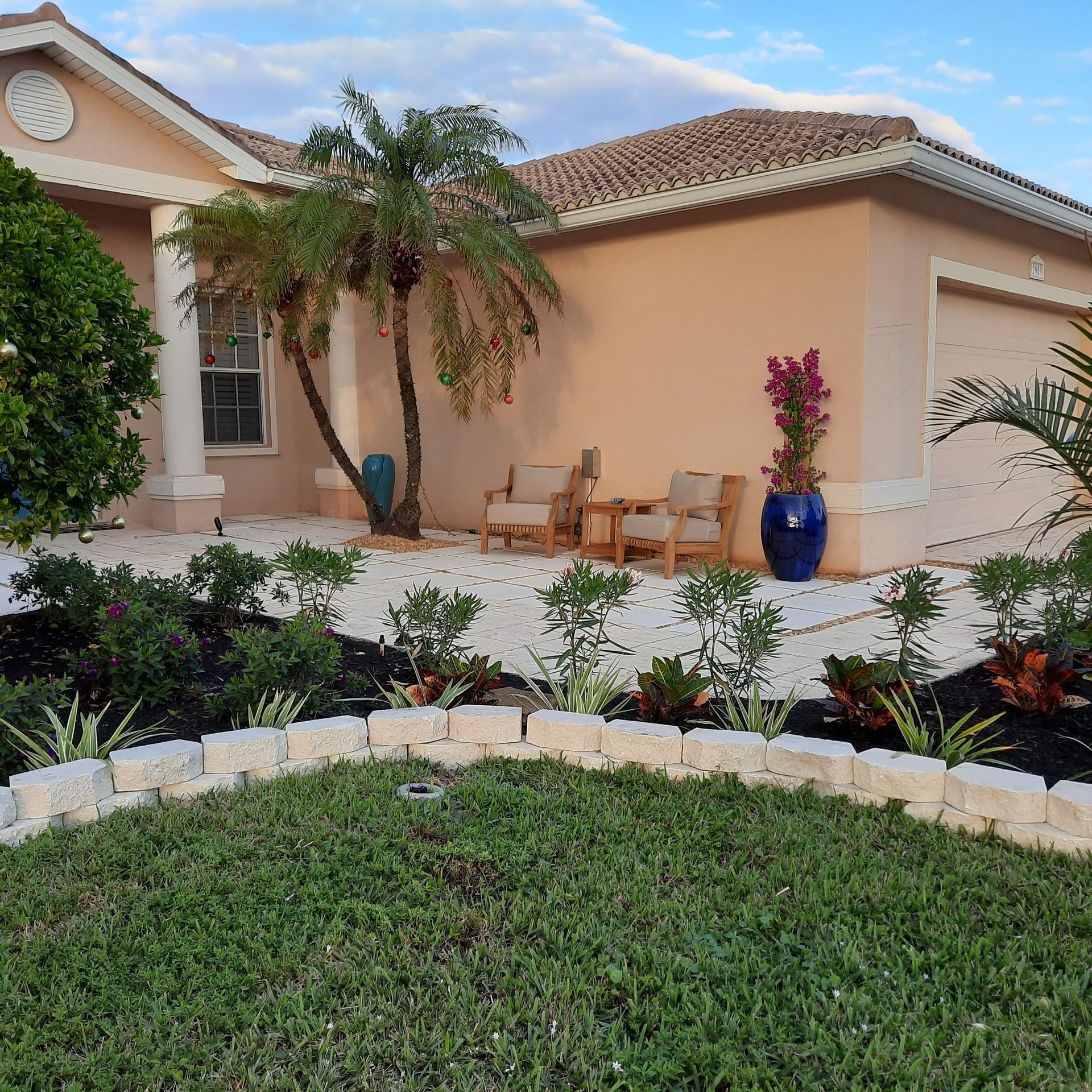
That matters even more near stucco walls, windows, concrete edges, and paver borders. A good foundation bed should frame the home, not fight it.
If the whole front yard needs a reset, professional landscaping services in Cape Coral can help match the planting plan to the rest of the property. The right mix of plants, mulch, and hardscape keeps maintenance low and curb appeal high.
Why Cape Coral foundation beds need a different plant plan
Cape Coral sits in a hot, humid zone where many popular shrubs grow too large or get scruffy fast. Plants near the house need to handle USDA Zones 10b to 11a , full sun, reflected heat, salty air, and sudden rain. They also need room to breathe, because tight beds trap moisture and invite mildew.
That is why Florida-friendly landscaping works so well here. It starts with the right plant in the right place, then adds mulch, sensible irrigation, and enough space for mature size. Skip invasive plants that spread beyond the bed and crowd out the design.
A pretty plant that outgrows the bed is a maintenance problem, not a win.
A clean layout also makes the rest of the front yard easier to keep in shape. That includes paver cleaning, bed edging, and any new concrete borders or walkways a concrete company may install before the plants go in.
Plants that hold up near the house
Simpson's stopper
Simpson's stopper is one of the safest evergreen picks for Cape Coral. It likes full sun to part shade, and it usually reaches about 6 to 10 feet if you let it grow. That size works well behind lower plants near a wall, because the shrub gives structure without looking bulky.
Its small white flowers and red berries add quiet color, and birds like the fruit. Keep it a few feet off the wall, though, because a crowded stopper can spread wider than people expect. Light pruning keeps it compact and tidy.
Dwarf cocoplum
Dwarf cocoplum gives a softer hedge look and handles coastal conditions well. It grows in sun or light shade, and many landscape forms stay around 4 to 6 feet when trimmed. That makes it a strong choice for foundation beds that need a dense green backdrop.
The glossy leaves look clean against a modern home or a white stucco wall. Still, it can widen more than planned if you ignore it. Give it room to breathe, and prune it before it starts pushing into windows or walk paths.
Plumbago
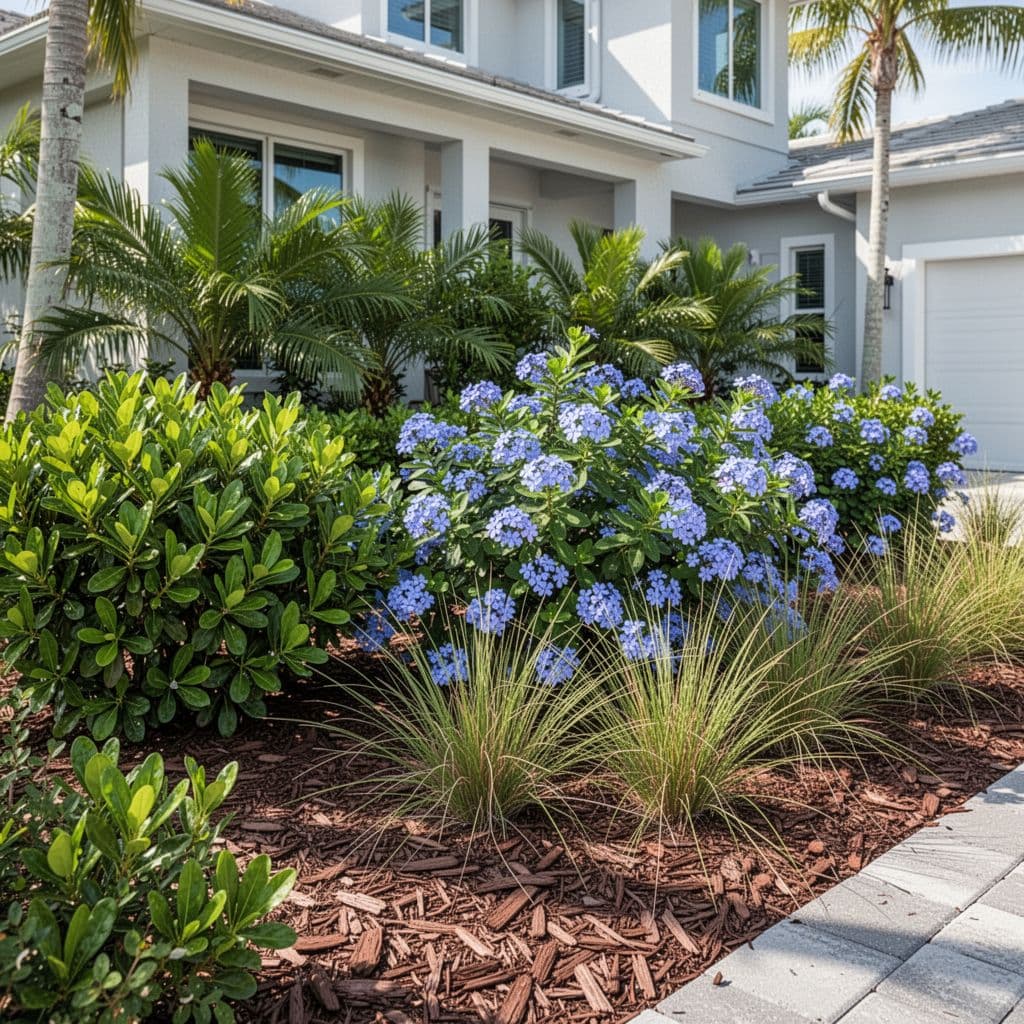
Plumbago is a favorite for homeowners who want color without a fussy plant. It likes full sun to light shade, and it usually reaches 3 to 5 feet tall and wide. The pale blue flowers soften sharp bed lines, so the front of the house feels less rigid.
The UF/IFAS plumbago profile notes that it works well as a foundation planting in Zones 9 through 11. That fits Cape Coral well. Watch for leggy growth, because plumbago can flop if it gets too much shade or too little trimming.
Dwarf ixora
Dwarf ixora brings a true tropical look to foundation beds. It prefers sun with some afternoon shade, and it usually stays around 3 to 4 feet tall. That size works well near entry points, where its bright flower clusters can stand out without blocking views.
It does need a little more care than some of the other plants here. Ixora likes regular feeding, decent soil, and protection from cold snaps. Yellow leaves often point to poor soil chemistry or a lack of iron. In the right spot, though, it looks polished and colorful all year.
Coontie
Coontie is a slow, low evergreen that fits clean foundation lines well. It stays about 2 to 3 feet tall, so it works near the house without hiding windows or crowds of taller shrubs. It also handles heat and dry periods better than many showier plants.
The look is simple, native, and tidy. That makes coontie a strong match for homeowners who want a restrained front bed instead of a dense jungle. The slow growth is part of the appeal, but it also means gaps fill in slowly. Keep it out of heavy foot traffic, and remember that it is toxic if eaten.
Perennial peanut
Perennial peanut is one of the best groundcovers for a sunny foundation bed. It grows only 4 to 6 inches high, spreads across bare soil, and sends up small yellow flowers through the warm season. It helps cut down weeds, which makes weekly upkeep easier.
This plant fits Florida-friendly landscaping because it handles heat and short dry spells after it settles in. It also works well at the front edge of a bed, where taller shrubs need a low partner. Give it space to spread, because it takes time to knit together. It is not a good fit for deep shade.
Blue daze
Blue daze stays low, usually around 6 to 12 inches high, and it likes full sun with sharp drainage. The sky-blue flowers are a great way to soften a paver edge, a mulch line, or a front walk. It gives color without blocking the house.
That makes it useful in narrow beds where taller plants would feel cramped. Blue daze can thin after cold snaps, and too much water makes it floppy. For a tidy front bed, place it at the edge and let a sturdier shrub do the back-row work.
How to place shrubs, flowers, and groundcovers the right way
Good landscaping near a foundation starts with spacing. Start by thinking about the plant at maturity, not the size of the nursery pot. A small shrub may look tiny on planting day, but it can fill a bed fast in Cape Coral heat.
A simple spacing plan works well:
- Keep small plants and groundcovers at least 18 to 24 inches from the wall.
- Leave 3 to 5 feet for shrubs that will reach four feet or more.
- Keep window lines clear so the house still gets light.
- Leave about 3 feet around HVAC units so air can move freely.
If your front walk or driveway needs clean lines, a concrete company can set a crisp edge before planting begins. That matters because rough borders make even healthy landscaping look unfinished. The same idea applies to pavers. Keep paver cleaning on the schedule so dirt, algae, and mulch do not drag down the whole front entry.
Some narrow side strips work better with hardscape or lawn solutions than with shrubs. In those spaces, sod and artificial grass installation can be a smart companion to the main beds. In very tight areas, artifical turf can cut down on mowing, but it should not replace real foundation planting where the house needs softening.
Matching plants to a modern, coastal, or tropical front yard
The best foundation plants also match the style of the home. A modern house usually looks best with fewer plant types, strong shapes, and a cleaner color palette. Simpson's stopper, coontie, and dwarf cocoplum fit that look because they stay calm and structured.
Coastal homes usually benefit from lighter textures and a softer color mix. Plumbago, blue daze, and perennial peanut work well here because they add blue flowers, low mounds, and open space. That combination feels breezy instead of crowded.
Tropical homes can handle more color and leaf texture. Dwarf ixora brings bright flowers, while cocoplum and Simpson's stopper keep the bones of the bed in place. The trick is balance. Too many bold plants in one small bed can feel noisy, especially near concrete, stucco, or a small porch.
A helpful rule is simple. Use one evergreen structure plant, one flowering plant, and one low groundcover in each main section. That gives the bed depth without turning it into a jungle. It also makes maintenance easier when the weather pushes growth fast.
Conclusion
Cape Coral foundation beds work best when the plants stay in scale with the house. That means choosing heat-tolerant, humidity-tolerant, low-maintenance plants that can handle the local climate without constant rescue work.
If you build the bed around sturdy evergreens, add one or two flowering plants, and finish with a good groundcover, the front of the home will look settled for years. Start with mature size, leave room for airflow, and keep the hardscape clean. That is how a front yard stays sharp in Southwest Florida.