


Swale Installation Cost in Cape Coral, FL: 2026 Pricing Guide
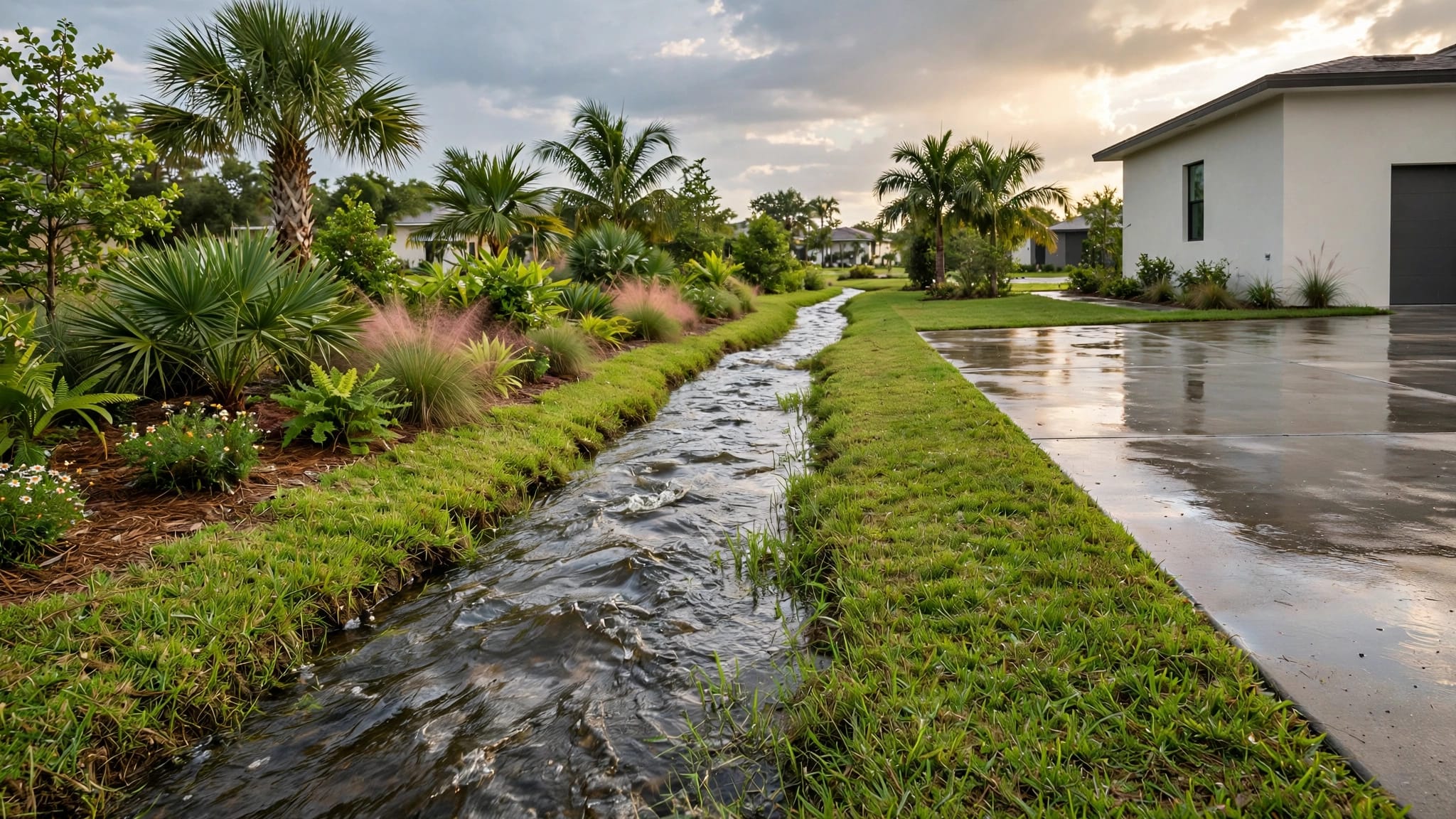
If your yard turns into a shallow lake after a hard storm, you're not alone. In Cape Coral, water moves fast in summer and then seems to sit forever in the wrong spots. A properly shaped swale fixes that by giving runoff a "lane" to follow, like a gutter for your lawn.
For most homes, the swale installation cost in Cape Coral in 2026 lands in the $900 to $1,800 range for a typical residential job. Smaller touch-ups can be less, while longer runs and messy restoration can push the total higher. This guide explains what drives pricing, how to compare bids, and what to demand in writing before any dirt gets moved.
What a swale does in Cape Coral, and the assumptions behind these prices
A swale is a shallow, grass-lined channel that guides rainwater away from your home, patio, and low areas. It's not meant to look like a ditch. A good swale looks natural, mows easily, and keeps water moving toward a legal discharge point (often the street or an existing drainage path).
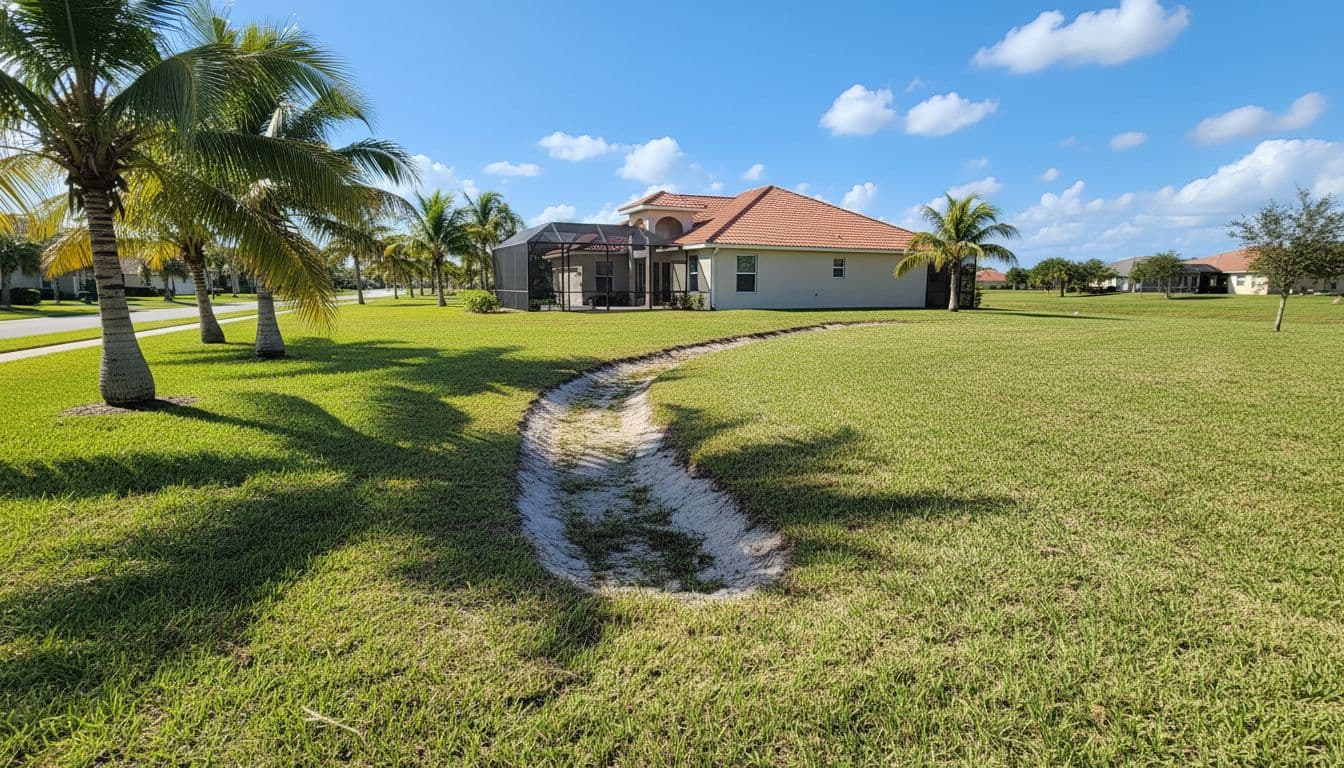
To keep this pricing realistic, the ranges below assume a common Cape Coral setup:
- Typical residential lot : 1/4-acre neighborhood lot with standard side-yard access.
- Access : equipment can reach most areas (tight gates raise labor).
- Soil : sandy soil, sometimes wet or loose in low spots.
- Disposal distance : haul-off and disposal within about 10 miles (longer drives add cost).
- Scheduling : work done in the drier window (March is usually easier), with rainy-season jobs often taking longer and costing more.
If your project is really a re-slope of the whole yard, a swale might be only one piece of the fix. For broader drainage budgeting, compare it with Cape Coral yard grading costs for drainage.
A swale works when it has one clear job: collect water and send it somewhere on purpose. If the discharge point is vague, the plan is vague.
2026 swale installation cost ranges, plus the line items that move your total
Most homeowners want one number, but swale pricing is really a stack of smaller decisions. Length matters, but restoration and access often matter just as much.
Here's a quick pricing snapshot you can use to sanity-check quotes:
| Swale scope (installed) | Typical Cape Coral size | 2026 price range (USD) | What usually drives the range |
|---|---|---|---|
| Small shaping or repair | 30 to 60 linear ft | $400 to $900 | simple dig and grade, minimal sod work |
| Typical residential swale | 50 to 120 linear ft | $900 to $1,800 | shaping, compaction, basic restoration |
| Longer roadside run | 150 to 200 linear ft | $1,800 to $3,500+ | length, street edge transitions, more cleanup |
Now the real question is, what's inside that total? These are the cost factors that show up again and again in Cape Coral bids:
Itemized cost factors (what you're actually paying for)
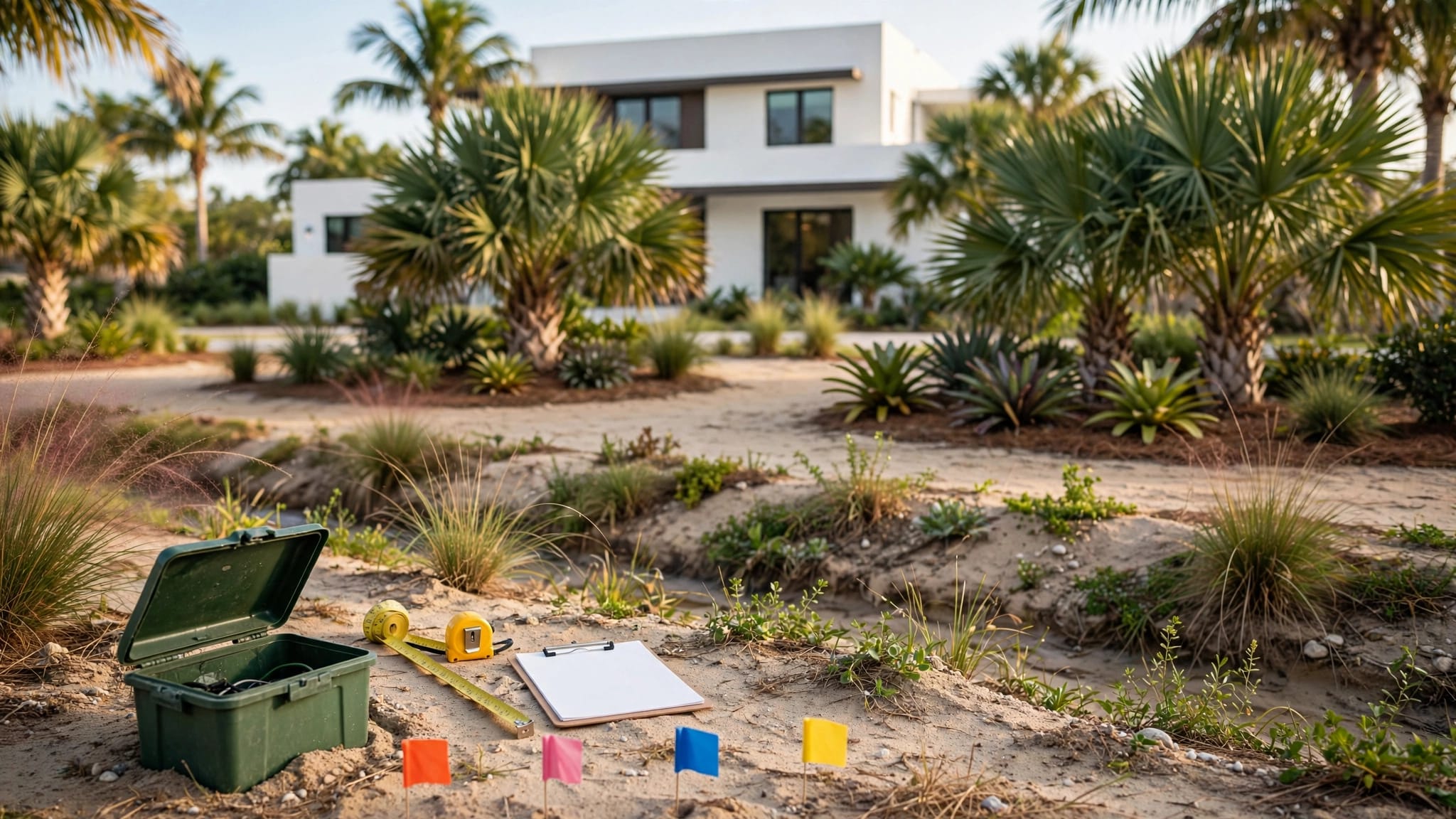
Layout and grade planning : The crew has to confirm slope, tie-in points, and where the water will exit. This can be quick, or it can take time if the lot is flat.
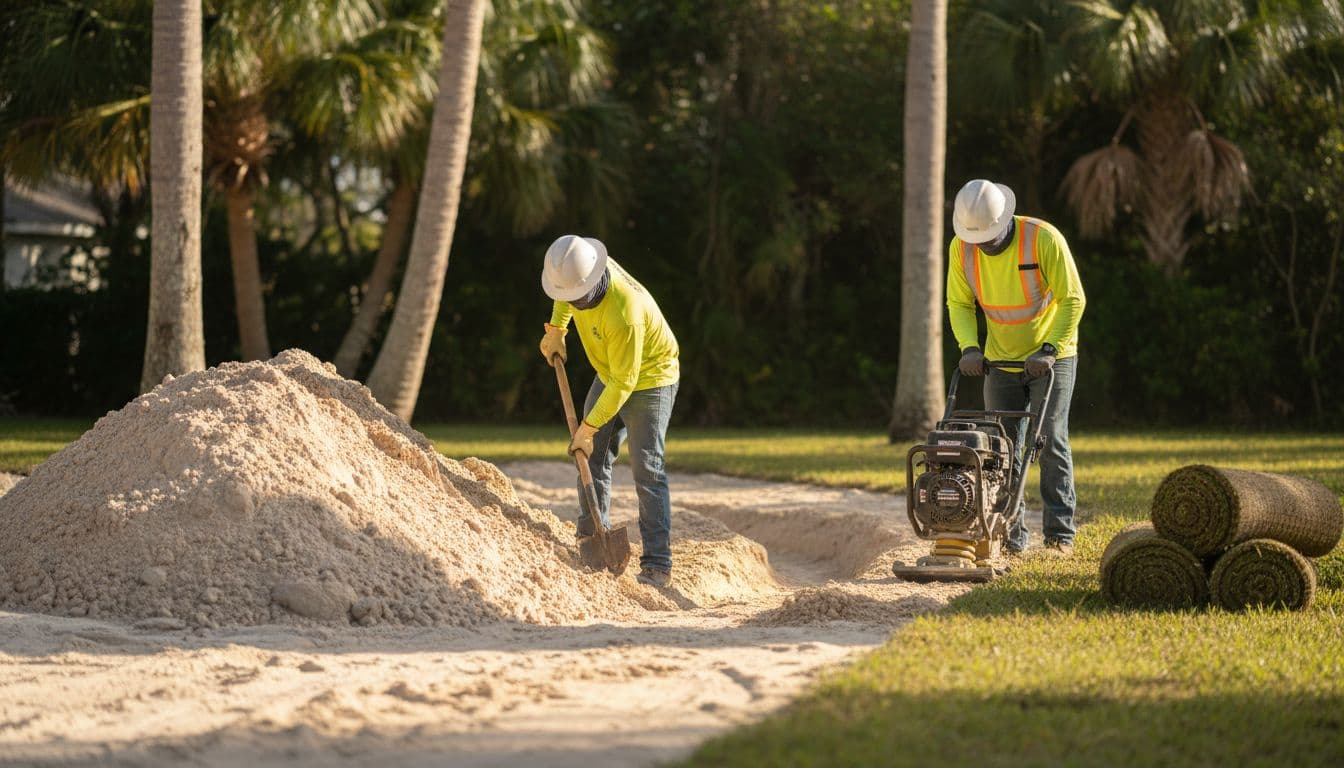
Excavation and shaping : Digging is straightforward in sand, but wet sand slumps. If the ground is saturated, crews may need extra passes to get clean lines.
Compaction and soil conditioning : Swales fail when the bottom turns into a soft rut. Light compaction and clean shaping help the swale keep its form.
Haul-off and disposal : If soil has to leave the site, the distance and dump fees matter. Some projects avoid haul-off by redistributing soil on-site.
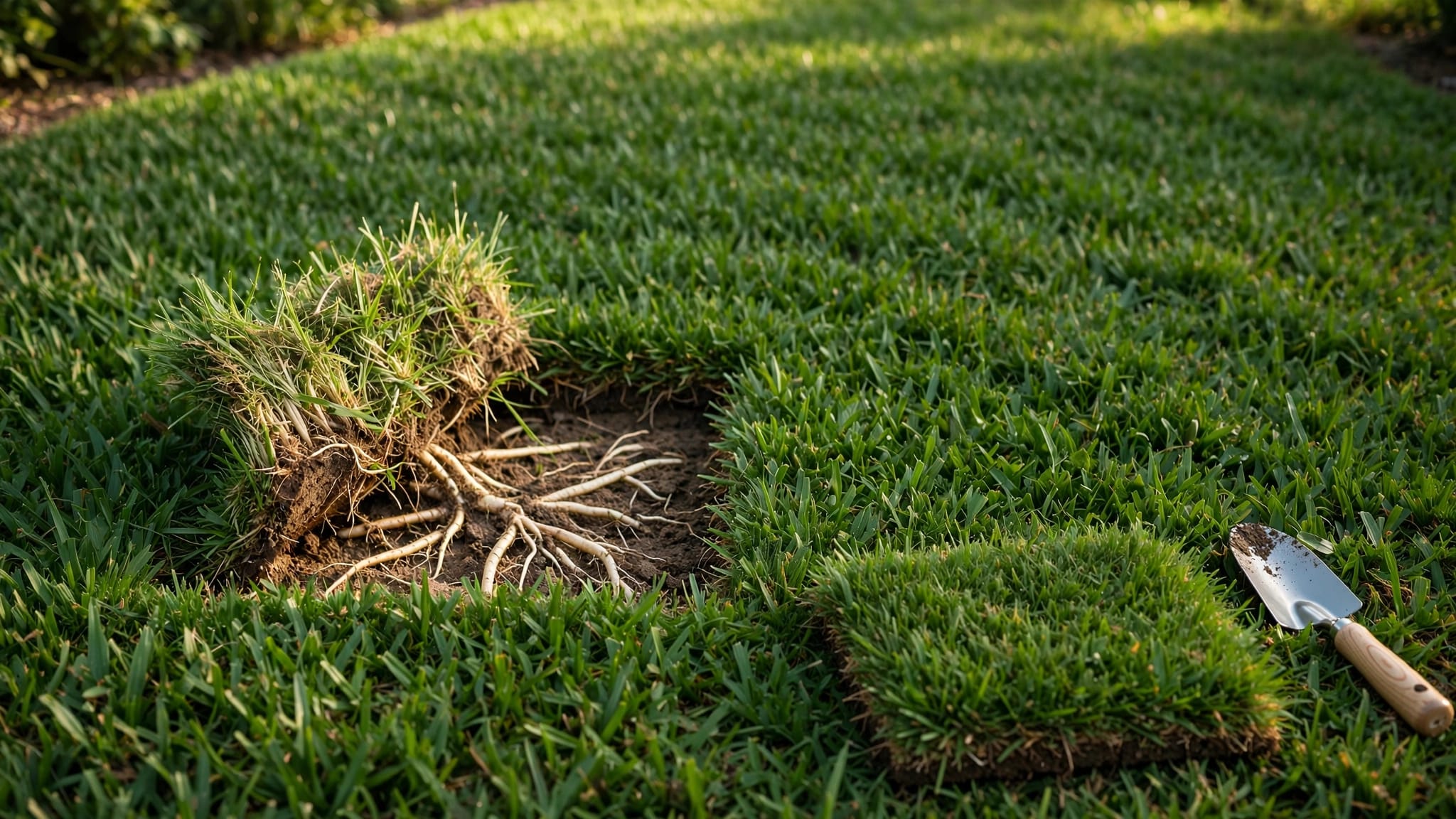
Restoration (often the surprise cost) : Sod replacement, bed repair, and irrigation touch-ups can cost as much as the digging. This is where "cheap" bids often hide the gap.
Permits and compliance (when needed) : Some locations or scopes call for permit steps or drainage review. If a contractor says "no one pulls permits here," push back and verify what applies to your address.
Quick internal summary
- Expect most typical jobs to land around $900 to $1,800 .
- Rainy-season scheduling can add time and labor , especially in low, wet yards.
- Restoration and access commonly decide whether you're at the low end or high end.
Sample estimate scenarios (small swale, long roadside swale, bioswale upgrade)
Use these as "compare to my quote" examples. They're written like homeowner scopes, not contractor jargon.
| Scenario | What's being built | Typical 2026 range (USD) | Notes |
|---|---|---|---|
| Small front-yard swale | 75 lf shallow swale to street, open access | $600 to $1,200 | often simple shaping with light sod repair |
| Long roadside swale | 180 lf along street edge, more restoration | $1,800 to $3,500+ | longer run, driveway tie-ins, more cleanup |
| Bioswale upgrade | 120 lf swale with amended soil and plants | $3,000 to $7,000 | adds filtration features and more maintenance planning |
A "bioswale upgrade" is basically a swale that also filters runoff using soil, stone, and plants. It can be worth it when water carries sand, mulch, or fertilizer runoff toward drains, but it costs more because the finish work is more detailed.
One more real-life note: swales often touch other outdoor features. If the swale runs near your driveway or sidewalk, you may need clean transitions so water doesn't undermine hard edges. That's where coordination with a concrete company pays off. If you're already planning concrete work, this driveway control joint placement guide helps you understand how drainage and slabs affect each other.
How to reduce swale cost without weakening drainage (plus bid red flags)
You can cut cost, but don't cut the parts that make water move.
Smart ways to save money
Keep the plan simple. A clean, mowable shape usually outperforms a complicated channel with random dips.
Do restoration in phases. For example, you can have the contractor shape and grade, then you handle some landscaping cleanup if you're comfortable laying small sod patches.
Schedule for drier weather when possible. March through spring often gives you a better work window. In rainy season, wet soil slows grading and makes clean finish work harder.
Bundle work the right way. If you want paver cleaning , do it after swale work, not before, because equipment tracks and sand wash can stain surfaces. Pricing and timing details are covered in paver cleaning and resealing costs in Cape Coral.
Be careful with "pretty" surface fixes. Some homeowners switch a soggy side yard to artifical turf , but it still needs correct grade and a stable base. If you're weighing that option, compare budgets using artificial turf installation costs in Cape Coral.
Red flags in contractor bids
A bad swale bid reads like a magic trick, lots of hand waving, no measurements.
- No lineal footage listed : if they won't measure it, they can't price it fairly.
- No stated discharge point : "It'll drain better" isn't a plan.
- No grade details : you want target slopes, not guesses.
- Restoration is vague : "repair lawn as needed" often means "not included."
- Cleanup isn't defined : you shouldn't be left with piles of spoil and torn sod.
Quick "cost calculator" checklist (fill this in before you call for quotes)
- Swale length (linear feet): ______
- Average swale width (feet): ______
- Access: wide gate / narrow gate / no machine access: ______
- Soil condition: dry sand / wet sand / soft low spots: ______
- Restoration needed: none / spot sod / full sod section: ______
- Haul-off needed: yes / no (distance about ____ miles): ______
- Rainy-season scheduling (June to Sep): yes / no: ______
- Near hardscape (driveway, patio, pavers): yes / no: ______
Questions to ask, and what your written quote should include
Ask these before you sign. You'll get clearer answers, and you'll avoid the "that wasn't included" surprise.
- What is the total lineal footage and where does it start and end?
- What grades will you set (high point, low point, and direction of flow)?
- How will you compact and shape the swale so it holds form after storms?
- What sod type will you install, and how will seams be handled?
- How will you protect existing landscaping and irrigation lines?
- What warranty covers settling, rutting, or poor drainage performance?
- What cleanup is included (haul-off, smoothing, debris removal)?
Your written quote should list: lineal footage, target grades or slope notes, compaction approach, disposal plan, sod type, warranty terms, and cleanup scope.
Conclusion
A swale is simple in theory, but it has to be built with intent. In Cape Coral, the swale installation cost usually sits between $900 and $1,800 in 2026, then moves up based on length, access, and restoration. Get an itemized scope, confirm where water will discharge, and keep your finish work planned around rainy-season timing. Prices vary by yard, so get 3 local quotes before choosing, then pick the contractor who measures, explains, and puts it all in writing.