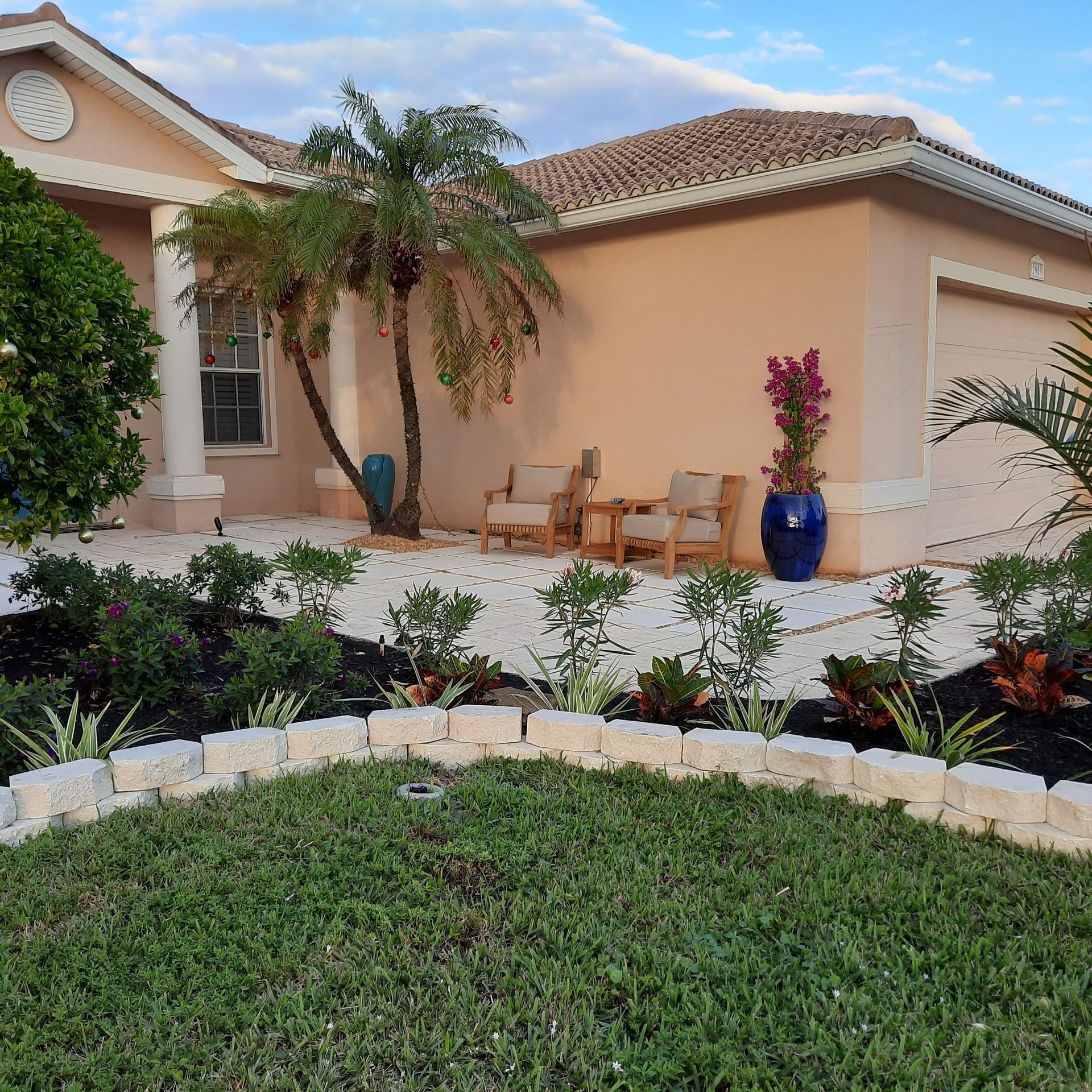



How to Stop Weeds Between Pavers in Cape Coral
Cape Coral rain can turn a clean patio into a weed patch fast. Once seeds find loose joints, they settle in after every storm and grow back before you know it.
That cycle gets worse in hot, humid weather. Damp sand, shaded corners, and a little dirt in the cracks create the perfect spot for weeds between pavers .
The good news is that you can break the cycle with a few simple steps. Start with removal, then lock the joints back down and keep water moving away from the surface.
Why weeds return so fast here
Southwest Florida gives weeds a lot of help. Summer rain pushes sand out of the joints, and that leaves space for seeds to land.
Heat speeds up growth, too. So does debris from palm fronds, mulch, and grass clippings. On shaded patios, the problem can shift from weeds to moss, algae, and mildew.
That is why a quick pull once in a while usually fails. If the joint sand stays loose or low, the weeds come right back.
A solid paver surface needs three things to stay cleaner: tight joints, good drainage, and routine paver cleaning. Without those, the cracks act like tiny planters.
Remove the weeds the right way
Start by pulling what you can by hand. Grab the weed at the base and lift slowly so the roots come out with it.
For stubborn growth, use a narrow weeding tool or stiff putty knife. Work along the full joint, not just the visible top. If roots stay behind, new shoots can return in a week.
- Pull weeds after a rain or light watering, when the soil is softer.
- Sweep away loose dirt, leaves, and seed heads.
- Use a paver-safe spot treatment only where you need it, and avoid spraying nearby plants.
- Rinse lightly, then let the area dry before you refill the joints.
For pet-friendly and plant-conscious care, stay focused on physical removal first. If you do use any treatment, keep pets off the patio until the surface is dry and follow the label directions closely.
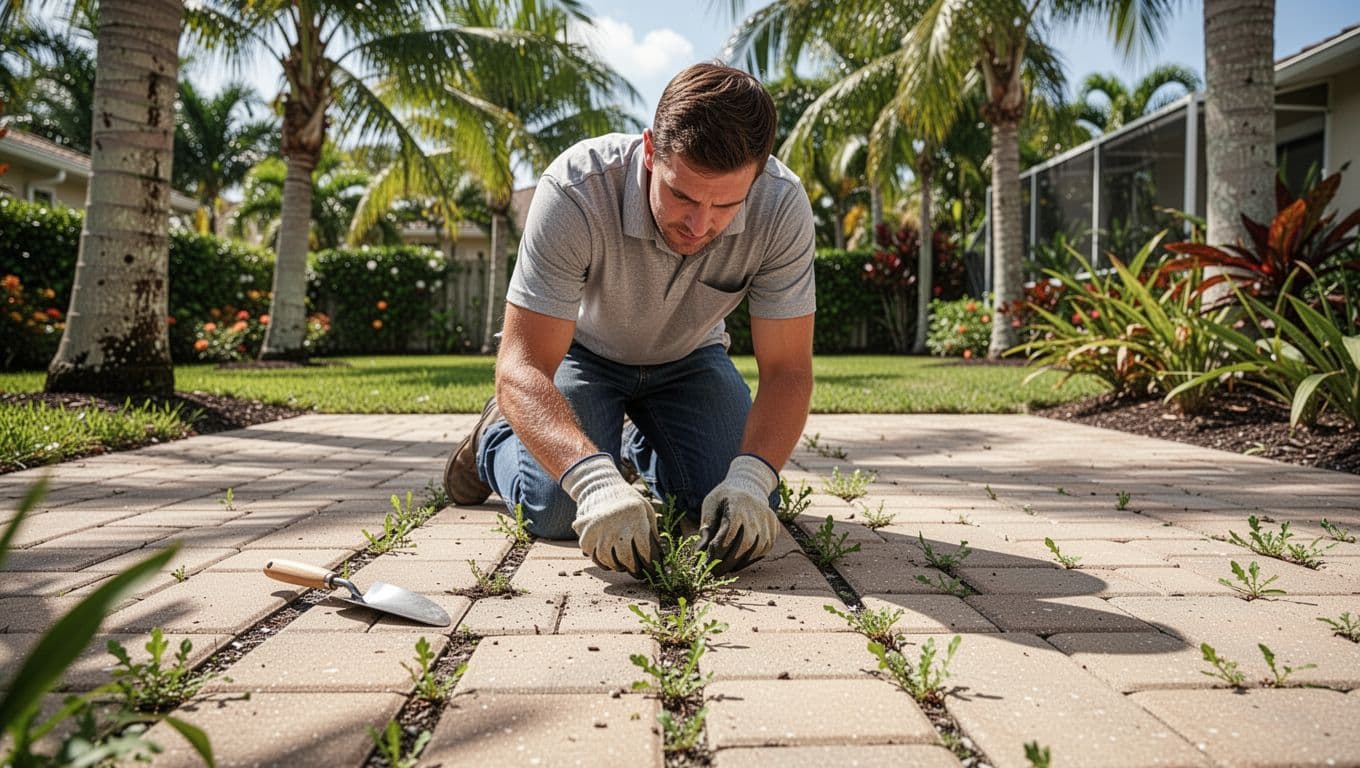
If weeds keep showing up near the edge, check for settled pavers or washed-out sand. A small repair now is easier than a bigger fix later.
Re-sand the joints so seeds have less room
Once the surface is clear, refill the joints before the next rain. Dry, open joints invite seeds, ants, and more erosion.
Polymeric sand works well in many Cape Coral yards because it helps bind the joints after activation. Sweep it in slowly, compact it if needed, and top off any low spots. Then mist it lightly. Do not flood it.
If the joint sand is gone, weeds will return faster after every hard rain.
Take your time here. Too much water can wash the sand out, and too little water can leave the binder weak. Either way, the joints stay open.
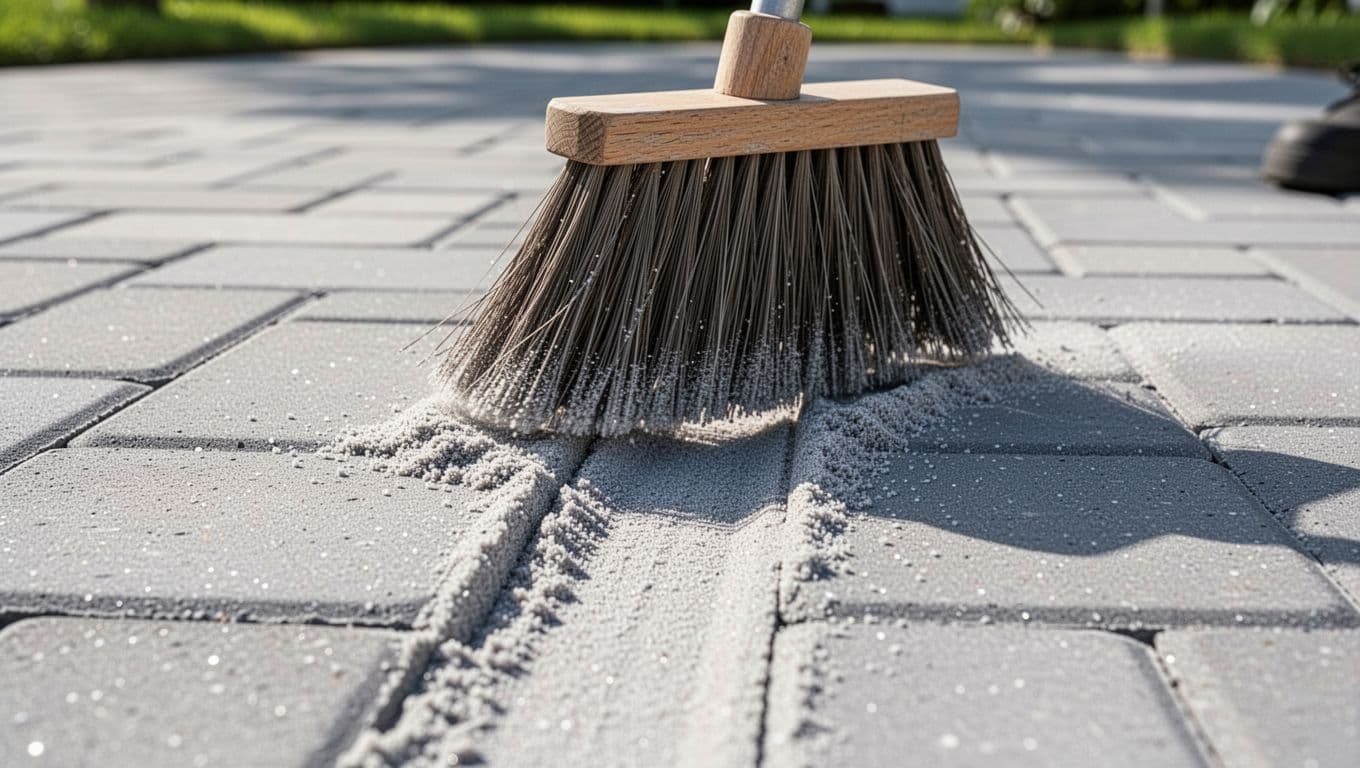
After the sand sets, clean the surface again. That keeps the finish neat and helps the joints cure evenly.
Improve drainage before summer rain brings them back
Weeds love damp, dirty joints. If water sits on the pavers, the problem never really ends.
Check whether your patio slopes away from the house. Look for low spots, pooling water, and clogged drain areas. Even a small dip can keep one section damp long enough for weeds and mildew to move in.
If the base has failed, a proper paver thickness guide for driveways helps explain why some hardscapes stay tight while others sink and spread apart. In some cases, a local concrete company may need to repair a cracked apron or a sunken edge before the pavers can stay level.
Good landscaping also helps. Keep soil, mulch, and groundcover from washing into the joints. Trimming back plants near the edges reduces shade and cuts down on trapped moisture.
Keep a simple maintenance schedule
A little upkeep goes a long way in Cape Coral. You do not need a huge weekend project every month, just a short routine.
| Timing | What to do | Why it helps |
|---|---|---|
| Weekly | Sweep off leaves, dirt, and grass clippings | Stops seeds from settling into joints |
| After heavy rain | Check for washed-out sand or standing water | Catches problems before weeds spread |
| Monthly | Do quick paver cleaning and spot-pull new weeds | Keeps growth from taking hold |
That routine is simple, but it works. Most weeds start with a mess of debris and moisture, not with a giant crack.
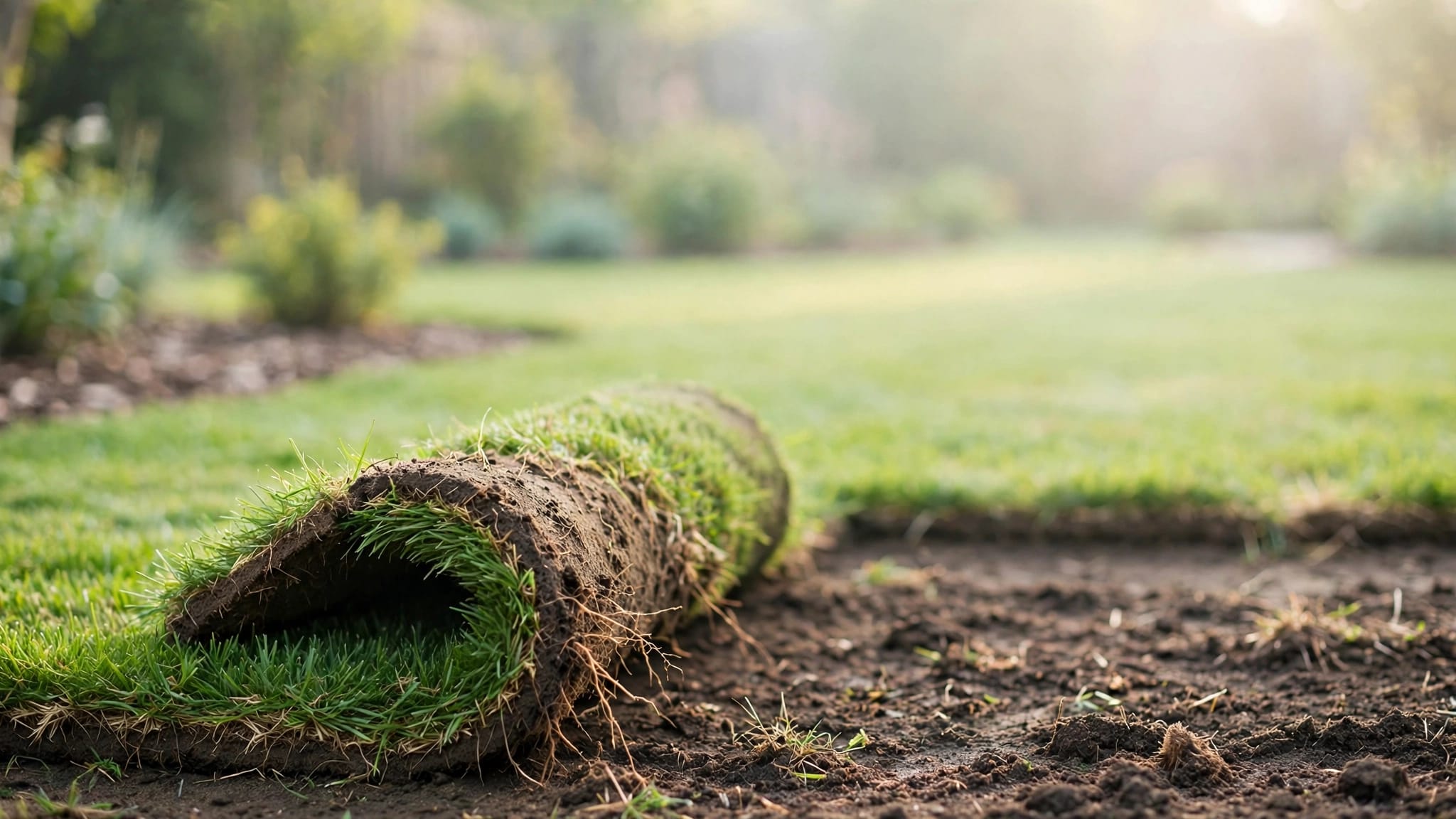
If you're reworking the whole yard, artifical turf can cut down on weed pressure in some smaller spaces. Still, pavers need their own care, especially where the joints collect sand and rain.
When sealing or repairs make sense
Sealing can help once the joints are clean, dry, and refilled. It helps lock sand in place, slows water intrusion, and makes future cleaning easier.
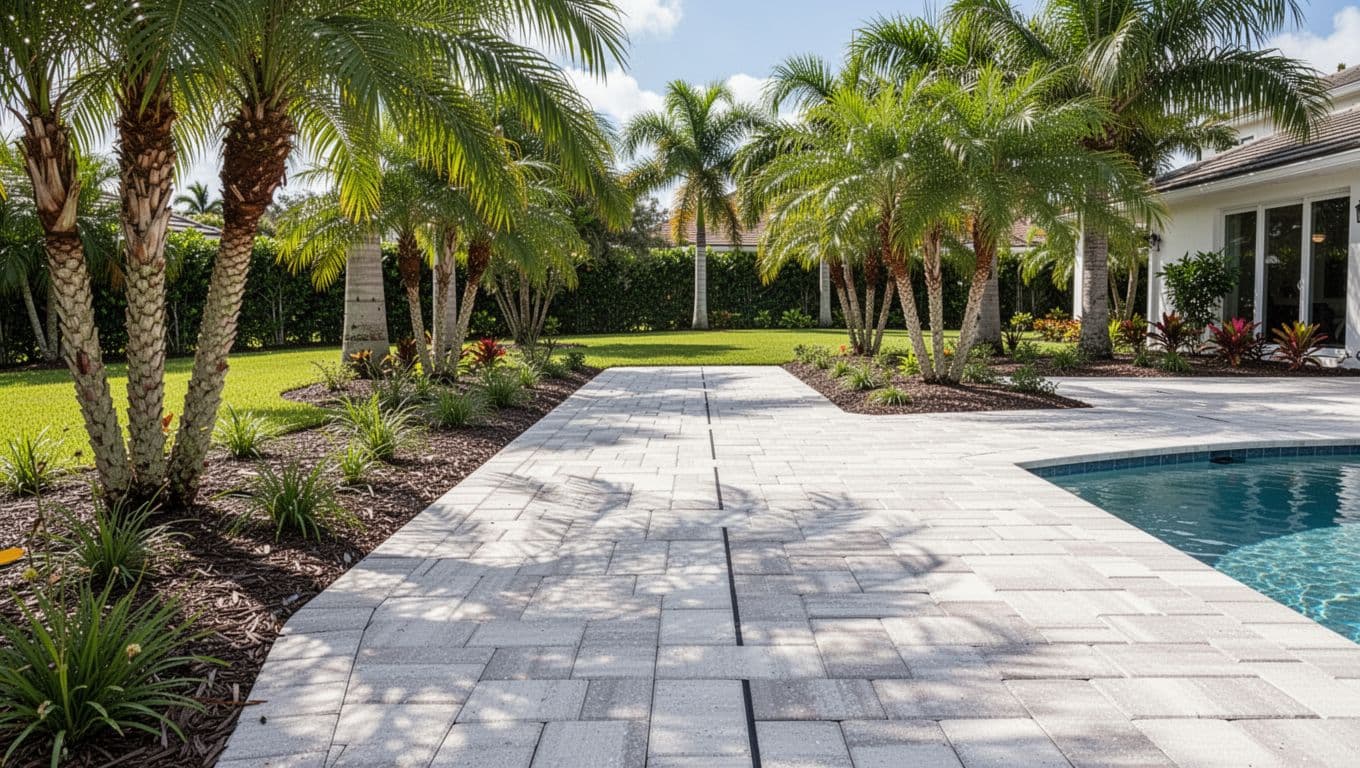
Sealing works best as part of a larger fix, not as a patch over loose, shifting pavers. If the surface rocks, gaps keep opening, or weeds return right after cleanup, professional paver repair services may be the better answer.
That is especially true for driveways and pool decks that take heavy rain and daily use. A repaired, sealed surface usually stays cleaner and needs less work between seasons.
Conclusion
Stopping weeds between pavers in Cape Coral starts with removing what is already there, then rebuilding the joints so new seeds have less room to grow. After that, drainage and routine cleaning do most of the work.
Keep an eye on summer rain, damp corners, and any low spots that stay wet. With the right mix of landscaping , joint care, and timely repair, your patio or driveway can stay cleaner without constant scrubbing.