


Paver Driveway vs Concrete Driveway Cost in Cape Coral (2026)
Sticker shock hits fast when you're planning a new driveway in Cape Coral. In 2026, concrete usually costs less upfront, while pavers often cost less to live with over time. That difference matters when you're dealing with heavy rain, strong sun, salty air, and sandy soil.
So, which one is the better buy? For most homeowners, it comes down to paver driveway cost today versus repair and upkeep later. Here's a practical look at both.
Cape Coral driveway prices in 2026, side by side
These ranges reflect typical March 2026 pricing for new residential driveway installation in Cape Coral.
| Driveway type | Installed cost per sq ft | Approx. total for 450 sq ft |
|---|---|---|
| Concrete driveway | $6 to $15 | $2,700 to $6,750 |
| Paver driveway | $10 to $30 | $4,500 to $13,500 |
Those numbers usually cover labor and standard materials. They may not include demolition, permit fees, drainage work, or major base repair. If your existing driveway is cracked, settled, or holding water, the final price can climb fast.
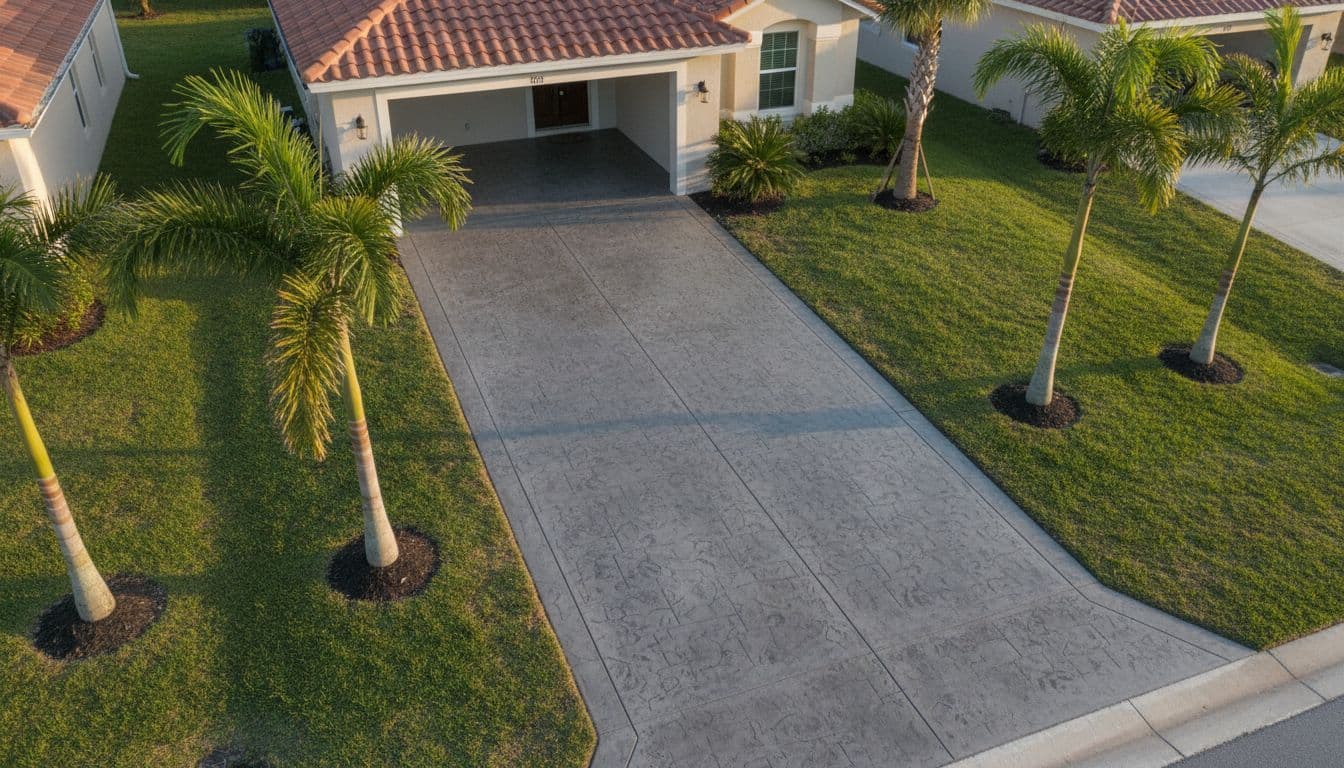
Concrete is the lower-cost choice at the start. A basic broom-finish slab lands near the bottom of the range. Stamped or decorative finishes push it higher. If you're comparing prices, this guide to concrete driveway cost in Cape Coral helps show how finish level changes the number.
Pavers cost more because the work is slower and more detailed. Each layer matters, from the compacted base to the edge restraints and joint sand. Standard concrete pavers with a simple pattern stay closer to the low end. Larger pavers, borders, permeable systems, and premium colors move the price up.
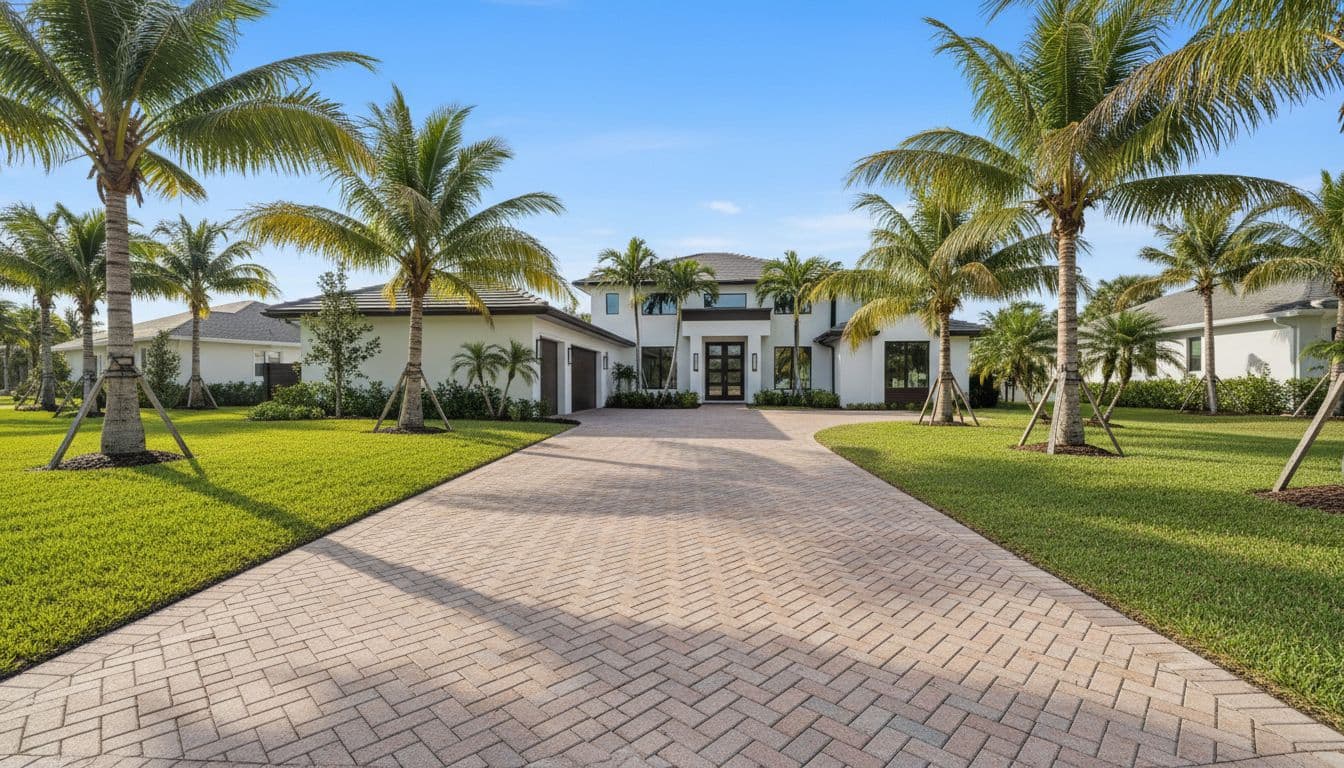
For a simple budget question, concrete wins. For curb appeal, pattern choices, and easier spot repairs, pavers start to look stronger. It's a bit like buying shoes, one pair is cheaper at checkout, but the better-built pair may cost less after years of wear.
What makes Cape Coral driveway costs go up or down
The low end and high end of any quote are usually driven by site conditions, not just the material. In Cape Coral, base preparation is a big one. Sandy soil can shift, and heavy summer rain can wash out weak spots. A good driveway needs proper grading, compacted rock, and sometimes geotextile fabric below the base.
Labor also changes the math. Concrete labor often adds about $2 to $5 per square foot. Paver labor is usually higher, around $5 to $10, because installation is more hands-on. If a bid looks unusually cheap, look closely at what was left out.
Drainage matters here more than many homeowners expect. Concrete needs the right slope so water runs off instead of ponding near the garage or sidewalk. Pavers can handle minor ground movement better, and the joints help with surface drainage, but only if the base is built right. For that reason, strong prep matters more than flashy finish.
Ask each concrete company exactly what's included. A solid quote from a concrete contractor in Cape Coral should list slab thickness, reinforcement, saw cuts, slope, and cure time. On the paver side, good estimates should spell out base depth, edge restraints, bedding sand, and final compaction. This overview of paver installation in Cape Coral shows what to look for.
Extra work can also shift the budget. Removing an old driveway, adding a swale, tying in new landscaping, or blending the project with artifical turf near the front walk all affect labor and layout. In other words, the driveway rarely exists by itself.
Upfront cost vs long-term ownership cost
This is where the gap gets interesting. Concrete is usually cheaper to install, but repairs can be expensive and obvious. When a slab cracks or settles, patching rarely disappears. Section replacement costs more, and the new concrete often looks different from the old.
Pavers ask for more money at the start, yet they tend to be easier on the budget later. If a few units crack or sink, a crew can lift that area, fix the base, and reset it. That's a big advantage after storm-related washout, root movement, or utility work. If you want a local benchmark, this breakdown of paver repair costs in Cape Coral is useful.
Maintenance is different too. Concrete may need sealing every few years, plus crack repair when issues show up. Pavers usually need paver cleaning , joint sand touch-ups, and optional sealing every few years. That routine work isn't free, but it tends to come in smaller bites instead of one big replacement bill.
In Cape Coral, the cheapest bid often isn't the cheapest driveway to own.
For homeowners staying put for a long time, pavers often have the better ownership story. For homeowners who want the lowest upfront number and a clean, simple look, concrete still makes sense. Most importantly, both materials fail early when the base is weak or drainage is ignored.
If you're also reworking the front yard, coordinate the driveway with lighting, beds, and other landscaping so water moves away from the house, not toward it.
Concrete is usually the best choice when upfront cost is the main driver. Pavers are often the better choice when you care more about repair flexibility, appearance, and long-term value. In Cape Coral's climate, build quality matters more than the material alone. A fair quote should explain the base, drainage, and finish in plain language, because that's where the real cost lives.