


Pool Coping Cost in Cape Coral, FL: 2026 Homeowner Guide
A pool edge does more than finish the look. It protects the shell, helps shed water, and gives wet feet a safer place to land. In Cape Coral, that matters because sun, salt air, splash-out, and summer rain can punish weak materials fast.
For 2026, most pool coping cost Cape Coral projects land between $20 and $60 per linear foot installed , with higher-end stone and custom shapes pushing past that. The final number depends on the coping material, how much old material must come off, drainage details, and how the new edge ties into your deck. If you're planning a pool update as part of a bigger landscaping project, this guide will help you set a real budget.
2026 pool coping cost in Cape Coral, what most homeowners should expect
Pool coping is usually priced by the linear foot , not the square foot. That means a modest price jump per foot can change the total fast, especially on freeform pools with lots of curves.
Here is a practical 2026 range for Cape Coral homeowners:
| Material | Installed cost per linear foot |
|---|---|
| Concrete | $20 to $35 |
| Brick | $25 to $40 |
| Precast coping | $25 to $45 |
| Travertine | $35 to $55 |
| Natural stone | $40 to $60+ |
A simple 90-linear-foot pool might cost about $1,800 to $3,150 in basic concrete coping. The same pool in travertine could land around $3,150 to $4,950. Natural stone can climb higher, especially when the installer has to cut many corners or match a raised beam.
Low-end pricing usually assumes straight runs, easy access, and little repair work. High-end pricing often includes curved layouts, tight screen-cage access, custom corners, and more deck tie-in work. Older pools can also need bond-beam repairs under the coping, which changes the budget quickly.
If water already sits near the deck after storms, coping alone may not solve the problem. In that case, it helps to review nearby drainage work, such as yard grading costs in Cape Coral, before you lock in a final scope.
Which pool coping materials hold up best in Cape Coral weather
Material choice is where looks and long-term comfort meet. A coping that looks great in a showroom can feel too hot or slick in July.
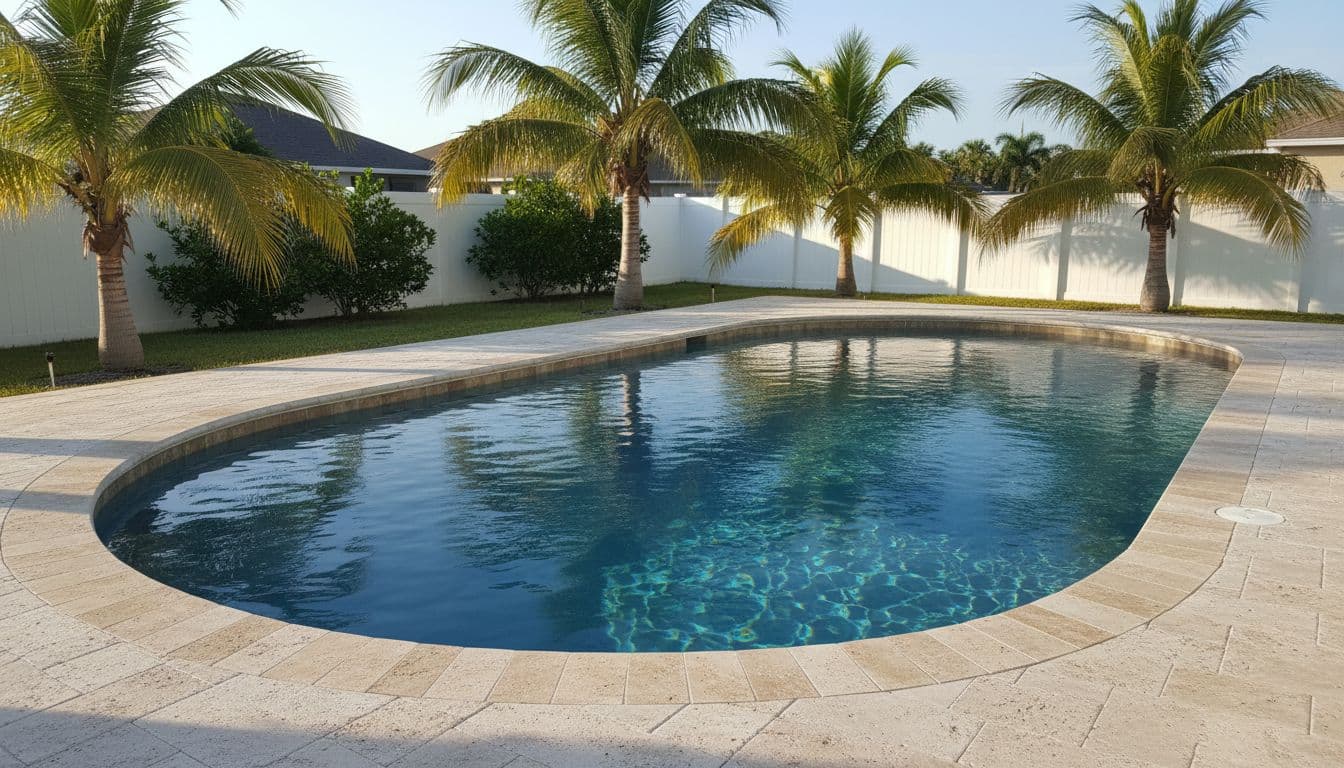
Travertine is a favorite in Southwest Florida for a reason. It stays cooler than many darker surfaces, has solid slip resistance when finished right, and fits both modern and tropical yards. The tradeoff is price, plus periodic sealing and care.
Concrete coping costs less and works well on basic pools. It can be poured or installed as precast pieces. Still, plain concrete can run hotter under bare feet, and poor prep can lead to cracks or movement over time. If your pool deck also needs work, a good concrete company should look at the full edge, not just the top cap.
Brick coping has a classic look and good grip, especially when it ties into a paver deck. On the other hand, the joints can collect grime and algae. Around pools with older decks, regular paver cleaning becomes part of the upkeep plan.
Natural stone gives the richest look and often the best one-of-a-kind finish. It also costs the most, and not every stone handles Florida moisture the same way. Ask what type of stone is being quoted, because "natural stone" is a wide bucket.
Precast coping sits in the middle. It offers clean shapes, steady sizing, and faster install times. That can help control labor costs, though it won't look as unique as cut stone.
Some homeowners also update the whole pool area at once, adding beds, low-maintenance landscaping, or even Cape Coral artificial turf installation costs to compare against grass. Even small artifical turf sections can affect edging and runoff, so sequence matters.
Hidden costs that push pool coping quotes higher
This is where many budgets go sideways. The material price is only part of the story.
Old coping removal often adds $5 to $15 per linear foot . That covers demo, haul-off, and the slower pace that comes with protecting the pool shell and deck. If thin-set, mortar, or cracked edge material sticks hard, labor climbs.
Drainage and deck tie-ins are the next big cost drivers. If the new coping has to meet existing pavers, stamped concrete, or a deck with settlement issues, the crew may need to reset the first row, patch edges, or rework pitch so water runs away from the pool. Those fixes can add $10 to $20 per linear foot , sometimes as separate line items.
Custom curves and corners also matter more than homeowners expect. Straight runs are quick. Freeform pools are not. Extra cuts, mitered corners, radius pieces, and detail work can raise pricing by 20 to 50 percent.
The cheapest quote often leaves out demo, disposal, bond-beam repair, or deck reset work.
If your pool area has older brick or concrete pavers, budget for cleanup after the coping job. Fresh work next to stained decking can make the old surface look worse by comparison, so many homeowners also compare paver cleaning and resealing costs in Cape Coral.
How to compare quotes without getting burned
A good quote should read like a clear plan, not a mystery number on a page.
Ask each contractor to list the coping material, profile style, total linear footage, demo and haul-off, substrate or bond-beam repairs, deck tie-in work, and cleanup. Also ask how they handle slope and water runoff. In Cape Coral, that part matters as much as the stone itself.
Then compare apples to apples:
- Material detail : Travertine and "stone-look" precast are not the same thing.
- Repair scope : Some bids include edge repair, others bill it later.
- Access limits : Narrow gates and screen enclosures can raise labor.
- Finish and traction : A polished surface may look nice, but it may not be the safest choice when wet.
A trustworthy installer won't dodge those details. They should explain what is included, what could change after demo, and what would count as an extra.
Conclusion
Pool coping is like the frame around the whole pool, and in Cape Coral it has to work hard. For most homes in 2026, realistic pricing falls between $20 and $60 per linear foot , with material choice, removal work, drainage, and curves driving the final total. Focus on the full scope , not just the top-line number, and you'll have a much better shot at a pool edge that looks right, feels safe, and lasts.