


Repair Herbicide Damage in Cape Coral Lawns
Herbicide injury can make a Cape Coral lawn look far worse than it is. Yellowing, curled blades, or a fading strip near a plant bed causes understandable concern, especially when Florida heat already stresses the grass.
If you're facing a herbicide damage lawn , stop further exposure first and identify what happened. Recovery depends on the herbicide, application rate, turf species, weather, and how much living tissue remains. Fertilizer and another chemical treatment can't revive grass that has died.
A calm assessment and low-stress care give surviving turf the best chance to recover.
Herbicide Damage Lawn: Confirm the Cause Before You Treat
Herbicides don't all affect turf the same way. A broadleaf weed spray, a pre-emergent product, and a brush killer can leave different clues. Before changing your watering, fertilizer, or mowing routine, look closely at the pattern and recent lawn history.
Read the pattern in the grass
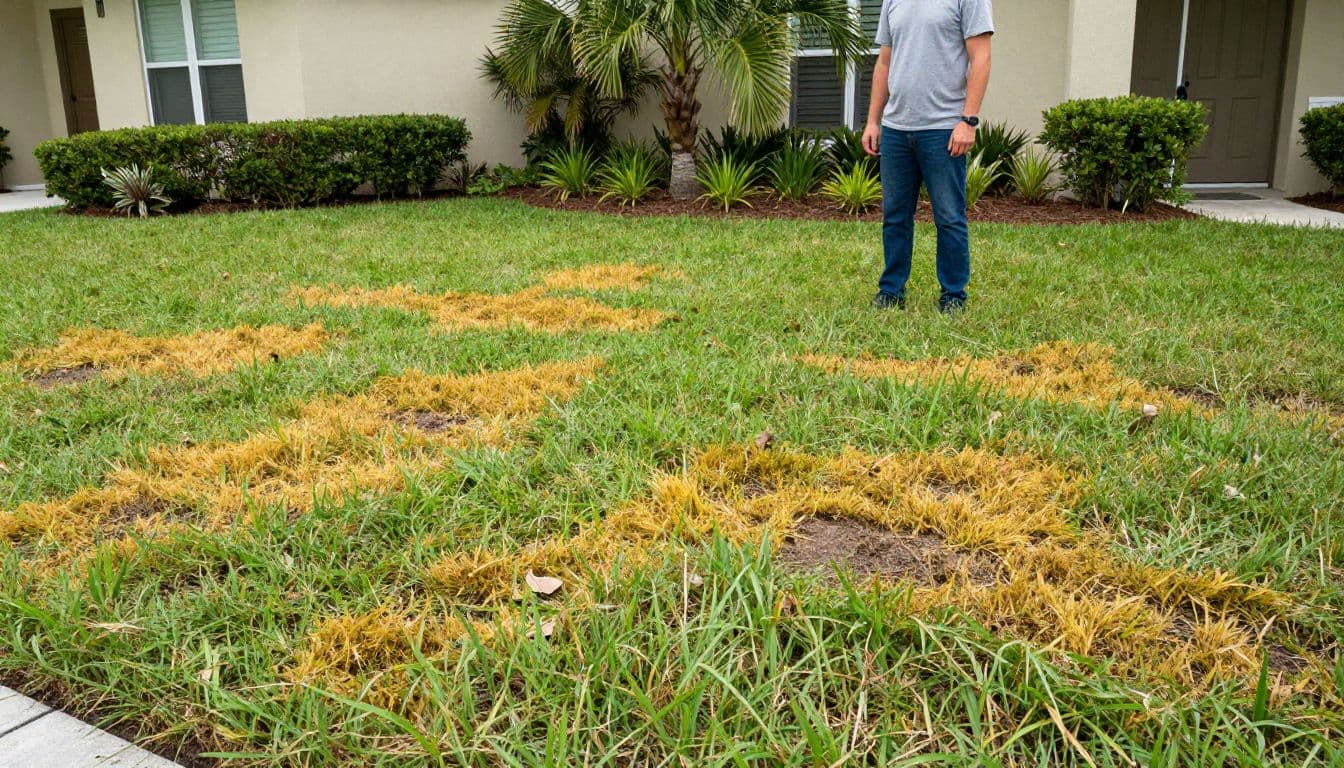
Herbicide damage often follows the application route. You may see sharp lines along a bed, a worse patch where a sprayer paused, or a faded edge caused by wind drift.
New blades may grow narrow, twisted, yellow, or pale. Some products cause thinning and slower growth several days later. In contrast, chinch bugs, disease, compacted soil, broken irrigation heads, and salty irrigation water can also create patchy decline.
Check whether the damaged grass matches a sprinkler zone, a walkway edge, or the route used while spraying. That detail can separate chemical injury from a watering or pest issue.
Save the product details
Take clear photos before mowing or changing the irrigation schedule. Keep the original product container, or photograph its label, active ingredient, application rate, application date, and the weather that day.
Also record the lawn type. St. Augustinegrass, bahia grass, and zoysia don't tolerate every herbicide equally, and even cultivars of the same grass can react differently.
If you don't know what was applied, don't guess with a second product. UF/IFAS recommends getting local help when herbicide injury is uncertain because other lawn problems can look similar.
Stop Further Exposure and Water With Care
The first day with a herbicide damage lawn should focus on preventing more stress. Don't apply more weed killer, fungicide, insecticide, or fertilizer in an effort to correct the color quickly.
Keep the herbicide from spreading
Set aside the sprayer and avoid treating nearby weeds until you know what caused the injury. Don't hose down the lawn in an attempt to wash away a product unless its label directs you to do so. Extra water can move some materials through sandy soil or into unintended areas.
If the same sprayer has been used for brush control or ornamentals, clean it only as directed on the product label before it goes near turf again. A trace left in a tank or hose can damage a new area.
Avoid homemade remedies and off-label pesticide use. A brown patch needs a diagnosis, not a chemical experiment.
Give roots enough water, not constant water
Water supports surviving roots, but it isn't an antidote. For established St. Augustinegrass, UF/IFAS recommends watering when blades fold or wilt, turn blue-gray, or hold visible footprints.
A typical irrigation event of 0.5 to 0.75 inch wets much of the active root zone. In Cape Coral's sandy soils, inspect the ground below the surface rather than relying only on the lawn's color.
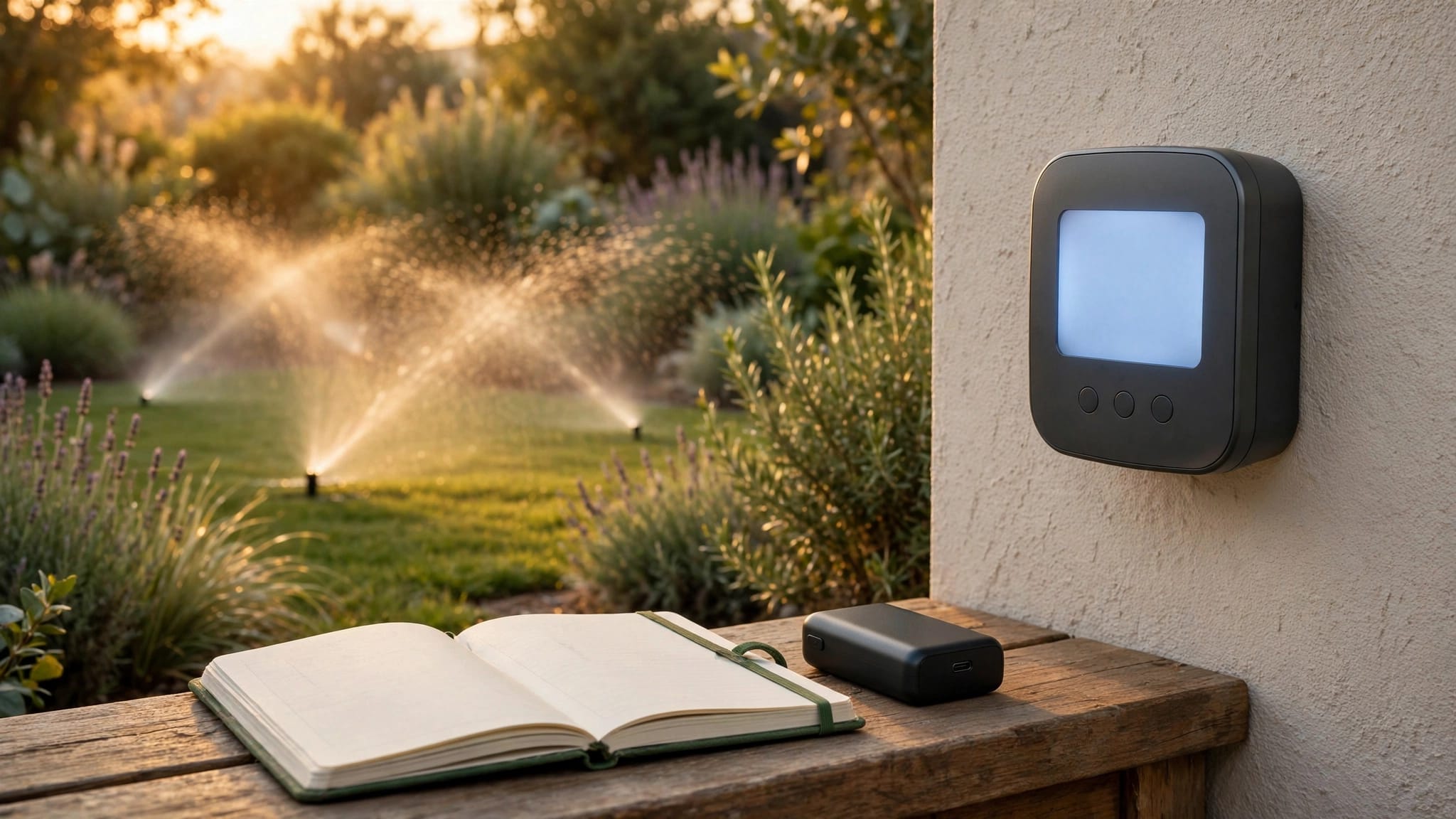
Heavy summer rain changes the plan. Turn an automatic controller to manual when possible, then skip a cycle after substantial rainfall. Frequent shallow watering can leave roots weak and keep the soil too wet.
Water can keep surviving roots active, but it cannot restore crowns that have already died.
Salt in irrigation water can also mimic leaf burn and slow recovery. If symptoms follow sprinkler coverage or worsen after irrigation, have the water source and irrigation system checked before increasing run times.
Reduce Mowing and Heat Stress During Recovery
A recovering herbicide damage lawn needs leaves to make energy. Scalping it or forcing it through a heavy maintenance routine can turn mild injury into a longer repair.
Raise the mower for a few weeks
UF/IFAS advises raising the mowing height by about one-half inch and reducing mowing frequency for up to three weeks after herbicide application. Use a sharp blade and avoid mowing when the grass is wilted or saturated.
Standard St. Augustinegrass cultivars, including Floratam, BitterBlue, and Classic, commonly perform best at 3.5 to 4 inches with a rotary mower. Bahia and zoysia have different height needs, so follow the recommendation for your grass rather than copying a neighbor's setting.
Leave clippings on the lawn if they are light and dry. However, remove thick clumps that block sunlight over injured turf.
Let the weather guide the schedule
Cape Coral's August heat can slow recovery, especially where turf sits beside a driveway, patio, or south-facing wall. Keep foot traffic, pet wear, and mower turns off damaged patches as much as possible.
Hold off on aeration, dethatching, and aggressive raking while the lawn is weak. Heavy rain, high humidity, and stressed roots also create favorable conditions for disease, so watch for expanding patches or unusual leaf spots.
Don't Try to Force a Fast Green-Up
A fast green color doesn't always mean a lawn is healing. Heavy fertilizer can stimulate top growth while injured roots struggle below the soil line. It can also increase disease pressure during warm, wet weather.
Use fertilizer cautiously
UF/IFAS notes that a modest nitrogen application after herbicide use may support recovery, but a heavy feeding won't reverse chemical damage. Wait until the lawn has stable moisture, active growth, and a known cause for its decline.
A licensed local lawn professional can calculate a suitable rate for your grass, season, and recent treatment history. This matters on Cape Coral's sandy soils, where nutrients move through the root zone quickly.
Don't fertilize newly installed St. Augustine sod immediately. UF/IFAS recommends waiting about 30 to 60 days after planting before fertilizing new sod.
Rule out pests and irrigation problems
Herbicides can hit a lawn that is already under pressure from chinch bugs, nematodes, disease, drought, or poor drainage. Those problems often overlap, which is why a single treatment rarely fixes an uncertain lawn.
Call a licensed Florida lawn professional or Lee County UF/IFAS Extension when the damage spreads, symptoms don't match the spray pattern, or you can't identify the product used. A proper diagnosis prevents more injury and avoids unnecessary pesticide use.
Decide Whether the Turf Can Recover or Needs Sod
Living grass has a chance to spread back in during active growing weather. Dead stolons and crowns do not. Look below the leaf blades before tearing out a whole section.
Look for living runners and crowns
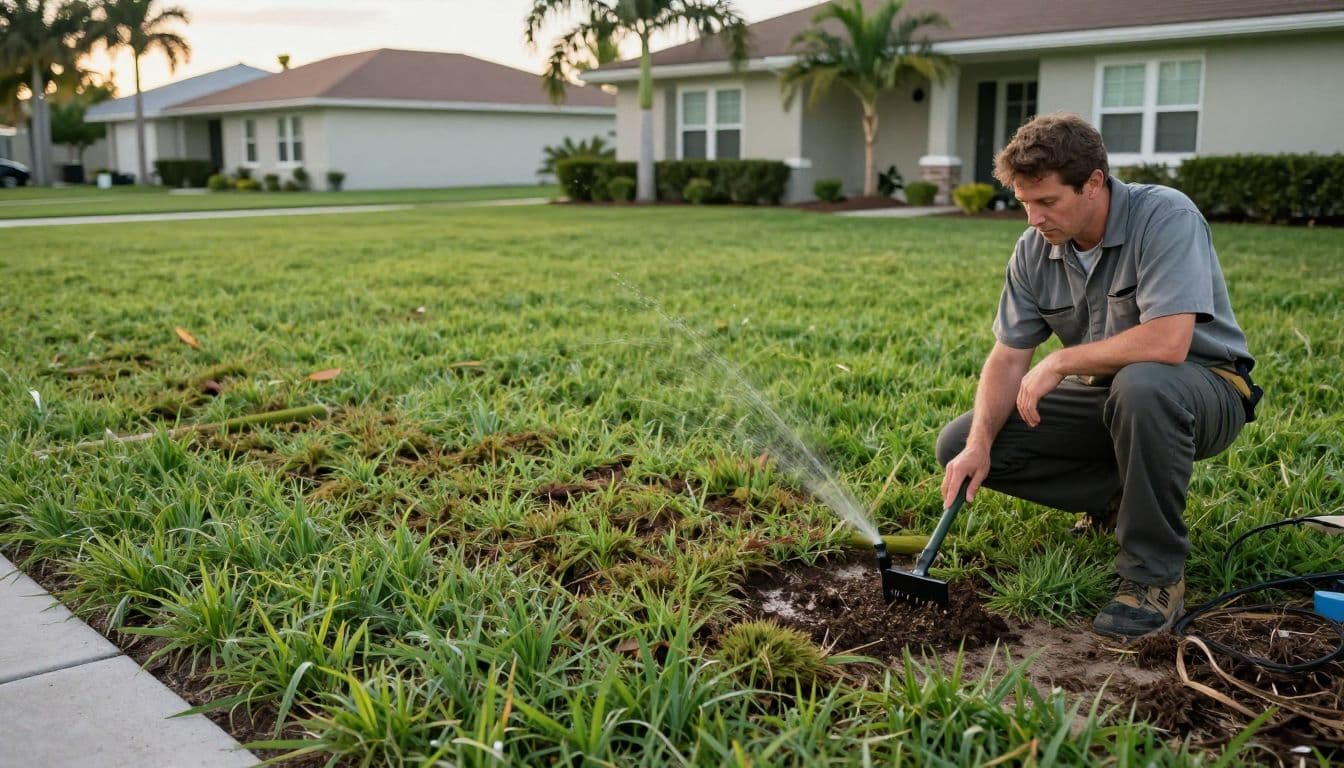
Part the damaged grass and inspect the stolons, which are the runners at the soil surface. Green, flexible runners and small new shoots are encouraging signs. Keep those areas watered properly, mow carefully, and give them time.
Recovery is often uneven. A lawn may regain color before it fills thin spots, so inspect it weekly instead of changing the care routine every few days.
If you see no new growth after about six weeks during active growth, the damage may be too severe for a wait-and-see approach. Recheck the irrigation coverage before deciding to replace grass.
Resod only after fixing the underlying issue
Where stolons are dead and no green tissue remains, sod offers the quickest visual repair. Match the replacement grass to the existing lawn when possible, since different turf types have different color, texture, mowing, and water needs.
Review the best sod for Cape Coral yards before choosing St. Augustine, zoysia, or bahia. New St. Augustine sod should root into the soil before its first mowing, often within 14 to 21 days.
For a small dog run or side yard that repeatedly fails from shade or traffic, artificial turf can be a practical alternative. It should never cover an unresolved drainage or irrigation problem.
Prevent Another Herbicide Injury During Yard Work
Careful product use protects more than the lawn. It also prevents overspray from reaching shrubs, mulch beds, pavers, driveways, and nearby water.
Follow the label for your turf type
Use only products labeled for your grass species and the weeds you need to control. Check rate limits, temperature guidance, application timing, and any warnings for drought-stressed turf.
Avoid spraying when the lawn is wilted or when hot weather will add stress. Keep spray away from roots of desirable plants, and don't let wind carry droplets onto turf or ornamental beds.
Good landscaping maintenance includes checking sprinkler heads and rain sensors before applying any lawn product. A broken head or wrong timer setting can make a minor herbicide injury much harder to diagnose.
Coordinate sod with pavers and concrete work
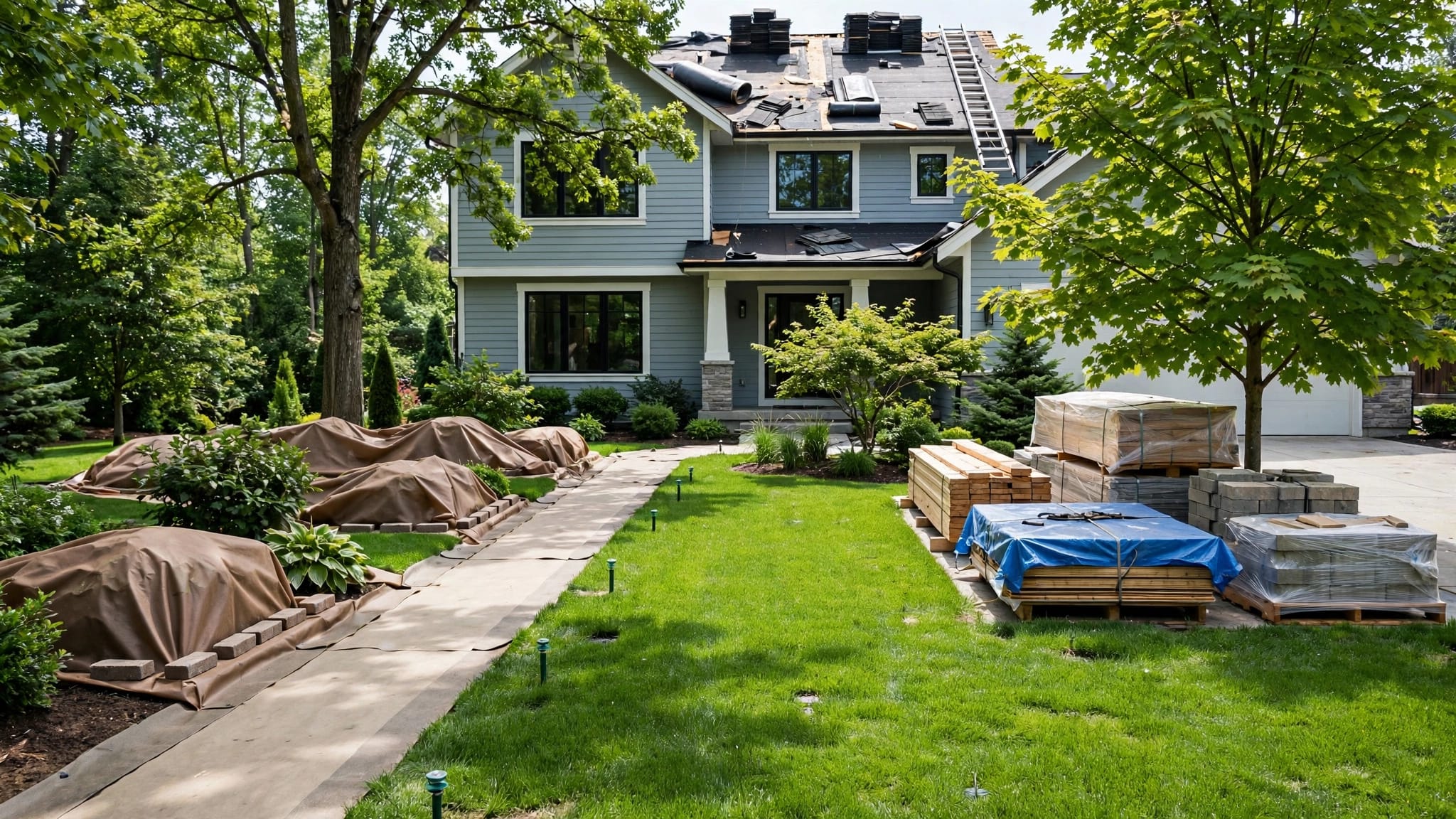
Plan repair work in the right order if other outdoor projects are on the calendar. A concrete company should complete driveway or patio work, final grading, and drainage corrections before new sod arrives.
Likewise, wait to schedule paver cleaning until fresh sod has rooted. Dirty runoff, sand, and cleaning water can stain or smother new sod seams.
For projects involving irrigation changes, grading, hardscape, and turf replacement, use a Cape Coral backyard renovation order that puts drainage and underground work ahead of finished grass.
A Healthy Lawn Can Recover With Patient Care
Herbicide injury isn't always permanent, but recovery takes more than a quick green-up product. Stop additional exposure, document the product, water based on the lawn's condition, and reduce mowing stress while living turf repairs itself.
When grass has dead crowns or the cause is unclear, bring in local help before spending more on treatments. Patience and an accurate diagnosis protect both your lawn and the investment around it.