


How to Find a Buried Irrigation Valve Box in Sod
Grass can hide an irrigation valve box so completely that the lawn looks untouched. Thick roots, thatch, added soil, and years of mowing can bury the lid below the surface.
If you need to find buried irrigation valve box locations in sod, start with the irrigation layout instead of a shovel. A few observations and shallow checks can often locate the box without tearing up a large section of grass.
The safest approach is to trace the system, probe only the turf layer, and expose the lid by hand before digging deeper.
How to Find Buried Irrigation Valve Box Locations in Sod
An irrigation valve box usually sits above one or more valves. Those valves control separate sprinkler zones and connect to underground water lines and low-voltage control wires. The box gives you access for repairs, but the lid can disappear when the lawn grows over it.
Start by looking at the sprinkler pattern. A zone may cover the front lawn, side yard, planting beds, or backyard. Valves are often grouped near the water source, beside a house, near a driveway, or at the edge of a landscaped bed. They aren't always directly beside the sprinkler heads they control.
Walk the property and look for clues such as:
- A shallow depression that stays visible after mowing.
- Grass that grows faster or stays greener in one small area.
- A circular or rectangular outline under the sod.
- A patch of different grass, soil, or older repair work.
- Several sprinkler heads arranged around one likely valve area.
If the irrigation system is operating normally, run one zone briefly and observe where the water reaches. This can help you connect a group of sprinkler heads to the right part of the yard. Don't run the system if you already suspect a broken line, stuck valve, or active leak.
Check the controller and old yard records
Look inside the irrigation controller for zone labels. A note such as "front lawn" or "side bed" can narrow your search. Photos taken during a previous repair may also show the valve box before sod covered it.
Ask the previous homeowner, property manager, or irrigation installer if a layout exists. Even a rough sketch can save hours of searching. When you need to find buried irrigation valve box locations faster, fixed landmarks such as corners, fence posts, hose bibs, and cleanout caps provide useful reference points.
People often find buried irrigation valve box locations near the edge of a bed because that area is easier to access during installation. Check transitions between turf and mulch, stone, or shrubs before searching the middle of an open lawn.
Gather the Right Tools for a Careful Search
You don't need heavy equipment for the first part of the search. The goal is to identify a likely lid, not excavate the entire area.
Gather a flashlight, work gloves, a hand trowel, and a narrow spade. A blunt landscape probe or rounded metal rod can help you feel for a plastic lid. A small garden rake can remove grass clippings and thatch without cutting the turf.
A standard metal detector usually won't locate a plastic valve box. It may react to a metal screw or component, but that signal won't reliably identify the lid. Professional irrigation technicians may use a valve or wire locator, especially when the box has no visible outline.
Begin when the grass is dry enough to see the surface clearly. Rake away loose clippings, leaves, and thatch. Then inspect the area from several angles. Low morning or late-day light can reveal a slight dip, raised edge, or change in grass texture.
If the box is near a sidewalk or driveway, measure the distance from the hard edge and search along the same line. Installers often place boxes in consistent rows, although later landscaping work may have shifted the visible reference points.
Probe only the shallow turf layer
Place the blunt probe vertically and apply light pressure. Move in a small grid, spacing each test a few inches apart. A valve box lid may feel like a broad, firm surface, while a rock usually feels irregular and stops abruptly.
Stop as soon as you feel solid resistance. Don't jab repeatedly or force the probe deeper. Irrigation wires, water lines, drainage pipes, and private utility lines may be below the box.
A probe can help locate the lid, but it cannot identify everything beneath the soil. Once you feel a broad, solid surface, switch to a hand trowel.
Expose the Valve Box Without Tearing Up the Sod
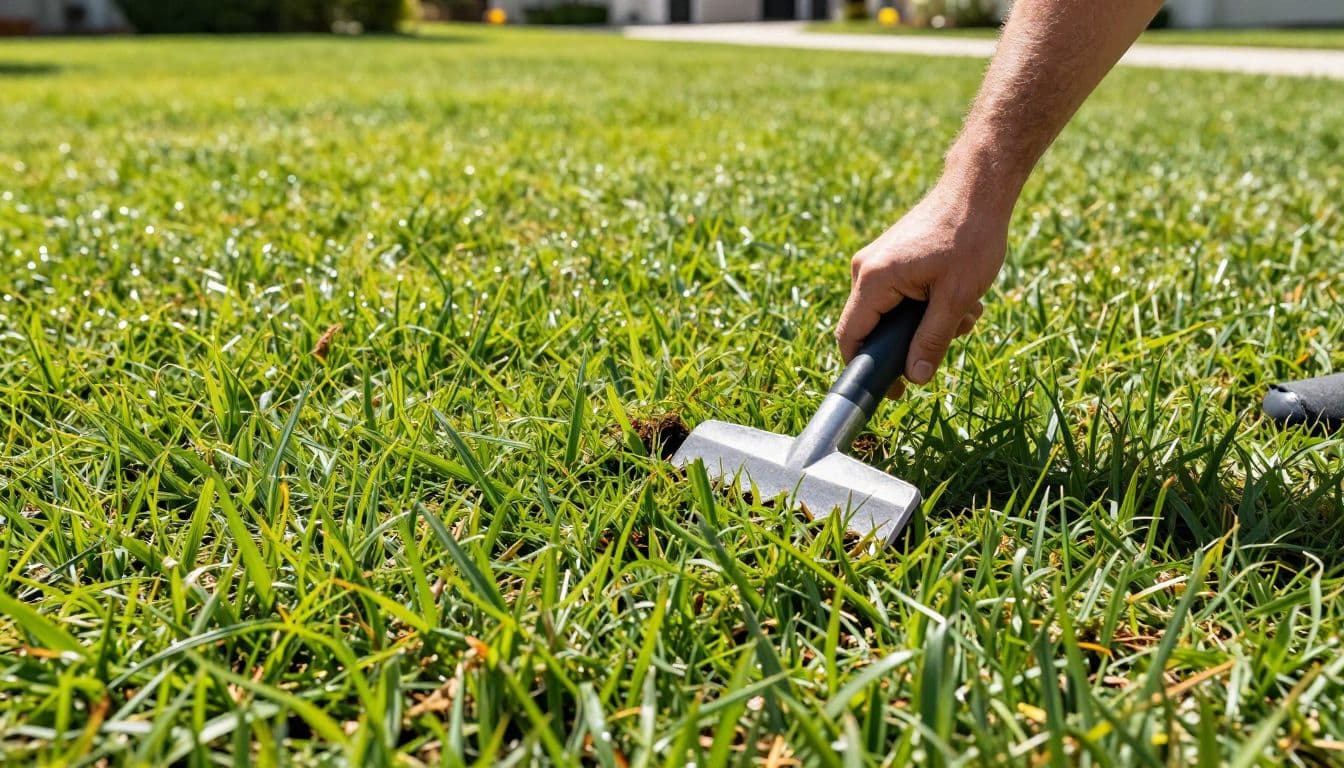
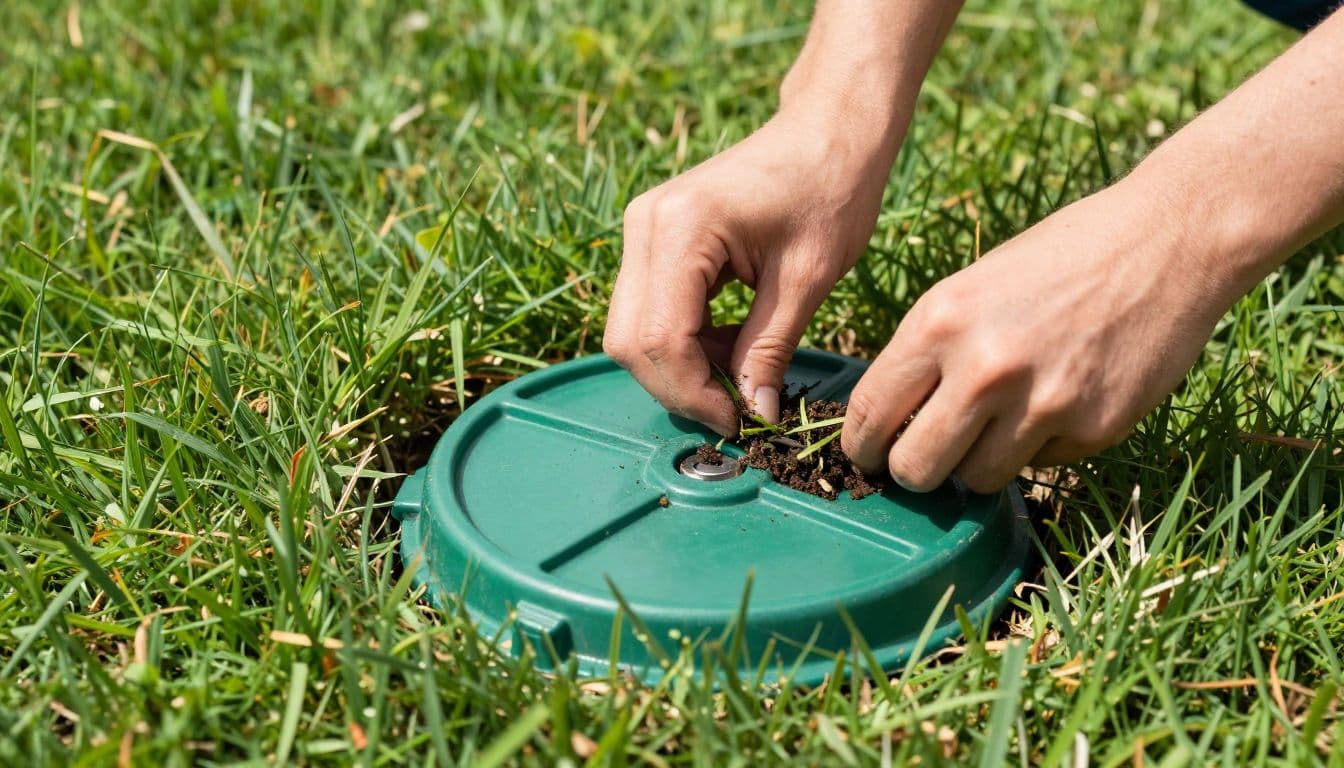
Once you feel a likely lid, mark the spot with a temporary flag or small object. Then clear the grass around it slowly. Starting several inches away from the suspected edge gives you room to work without cutting through the lid or its connected wires.
Use a hand trowel to remove loose soil in thin layers. Work toward the resistance from more than one direction. You may find the lid first, or you may uncover a plastic rim that confirms the box's position.
If the grass has grown over the box, cut the sod with a sharp knife or spade. A U-shaped cut lets you fold the turf back while keeping one side attached. Keep the grass piece intact, place it on a damp towel or soil, and replace it after the search.
Do not lift a large section of lawn when a small access flap will work. Sod roots dry quickly in hot weather, especially during Southwest Florida's sunny conditions.
Dig around the lid, not through it
Keep the spade shallow until you can see the box's outline. Push the blade at an angle outside the lid rather than straight down over its center. Plastic lids can crack under pressure, and a blade can damage wires or fittings underneath.
Remove soil by hand as the box becomes visible. Roots may hold the lid in place, but cutting every root around the box can loosen the surrounding turf. Trim only what blocks access.
Never pull hard on a lid that doesn't move. Soil may be pressing against the sides, or the box may have shifted. Clear the perimeter first, then lift it using the molded handle or designed slot.
Confirm the Box Before Opening It
A valve box lid is usually green, black, or another color that blends with the lawn. It may be round or rectangular and can have a small slot, tab, or removable center section. Dirt and grass often hide these details.
Brush the surface clean and inspect the edge. A real valve box should have a defined rim that continues below the turf. If you find a loose plastic fragment, a drain cover, or a small irrigation emitter, keep searching before you excavate further.
Turn off the irrigation controller before opening the box. If the system has a dedicated irrigation shutoff, close it when you plan to remove a valve or disconnect a fitting. Controller power is low voltage, but damaged wiring still needs careful handling.
Use a valve-box key or the lid's intended slot. A flat screwdriver may work on some lids, but don't twist against brittle plastic or pry from an unsupported corner. Once open, keep soil out of the box and avoid pulling on the wires.
Take a photo of the valves and wire connections before touching anything. If the system has several valves, label each one by zone while the layout is visible.
Know When to Stop Digging
Shallow probing is different from excavation. Probing checks the upper turf layer for a likely lid. Excavation exposes soil around a known object. Once you move beyond the lid's immediate edge, you need to account for buried utilities and connected lines.
Call 811 before digging in areas where public underground utilities may be present. Ask how private irrigation lines and other privately installed utilities are handled, because they may not be marked through the same process.
Stop immediately if you uncover unfamiliar conduit, electrical cable, damaged wiring, or a pipe that doesn't clearly belong to the irrigation system. Don't cut, pull, or move it to reach the box.
A leaking line also changes the job. Turn off the irrigation water supply if you can identify it safely, then arrange an inspection. If water keeps flowing after the controller is off, the problem may involve a stuck valve, a damaged mainline, or another supply connection.
Professional help also makes sense when the box lies under roots, concrete, pavers, or a structure. Before a landscaping redesign, ask the contractor to locate and map every valve. If a concrete company plans a patio or walkway, valve access and irrigation sleeves should be handled before concrete is poured. Schedule irrigation work before paver cleaning or sealing so fresh joints and finished surfaces aren't disturbed.
For repair planning, review this irrigation repair cost guide before approving work. Hidden digging, damaged wiring, and corroded valves can affect the final price.
Keep the Box Easy to Find Next Time
After you locate the box, bring the lid close to the finished soil grade. The lid should remain visible and accessible, but it shouldn't stick up where it can catch a mower or create a tripping hazard. Don't cover it with new sod, mulch, decorative stone, or planting soil.
If the box sits too low, a properly sized extension or riser may help. Use a component made for the box, and keep the final lid stable. Avoid stacking random materials under it, since shifting pieces can damage the valve connections.
Create a simple irrigation map. Record the box's distance from two permanent landmarks, such as the house corner and a fence post. Take a wide photo that includes those landmarks, then save a close-up of the open box and its zone labels.
Before replacing sod with artificial grass, sometimes misspelled online as "artifical turf," locate all valve boxes and confirm that each one remains accessible. Future technicians should be able to reach the valves without cutting the finished lawn or removing hardscape.
You can also add a discreet, removable marker near the box. Keep it outside the mowing path and choose a marker that won't become a permanent eyesore.
Conclusion
A buried irrigation box is easier to locate when you follow the system's pattern instead of searching randomly. Check the controller, study sprinkler zones, inspect turf changes, and use a blunt probe only in the shallow surface layer.
Once you feel the lid, expose it with a hand trowel and protect the surrounding sod. Stop when you encounter unknown utilities, damaged wiring, or a leaking line. Afterward, map the box and keep its lid at grade so the next repair doesn't begin with another search.