


Best Privacy Hedges for Cape Coral Yards and Pool Cages
A privacy hedge in Cape Coral has to do more than block a view. It has to handle heat, sandy soil, salt air, hard summer rain, and long dry stretches without turning into a full-time chore.
The best Cape Coral privacy hedges stay green year-round, grow dense enough to screen neighbors, and still make sense beside pool cages, lanais, pavers, and tight side yards. A good hedge should feel like a wall of green, not a weekly fight with clippers.
What makes a hedge work in Cape Coral
Southwest Florida conditions are tough on weak plant choices. Sandy soil drains fast, so roots dry out sooner than many homeowners expect. Salt exposure also matters, especially in open front yards and canal-adjacent lots. Then storm season arrives, and brittle plants snap, lean, or thin out.
That's why the best screening plants here share a few traits. They stay evergreen, respond well to pruning, and don't send aggressive roots under decks or screen enclosures. They also drop less litter, which matters a lot near pools.
For tight spaces by a lanai or cage, root behavior and mature width matter as much as height. A hedge that wants to become a 15-foot-wide monster will cause problems fast. Good landscaping starts with the right plant in the right bed, not the fastest thing at the nursery.
Top hedges for full backyard borders
If you need a broad privacy wall along a rear fence or side lot line, these choices usually perform best in Cape Coral.
| Hedge | Best use | Typical spacing | Upkeep |
|---|---|---|---|
| Podocarpus | Tall, narrow privacy wall | 3 to 4 ft | Low to moderate |
| Sweet viburnum | Fast screen for larger yards | 4 to 6 ft | Moderate to high |
| Cocoplum | Coastal or shorter living border | 3 to 5 ft | Moderate |
Podocarpus is the safest all-around pick for many homes. It grows upright, stays dense, and drops very little debris. That makes it a strong choice behind pools, along fences, and in places where you want a clean look. It also handles shaping well without looking hacked up. For a solid screen, most homes do well with plants set 3 to 4 feet on center.
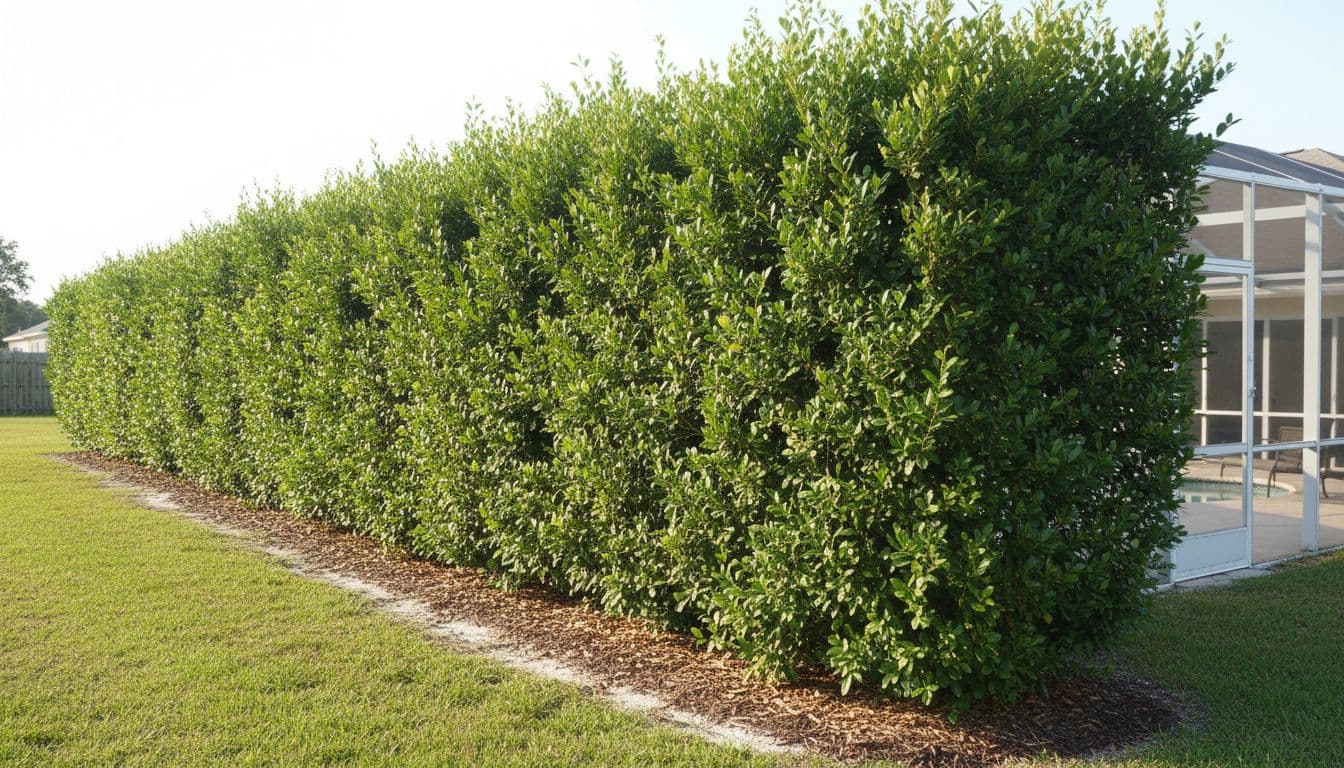
Sweet viburnum fills in faster, which sounds great until pruning season starts. It's excellent for a full yard border where you have room to let it thicken up. Still, it grows wide and tall fast, so expect more trimming. It can also drop flowers and berries, which makes it less ideal right beside a pool cage.
Cocoplum works well in saltier spots and coastal-style yards. It makes a softer, more natural screen than podocarpus. The tradeoff is speed. It's slower to fill in, and fruit can create some litter. For a front or side border, though, it's a smart option.
Best picks near pool cages and lanais
Near a pool cage, neatness matters. Leaves, berries, seed pods, and weak branches all end up where you don't want them. In these tighter zones, small-leaf clusia is one of the best choices. It handles sun, heat, and salt better than many common hedges, and its thick leaves create a dense screen without constant mess.
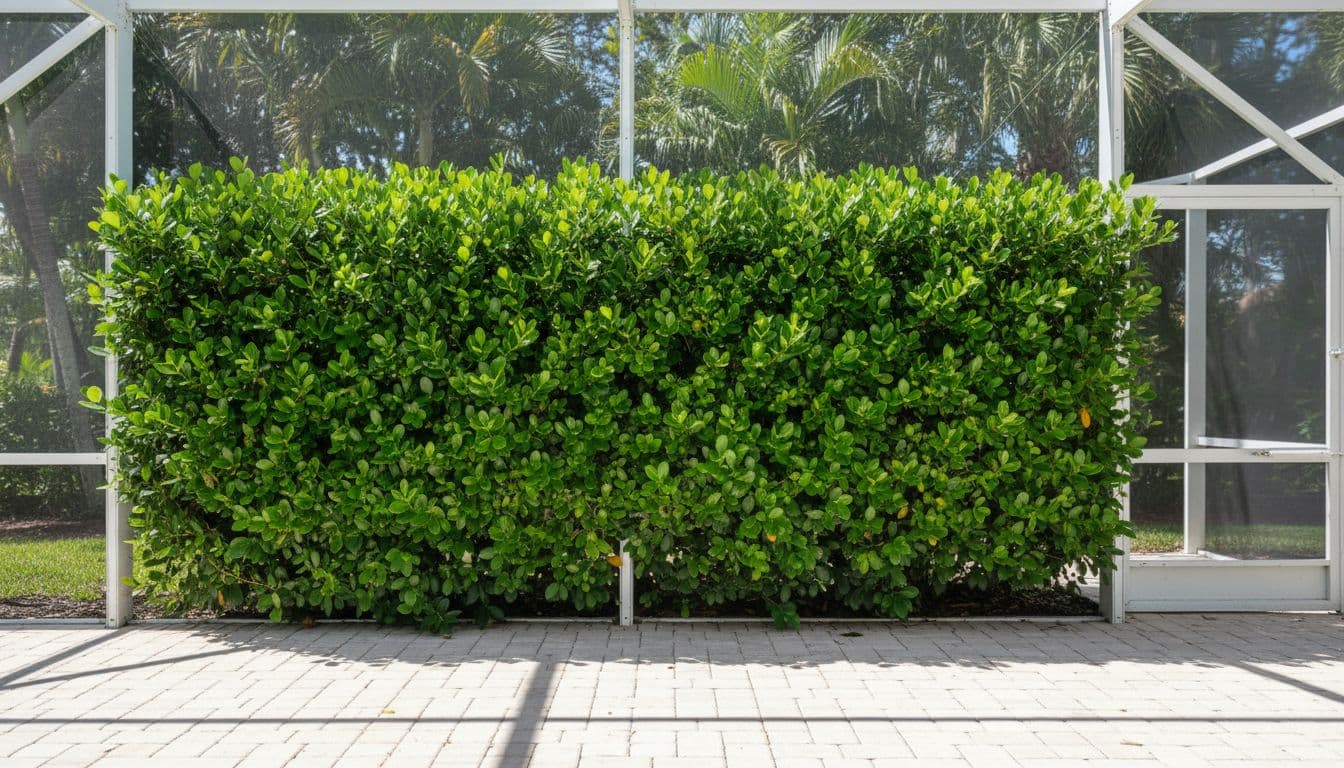
For most cage-side beds, set clusia about 3 to 4 feet apart and keep the planting line at least 30 inches off the screen. That buffer gives you room to trim, clean, and inspect the cage frame. Podocarpus also works well in these narrow beds if you want a taller, slimmer look.
The tighter the bed, the more important mature width becomes.
A few plants are better left out of these spaces. Areca palms create more frond debris than most homeowners want near a pool. Bamboo can spread and become a headache. Ficus may look lush early on, but its roots and size can outgrow residential beds. Standard tree-form clusia is also too big for many narrow cage lines, so stick with hedge-sized forms.
Planting, spacing, and care that actually hold up
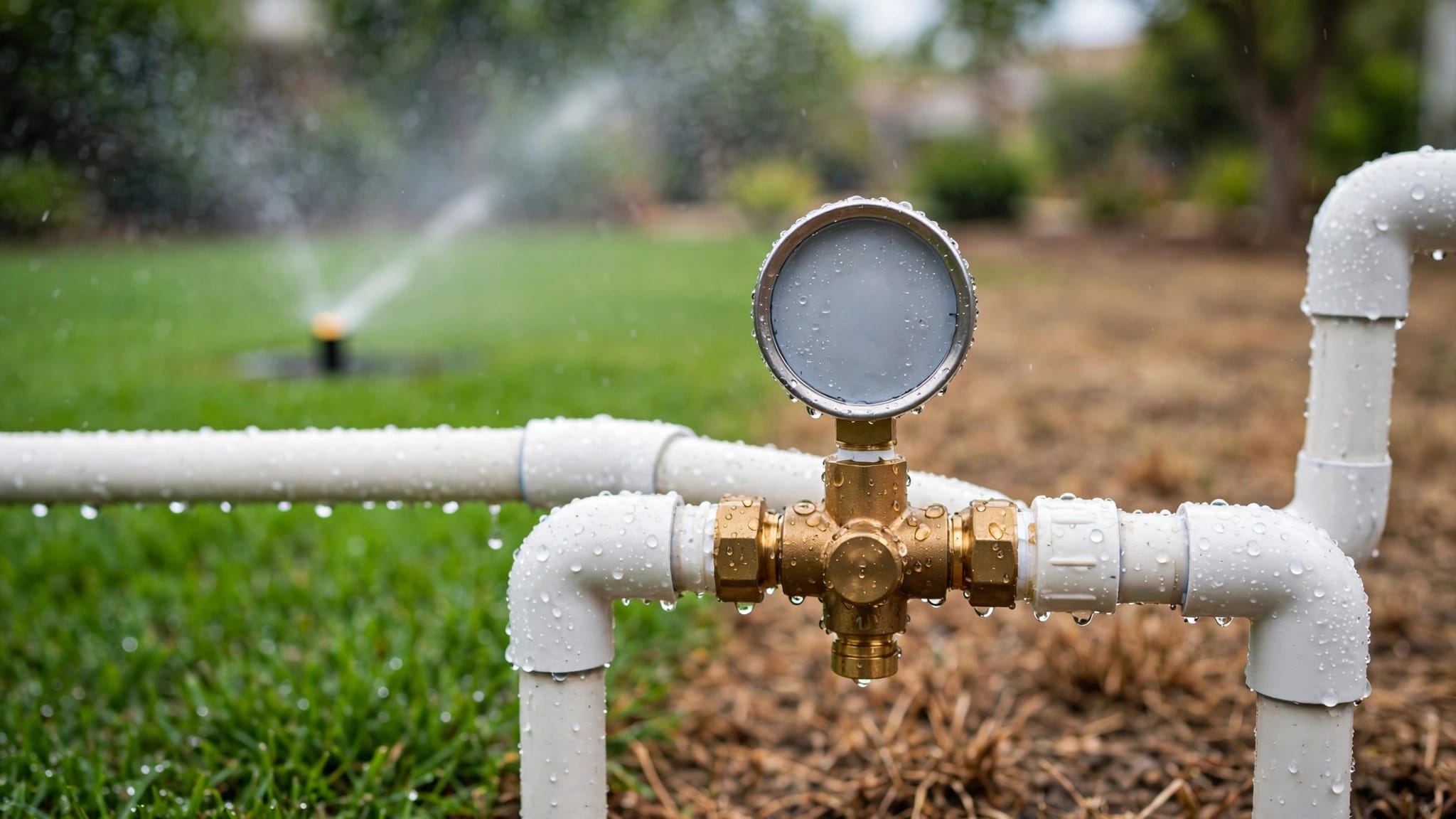
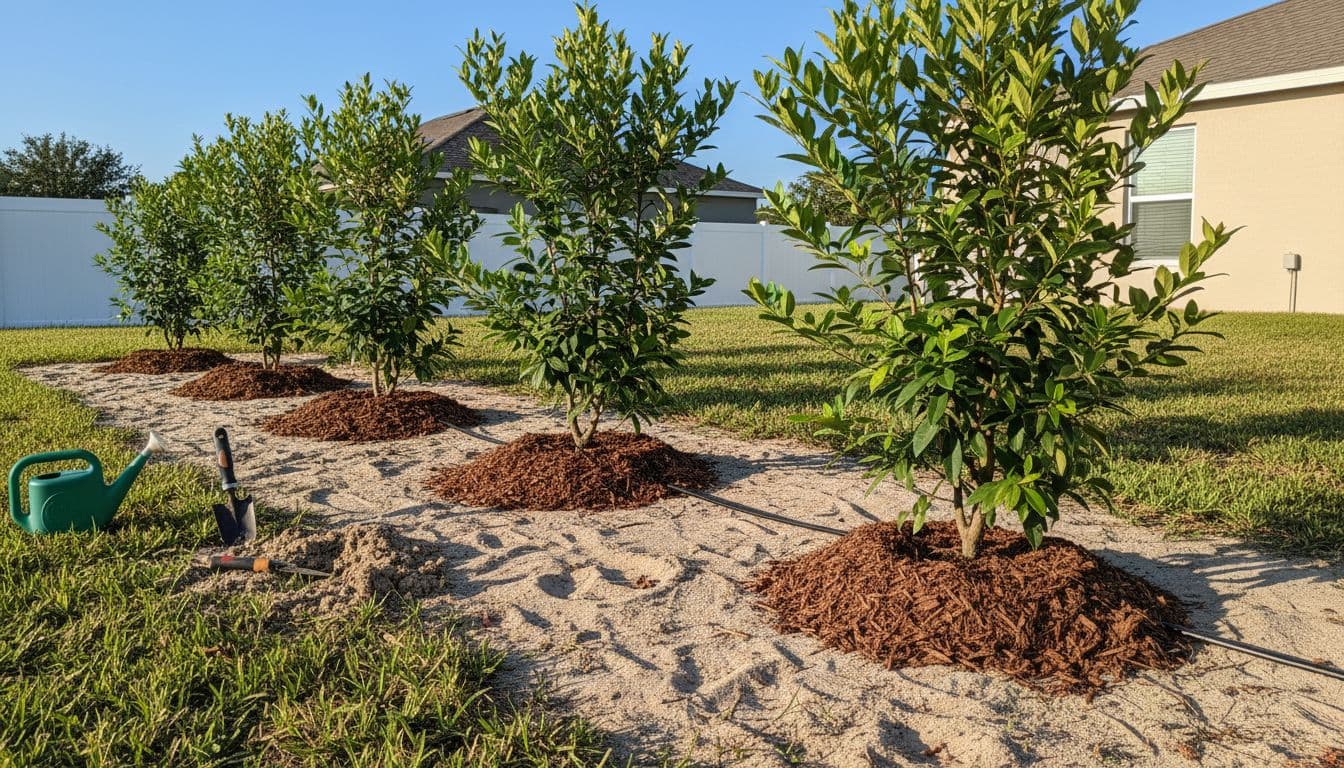
Cape Coral hedge success often comes down to the first year. Plant a bit high, mulch 2 to 3 inches deep, and don't pile mulch against the trunk. In sandy soil, regular watering matters early, then you can stretch out the schedule as roots settle in. If you're planning a new drip line or zone changes, this guide to irrigation system installation costs in Cape Coral helps explain what proper watering setup adds to the job.
For full yard borders, wider spacing is fine if you can wait. For fast screening, plant tighter, but don't crowd the row so much that airflow disappears. Most hedges near pavers or pool decks should sit 18 to 24 inches off the hard edge. That gap helps with pruning, drainage, and future repairs.
If your hedge line runs beside a slab, deck, or footer, a trusted concrete company should check slope before planting. Water that sits against the house or cage will damage more than the plants. The same goes for older pool decks. It's often smart to handle 2026 paver cleaning and resealing costs in Cape Coral before new shrubs and mulch go in, because access gets tighter later.
Some homeowners also pair a narrow hedge bed with artifical turf to cut mud and mower mess beside the cage. If that's part of the plan, compare artificial turf installation costs in Cape Coral before final layout, so drainage and edging work together. That kind of planning keeps the whole yard cleaner and makes paver cleaning easier over time.
Conclusion
The best hedge depends on where it goes. For large borders, podocarpus, sweet viburnum, and cocoplum are strong choices. For tighter beds near pool cages, clusia and podocarpus usually give the cleanest results with the fewest headaches. Pick for mature size, not nursery size, and your privacy screen will work a lot harder than you do.