


Best Cape Coral Plants for Narrow Side Yards
A narrow side yard can turn into wasted space fast. With the right Cape Coral plants , though, it can become a clean, useful part of the home.
Cape Coral heat, humidity, and seasonal rain call for plants that stay in bounds. You want narrow growth, manageable roots, and shapes that do not crowd walkways or AC units. When the layout is smart, even a tight strip can feel polished instead of pinched.
What narrow side yards need in Cape Coral
Side yards here face more than one challenge. Sun bounces off walls and concrete. Rain can pool, then dry out fast. Some spots stay bright all day, while others sit in shade and never seem to dry fully.
That mix means plant choice matters as much as style. Good side-yard plants should hold their shape, tolerate heat, and leave room for air to move. If you are planning a bigger refresh, a custom landscape design in Cape Coral can help you set bed width, drainage, and plant spacing before anything goes in the ground.
A narrow side yard feels larger when the path stays open and the planting repeats in simple lines.
Skip anything that sprawls too fast or needs constant rescue pruning. In tight spaces, the best landscaping choices are the ones that keep their shape with light care, not weekly battles.
Shrubs that stay slim and still look finished
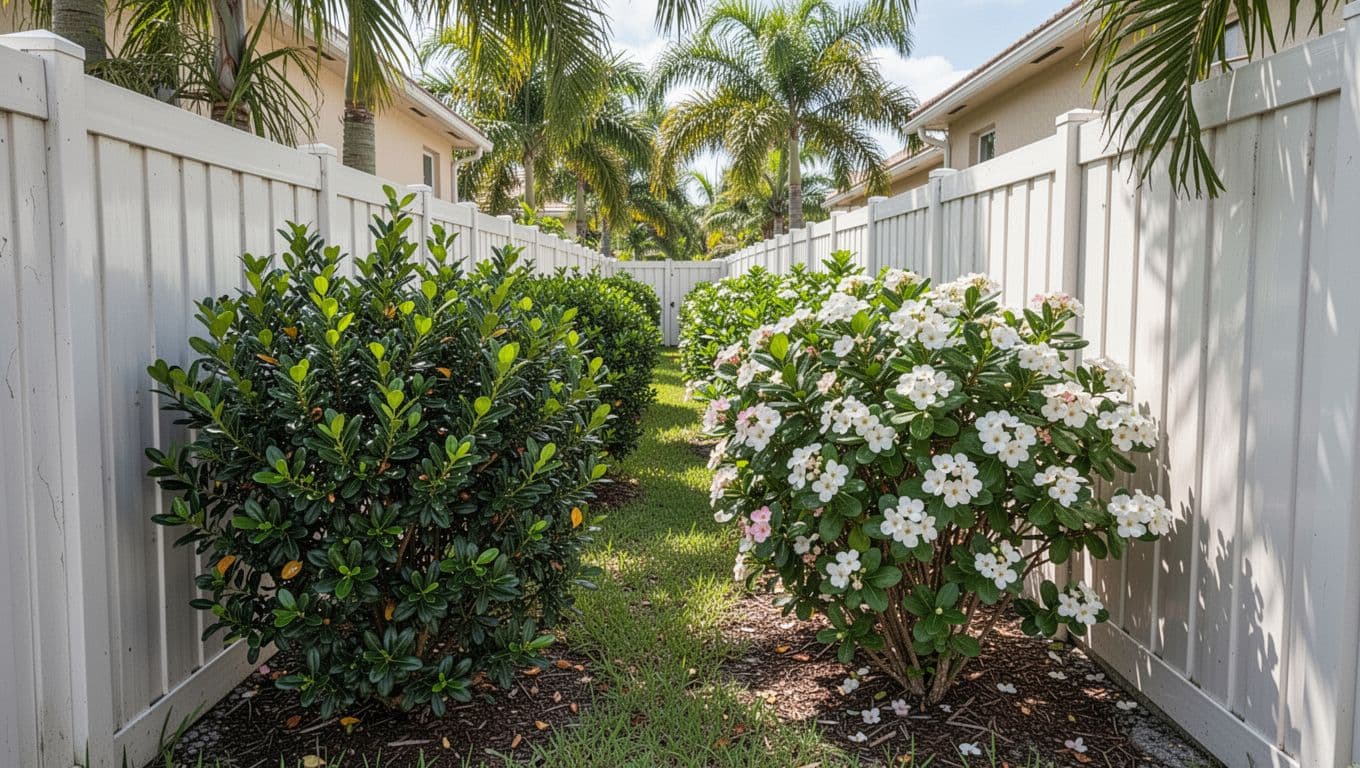
Shrubs do a lot of work in narrow beds. They can hide a fence, soften a wall, and give the yard structure without eating the whole walkway.
Dwarf yaupon holly
Dwarf yaupon holly is one of the safest bets for a slim side yard. It stays dense, trims well, and handles Cape Coral heat without much drama. Most plants mature around 4 to 6 feet tall and 3 to 4 feet wide, though you can keep them smaller with light pruning.
It works best in sun to part shade. Give it some breathing room from the path, because even a tidy hedge needs space after summer growth flushes. This is a strong choice when you want privacy along a fence or a soft green line beside a blank wall.
Indian hawthorn
Indian hawthorn brings a lower, softer look. It usually stays around 3 to 4 feet tall and wide, so it fits under windows or beside a side gate. In spring, it can add color without looking busy.
Use it in full sun or light shade, and keep the plants far enough apart for air flow. That matters in humid weather, because crowded shrubs hold moisture and look rough faster. Indian hawthorn is best when you want a finished edge, not a tall screen.
Little John bottlebrush
Little John bottlebrush adds a little more texture and color. It stays compact, often around 3 feet tall and 4 to 5 feet wide, so it works best as a middle layer, not a plant jammed against the walkway.
This shrub loves sun and handles heat well. Its red blooms bring in pollinators, which makes the bed feel alive without adding width. It also works well where you want a low screen that feels softer than a hedge.
Grasses and low accents that keep the bed light
Tight yards can look stiff if every plant is boxy. A few grasses or low accents break up the straight lines and make the space feel calmer.
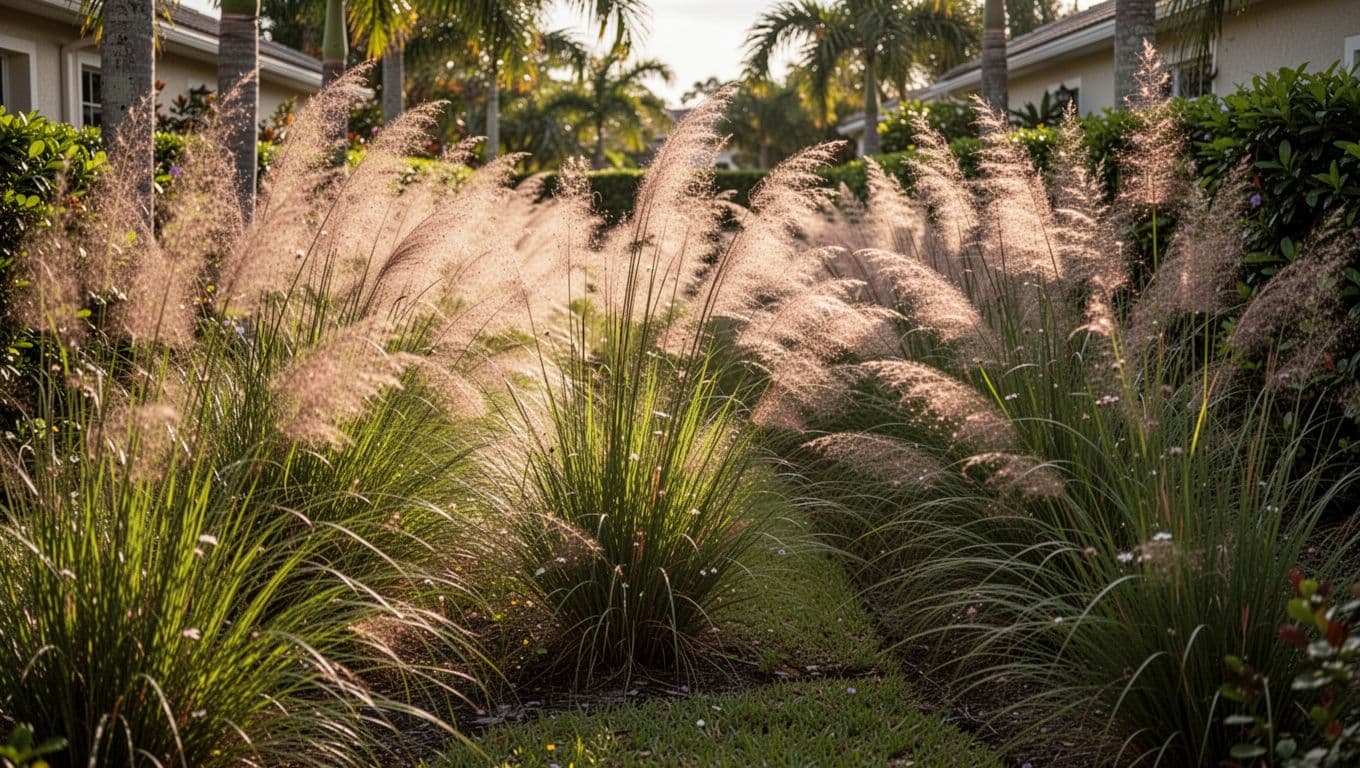
Muhly grass
Muhly grass is a smart pick for narrow side yards with sun. It usually grows about 3 to 4 feet tall and wide, so it adds movement without becoming bulky. In fall, the pink plumes give the yard a soft glow.
It also helps on edges where water runs after heavy rain. That makes it useful for slight slopes or areas near drainage paths. Cut it back in late winter, then let it fill out again. If you want a plant that feels airy instead of heavy, muhly grass does that job well.
Coontie
Coontie is a native accent plant that fits in tight spots better than many showier options. It grows slowly, usually around 2 to 3 feet tall and 3 to 5 feet wide, and it handles sun or part shade.
That slow pace is a plus in narrow landscaping beds. You do not have to keep chasing it with the trimmer. Coontie also works well under trees, near a wall, or in a side yard that needs a tough, low-profile plant. It brings structure without crowding the path.
Bromeliads
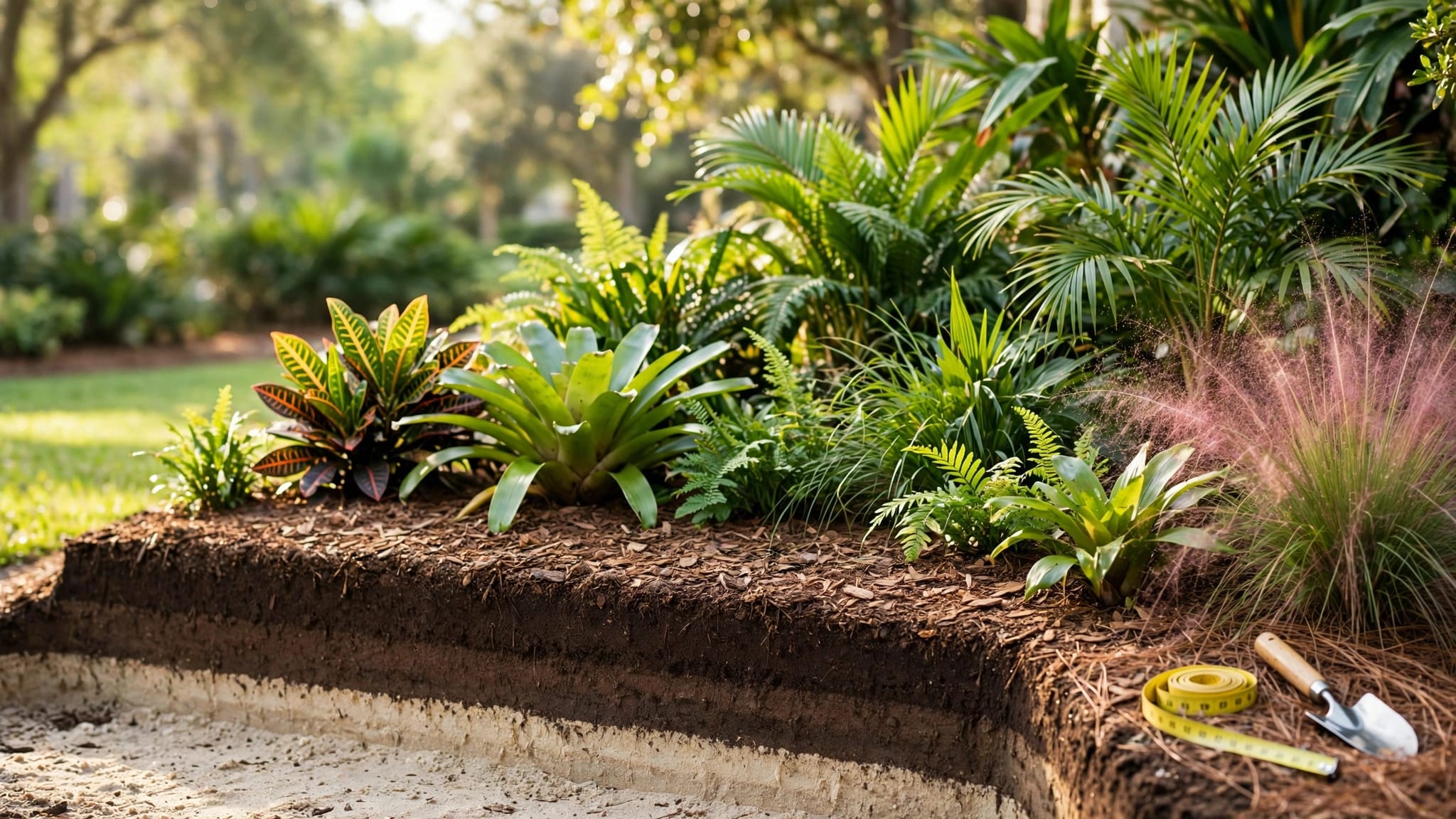
Bromeliads are a strong choice for brightening shaded side yards. They stay compact, often 1 to 2 feet tall and wide, and they add color where many other plants look tired.
Group them in clusters instead of scattering them one by one. That gives the bed a cleaner look. They do best in bright shade or filtered light, and they dislike soggy soil around the roots. Use them where you want a small splash of color near the house or under tree cover.
Vertical plants that add privacy without stealing space
When the side yard is too narrow for wide shrubs, go up instead of out. Vertical plants give you height, softness, and privacy while keeping the floor space open.
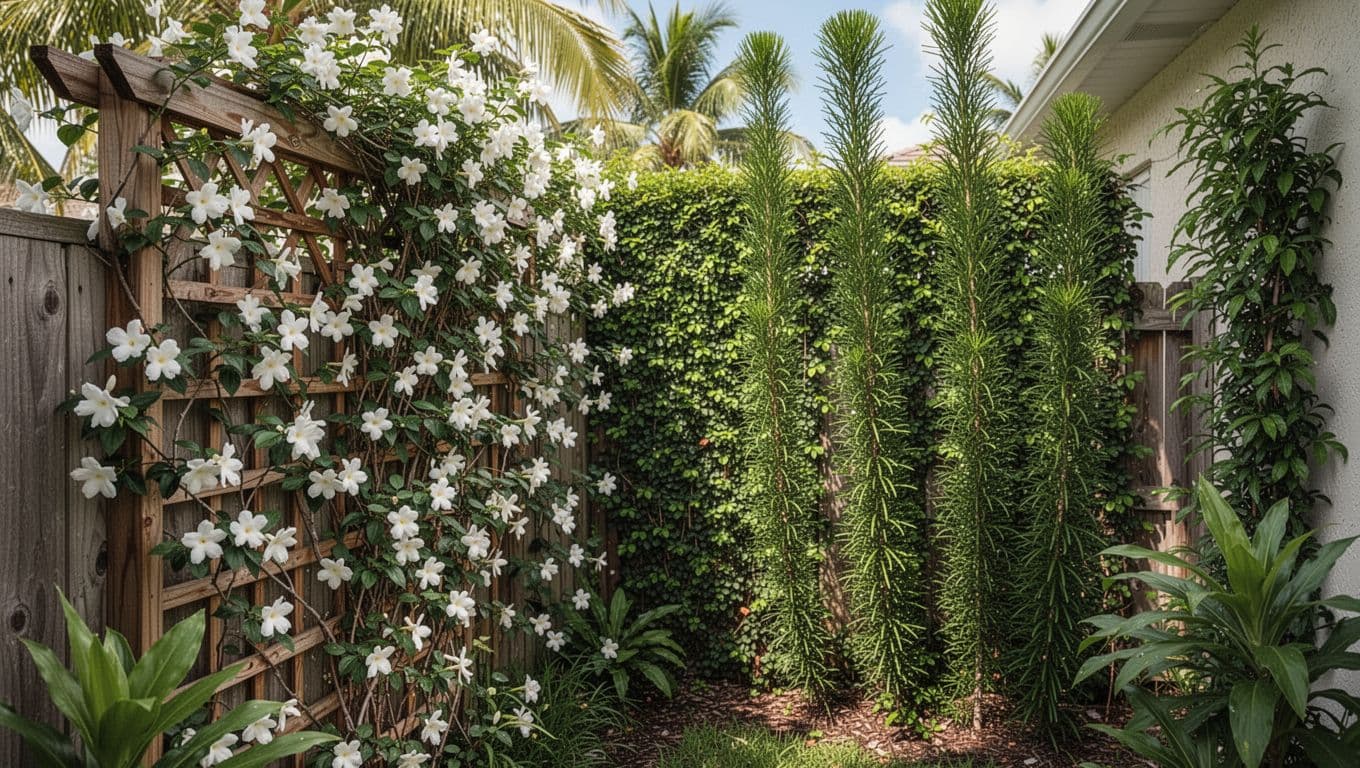
Dwarf podocarpus
Dwarf podocarpus is one of the better screen plants for a narrow strip. It can reach 6 to 10 feet or more over time, but it stays narrow if you prune it correctly. Many homeowners keep it in the 4 to 6 foot range for easier care.
It likes sun to part shade and does well as a green wall along a fence line. Because it grows in a tighter form than many hedge plants, it is easier to manage beside a side yard path. Keep it a little away from the house and AC unit so air and service access stay clear.
Confederate jasmine on a trellis
Confederate jasmine works when you want softness, fragrance, and vertical interest. The vine climbs well on a trellis, and its footprint stays small compared with a full shrub bed.
This is a good answer for blank walls or fence sections that feel bare. Give it a strong support and trim it so it does not creep where you do not want it. It likes sun to part shade and can make a narrow side yard feel much more finished without using much ground space.
Smart spacing around pavers, concrete, AC units, and drains
The best plant choices still fail if the layout is too tight. Leave room for mature width, then give the path side a little extra space. That helps after rain, when everything grows faster and leaves start to droop.
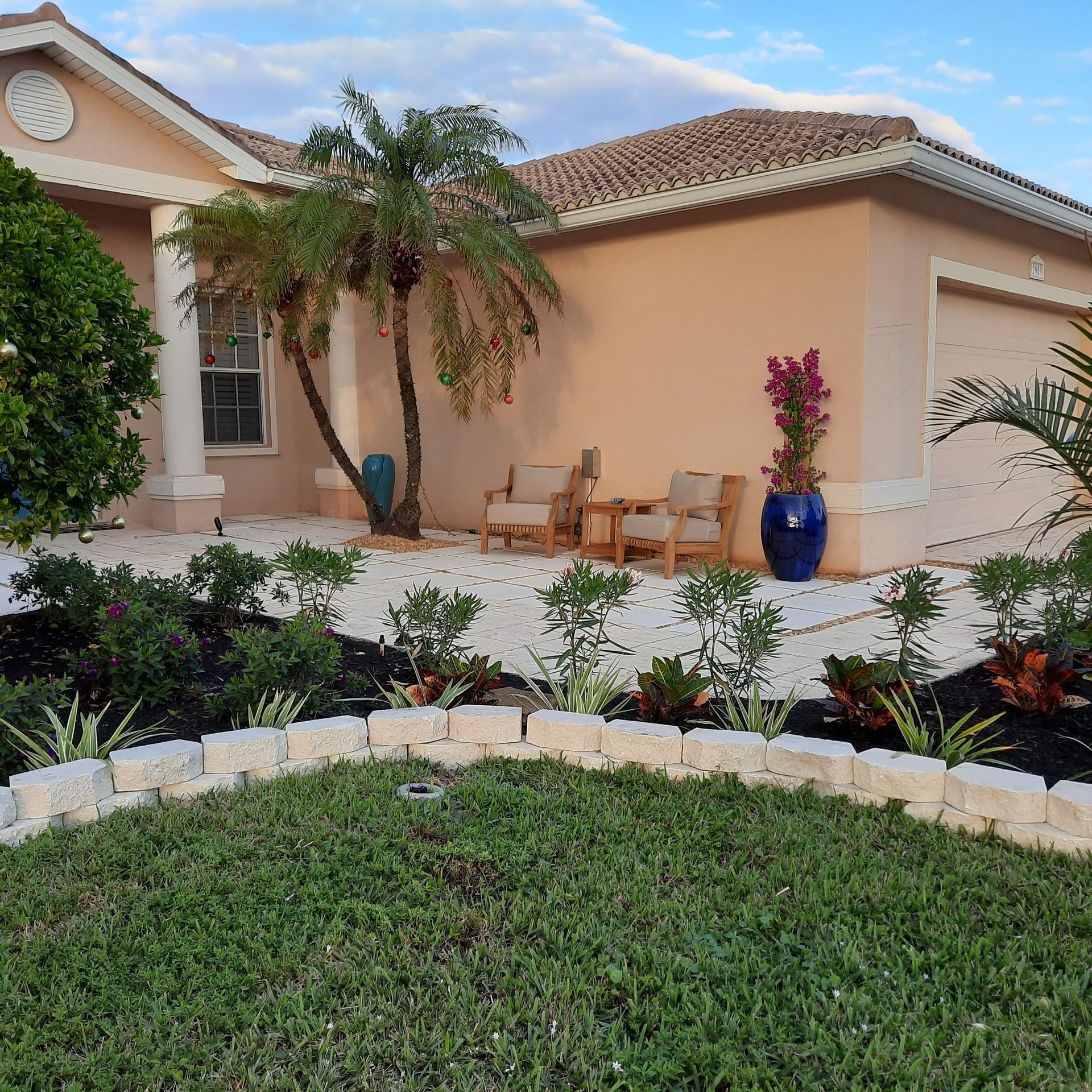
If you are adding a border or new edge, a Cape Coral concrete contractor can help you set a clean line before planting starts. A local concrete company can also make the bed edge easier to mow, sweep, and keep straight.
Pavers need their own care plan too. If your side yard has a walk or patio, regular paver cleaning and resealing costs in Cape Coral are worth checking, especially when plants drop leaves or hold moisture near the surface. Clean pavers look better, and they stay safer under wet feet.
In the narrowest side yards, artifical turf can replace a thin strip of grass and leave more room for planting pockets. If you want that option, Cape Coral artificial grass options can fit well beside a fence or wall where live turf struggles. It also pairs well with a few bold plants instead of a crowded bed.
Keep shrubs away from AC units so service workers can reach them. Leave drainage paths open so water can move after a storm. Near foundations, stay conservative and let the bed breathe.
Simple layout choices that keep the yard open
A narrow side yard looks better when the design stays simple. Repeating one shrub, one grass, and one accent plant usually feels calmer than mixing too many shapes.
Use mulch, shell, or stone to separate the plant bed from the walking strip. That small gap gives the eye a place to rest. It also makes maintenance easier after storms.
If the fence line is long, put the taller plant toward the back and the lower plants near the front. That keeps the yard from feeling boxed in. In shady corners, use bromeliads or coontie instead of forcing sun-loving plants to struggle.
Conclusion
Cape Coral side yards do not need a lot of plants. They need the right ones, placed with room to grow.
Choose narrow shrubs, light grasses, and vertical accents that fit the space you actually have. Keep the path open, respect drainage, and use plants that match the sun in each part of the yard. That is how a tight strip starts to feel like part of the home instead of leftover space.