


Lawn Scalping in Uneven Cape Coral Yards: How to Fix It
A mower can leave pale, ragged patches when its blades pass over a high spot and cut the grass too short. On a bumpy yard, lawn scalping can return even after you replace the damaged grass, unless you address the uneven surface or the way water moves through the area.
Start by looking for a pattern. Scalp marks often follow the mower's path or appear on raised areas. Then adjust your mowing approach, inspect low spots and drainage, and repair the turf only after you understand what caused the damage.
Key takeaways
- Mower scalping often happens where a high spot brings the blades too close to the ground.
- Slow, careful mowing can reduce repeat damage, but it won't level a persistently uneven yard.
- Check for drainage problems, soil compaction, and blocked water paths when damage keeps returning in one area.
- Repair small areas gradually. Replace turf only after correcting the conditions that damaged it.
- If grading or drainage work is needed, protect nearby slabs and direct water away from neighboring properties.
Why lawn scalping happens on uneven Cape Coral yards
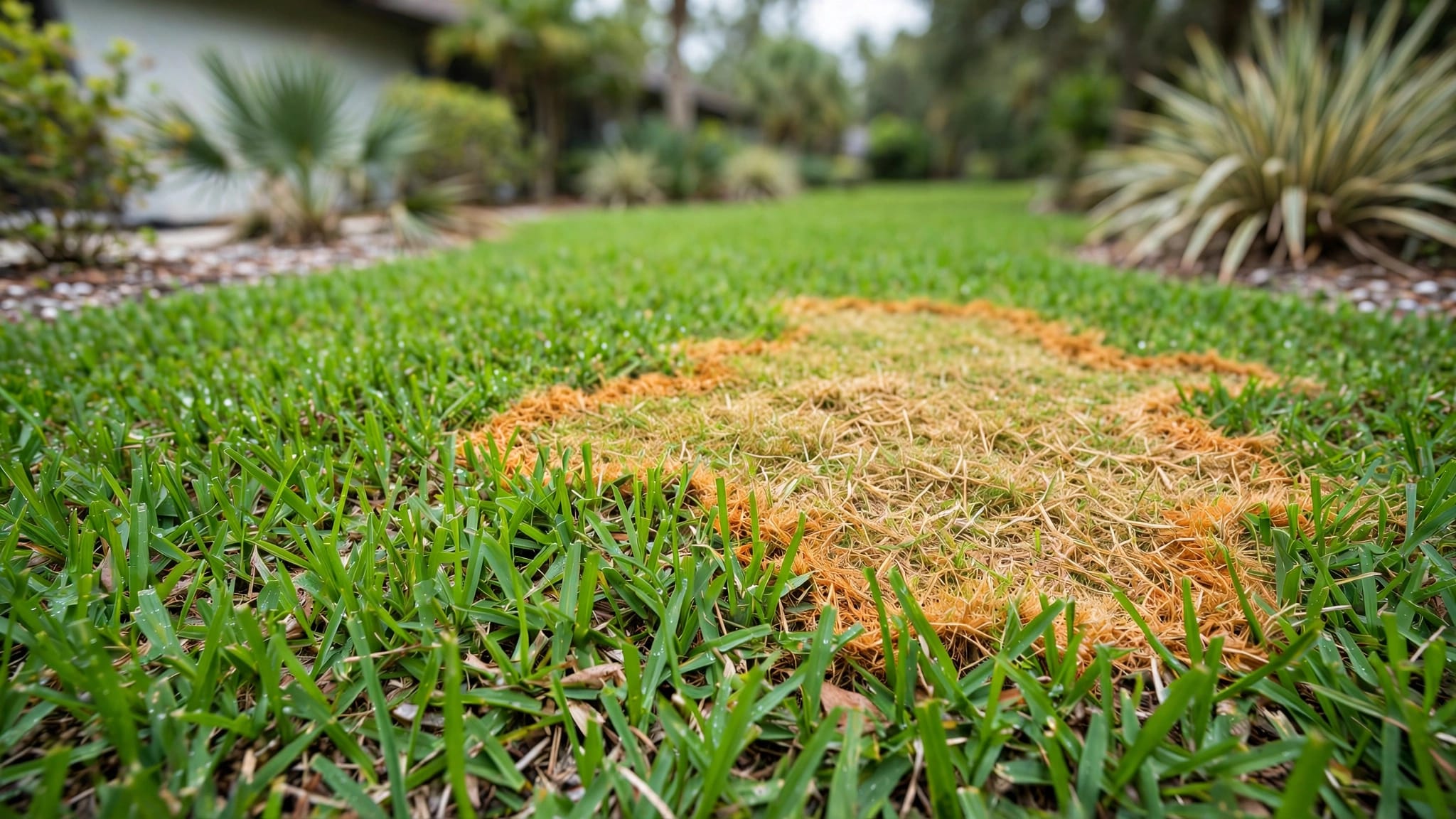
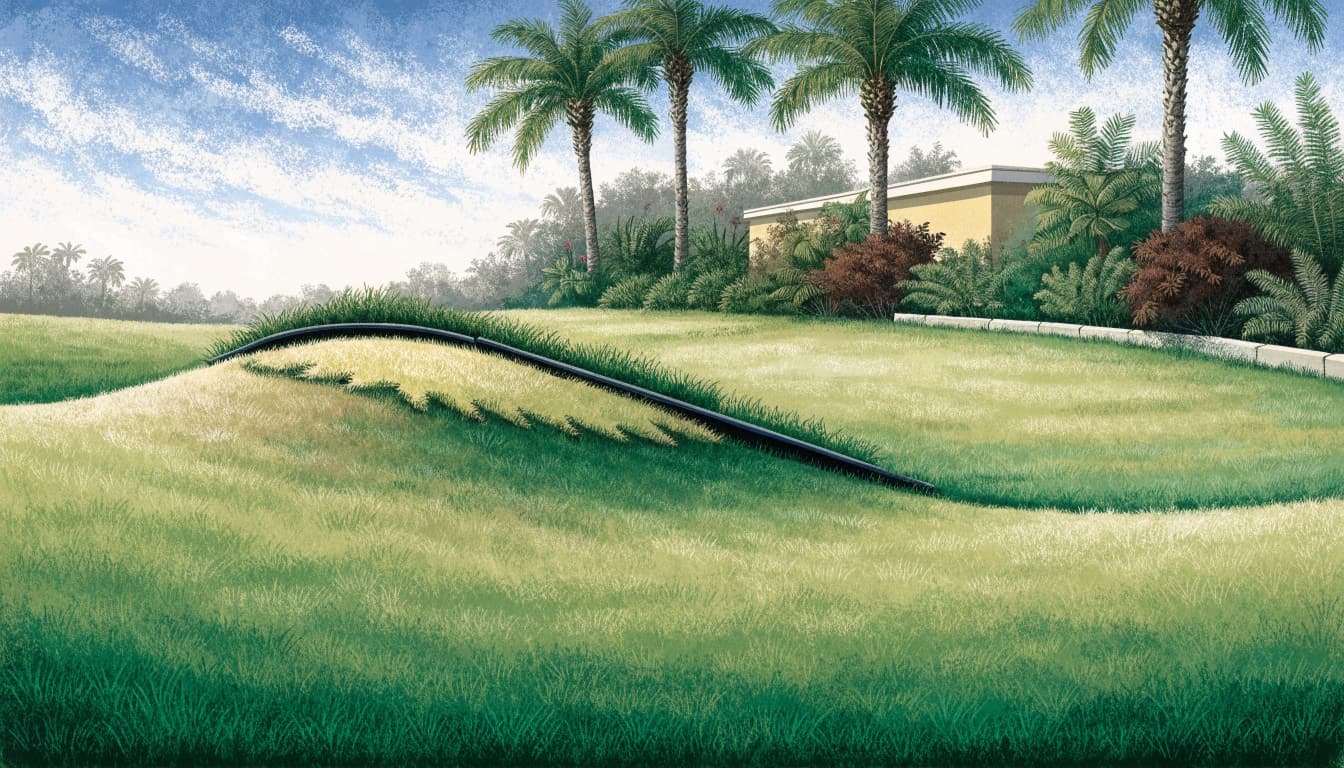
A mower deck follows the ground beneath it. When the wheels cross a raised patch, the deck can dip or tilt enough for the blades to shave the grass close to the soil. The result may look like a pale or brown spot, sometimes with torn leaf tips.
High spots and dips affect the mower deck
Small changes in grade can matter. A ridge beside a low area, a mound of soil, or a settled patch can make the mower rise and fall as it crosses the lawn. The deck may cut unevenly even when the mower is in good working order.
Cape Coral yards can also have sandy soil and drainage concerns. Water movement, erosion, or previous yard work may leave some areas higher or lower than the surrounding turf. If the same patch gets scalped on repeated passes, look beyond the mower and inspect the ground.
Scalp marks aren't the only reason grass turns brown
Scalping usually leaves a close-cut pattern, often across a raised spot or along a mower route. By contrast, a patch that spreads irregularly or appears away from mowing paths may have another cause, such as irrigation trouble, pests, disease, or standing water.
Avoid treating every brown patch as a mowing problem. Check whether the blades visibly removed grass, whether the soil is exposed, and whether nearby turf is also thinning. If the signs don't match a close cut, investigate the lawn's moisture and condition before attempting a repair.
Mow to prevent repeat damage
A better mowing approach can protect grass while you plan a lasting fix. It won't correct a mound or low spot, but it can reduce the chance of shaving the same area again.
Watch the mower's path and deck
Move at a steady pace and take extra care over visible ridges and dips. Sharp turns can shift the deck and cut unevenly, so turn on a flatter section when possible. If the mower leaves uneven marks across otherwise level ground, inspect the deck and blades for damage or poor adjustment.
When the lawn is wet or soft, mower wheels may sink into the soil and change the cutting height. Waiting for firmer ground can help prevent tire ruts and uneven cuts. Clear sticks and debris before mowing so they don't interfere with the mower or damage the blades.
Avoid trying to hide high spots with a lower cut
Cutting the whole lawn shorter to make it look even can worsen exposed patches. Instead, use a conservative cut and avoid removing too much grass at once. A healthy lawn has a better chance to fill in than one repeatedly cut close to the soil.
If a high spot keeps scalping, mark its location and inspect it after mowing. A persistent problem points to an uneven grade or another site condition, not simply an occasional missed pass.
Inspect the soil, slope, and drainage
A lawn that repeatedly scalps in one place deserves a closer look at the ground. Check the area after rain and compare it with the surrounding yard. Notice where water collects, where it runs, and whether the soil seems compacted or washed away.
Look for changes in grade and runoff
A shallow dip may collect water, while a raised ridge may cause mower contact. Runoff from a patio, walkway, or downspout can also wash soil away or keep one section wetter than the rest. If damage follows a low spot or a soggy strip, address water movement before adding grass.
Proper grading directs water away from structures. For a broader project, our guide to the Cape Coral landscape installation process explains how grading fits into yard preparation. You can also review Cape Coral soil improvement tips if the lawn struggles in sandy or poor soil.
Check for irrigation or compaction issues
A dry patch near healthy grass may point to uneven sprinkler coverage. A persistently wet patch could signal overspray, a leak, or poor drainage. Check sprinkler heads and nearby downspouts, then consider whether foot traffic or construction has compacted the soil.
When a lawn problem stays localized, grading, soil compaction, or a blocked drainage path may be involved. Our article on managing nutgrass and lawn drainage also covers why recurring trouble in one spot can call for a site inspection rather than a surface-only treatment.
Don't direct runoff onto a neighbor's property or beneath a driveway, slab, or pool deck. Water can cause disputes or wash away supporting material.
Before digging for drainage work, arrange utility locates. Major drain work or a connection to a municipal storm system may also involve permit requirements.
Repair scalp marks and low spots
Once the cause is clear, match the repair to the size of the damage. A small scalp mark may recover if the grass and roots remain intact. A bare or badly damaged area may need soil correction and replacement turf.
Give lightly damaged grass a chance to recover
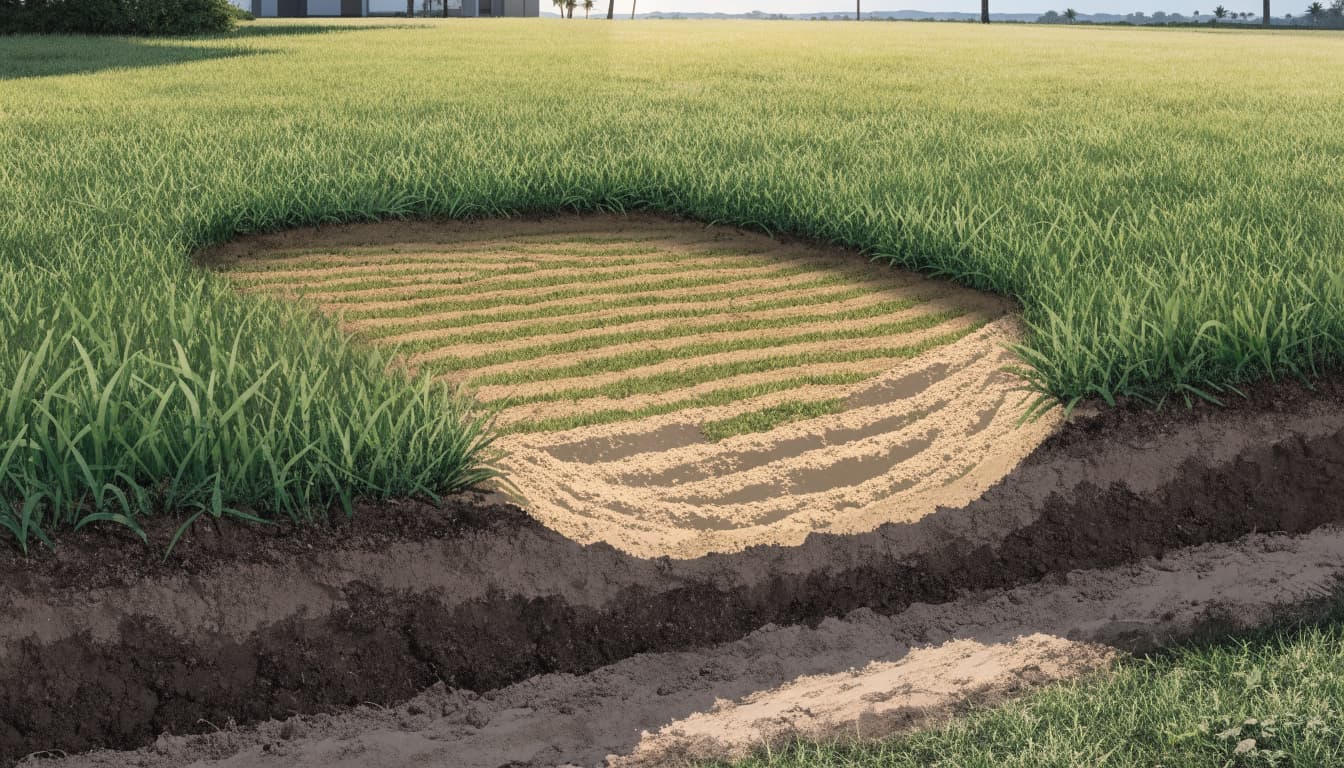
Stop cutting the affected patch too close. Keep foot traffic off it while it recovers, and water according to the lawn's needs rather than soaking the area by default. Extra fertilizer won't replace missing grass or fix poor drainage, so don't use it as a quick cover-up.
If the grass remains rooted and the damage is limited, recovery may be possible. Watch whether new growth appears and whether the same spot stays pale after nearby turf has improved. Repeated damage means the underlying grade or mowing issue still needs attention.
Correct low areas gradually
For a shallow depression, small, gradual additions of suitable soil can help bring the surface closer to the surrounding grade without burying the existing grass. Avoid filling a low area all at once. A large mound of fill can smother turf and create a new high spot for the mower to scalp.
For deeper depressions, broad uneven areas, or places where water collects, a simple surface touch-up may not be enough. Correcting grade and drainage together can prevent the repair from failing again. Keep the intended water path in mind so leveling doesn't send runoff toward the home or a neighbor.
Decide when sod or an alternative fits
If turf has died or the damaged area is large, replacement may be more practical than waiting for recovery. However, new grass can struggle if you leave the original cause in place. Prepare the surface, correct irrigation or drainage concerns, and choose turf suited to the site.
Our sod and artificial grass installation options can help you compare natural grass with a lower-maintenance surface. Some searches misspell the term as "artifical turf," but the product is generally listed as artificial turf or artificial grass.
Artificial turf can suit selected spaces, including narrow areas where natural grass repeatedly fails. It still needs a stable base and a path for water to drain. If the base or grade holds water, synthetic grass won't solve the underlying problem.
Consider the rest of the yard before changing one section. Planting beds or other landscaping may work better than repeatedly repairing a damp or shaded strip. If a new turf area meets a patio, plan paver cleaning before installation so debris and grime don't complicate the edge work afterward.
When to get help with grading or lawn repair
A small, isolated scalp mark may be manageable with careful mowing and a limited repair. Get help when the yard has broad uneven areas, water repeatedly pools, soil washes away, or the same patch fails after each repair.
At Outdoor Life Pros, we work on landscaping, irrigation repair, sod and artificial grass, pavers, and concrete. A persistent lawn problem may involve more than one of those areas. For example, a settled walkway or patio can affect how water reaches the grass; a concrete company may be needed to address a hardscape surface that directs water toward the lawn.
Coordinate the work in the right order. Resolve grading and drainage before replacing turf or installing artificial grass. If you're planning a larger yard update, review how to read a landscape grading plan so you can understand how the proposed slopes and runoff paths relate to the lawn.
Frequently asked questions
Will scalped grass grow back?
It may recover if the roots and growing parts of the grass remain healthy. Stop cutting the patch too close and watch for new growth. If the ground is bare or the same spot keeps getting shaved, correct the surface or mowing issue before replacing turf.
Should I add soil to every scalped spot?
No. First determine whether the spot is actually too low or whether nearby ground is too high. Add soil gradually only where the grade needs correction. Filling a spot without checking runoff can bury healthy grass or create a mound that causes more scalping.
Can artificial turf fix a yard that stays wet?
It can replace grass in a selected area, but it won't correct drainage by itself. The base and surrounding grade still need to move water away. Address the water problem before installing turf.
Keep the lawn even by fixing the cause
A pale strip after mowing can be a warning that the yard's surface needs attention. Careful mowing can limit further damage, but repeated scalping calls for a closer look at grade, soil, and drainage.
Repair the ground before replacing the grass, and plan for water to flow away from structures and neighboring lots. That's the best way to keep a quick patch from becoming a recurring problem.