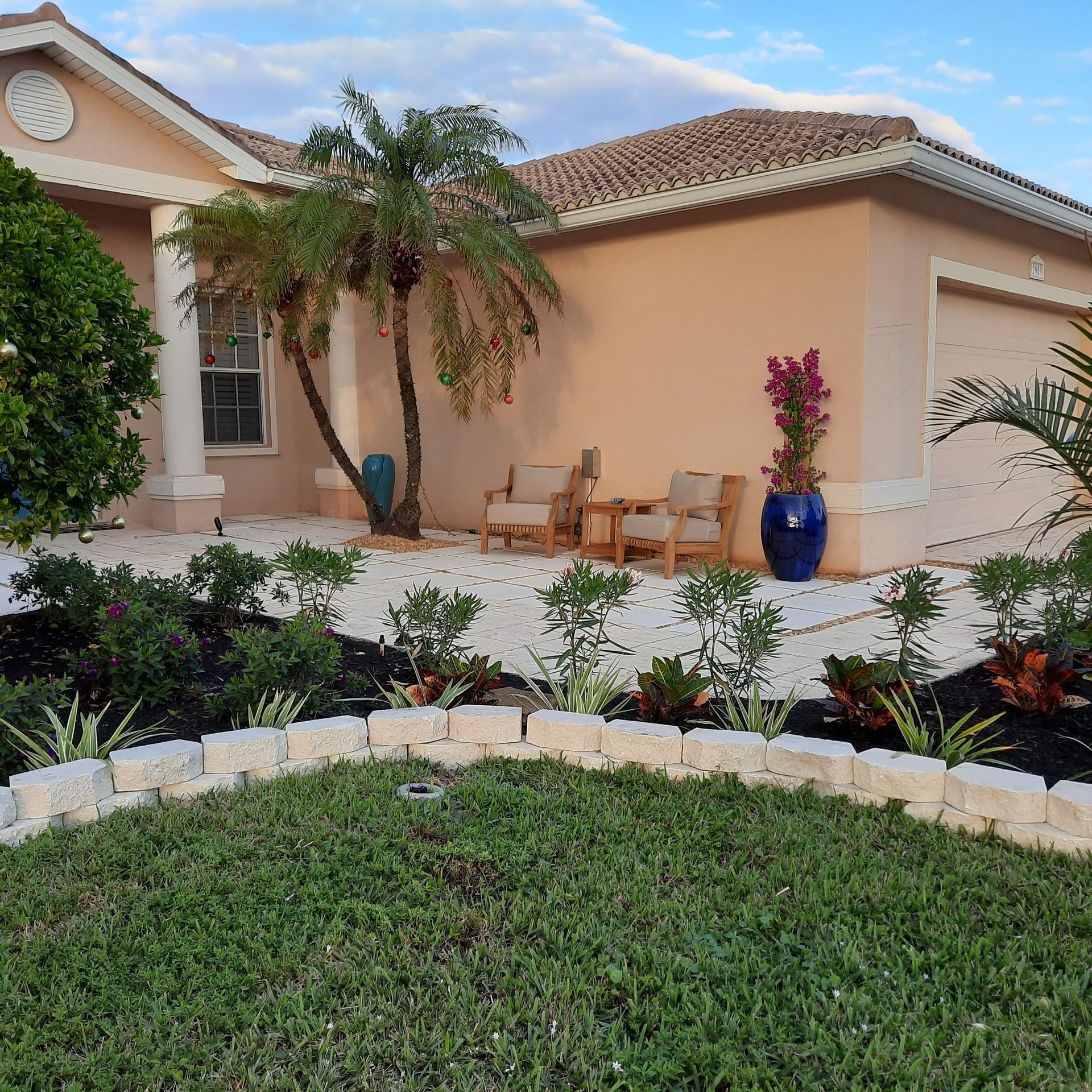



How to Remove Rust Stains From Pavers Without Damage
One rusty patio chair can leave a stubborn orange mark across an otherwise clean paver surface. Irrigation water, fertilizer, metal edging, and outdoor furniture can create the same problem.
The safest way to remove rust stains from pavers is to identify the source, test a small area, and use the mildest effective cleaner. Strong acids and aggressive pressure can damage the paver before the stain disappears.
Key Takeaways
- Remove the metal source before treating the stain.
- Test every cleaner on an inconspicuous paver first.
- Use gloves, eye protection, plant protection, and good ventilation.
- Choose a product labeled for your exact paver material.
- Repeat a mild treatment instead of reaching for a stronger chemical.
Find the Rust Source Before Cleaning
Rust stains come from iron particles that oxidize and bond with the porous surface of concrete pavers. The stain may sit beneath a furniture leg, near a sprinkler head, or along a driveway edge where metal fertilizer equipment rests.
Start by looking for the cause. Check patio furniture feet, fire pit bases, steel planters, pool equipment, edging, irrigation fittings, and downspouts. If a rusty object stays in place, the stain will return after cleaning.
Irrigation water can also create orange marks when it carries dissolved iron. This issue is more common with private wells, although municipal water can still leave mineral deposits. Look for matching stains on nearby walls, curbs, artificial grass borders, or other surfaces reached by the same sprinkler.
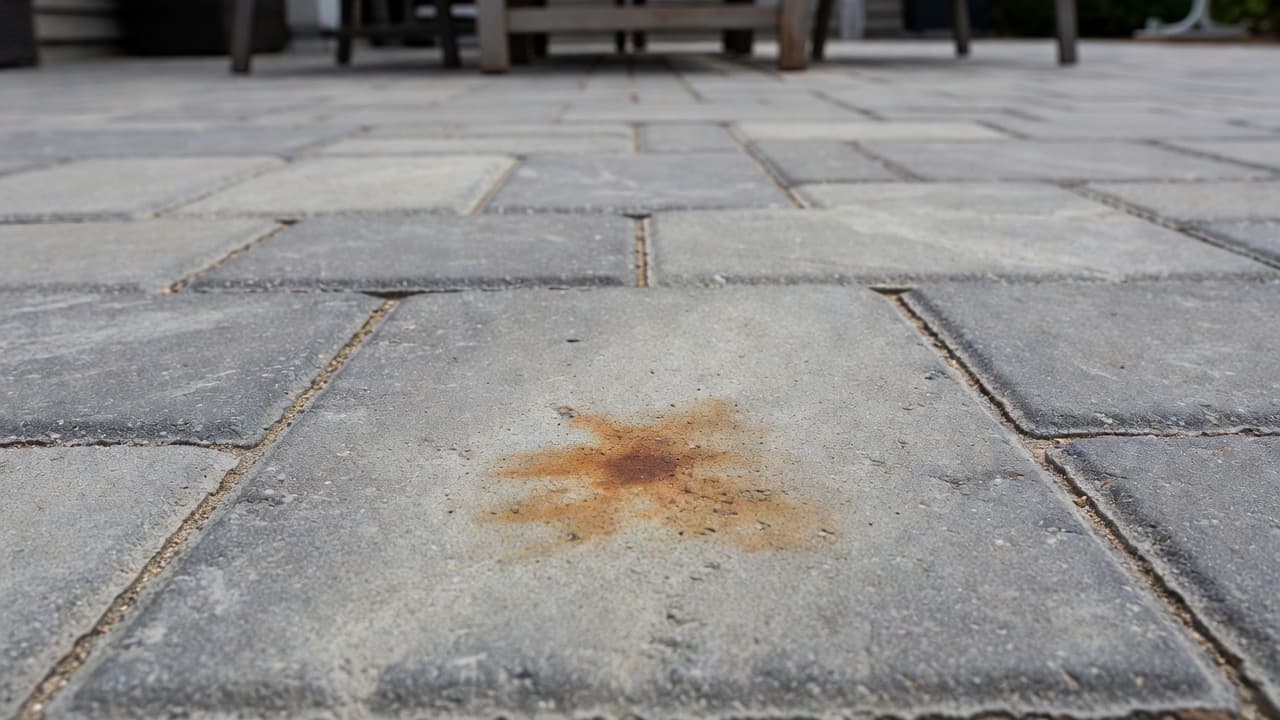
Before cleaning, sweep away sand and loose debris. Then rinse the area with clean water and inspect the mark in good light. A bright orange or reddish-brown stain usually points to rust. Dark gray marks may be tire residue, while green or black patches can indicate algae or mildew. Each stain needs a different cleaner.
If the stain covers a large section, take a photo before treatment. This helps you compare progress and makes it easier for a landscaping contractor to identify a recurring irrigation or drainage problem.
Prepare the Pavers and Test the Cleaner
The surface material determines which rust remover is safe. Standard concrete pavers can tolerate some products that would damage limestone, marble, travertine, clay brick, or decorative coatings. If you don't know the material, contact the installer or a qualified paver cleaning professional before using an acidic product.
Read the entire product label before opening the container. Some masonry rust removers contain oxalic acid or phosphoric acid. These ingredients can loosen rust, but they can also etch cement-based surfaces, strip sealer, fade color-enhanced pavers, and harm nearby plants.
Wear chemical-resistant gloves, eye protection, long sleeves, and shoes that cover your feet. Keep children and pets away from the work area. Wet nearby plants before cleaning, cover them during application when the product allows it, and rinse them afterward with plenty of clean water.
Protect walls, painted surfaces, metal fixtures, and storm drains from runoff. Never mix rust remover with bleach, ammonia, vinegar, or another cleaning product. Chemical combinations can release harmful fumes or create a more damaging solution.
Test the cleaner on a hidden paver or a spare piece first. Apply the recommended amount, follow the listed dwell time, rinse thoroughly, and let the area dry. Check for fading, roughness, pale spots, or a change in sheen before treating the visible stain.
A cleaner that removes rust quickly can still damage pavers. The test patch tells you more than the product name does.
Avoid beginning with a pressure washer. High pressure can remove joint sand, expose aggregate, chip edges, and drive water deeper into porous pavers. For rust, the right chemical and controlled scrubbing matter more than force.
Use the Least Aggressive Method First
Once the source is gone and the test patch looks sound, work through these steps in order.
- Remove loose dirt. Sweep with a soft-bristle broom. Rinse with a garden hose or use a low-pressure spray that doesn't disturb the joints.
- Try a pH-neutral cleaner. Mix a paver-safe detergent according to its label. Apply it to the stain, scrub with a nylon brush, and rinse well. This may remove surface residue around the rust, even if it doesn't dissolve the iron mark itself.
- Apply a concrete-safe rust remover. Choose a product that names concrete pavers or masonry on its label. Don't assume a cleaner designed for toilets, sinks, or metal will be safe outdoors.
- Control the application. Apply the product only to the stained area with a brush, sponge, or small plastic watering can. Avoid spraying on windy days, since mist can reach plants, siding, vehicles, and metal hardware.
- Follow the dwell time exactly. Keep the cleaner wet for the time listed on the label. If the stain starts drying, add only the amount the instructions allow. Never leave an acidic product on the paver longer because the rust looks stubborn.
- Scrub with nylon bristles. Use steady pressure rather than a wire brush. Steel bristles can scratch the surface and leave their own metal particles behind.
- Rinse completely. Flush the area with clean water while directing runoff away from landscaping and drains. Rinsing removes dissolved rust and leftover cleaner from the pores.
- Let the paver dry before judging it. Wet concrete often looks darker, which can hide remaining discoloration. If a faint mark remains and the paver shows no damage, repeat the same treatment rather than increasing the concentration.
Rust removers work best when the stain is isolated. If you pour acid across an entire patio, you may create a lighter or duller section around the original spot. Keep the treatment narrow, but blend the rinse area enough to avoid a visible cleaning outline.
A sealed paver may respond differently because the coating blocks some penetration. Strong products can cloud or soften that coating. In this situation, a paver specialist should assess whether the stain is above the sealer, beneath it, or trapped in a damaged area.
For related guidance on stains, discoloration, and repairs, review these paver cleaning and repair solutions before choosing a stronger treatment.
Know When to Stop and Prevent New Stains
A small stain from a furniture foot is usually manageable with careful spot cleaning. Stop immediately if the paver becomes rough, chalky, lighter, or unusually glossy. Those changes may indicate etching or sealer damage, not successful rust removal.
Call a qualified contractor when rust covers a large driveway, returns after several cleanings, or appears across multiple outdoor surfaces. A reputable concrete company or paver contractor can identify the source, test the surface, and use commercial equipment without treating every paver with unnecessary force.
Professional help also makes sense when the installation includes natural stone, color-enhanced concrete, painted coatings, polymeric joint sand, or an unknown sealer. A stain that has penetrated damaged concrete may need surface restoration rather than another round of chemicals.
Prevention starts with small changes. Add rubber or plastic feet to metal furniture, replace rusty hardware, and keep steel planters on saucers or stable stands. Don't drag metal objects across the pavers. Clean fertilizer granules, leaves, and metal residue as soon as you notice them.
Adjust sprinklers so they don't repeatedly spray pavers, walls, or furniture. If well water leaves orange deposits, have the water tested and ask an irrigation professional about filtration or sprinkler adjustments. Landscaping choices also matter. Keep mulch, soil, and wet plant material from staying against the paver edge.
After the surface is clean and fully dry, a compatible sealer may slow future staining. Sealing doesn't make pavers stain-proof, and it won't correct an active rust source. Still, it can give you more time to clean spills before they soak in. Follow the sealer label for drying conditions, especially during humid Southwest Florida weather, and review this paver maintenance and sealing guide before scheduling the work.
The same care applies around artificial grass, sometimes searched as "artifical turf," concrete edging, pool decks, and outdoor kitchens. Keep chemicals off these surfaces unless their labels approve the application.
Conclusion
Removing rust stains from pavers safely starts with patience. Find the rusty source, protect nearby plants and surfaces, test the cleaner, and use nylon scrubbing with thorough rinsing.
Skip wire brushes, unapproved acids, chemical mixtures, and damaging pressure settings. When the stain keeps returning or the pavers have a delicate finish, professional paver cleaning can protect the surface while addressing the cause. A clean stain is useful, but a rust-free patio begins with removing whatever keeps creating it.