


Florida Palm Lethal Bronzing: Symptoms and Next Steps
A palm that suddenly drops fruit and develops bronze-colored lower fronds needs more than a fertilizer adjustment. In Florida, those changes can signal lethal bronzing disease, an infection that cannot be cured .
However, brown foliage also results from transplant stress, nutrient problems, and other diseases, so appearance alone isn't enough. If your palm is declining quickly, arrange a professional evaluation rather than waiting for the next maintenance visit.
Start with the symptom sequence, then confirm the cause before making treatment or removal decisions.
Key Takeaways
- Sudden fruit drop, dying flowers, and rapid bronzing of older fronds warrant prompt evaluation.
- Laboratory testing is necessary because nutrient deficiencies and other palm problems can produce overlapping symptoms.
- Infected palms cannot be cured. Confirmed cases require prompt removal and assessment of nearby palms.
- Preventive antibiotic injections are a professional decision for tested, disease-free palms at risk, never a homeowner treatment project.
How Lethal Bronzing Affects Florida Palms
Lethal bronzing is caused by a phytoplasma, a microscopic bacterium that lives in the palm's food-conducting tissue. UF/IFAS identifies the pathogen as 16SrIV-D . Older references may call the disease Texas Phoenix Palm Decline.
The palm cixiid, Haplaxius crudus , is associated with transmission. That makes the problem different from damage caused by poor irrigation or fertilizer shortages.
UF/IFAS reports detection in 21 palm species. However, susceptibility and symptom development differ among species, so identifying your palm matters. A professional needs that information when evaluating a declining canopy or planning replacement planting.
The infection can remain hidden before visible decline begins. UF/IFAS describes an estimated four-to-five-month period before symptoms, although timing varies. Once symptoms appear, the spear may collapse within roughly two to three months.
For homeowners in Fort Myers, Cape Coral, Estero, and Bonita Springs, that means waiting through an entire season can cost valuable response time. Early action won't cure an infected palm, but it helps clarify decisions for neighboring palms.
Early Symptoms of Lethal Bronzing Disease
Look for a sequence of changes rather than one brown leaf. Not every palm shows every symptom, and palms without fruit offer fewer early clues.
Fruit Drop and Dying Flowers
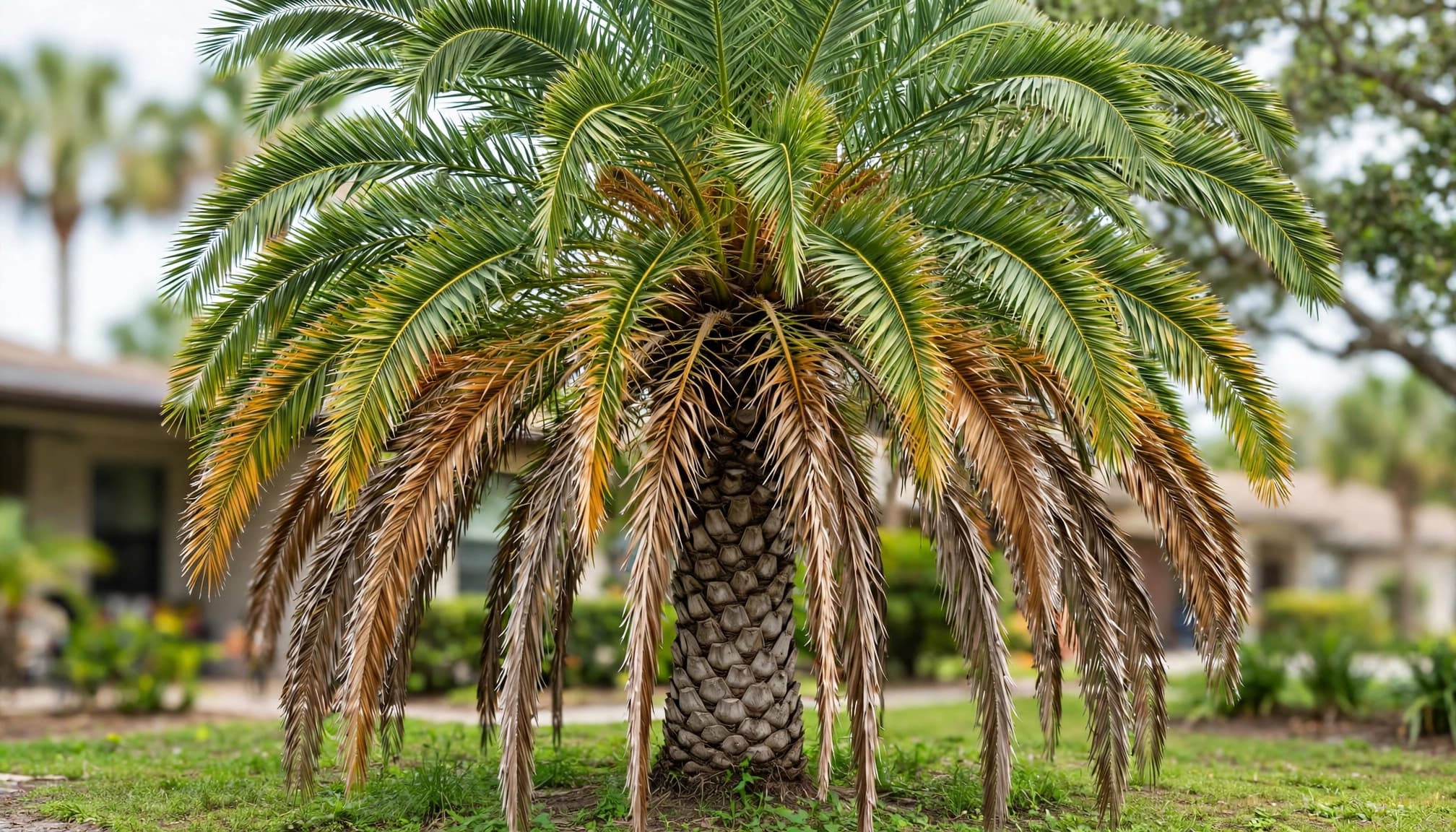
When fruit is present, premature fruit drop is often an early warning. A noticeable loss before normal maturity deserves attention, especially when foliage begins changing soon afterward.
If the palm hasn't set fruit, flowers may die instead. However, fruit loss alone doesn't confirm infection. Weather, normal development, and other stresses can also affect fruiting.
Photograph fallen fruit and flower stalks before cleanup. Note when the change began and whether neighboring palms show similar problems. Those details help the evaluator understand the order of events, which a single crown photograph cannot capture.
Bronzing Moves Upward Through the Crown
Discoloration commonly begins in the oldest, lowest fronds and progresses upward. Leaves may develop a bronze-brown appearance as decline advances.
The center spear is the newest unopened leaf. With lethal bronzing, spear death indicates that the growing point has died. For the affected stem, that loss ends the possibility of continued crown growth.
Don't wait for the spear to collapse before calling for help. Also, don't climb the palm or pull on the spear to investigate. Observe from the ground and let a qualified professional assess the crown safely.
How It Differs From Other Palm Problems
Several Florida palm problems overlap visually. Leaf color can help guide an inspection, but it cannot reliably separate lethal bronzing from every other cause.
Nutrient Deficiencies and Transplant Stress
Nutrient shortages can produce yellowing, spotting, and leaf-tip damage. Their appearance depends on both the missing nutrient and the palm species. Adding fertilizer without identifying the problem can cause further injury.
A recently installed palm may also lose older fronds after root disturbance. Continued production of healthy new growth is encouraging, although it doesn't rule out infection.
Record planting dates, irrigation changes, and recent fertilizer applications. Along Southwest Florida's coast, salt exposure can contribute to foliage damage; inland cold events and saturated soil also deserve consideration.
Unlike routine establishment problems, a rapid combination of premature fruit loss, upward-moving bronzing, and spear death requires urgent disease evaluation.
Bud Rot, Fusarium Wilt, and Site Damage
A dead or loose spear can occur with bud rot or another growing-point problem. Meanwhile, one-sided canopy decline and streaking along leaf stems can occur with vascular diseases such as Fusarium wilt.
These are reasons to seek diagnosis, not proof of a particular disease. A professional should also inspect for insects, scale, unusual spotting, trunk damage, and root-zone problems.
Nearby construction may compact soil or damage roots. Cleaning runoff, herbicide exposure, and irrigation failures can injure palms too. Tell the evaluator about recent work rather than assuming every brown frond has an infectious cause.
What to Do When You Suspect Infection
Arrange an evaluation by an ISA-certified arborist with palm experience or another qualified palm-health professional. County UF/IFAS Extension can provide current diagnostic and sampling guidance.
Document Changes Before Altering the Site
Take clear photographs of the entire palm, lower fronds, center crown, and trunk base. Record the first symptom date and whether decline is accelerating.
Include recent weather events, transplanting, fertilizer use, herbicide applications, and construction. Also note whether other palms nearby have changed.
Avoid relocating the palm again or stripping the crown to improve its appearance. Extra root disturbance adds stress, while premature pruning can remove useful diagnostic evidence.
Keep people away from hanging fronds or other hazards. Safety takes priority over preserving evidence, so leave hazardous material to a trained crew.
Arrange Laboratory Testing
UF/IFAS states that visual symptoms alone cannot confirm lethal bronzing. Testing typically involves trunk-core material or sawdust collected using the laboratory's current instructions.
Ask the professional to coordinate sample collection and submission. Don't drill into the trunk yourself or mail fallen leaves without confirming the accepted sample type.
Ask how results will guide removal, nearby-palm testing, and any preventive treatment decisions. If a test is negative but decline continues, the professional should investigate other causes and determine whether further sampling is appropriate.
Meanwhile, avoid changing several care practices at once. That can make the original problem harder to identify.
Confirmed Infection Means Removal, Not Recovery
An infected palm cannot be cured , including a palm that tests positive before severe symptoms appear. Fertilizer, extra watering, fungicides, and routine pruning won't eliminate the phytoplasma.
UF/IFAS recommends prompt removal of infected palms and testing nearby palms, including those without visible symptoms. Discuss the removal schedule and surrounding palms with the evaluating professional.
A healthy-looking neighboring crown doesn't rule out infection. Testing matters because visible symptoms can lag behind the pathogen.
Request a written removal scope covering equipment access, debris hauling, cleanup, and whether stump work is included. These are separate tasks, and a basic tree-removal price may not cover all of them.
Tell the crew about irrigation lines, landscape lighting, pool cages, fences, and underground utilities. Keep children and pets outside the work area, and don't attempt tall-palm removal yourself.
Removal doesn't prove the rest of the property is disease-free. Continue monitoring nearby palms and follow the professional's testing plan rather than assuming the problem ended with one tree.
Prevention Has Limits, and Antibiotics Aren't a Cure
Preventive management focuses on palms that aren't infected. UF/IFAS describes oxytetracycline HCl injections for tested, disease-free palms at risk near infected palms.
This requires a professional plan. Product labeling, palm size, test results, treatment intervals, and the property's disease situation all matter. Repeated injections also mean an ongoing commitment, not a one-time service.
Don't buy antibiotics and inject the trunk yourself. Improper treatment can injure the palm, and injections cannot restore a confirmed infected palm. Ask the evaluating professional whether preventive treatment makes sense for the remaining trees.
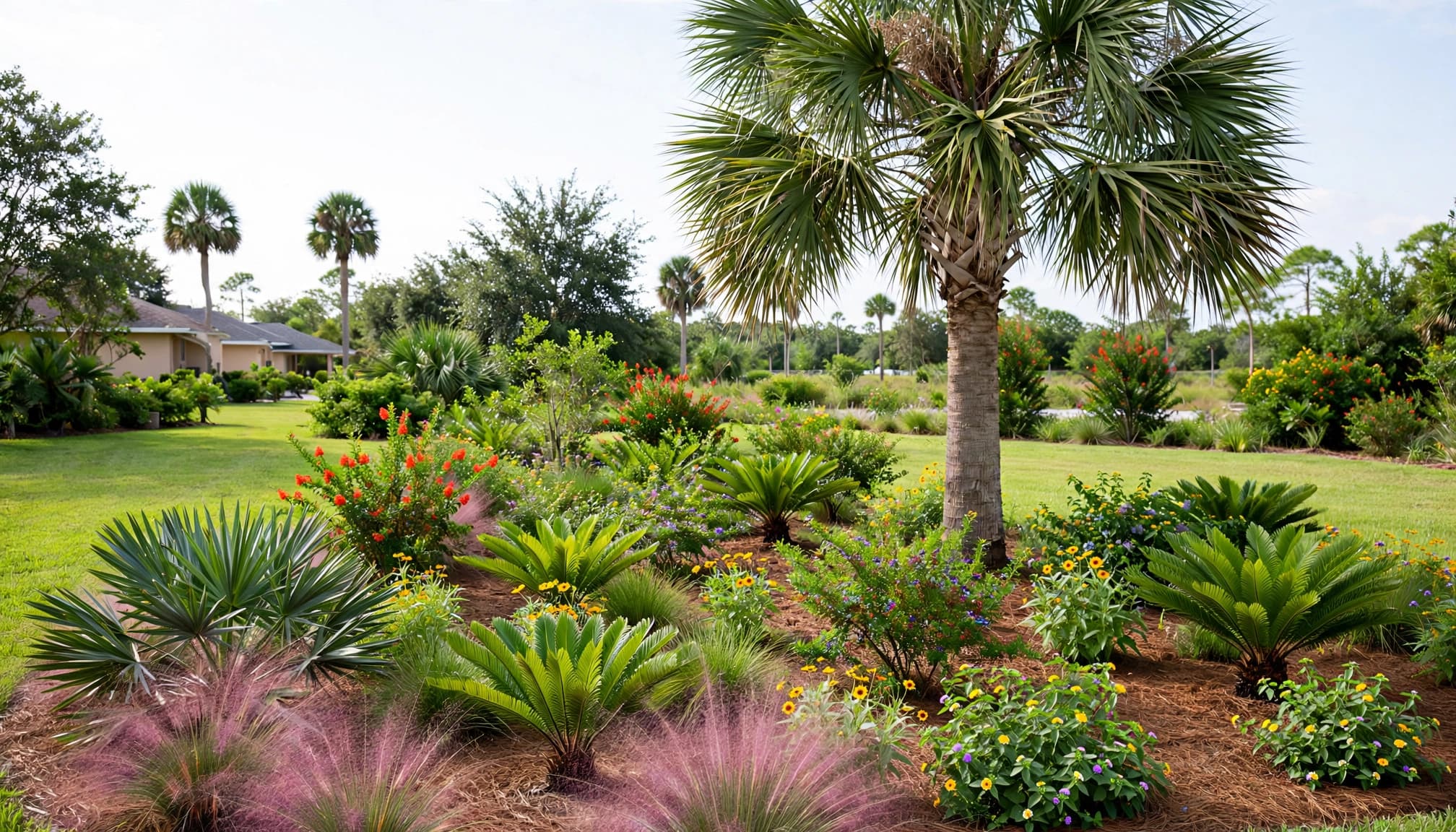
Good landscaping care supports palm health, but it doesn't make susceptible palms immune. Correct irrigation, drainage, planting depth, and nutrition address other causes of decline; they aren't a cure or guaranteed prevention for lethal bronzing.
If irrigation problems accompany browning, coordinate repairs through landscape and irrigation services while a palm-health professional handles disease evaluation.
Likewise, don't assume a general insecticide application will protect every palm. Ask for evidence-based recommendations suited to your property. Keep dated photographs of remaining palms so you can spot changes sooner.
Rebuild Without Stressing the Remaining Palms
After removal, review the replacement plan before buying another palm. Ask about documented susceptibility, mature size, drainage needs, and whether a non-palm tree or mixed planting would better suit the site.
A diverse planting plan avoids relying on one palm species throughout the yard. However, diversity doesn't guarantee that susceptible palms will escape infection. Landscape design and installation can help organize replacement beds without assuming every open space needs another palm.
Complete heavy removal work before installing artificial turf or delicate new plants. If access crosses a planned patio or driveway, coordinate scheduling with your concrete company to avoid equipment damage to finished surfaces.
During later paver cleaning, keep chemical runoff out of planting beds. Cleaner injury is a separate problem, but it can complicate future palm-health assessments.
Finally, preserve the grade around remaining trunks. Don't bury them under new soil or thick mulch, and have irrigation coverage checked after the layout changes.
Conclusion: Act Before the Crown Collapses
Rapid fruit loss and bronzing deserve prompt attention, even while the upper crown remains green. Professional evaluation and laboratory testing provide a sound basis for the next decision.
Confirmed infected palms cannot be saved, but timely removal and assessment of nearby palms help you manage the property responsibly. Avoid guesswork with fertilizer or antibiotics, and plan replacement planting around both disease risk and Southwest Florida site conditions.