


Best St. Augustine Mowing Height for Cape Coral Lawns
A mower set too low can turn a healthy Cape Coral lawn into a brown, stressed patch within days. For most standard St. Augustinegrass, the best St. Augustine mowing height is 3.5 to 4 inches, with 4 inches often the safer target during Southwest Florida's hottest weather.
The correct setting depends on your cultivar, shade, rainfall, and irrigation. Mowing at the right height protects the leaf surface, helps the turf handle heat, and keeps scalping from damaging the stolons. Start by identifying your grass type, then adjust your mower and schedule to match the lawn's current condition.
The right St. Augustine mowing height for Cape Coral
Cape Coral lawns often face intense sun, sandy soil, heavy summer rain, and short dry periods. A taller mowing height gives standard St. Augustinegrass more leaf area and helps shade the soil.
Standard cultivars need a taller setting
Common standard cultivars include Floratam, BitterBlue, and Classic . Keep these grasses between 3.5 and 4 inches. In a sunny, well-irrigated yard, 3.5 inches can work. A 4-inch setting is usually better during hot weather or when the lawn dries quickly.
Floratam is common in Florida, but it doesn't tolerate cold as well as some other cultivars. It also has only fair shade tolerance. A taller cut won't fix deep shade, but it can help the plant retain enough leaf surface to use the limited light available.
For a standard lawn, set the mower near 4 inches if you're unsure of the cultivar. Cutting below 3 inches can expose the soil, weaken the grass, and encourage weeds.
Dwarf cultivars can be cut shorter
Dwarf types include Seville, Jade, Palmetto, and Delmar . These cultivars are generally maintained around 2 to 2.5 inches. A 2.5-inch target is a practical starting point for most Cape Coral yards.
Dwarf St. Augustinegrass is the exception to the general rule against mowing below 3 inches. However, don't assume a lawn is dwarf grass because it has a fine texture. Confirm the cultivar before lowering the deck.
Shade also affects the target. In partial shade, keep standard grass toward 4 inches and dwarf grass near 2.5 inches. More leaf area helps the plant collect light, while a short cut can leave shaded turf thin and weak.
How Cape Coral weather changes mowing needs
The calendar doesn't tell you when to mow as reliably as the grass itself. Warm weather and rain can produce a fast growth flush, while heat and dry soil can leave the lawn brittle.
Adjust during heat and rainy weather
During August and other hot summer months, keeping standard St. Augustinegrass near 4 inches can reduce stress. Taller blades shade the soil and help slow moisture loss. Avoid cutting during the hottest part of the day, especially when the lawn already shows wilt.
Summer rain can make the grass grow quickly. You may need to mow every four to seven days during an active growth period, although some lawns grow more slowly. Check the blade length instead of following a fixed weekly routine.
Mow only after the leaf blades and soil surface have dried. Wet grass bends under the mower, leaves uneven cuts, and can create clumps that block light from the turf below.
Protect grass during dry periods
Cape Coral's sandy soils can drain water quickly. When rainfall drops, check whether the lawn shows stress before mowing. Folded blades, footprints that remain visible, and a gray-green color indicate that the grass may need water.
Severely drought-stressed grass becomes brittle and bruises more easily under a heavy mower. Delay mowing until the turf has recovered, then cut with a sharp blade. A smart irrigation controller can help adjust watering as weather changes, but it still needs separate schedules for turf, planting beds, and new sod. These smart irrigation timers for Cape Coral lawns can help organize those different watering needs.
Follow current local watering rules and water deeply enough to moisten the active root zone. Short daily watering often produces shallow roots and doesn't solve dry-soil stress.
How to measure mowing height correctly
Mower height settings aren't always accurate across different machines. Worn tires, uneven decks, and different blade designs can change the actual cutting height.
Measure the grass, not only the mower dial
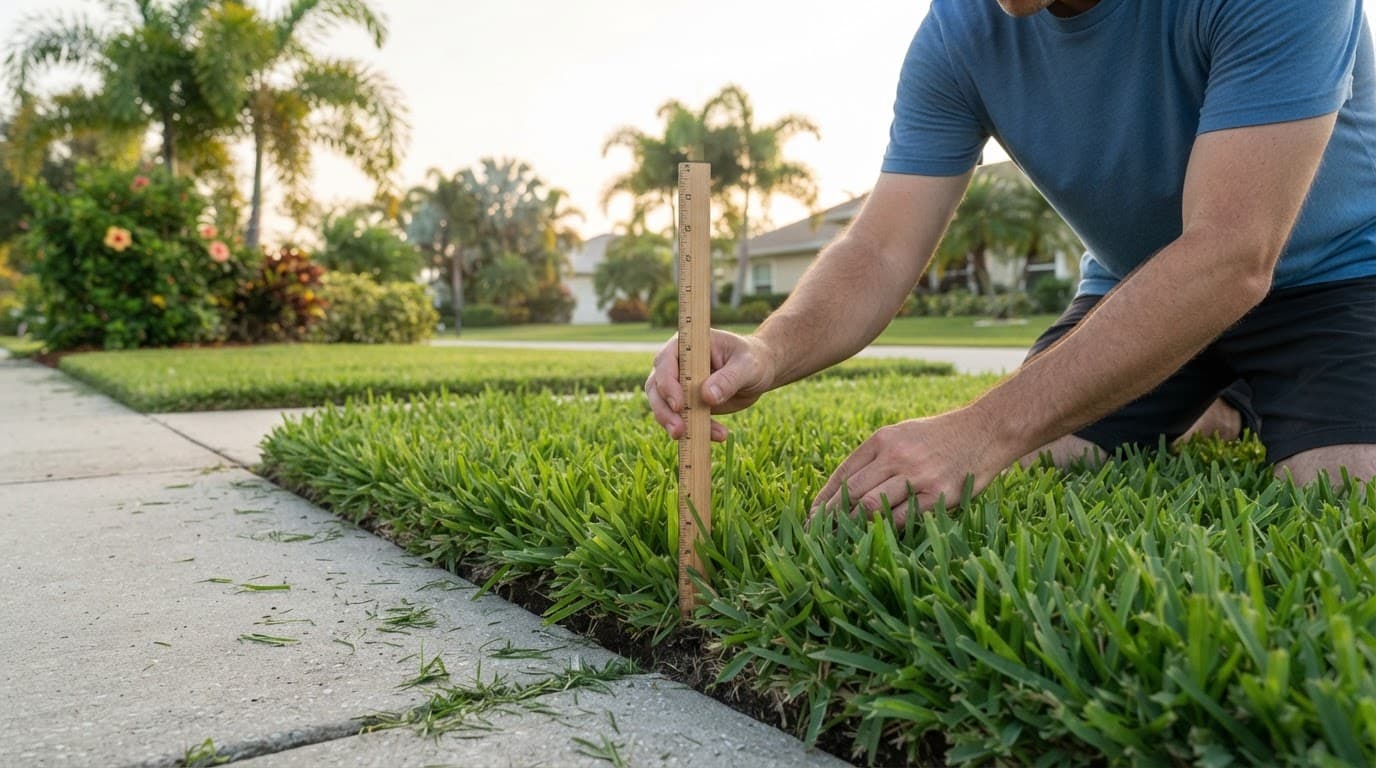
Choose several locations across the yard. Avoid measuring a bent blade or a spot pressed down by foot traffic. Hold a ruler upright at the soil surface and measure to the tip of a naturally upright leaf.
Take readings in the front yard, side yard, and shaded areas. Uneven soil or a thick thatch layer can make one area appear taller than another. A few measurements provide a more useful target than one reading beside the driveway.
If you recently installed sod, wait until it resists a gentle tug and shows new growth before mowing. Cutting loose sod can pull up the pieces and damage developing roots.
Check the mower safely
Park the mower on a level surface and use the manufacturer's instructions to check the blade height. Disconnect the spark plug or battery before reaching near the blade. Never place your hand under an active mower deck.
The cutting plane of the blade matters more than the height of the deck shell. If the mower cuts lower on one side, check tire pressure and confirm that the deck sits level. A mower that tilts can scalp one strip while leaving the next strip too tall.
Make a small test pass in an out-of-the-way area. Measure the cut grass, then adjust the deck before mowing the entire property.
Use the one-third rule every time
The one-third rule is the simplest way to protect St. Augustinegrass. Remove no more than one-third of the leaf blade during a single mowing. Cutting more than that removes too much tissue and can expose the lower stems.
Set a practical mowing trigger
If you maintain standard grass at 4 inches, mow before the lawn exceeds about 6 inches. That follows the one-third rule, although mowing closer to 5 or 5.5 inches usually keeps the lawn neater and reduces heavy clippings.
For a 3.5-inch target, plan to mow when the grass reaches roughly 4.5 to 5.25 inches. For a 2.5-inch dwarf lawn, mow around 3.25 to 3.5 inches.
The target height describes where the grass should finish after mowing. It isn't the height at which you begin the cut. Waiting too long forces you to remove too much in one pass.
Recover an overgrown lawn gradually
Heavy rain, a missed service, or a broken mower can leave the grass far above the target. Don't drop the deck sharply and scalp the lawn. Instead, remove up to one-third, wait for the turf to recover, then mow again at the proper setting.
A second pass may be necessary when clippings form thick rows. Spread those clippings across the lawn so they don't smother the leaf surface. During a hot or dry period, give the turf time to recover before making another cut.
Mow in a different direction each time when possible. Changing patterns reduces ruts and helps prevent the grass from leaning permanently in one direction.
Troubleshoot common mowing problems
Mowing height often explains lawn damage, but it isn't the only possible cause. Look at the pattern, timing, and condition of the grass before changing the entire maintenance plan.
Brown tips and scalping
Brown tips that appear immediately after mowing often point to a dull blade. A dull blade tears the leaf instead of making a clean cut. Wet mowing can create the same problem because the blades fold and drag beneath the mower.
Sharpen or replace the blade, mow when the turf is dry, and check that you're removing less than one-third of the leaf. If brown tips appear across the lawn between mowing days, inspect irrigation coverage, salt exposure, insects, and disease as well.
Scalping occurs when the mower cuts into the lower stems or stolons. It often leaves pale soil, exposed runners, and thin strips along slopes or uneven ground. St. Augustinegrass should not be scalped as a routine practice. Scalping-related stress can slow green-up and create openings for weeds.
Raise the deck, correct the mower level, and let the turf rebuild its leaf surface. Avoid adding heavy fertilizer to a lawn that is already stressed unless a soil test or lawn professional identifies a nutrient need.
Thatch and uneven growth
Thatch is the layer of living and dead stems between the green leaves and soil. A thick, spongy layer can make the lawn feel high even when the leaf blades look short. It can also interfere with water movement and make it difficult to measure the real cutting height.
Lowering the mower won't solve thatch. Check whether excess fertilizer, shallow watering, poor drainage, or compacted soil is contributing to the problem. If the layer is thick, have the lawn assessed before choosing dethatching or renovation work.
Uneven growth can come from several sources. A tilted mower deck, low tire, bumpy soil, poor sprinkler coverage, shade, or grass spreading into different light conditions can all create height differences. Correct the equipment first, then review irrigation and drainage.
Coordinate mowing with the rest of the yard
A good mowing plan works alongside your property's hardscape and landscaping. Turf should meet walkways cleanly, receive even irrigation, and have enough room to drain after storms.
Protect grass near concrete and pavers
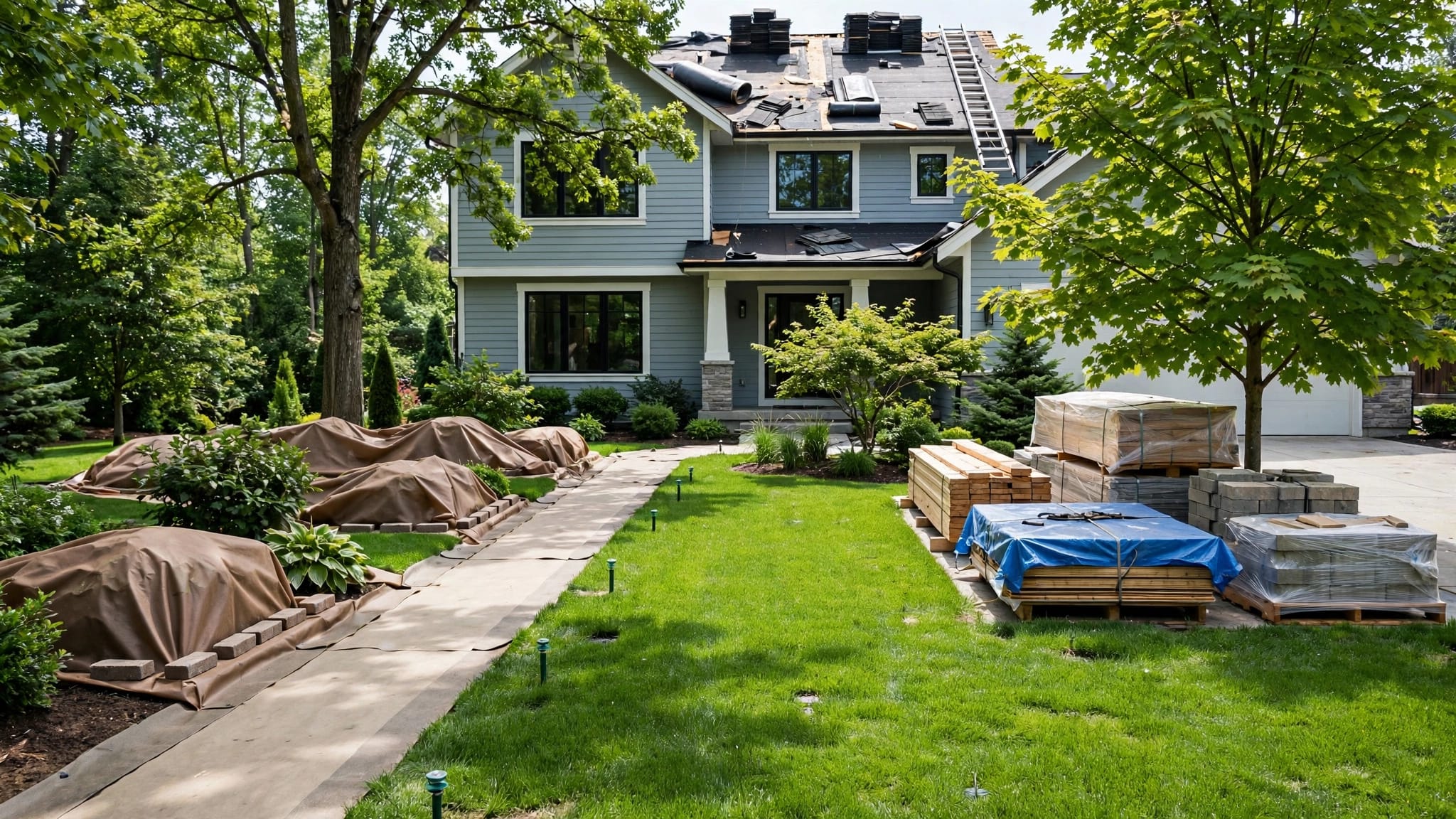
If a concrete company is adding a walkway, patio, or driveway, check the finished grade before replacing nearby sod. A low strip beside new concrete can collect water, while a high edge can leave the mower scalping the turf.
Keep mower wheels on a stable surface when trimming along hardscape. Use an edger or string trimmer carefully, because repeated low trimming beside concrete can create a permanently thin border.
Paver cleaning also requires care. Keep strong cleaning solutions and concentrated runoff off the grass. If overspray reaches the lawn, rinse the area with clean water and follow the product label.
Know when natural grass needs a redesign
Some thin areas need better drainage, irrigation repair, or more shade-tolerant planting rather than a lower mowing height. A full-sun lawn with compacted soil may need grading or soil work before new sod can succeed.
When comparing grass types, use this Cape Coral sod selection guide to review St. Augustinegrass, Zoysia, and Bahia options. For a narrow side yard where natural grass struggles, artifical turf may be an option, but its base and drainage still need careful planning.
A landscaping project that includes sod, irrigation, pavers, or concrete should address drainage before the final turf goes down. Otherwise, new grass may hide the same problem that damaged the old lawn.
Conclusion
For most Cape Coral lawns, the best St. Augustine mowing height is 3.5 to 4 inches , with 4 inches preferred during hot weather and in partial shade. Dwarf cultivars can stay near 2 to 2.5 inches, but every lawn should follow the one-third rule.
Measure the actual grass, mow when the turf is dry and not drought-stressed, and adjust frequency after heavy rain. A sharp blade, level mower deck, and gradual recovery plan will protect the lawn far better than a short cut. When the grass keeps struggling, inspect irrigation, thatch, drainage, and cultivar before lowering the mower.