


Why Retaining Walls Fail in Cape Coral Yards
A retaining wall in Cape Coral has to handle more than soil. It has to deal with heavy rain, wet ground, shifting fill, and fast changes in weather. When one part of that system gives out, the wall starts to move, crack, or bow.
That's why retaining wall failure often starts small. A tiny lean, a hairline crack, or a damp spot behind the wall can turn into a bigger problem after one storm. If you know what to look for, you can catch trouble before it affects your yard, your drainage, or your safety.
Why Cape Coral weather puts extra pressure on retaining walls
Cape Coral walls live in a tough setting. Rain can come fast, then sit in the yard for hours. Soil around the wall gets saturated, then dries out, then gets soaked again. That back-and-forth cycle pushes hard on the structure.
Water is the main reason many walls begin to fail. Soil gets heavy when it holds water, so the wall has to resist more pressure than it was built for. Add coastal weather patterns, tropical storms, and summer downpours, and the load rises again.
Wind matters too, but mostly because it drives rain into places that already drain slowly. Low spots in a yard can collect runoff, and that runoff often ends up behind the wall. Once water sits there, the wall starts working like a dam with a weak base.
Cape Coral yards also change over time. Fill dirt settles, roots spread, and landscaping beds get rebuilt. If the slope around the wall changes even a little, water may stop moving away from it. That shift can happen slowly, so the wall looks fine until it suddenly doesn't.
A retaining wall usually fails because of what water does behind it, not what you can see on the face of the wall.
Drainage problems are the biggest hidden cause
Drainage is where many walls go wrong. A wall can look solid from the front and still be in trouble behind the scenes. If water has nowhere to go, pressure builds every time it rains.
That pressure pushes the wall outward. Over time, you may see a slight bow, then a crack, then a clear lean. In some yards, the soil behind the wall softens so much that it starts to slide. That's when the wall loses support and parts of it separate.
Good drainage usually starts with yard slope. If the ground tilts toward the wall, water follows that path. Fixing the grade can make a big difference, and that's often part of broader drainage work like grading your yard for drainage.
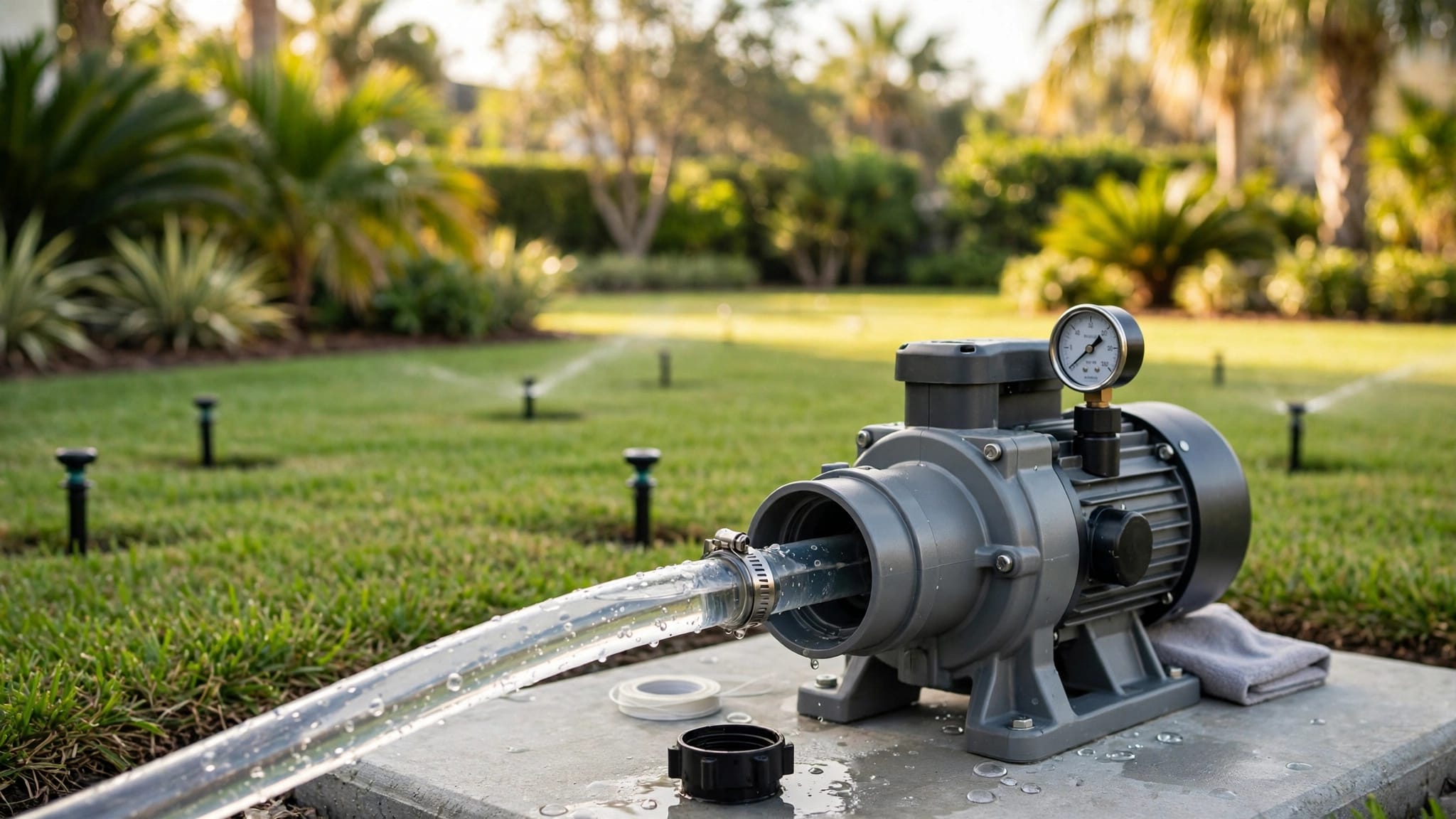
Downspouts also matter. If roof water dumps near the wall, the wall has to handle extra runoff every time it rains. Sprinkler heads can create the same issue when they keep the area damp day after day. Even a small leak near the top of the wall can feed the problem.
The ground itself can hold water longer than homeowners expect. Clay pockets, compacted fill, and old disturbed soil all slow drainage. That's why a wall can fail even when the surface looks dry. The water is still trapped below.
Build quality and base prep matter more than wall style
A wall's strength starts below ground. If the base is soft, uneven, or poorly compacted, the wall can settle and crack. Once that happens, the problem usually spreads.
This is why proper base preparation for retaining walls is such a big deal. If you want to compare what goes into a well-built wall, this guide on retaining wall installation cost in Cape Coral explains how base prep and drainage affect the final result.
A lot of failures come from shortcuts during installation. Common mistakes include:
- A base that is too shallow for the wall height
- Backfill that was not compacted in layers
- Drain pipe that was left out or installed poorly
- Blocks or stones that were set on uneven soil
- Wall height that exceeds what the site can support
A reliable concrete company should look at more than the block or cap on top. The ground, drainage path, and finished grade all matter. If those parts are off, the wall may move even if the surface looks neat.
Height is another issue. Taller walls hold more soil and water, so they need better planning. A short garden wall and a taller yard wall do not face the same stress. When the wall is built as if they do, failure often shows up sooner than expected.
Warning signs that a wall is starting to fail
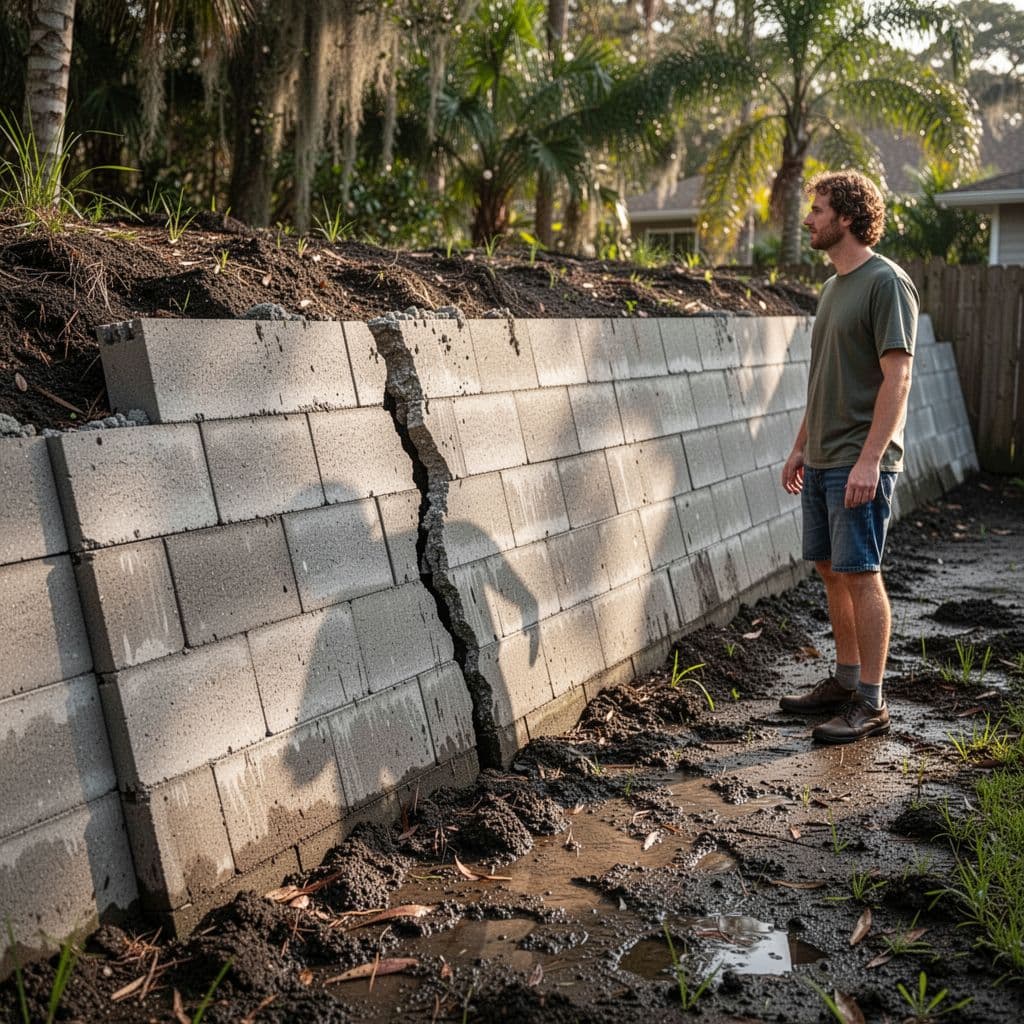
The early signs are often easy to miss if you only glance at the wall. A careful walk around the yard after a storm tells you much more.
Here's a quick guide to the most common symptoms and what they often mean:
| Warning sign | What it may point to | Why it matters |
|---|---|---|
| Leaning wall | Pressure from water or weak base support | The wall is losing its hold |
| Bulging face | Soil pushing hard from behind | The wall may be close to breaking |
| Cracks in blocks or concrete | Settlement or stress from movement | Cracks usually spread with more rain |
| Separating sections | Parts of the wall are shifting at different rates | Gaps can turn into collapse points |
| Sinking areas | Base failure or soil washout | The wall may no longer sit level |
| Washout near the bottom | Water escaping where it shouldn't | Soil loss can hollow out the support |
A wall can show more than one of these at once. For example, a slight lean paired with a crack near the middle often means the wall is already under strain. If you also see soil washing out, the problem is usually active.
Watch for changes after heavy rain. That's when weak spots show themselves. If a wall looks worse every time it storms, the movement is not random. It's telling you something about the soil or drainage behind it.
Landscaping choices can help the wall, or hurt it
The area around the wall matters just as much as the wall itself. Poor landscaping can trap water near the base. Smart landscaping helps water move away before it causes trouble.
Mulch piled too high can hold moisture against the wall. Heavy planting beds can also hide drainage problems until the soil starts to sink. Even artifical turf needs a good base and drainage plan, because water still has to go somewhere.
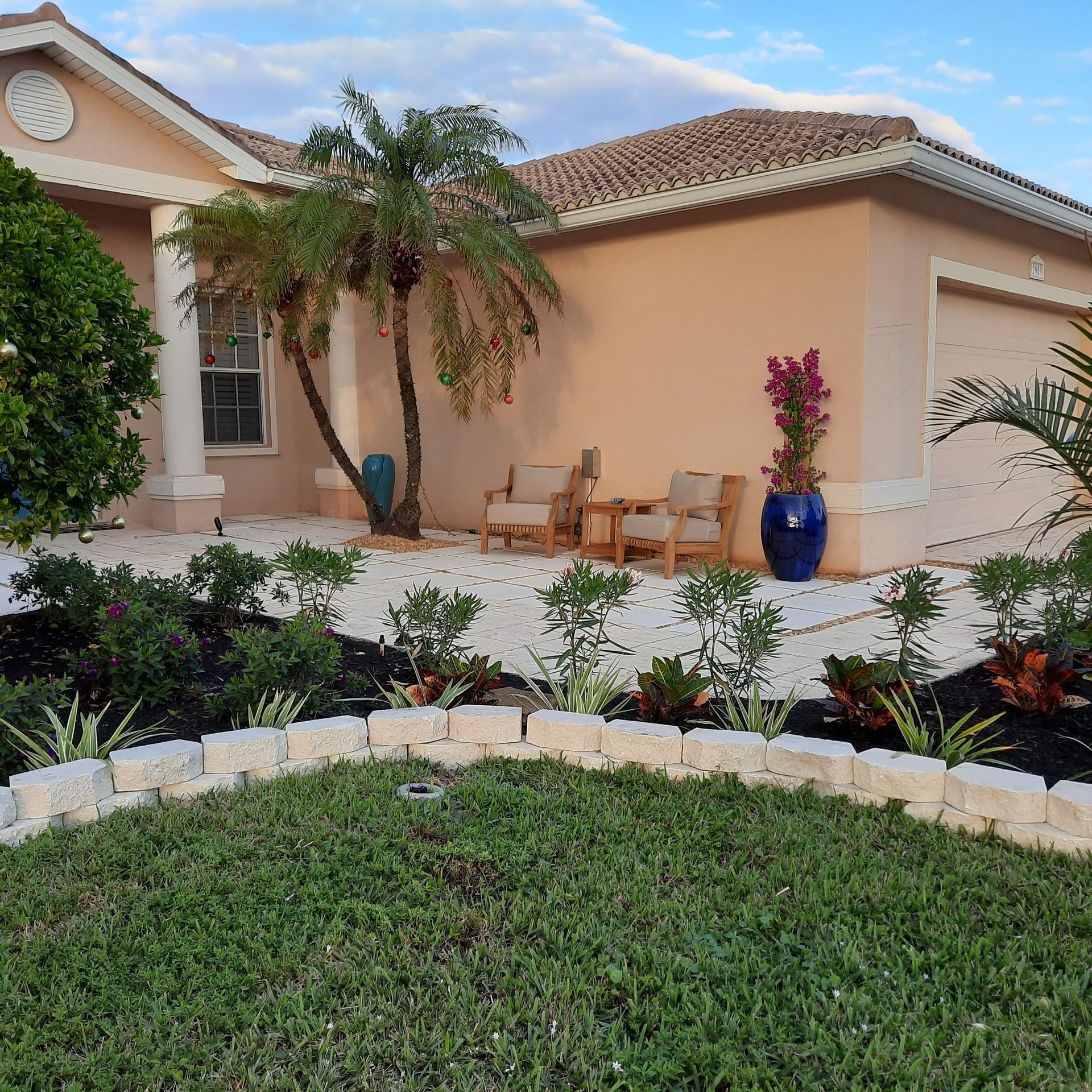
Paver areas near the wall deserve attention too. Loose joints, low spots, and settled edges can send water toward the wall instead of away from it. Routine paver cleaning helps you spot washout, weed growth, and sand loss before those issues spread.
A few yard habits help protect the wall:
- Keep soil and mulch from building up against the back of the wall
- Check gutters, downspouts, and splash blocks after storms
- Keep sprinkler heads aimed away from the wall
- Look for soft spots or erosion after long rain periods
- Fix slope changes before they send water back toward the structure
These small steps help, but they do not replace a sound build. A wall that was installed well can still fail if the yard changes around it. That's why wall care and yard care need to work together.
Conclusion
Cape Coral walls fail for a few clear reasons, and water is at the center of most of them. Saturated soil, poor drainage, weak base prep, and changing yard grades all add stress until the wall starts to lean, crack, bulge, or sink.
The best protection is simple. Keep water moving away, check the wall after storms, and stay alert for washout or separation. If a wall is showing real movement, have it professionally evaluated before it turns into a safety or drainage problem.