


Pool Deck Repair Cost in Cape Coral, FL for 2026
Cape Coral pools get a lot of use, and the deck pays for it. Sun, salt air, rain, and humidity work on concrete year after year, so small flaws turn into bigger ones faster than many homeowners expect.
If you're comparing estimates, the pool deck repair cost in 2026 usually depends on how deep the damage goes. A simple crack fix can stay affordable, while resurfacing, leveling, and drainage work can push the price much higher.
That's why a quote should match the deck in front of you, not a generic price sheet. Deck size, accessibility, material, and finish choices all shape the final number.
What Cape Coral homeowners are paying in 2026
For most Cape Coral homes, pool deck repair falls into a few cost bands. Small repairs often start around $100 to $500. Moderate repairs usually land between $500 and $1,500. Larger repair jobs or resurfacing projects often reach $1,600 to $6,000 or more.
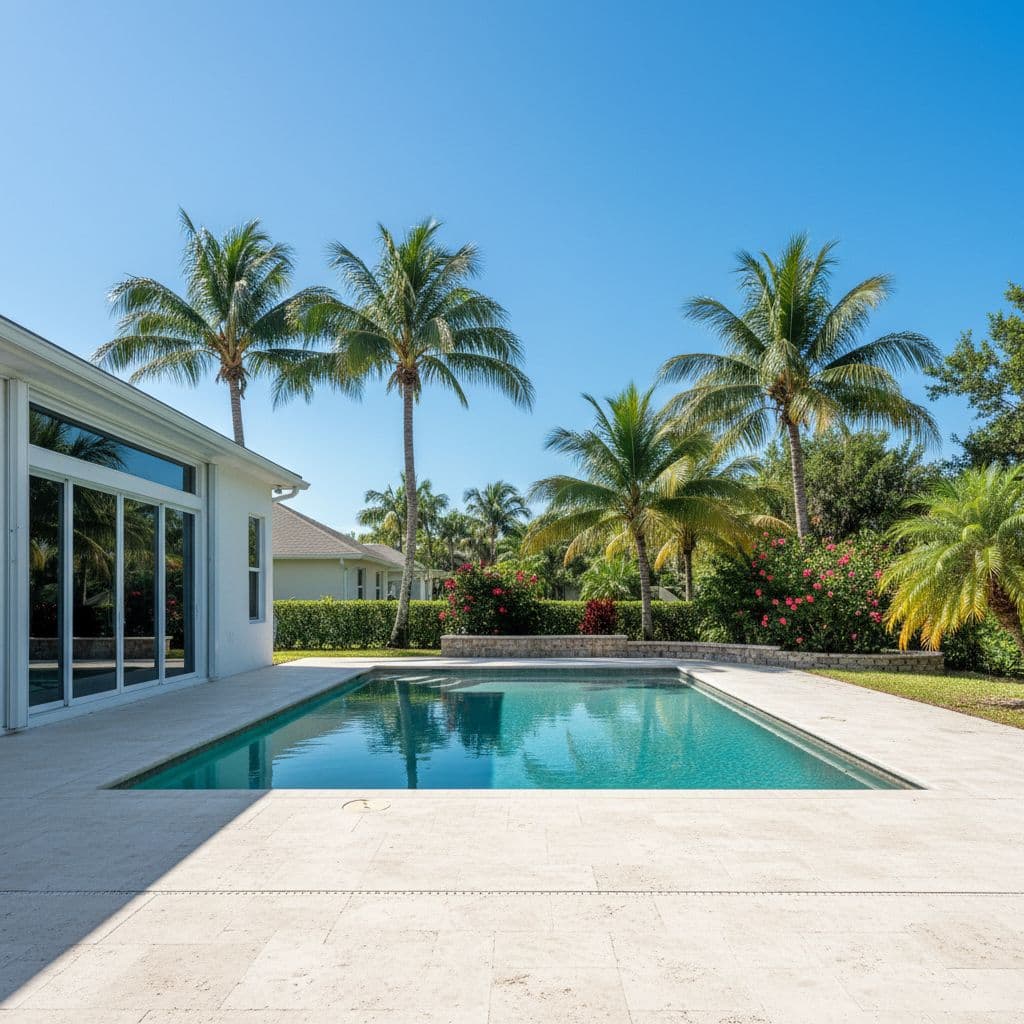
A square-foot price is helpful too. In 2026, many homeowners pay about $4 to $14 per square foot, depending on the work needed. That range is wide because a cosmetic patch is not the same as a surface rebuild.
| Repair type | Typical 2026 cost in Cape Coral | What it usually includes |
|---|---|---|
| Small crack or chip repair | $100 to $500 | Local patching, minor prep, seal touch-up |
| Moderate repair | $500 to $1,500 | Wider crack work, small leveling, extra surface prep |
| Resurfacing or larger repair | $1,600 to $6,000+ | New top layer, texture update, finish upgrades |
If the slab is still solid, fixing the surface is usually far cheaper than starting over.
The takeaway is simple. A few cracks may only need patching, but worn texture and sinking spots change the job fast. The more prep work a crew needs, the more the bill climbs.
Why Cape Coral pricing changes so much
Cape Coral weather is hard on concrete. Strong sun dries out sealers, frequent rain works into hairline cracks, and humidity keeps surfaces damp longer than most inland areas. Near the water, salt-air wear adds even more stress.
A local concrete repair and resurfacing services team can tell whether the damage is only on the surface or deeper in the slab.
Several things push the price up or down:
- Bigger decks need more labor, more material, and more time.
- Tight side yards or crowded pool equipment can slow access.
- Hairline cracks cost less than sunken or heaved sections.
- A plain finish costs less than a color-matched or slip-resistant surface.
- Drainage fixes often add prep work before the repair starts.
- Nearby coping, pavers, or edging can add labor if they need attention too.
Poolside safety matters here. If the deck gets slick after rain, a better texture or resurfacing system may be worth the extra cost. Saving money on a shiny finish can backfire if it makes the deck slippery.
A Cape Coral concrete company should also look at how water moves across the surface. If water pools in one corner, the repair bill can rise because the fix has to solve the cause, not just cover the crack.
When minor repairs are enough, and when resurfacing makes more sense
Small chips, hairline cracks, and light surface wear often respond well to spot repair. If the deck is still level and the surface feels stable underfoot, patching may be the smartest move.
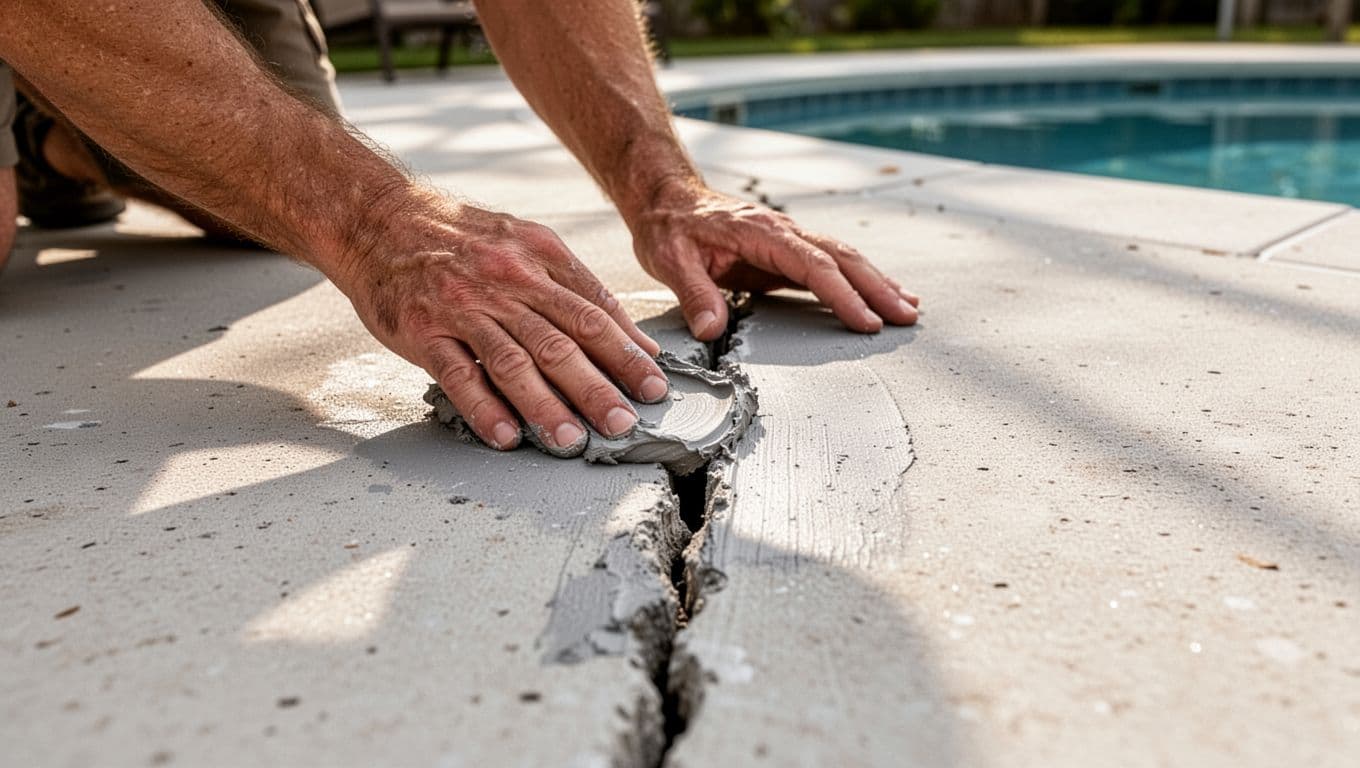
Resurfacing starts to make more sense when the deck has many cracks, faded texture, or rough spots across a wide area. It can also help when the top layer looks tired but the base slab still holds up.
Full replacement is usually the last step. That choice makes sense when the slab keeps settling, major sections have failed, or repairs keep coming back every season.
A simple way to think about it is this. If the problem is local, repair may be enough. If the whole surface is aging at once, resurfacing often gives better value. If the base has moved, replacement may be the only lasting fix.
That choice also affects safety. A deck with soft spots, slick patches, or repeated cracking can become a trip hazard. Around a pool, that matters just as much as looks.
Ways to keep the bill in check without cutting quality
The easiest savings often come from good planning. Clear furniture, move planters, and give the crew open access before work starts. When a job is easy to reach, labor usually stays lower.
If you're already improving the outdoor space, it can help to bundle related work. Fresh landscaping, paver cleaning, or a small drainage update may be cheaper when done with the deck repair instead of later. Some homeowners also replace muddy side strips with artifical turf to cut splash-back and cleanup near the pool edge.
For broader outdoor updates, professional landscaping and paver services can keep the whole area looking consistent.
A few choices usually protect your budget without hurting the result:
- Keep the finish simple if you don't need a decorative coating.
- Ask whether crack sealing can be done before resurfacing.
- Separate repair, prep, and sealing costs so you know what you're paying for.
- Fix drainage problems now, before they damage the new work.
Still, the cheapest quote is not always the best value. If a contractor skips prep or ignores drainage, you may pay for the same problem again.
What a solid inspection should include
A good estimate starts with a real inspection. A walk-through shows things a phone quote can miss, especially around pool edges and low spots where water likes to sit.
A proper visit should check:
- cracks, chips, and hollow spots
- slope and standing water
- surface texture and seal wear
- coping and edge conditions
- nearby pavers, drains, or landscaping borders
That inspection tells you whether you need a patch, resurfacing, or a larger fix. It also helps the contractor spot hidden work before the job starts, which keeps the quote closer to the final bill.
The best repair plan usually comes from a contractor who knows Cape Coral conditions well. Heat, rain, and salt air change how concrete ages here, so local experience matters.
Conclusion
The pool deck repair cost in Cape Coral, FL for 2026 is shaped by more than cracks alone. Deck size, access, drainage, finish choice, and the age of the slab all affect the price.
Small damage can stay modest. Once the surface wears out or the slab starts to move, resurfacing or replacement may make more sense.
A careful inspection is the best next step. It gives you a real number, a safer pool area, and a repair plan that fits Cape Coral weather instead of fighting it.