


Retaining Wall Installation Cost in Cape Coral, FL (block vs boulder, base prep, drainage, height rules)
A retaining wall in Cape Coral can look simple, until summer rains hit and the yard turns into a sponge. In Southwest Florida, retaining wall cost Cape Coral isn’t just about the face you see. It’s about what’s buried: base stone, compaction, drainage, and (sometimes) engineering.
This guide breaks down real-world pricing drivers for block vs boulder walls, what proper base prep looks like in sandy soil, why drainage is where good walls earn their keep, and how height and permit rules can change the plan.
Why Cape Coral conditions push retaining wall costs up (or down)
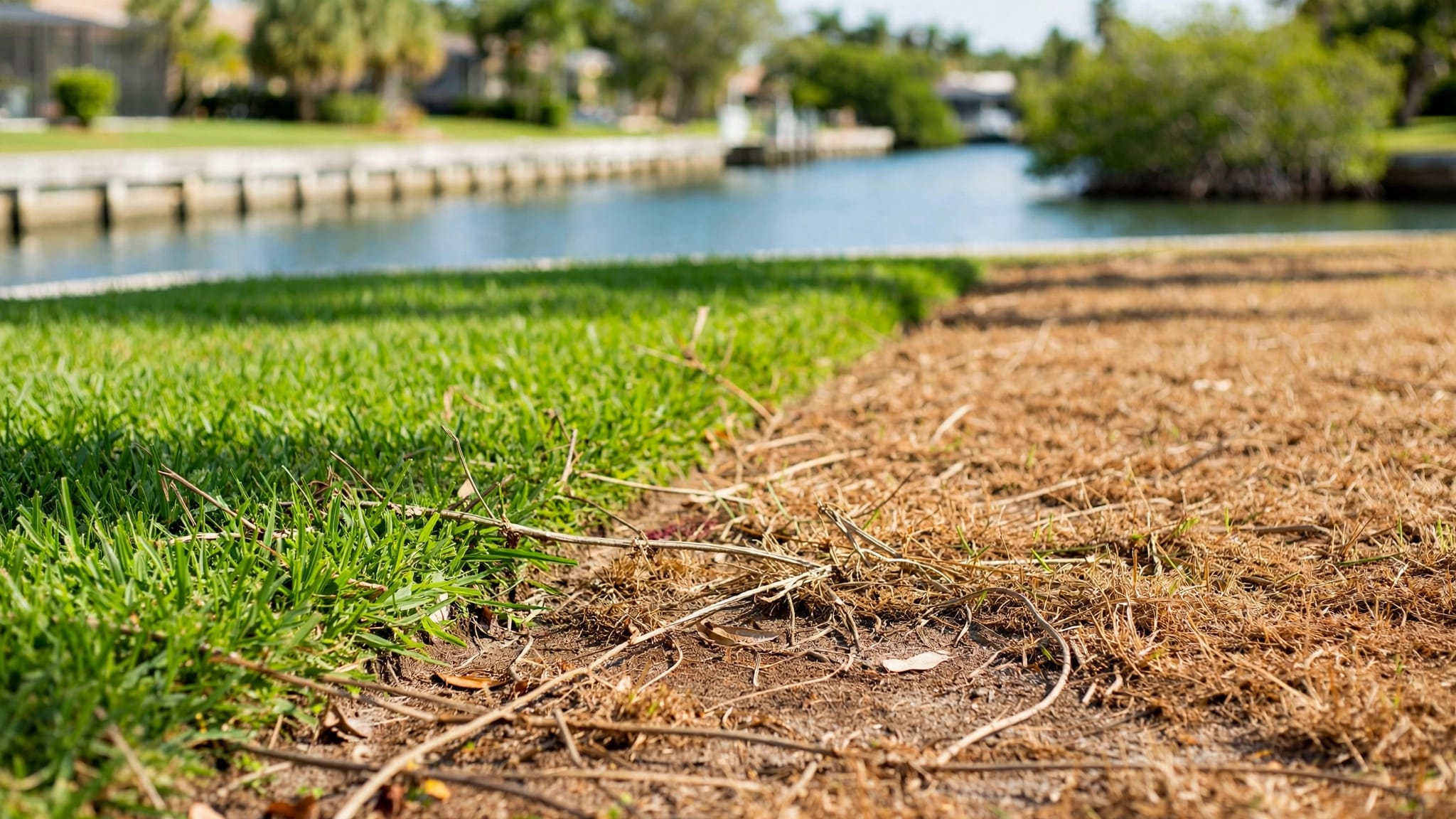
Cape Coral is famous for sand, canals, and a rainy season that can punish shortcuts. That local mix shapes cost in a few predictable ways.
Sandy soils are easy to dig, but they can shift and wash out. A wall that sits on a thin base can settle unevenly, then lean. Contractors often budget for thicker crushed stone bases, geotextile fabric, and more careful compaction than you’d expect in clay-heavy states.
High groundwater and heavy storms matter even for “short” decorative walls. When the soil behind a wall stays wet, water pressure builds like someone pushing on the wall with a wide plank. That’s why drainage pipe, gravel backfill, and outlets to daylight are common in well-built walls here.
Tight residential lots also change the number. If access is only through a side gate, a boulder wall might require smaller stones and more hand-setting, while a block wall might be easier to stage. If you’re near a seawall, canal, or easement, layout constraints can add survey, design, or inspection steps.
If you’re planning the wall as part of a bigger landscaping refresh, it helps to budget the full picture early. This pairs well with a local pricing overview like landscape design costs in Cape Coral.
Block vs boulder retaining walls in Cape Coral: cost ranges and tradeoffs
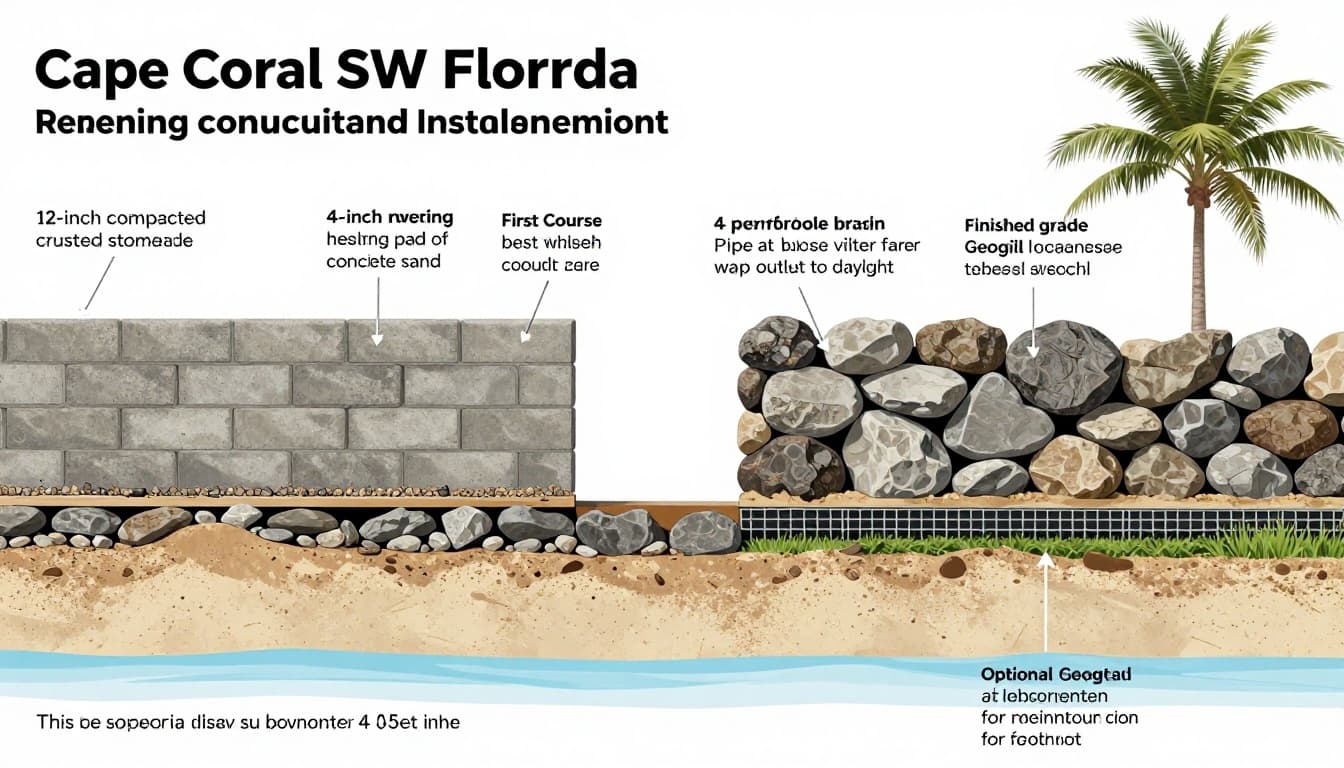
Side-by-side cross-sections of block and boulder wall builds, including base and drainage layers, created with AI.
In Cape Coral, most residential projects fall into two buckets: segmental concrete block (SRW) walls or natural boulder walls. Both can last, if they’re built for water.
National cost ranges can be a helpful starting point, but they’re broad. For example, Angi’s 2026 pricing overview shows wide variation by size and site conditions, which matches what homeowners see in real quotes ( retaining wall cost data). Local estimator sites also publish Cape Coral-specific ranges, but treat them as directional, not exact ( Cape Coral retaining wall cost ranges).
Pricing assumptions used below
Costs vary by access, soil moisture, wall shape, and finishes. These ranges assume:
- 25 linear feet, straight run
- 3 feet of exposed height
- No major demolition, no big roots, typical sandy soil
- Includes base and basic drainage, one outlet (where feasible)
| Wall type (installed) | Low | Typical | High |
|---|---|---|---|
| Segmental concrete block wall | $3,500 | $5,500 | $8,500 |
| Natural boulder wall | $5,000 | $8,000 | $12,000 |
Block walls usually win on clean lines, tight spaces, and predictable engineering options (like geogrid for taller sections). They’re also easier to match with pavers and capstones.
Boulder walls often cost more because of equipment, stone selection, and the time it takes to “fit” a natural face. They can look amazing in tropical landscaping, but they still need a real base and drainage. “Dry-stacked” boulders without proper prep can shift after repeated storm cycles.
A quick rule: if your yard needs a crisp, level terrace near a patio, block is often the efficient choice. If you’re shaping a planting berm with a natural look, boulders can make sense, if access allows machine placement.
Base prep and drainage: the hidden line items that decide longevity
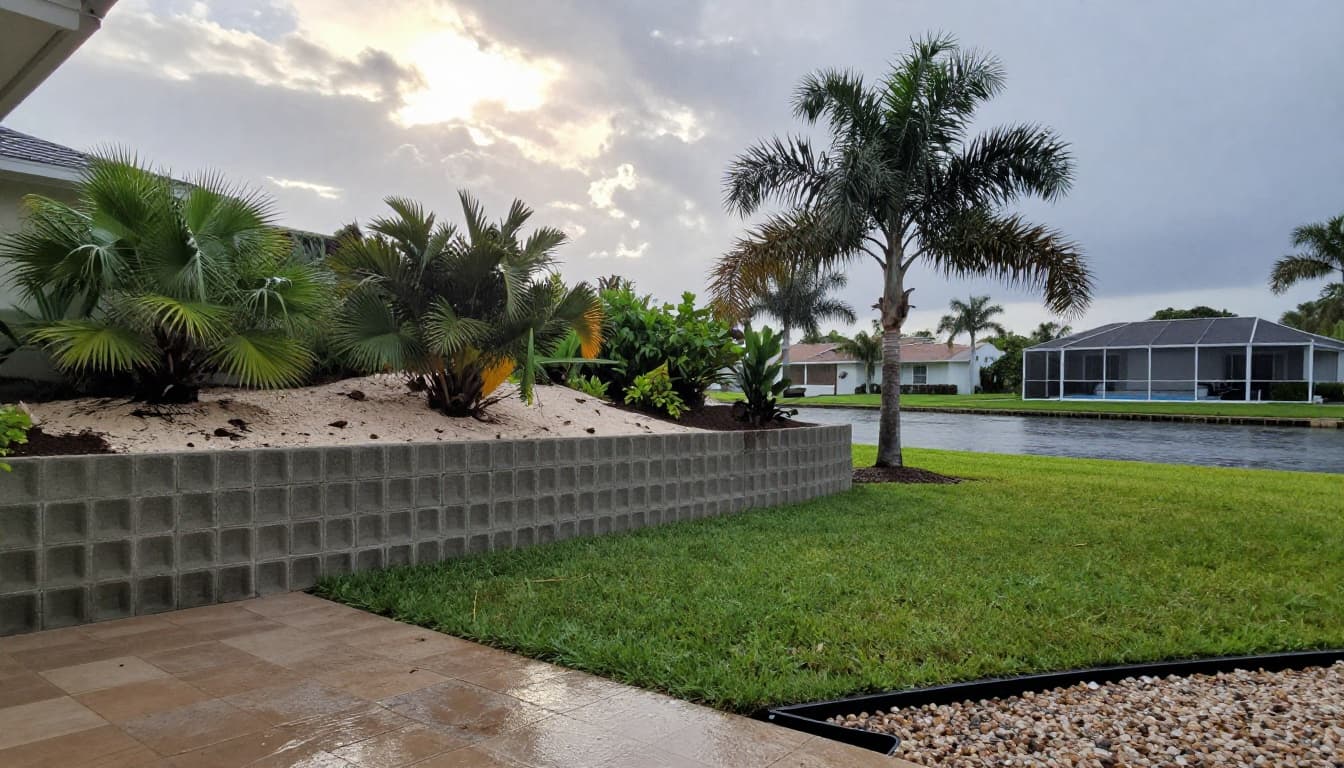
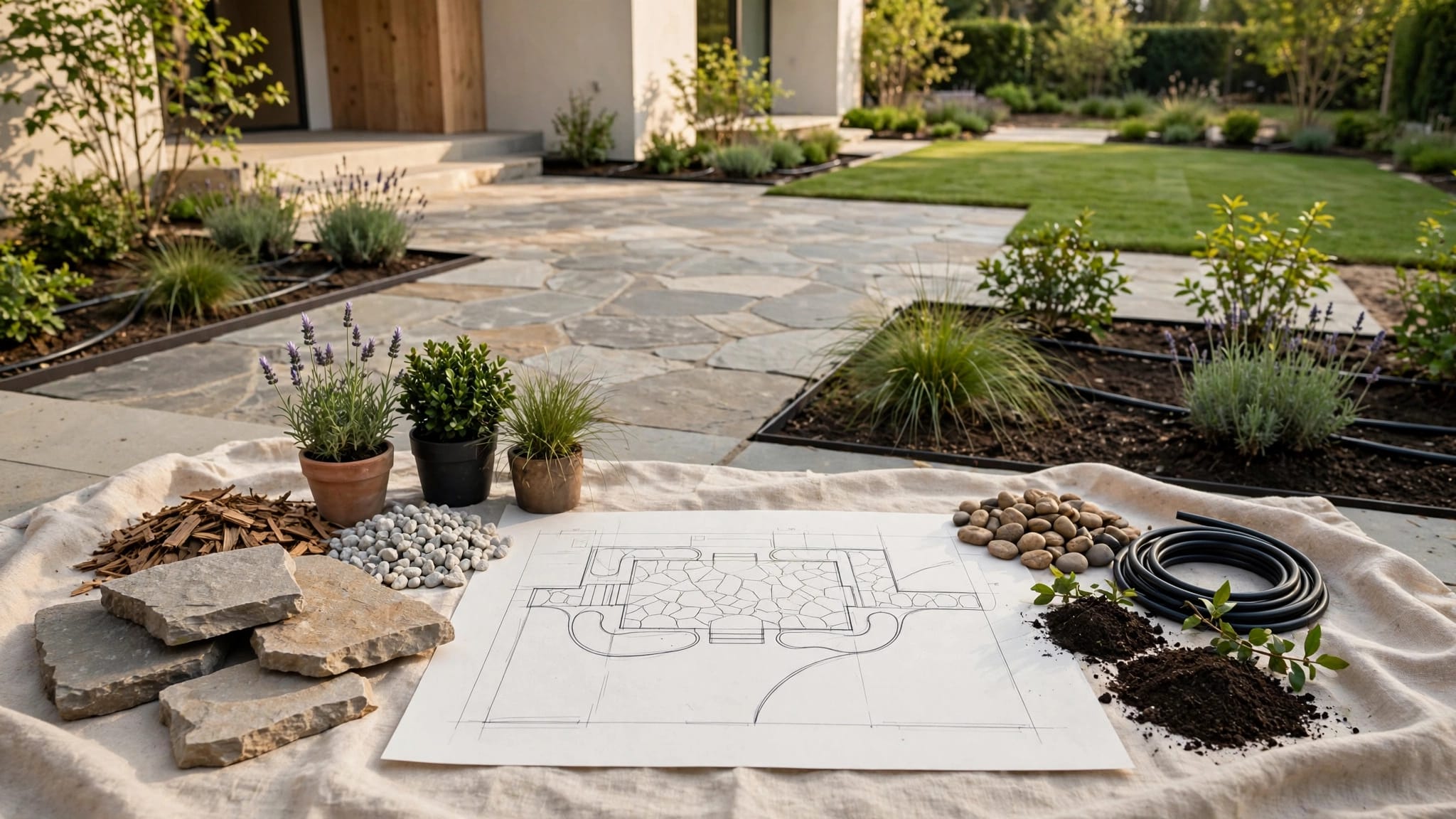
A Cape Coral-style backyard wall setup with pavers, turf, and wet-season conditions, created with AI.
A retaining wall is like a book on a shelf. The cover can be perfect, but if the shelf bows, the whole thing fails. In Cape Coral, the “shelf” is your base and drainage.
Base prep commonly includes excavation to undisturbed soil, geotextile separation fabric (to keep sand from migrating), and a compacted crushed stone base. In wet seasons, contractors may need to over-excavate soft spots or work in lifts to get compaction right. That extra time is real money, but it’s also what keeps the wall from settling into a wave pattern.
Drainage is where many budgets get trimmed, and where repairs get expensive later. A solid setup often includes gravel backfill directly behind the wall, a perforated drain pipe at the base wrapped in filter fabric, and a place for water to exit (daylight, a swale, or a tied-in system where allowed). Without a discharge point, a pipe is just storing water.
If the wall borders a patio, pool deck, or driveway approach, you may also be blending hardscape trades. That can mean coordination with a concrete company for edging, pads, or stairs, plus restoration work like paver cleaning after equipment tracks and sand spread.
Sample estimate breakdown (25 ft long, 3 ft tall block wall)
| Line item | Typical range |
|---|---|
| Wall block units, caps, adhesives | $1,600 to $2,600 |
| Excavation and haul-off | $500 to $1,200 |
| Base stone, geotextile, compaction | $700 to $1,400 |
| Drainage gravel, pipe, outlets | $450 to $1,100 |
| Labor (setting, leveling, backfill) | $1,600 to $3,000 |
| Equipment (mini skid-steer, plate compactor) | $250 to $700 |
| Permit/engineering allowance (if required) | $0 to $1,500 |
Planning a finished surface behind or above the wall can also change grading and drainage. Some homeowners choose artifical turf in small side yards to reduce mud and keep a clean look in shaded or soggy areas. If that’s part of the project, see sod and artificial grass options in Cape Coral.
For homeowners who want one contractor to handle wall, drainage, and surrounding hardscape, start with retaining wall installation experts.
Height rules, permits, and inspections in Cape Coral (what to verify)
Permitting rules can change, and the details depend on your lot, flood zone, and wall design. As of early 2026, Cape Coral’s permitting guidance points homeowners to a residential guideline for concrete and retaining walls, and many projects are submitted online through the city’s EnerGov system. Projects at or above certain values may also require a Notice of Commencement (commonly at $2,500+), and some applications include wildlife affidavits (for protected species).
Height is where requirements often tighten. Many Florida jurisdictions treat walls around 4 feet and up (measured from the bottom of the base/embedded portion to the top) as more likely to need engineered design, added reinforcement (like geogrid), and closer inspections. Add surcharges like a driveway, fence, or slope above the wall, and the engineering threshold can come sooner.
Before you build, confirm these items with the City of Cape Coral and Lee County:
- Whether your wall needs a permit at your specific height and location
- Setbacks and easements (especially near canals and utility lines)
- Flood zone requirements and drainage discharge rules
- When engineering drawings are required
If you want visual examples of finished walls and related hardscape, it helps to browse a local gallery like Cape Coral retaining wall projects.
Conclusion
The safest way to control retaining wall cost Cape Coral is to price the parts that matter most: base thickness, compaction, and a drainage path that can handle rainy season. Choose block for tight, clean geometry, choose boulders for natural style, but don’t treat either as “just stacking.”
Get a couple quotes, ask where the water will go, and verify permits and height rules with the City before work starts. A wall that’s built for Cape Coral weather is quieter, cleaner, and far less likely to become your next rainy-season headache.