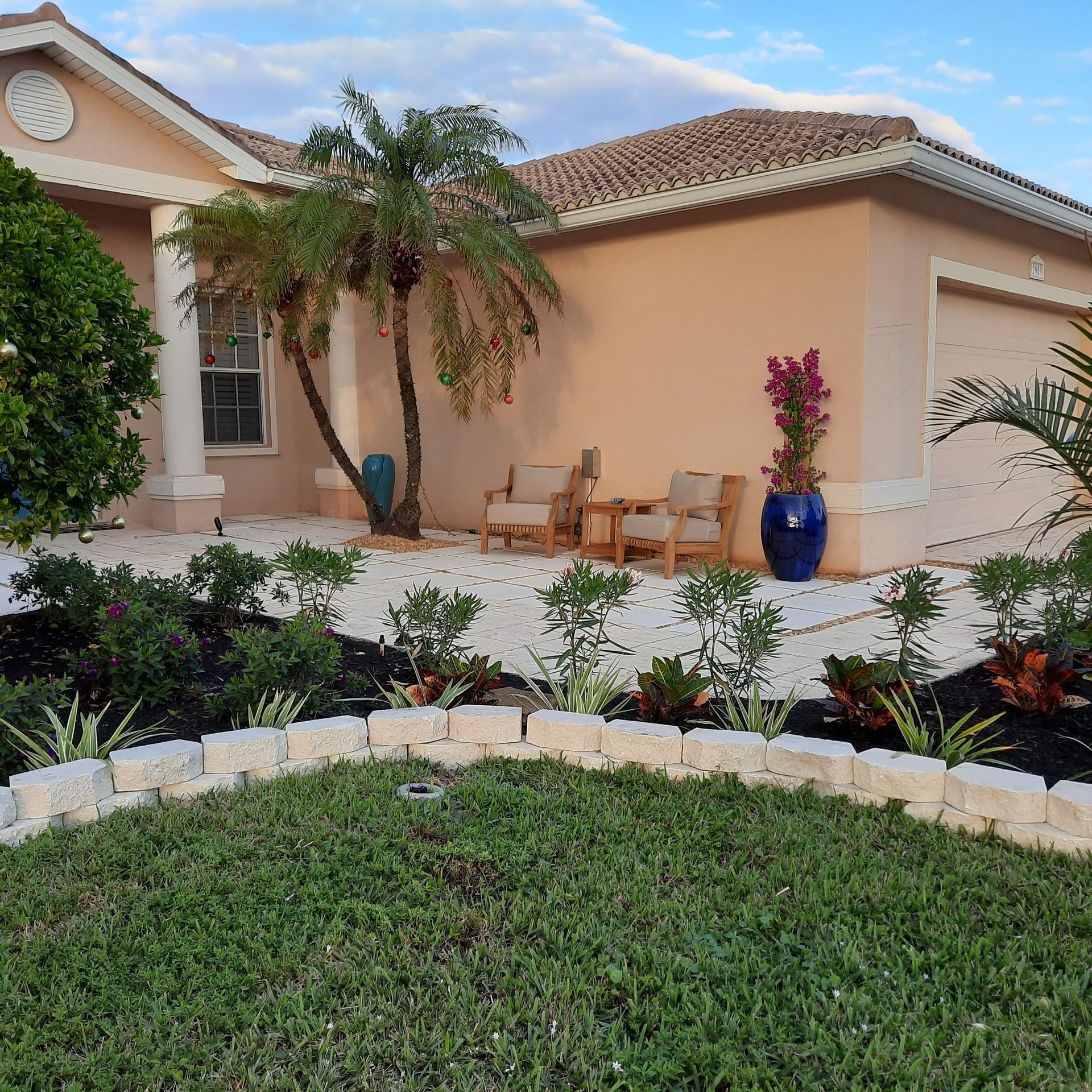



Best Cape Coral Rain Garden Plants for Wet Spots
Summer storms in Cape Coral can turn one part of the yard into a puddle and leave the rest baked dry by afternoon. The right cape coral rain garden plants handle both without turning your yard into a constant repair job. They soak up excess water, soften runoff, and make drainage look like part of the design.
That matters because wet spots in Southwest Florida do not behave like wet spots up north. Heat, humidity, flat lots, and sandy soil all push plants in different directions. If water stays too long, though, plants alone won't fix it, and choosing between catch basins and French drains may need to happen before you plant anything.
Why Cape Coral yards need the right wet-soil plants
Cape Coral rain comes down hard, then the sun comes back just as hard. That swing creates soggy pockets, stressed roots, and plenty of plant loss if you pick the wrong species. A good rain garden solves part of the problem by giving water a place to pause.
A rain garden is not a swamp. It is a shallow planted basin that catches runoff, slows it down, and lets the soil soak it in. That works well on Southwest Florida lots, especially where flat grades push water toward the lowest corner. It also fits clean, simple landscaping because it can sit beside lawns, paver beds, or a concrete edge without looking out of place.
Cape Coral yards also deal with humidity, heat, and soil that dries fast once the storm passes. So the plant list has to do more than survive. It has to take a wet day, a hot week, and the next round of rain without collapsing.
Native plants that handle wet feet and summer heat
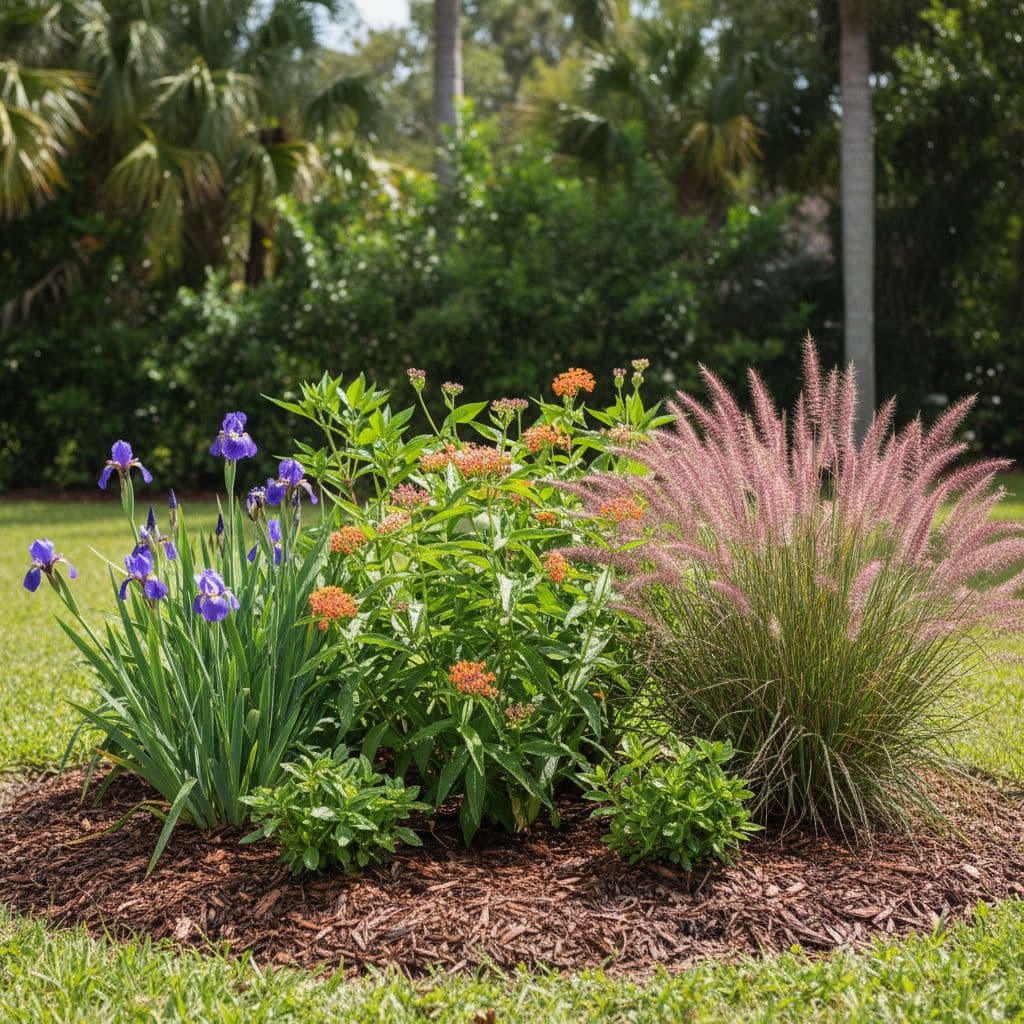
Native plants do the heavy lifting in a Cape Coral rain garden. They are already used to the local heat, the summer rain pattern, and the wet-to-dry swing that happens after a storm. The best ones are calm about periodic standing water, which is exactly what you want in a drainage bed.
| Plant | Status | Mature size | Sun needs | Best placement | Why it works |
|---|---|---|---|---|---|
| Pickerelweed | Native | 2 to 4 ft tall, 2 to 3 ft wide | Full sun | Center of the basin | Handles standing water after storms and adds vertical color |
| Soft rush | Native | 2 to 3 ft tall, clumping | Sun to part shade | Wet edge and overflow path | Strong roots help hold soil in place |
| Blue flag iris | Native | 2 to 3 ft tall, 1 to 2 ft wide | Full sun to part shade | Middle ring | Likes moist soil and flowers well in heat |
| Golden canna | Native | 3 to 5 ft tall, 2 to 4 ft wide | Full sun | Lower middle ring | Bright foliage, long bloom season, and good humidity tolerance |
| Buttonbush | Native | 6 to 12 ft tall, 6 to 8 ft wide | Full sun to part shade | Back of larger beds | Shrub for wetter ground, with great structure and pollinator value |
| Muhly grass | Native | 3 to 4 ft tall and wide | Full sun | Outer ring or raised edge | Softens borders and handles periodic wetness |
| Swamp sunflower | Native | 4 to 6 ft tall, 3 to 4 ft wide | Full sun | Back edge of bigger beds | Fast summer growth and late-season color |
Pickerelweed and soft rush are the workhorses in the wettest pocket. Blue flag iris and golden canna sit just outside that core, where soil stays damp but not flooded. Buttonbush brings a strong shrub layer, while muhly grass and swamp sunflower keep the upper edge from looking bare.
The best rain garden plant is one that can sit in water for a while, then keep growing when the soil dries out.
These natives are also easier to live with. Most need only light cleanup once a year, and none should need heavy feeding if the soil is healthy. That matters in Cape Coral, where low-maintenance plantings are easier to keep neat through summer.
Florida-friendly additions for the higher edge
Some homeowners want a softer, more finished look. Florida-friendly plants can help, as long as you keep them in the right zone. The safest approach is to use natives in the wettest area, then add a few non-native accents on the edges.
Louisiana iris is the best example. It is Florida-friendly, not native, and it handles moist soil, full sun, and the middle ring of a rain garden. Mature clumps usually reach 2 to 3 feet, so they fit well in smaller beds. Keep them out of the deepest pocket if water stands for long periods.
Garden canna hybrids are another Florida-friendly, not native choice. They usually reach 3 to 5 feet, like sun, and do best where the soil stays damp but not waterlogged for days. Give them space, and cut back tired growth during the season so they stay neat.
These plants work best as accents, not the whole bed. If you want the garden to feel polished, let the natives do most of the work and use the Florida-friendly picks for color and shape. That approach keeps the planting useful without making the bed look crowded. For a bigger project, professional rain garden design and pricing can help you plan the basin before the first plant goes in.
How to place plants around pavers, patios, and concrete
Plant choice matters, but placement matters just as much. A rain garden works in layers because water does not sit evenly across the bed. The center stays wet the longest, the middle ring drains next, and the outer edge dries first.
A simple layout works well:
- Center, use pickerelweed or soft rush where water sits the longest.
- Middle ring, place blue flag iris, Louisiana iris, or golden canna.
- Outer ring, use muhly grass, buttonbush, or swamp sunflower where the soil dries sooner.
That ring system becomes even more important near hardscape. If a concrete company is pouring a new patio, ask for a gentle slope that sends runoff toward the garden, not toward the house. The same rule applies to driveways and side yards. Effective driveway drainage solutions should come first if the water starts on a slab or paver surface.
If you already have pavers nearby, regular paver cleaning helps too. Sand and leaf debris can wash into the bed and clog the edge. A clean border keeps the garden looking intentional and helps water move where it should.
Common mistakes that turn wet spots into problems
A few mistakes show up again and again in Cape Coral yards. The first is buying plants for the label instead of the soil. Many drought plants, herbs, and desert shrubs rot when their roots stay wet. They may look fine for a month, then fail after a few summer storms.
Another mistake is using fast-spreading plants that crowd out slower growers. In a wet site, that can turn a small fix into a bigger maintenance job. Stick with native or non-invasive plants that stay where you put them, and skip anything that wants to take over canals, ditches, or the back fence.
A third problem is covering the area with thick rock, too much mulch, or artifical turf . Rock can heat up fast, and artifical turf hides drainage trouble instead of fixing it. It also makes the space feel hotter in August, which is the last thing a wet spot needs.
Finally, don't forget overflow. Every rain garden needs a place for excess water to go during a heavy storm. Bigger projects are easier to get right when the water path is planned early, and integrating drainage into rain garden installations keeps the bed from becoming a guessing game.
Conclusion
The best Cape Coral rain garden plants are the ones that match the water, not the other way around. Put the most water-tolerant natives in the center, use Florida-friendly accents only on the faster-draining edges, and keep taller shrubs toward the back.
That mix gives you better landscaping , fewer dead plants, and a yard that handles summer storms without looking messy. It also fits better beside pavers, patios, and concrete because the garden works with the drainage instead of fighting it.
Start with the water, then pick the plants. In Cape Coral, that simple order keeps the bed useful when the next storm rolls through.