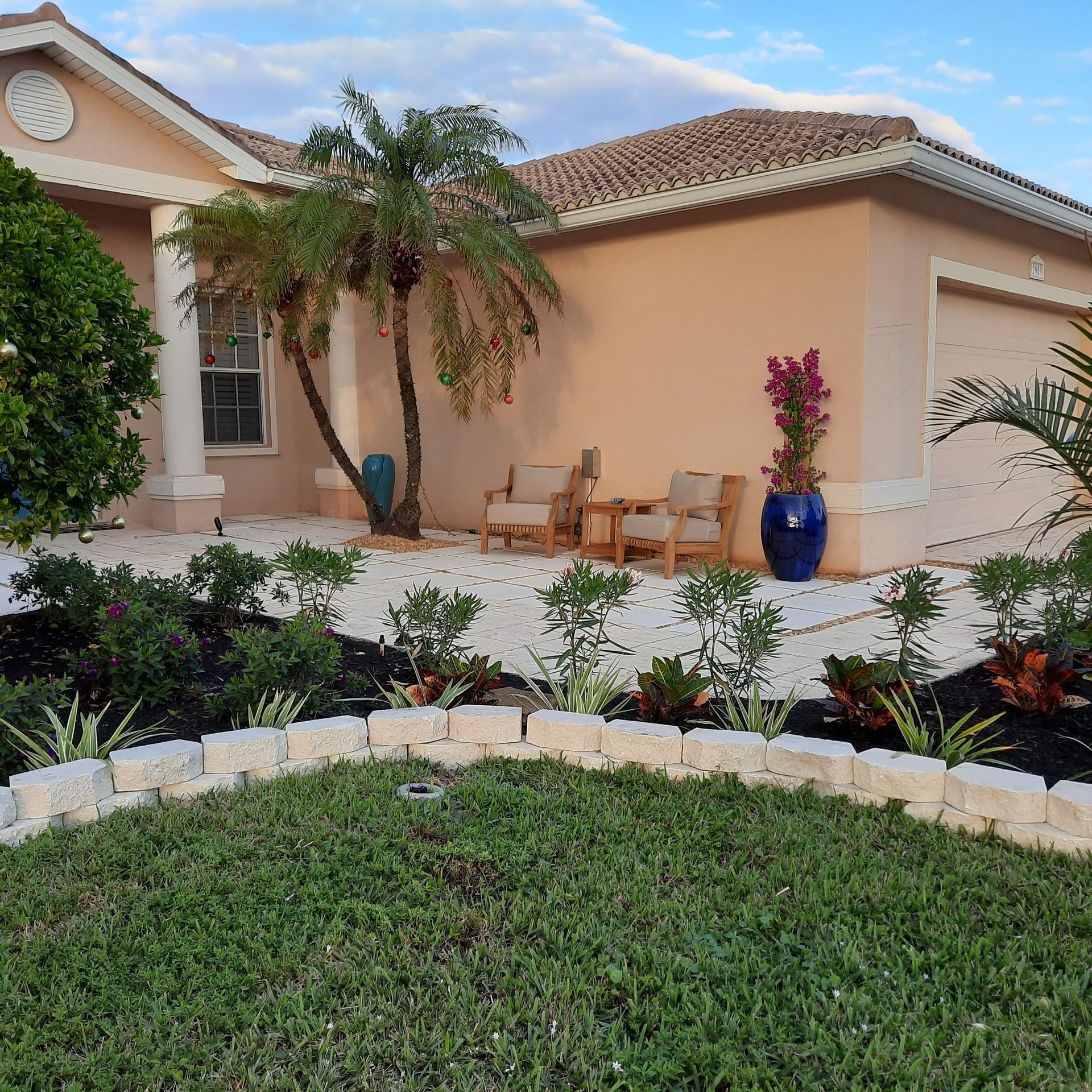



Best Cape Coral Plants for Hot Paver Borders That Stay Tough in the Heat
Cape Coral paver borders take a beating. Sun bounces off the stone, the soil dries fast, and a pretty plant can look tired before summer ends.
The best Cape Coral plants for these spots handle reflected heat, sandy soil, and full sun without constant fuss. They also stay tidy enough for driveways, walkways, patios, and pool decks.
If you want a border that looks good and still makes sense for daily life, plant choice matters more than most people think. The right match can make a hard edge feel finished instead of bare.
What hot paver borders need in Cape Coral
Paver edges are hotter than they look. The stone stores heat through the day, then pushes it back into nearby roots and leaves. That means a plant beside a driveway or patio has to deal with more stress than one in an open bed.
In Southwest Florida, the soil adds another challenge. Sand drains fast, so roots dry out quickly unless you water well during establishment. At the same time, that loose soil can be good news, because it keeps many plants from sitting in soggy ground after heavy rain.
The best border plants for this setting share a few traits. They handle full sun , they recover well after brief dry spells, and they don't spread roots in a way that fights with pavers. They also look clean from the street, since borders near hardscape show every dropped leaf and every rough trim.
A good border plant should look calm beside stone, not fight it.
Best Cape Coral plants for hot paver borders
These plants are popular for a reason. They can handle the heat, keep their shape, and fit the scale of a border without taking over the whole yard.
| Plant | Mature size | Why it works near pavers | Care notes |
|---|---|---|---|
| Firebush | 4 to 8 ft | Loves heat, blooms for a long stretch, and attracts birds and butterflies | Water regularly the first year, prune after bloom, medium maintenance |
| Dwarf ixora | 2 to 4 ft | Dense growth and bright color make a clean edge near patios | Needs steady water at first, likes richer soil, can be cold-sensitive |
| Dwarf yaupon holly | 2 to 4 ft | Tough evergreen shape suits driveways and front walks | Light pruning, low water once established, very manageable roots |
| Society garlic | 1 to 2 ft | Neat edging plant with fine leaves and small purple blooms | Trim spent stalks, divide when crowded, foliage may burn in hard freezes |
| Muhly grass | 2 to 4 ft | Softens hard edges and handles dry heat well | Cut back late winter, low maintenance, leave room for plumes |
| Dwarf plumbago | 2 to 3 ft | Long bloom season and a compact habit for sunny beds | Moderate water while young, shape as needed, may die back in cold snaps |
| Lantana | 1 to 3 ft | Very heat-tough and good for color near open stone | Choose compact types, prune if it sprawls, can get messy if ignored |
| Coontie | 2 to 3 ft | Slow-growing, clean-looking, and excellent in hot spots | Very low water after establishment, extremely slow, toxic if eaten |
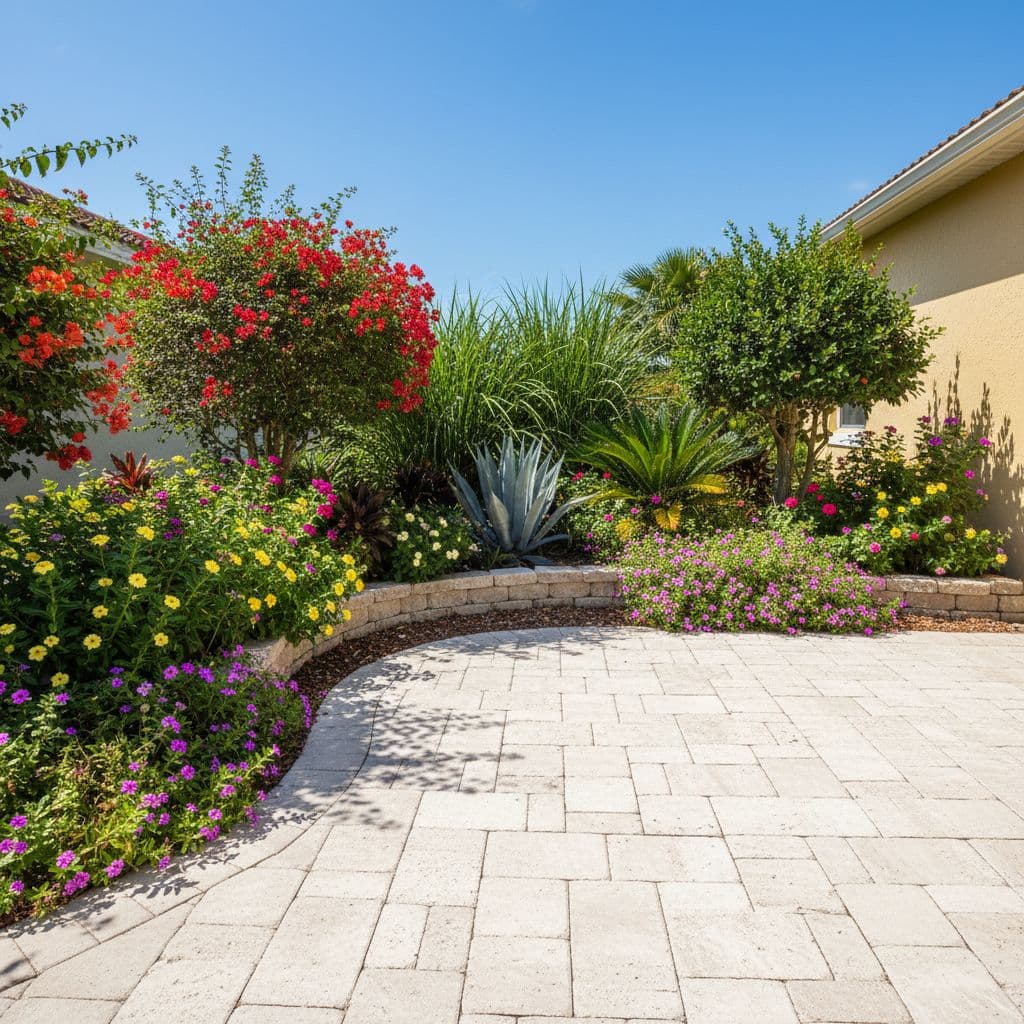
The plants above work because they do more than survive. They stay attractive without needing constant rescue from the heat.
Flowering plants that bring color
Firebush is one of the strongest picks for this climate. It blooms well in sun, handles reflected heat, and gives you a loose, natural look that suits larger border spaces. Dwarf ixora brings a tighter shape and bright flower clusters, which makes it a better fit for formal front beds or a walkway with a clean line.
Dwarf plumbago and lantana both earn a place near pavers, but they need different handling. Plumbago offers a softer, airy feel and can bloom for a long stretch. Lantana gives you punchy color and strong heat tolerance, but it can sprawl if you let it go too long between trims.
For small patio edges, compact flowering shrubs are often better than big tropicals. They keep the view open and avoid crowding the stone. That matters when you want the border to frame the hardscape instead of hiding it.
Low-border plants that stay tidy
Society garlic, muhly grass, and coontie are useful when you want structure more than big color. Society garlic is one of the cleanest edging plants for narrow beds, since it stays low and does not throw thick stems over the pavers. Muhly grass adds movement without bulk, and it looks especially good in groups.
Coontie is even easier to manage. It grows slowly, keeps a compact form, and handles rough conditions that would wear down fussier plants. That slow pace is useful near pavers, because you won't be fighting constant overgrowth.
Dwarf yaupon holly fits another need, a formal evergreen line. It works well when you want a border that still looks neat in winter and does not shed much mess onto the stone. If you like a crisp edge, this plant is hard to beat.
How to keep plantings neat beside pavers
Good plants still need good layout. A narrow border looks cleaner when the first row sits a little back from the paver edge. That small gap gives the plants room to grow and makes cleanup easier after rain.
Drainage matters too. Water should move away from the hardscape, not sit against it. If your bed holds too much water, roots can suffer and paver joints can stay damp longer than they should. Drip irrigation works well here because it sends water to the root zone instead of spraying the walkway.
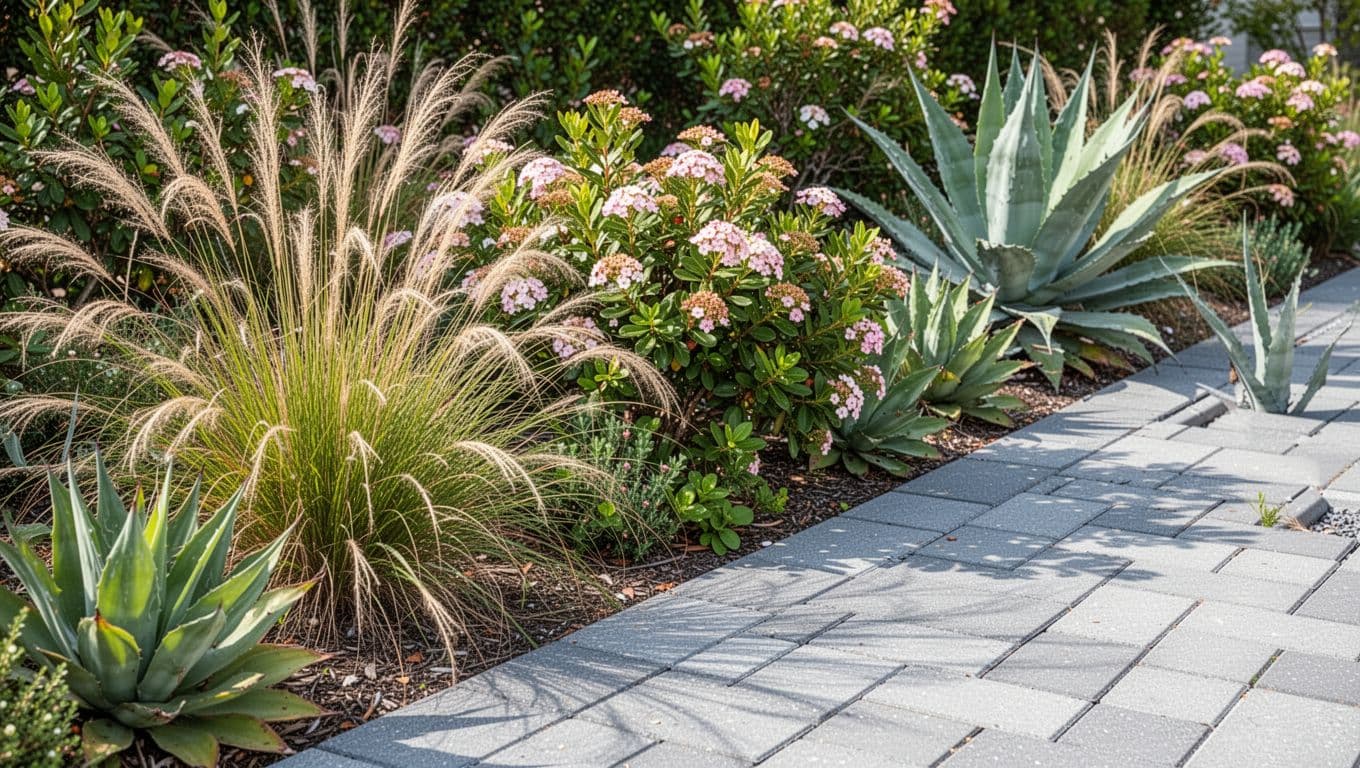
A few simple habits keep the whole edge looking sharp:
- Keep taller shrubs farther from the walk. Lower plants belong closest to the stone.
- Trim before branches or flowers start brushing the pavers.
- Use mulch or stone as a buffer so soil does not wash onto the hardscape.
- Watch for plants that drop fruit, berries, or sticky sap near pool decks.
- Schedule paver cleaning after heavy leaf drop or dusty weather so stains do not set in.
If you like a border that stays neat with less work, choose plants that hold their shape on their own. A bed full of tidy growers is easier to maintain than one that needs weekly correction.
When plant choices should match the whole yard
Borders work best when they fit the rest of the project. If a concrete company is pouring a new pad, driveway edge, or curb, the planting plan should happen at the same time. That helps with slope, runoff, and spacing around the finished surface.
The same idea applies to broader landscaping work. A plant bed beside a new patio looks better when the paver lines, irrigation, mulch, and plant sizes all make sense together. If you want that kind of coordination, professional landscaping services in Cape Coral can help tie the hardscape and planting plan together from the start.
Some homeowners also mix these borders with artifical turf in side yards or around pool decks. That can be a smart move when you want less mowing but still want a strong planting edge. In those projects, sod and artificial grass installation can fill open areas without competing with the border plants.
The best results usually come from simple decisions. Use heat-tough plants where the sun hits hardest, keep the tallest growth away from narrow walkways, and match the border to the way you use the space.
Conclusion
Hot paver borders in Cape Coral need plants that can handle reflected heat, sandy soil, and regular sun. The strongest choices stay tidy, recover well, and keep the edge of the hardscape looking finished.
If you focus on Cape Coral plants that fit the size of the space, the border will look better for longer. Add smart spacing and regular trimming, and the plants will work with the pavers instead of against them.
A border that still looks good in July is the right border.