


Why Bird of Paradise Leaves Split in Southwest Florida
Bird of paradise leaves can split while the rest of the plant remains green and healthy. A divided leaf alone doesn't tell you that the plant needs treatment or that something is wrong.
In Southwest Florida, outdoor plants face wind, heavy rain, heat, and occasional cold weather. The best way to judge plant health is to look beyond the splits and consider the whole plant.
Start by noticing what healthy growth looks like in your yard, then give the plant a location and watering routine that suit local conditions.
What Bird of Paradise Leaves Splitting Can Tell You
Bird of paradise plants are grown for their large, upright leaves. Those leaves don't always stay smooth and unbroken, especially on a plant that has spent time outdoors.
A few divisions in otherwise green foliage aren't enough on their own to identify a problem. Older leaves can look more worn than fresh growth, and an outdoor plant doesn't have to look as pristine as one displayed in a nursery.
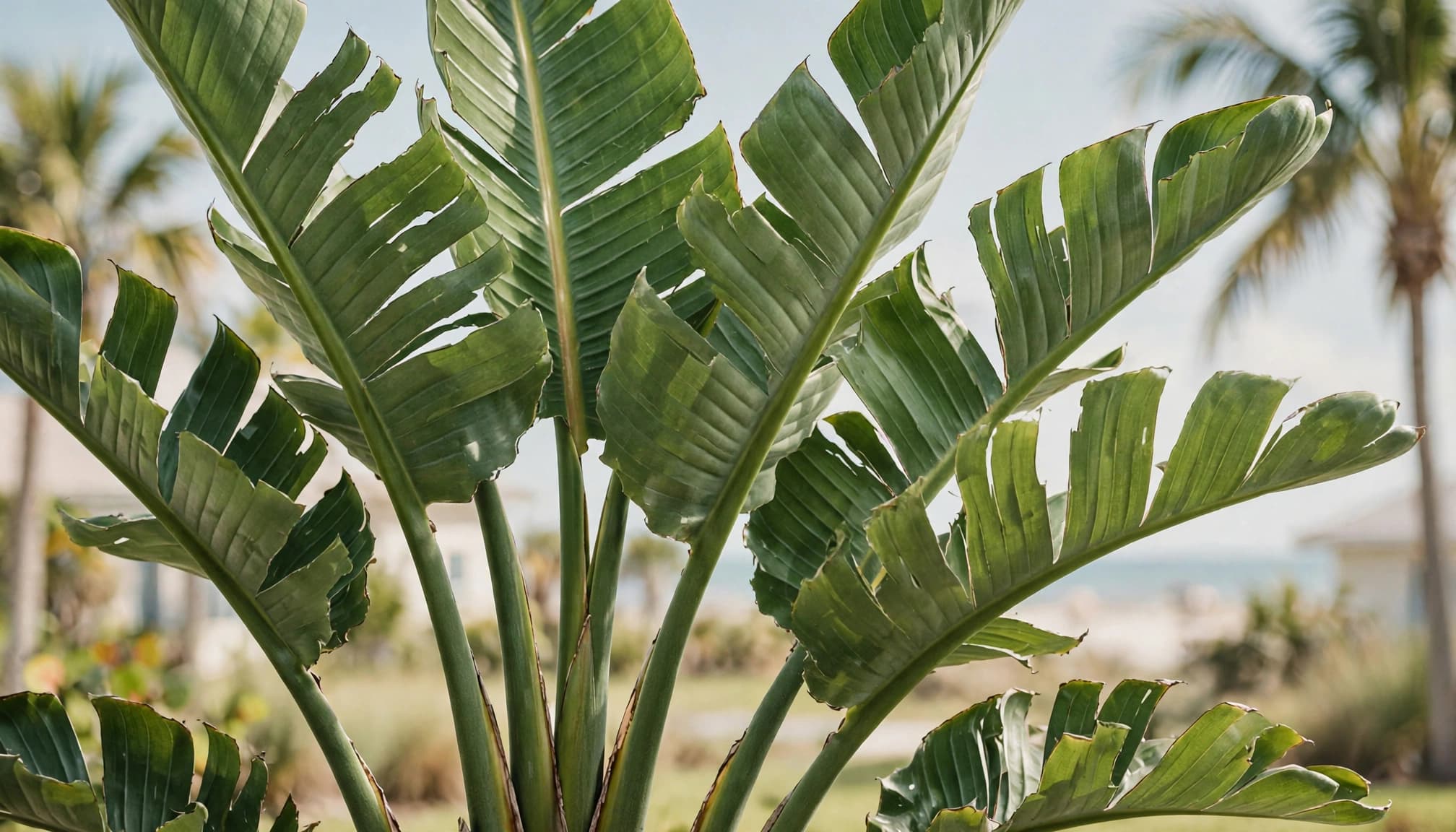
Instead of judging the plant by one leaf, look at its overall condition. Healthy-looking color, firm stems, and continuing new growth give you a fuller picture than the shape of a leaf edge.
Keep your expectations practical, too. Bird of paradise foliage brings a broad, tropical look to a garden, but individual leaves won't stay perfect forever. A plant can contribute plenty of color and structure even when some leaves look weathered.
If the plant's appearance changes quickly, take a closer look at the bed and the plant's surroundings before changing your care routine. That gives you a better starting point than trying several treatments at once.
How to Spot Signs of Plant Stress
Splits are easier to assess when you pay attention to the rest of the plant. Look for changes in color, firmness, and new growth over time rather than relying on a single observation.
Look at the whole plant
Yellowing across several leaves, widespread browning, soft stems, or a plant that stays wilted are reasons to investigate. A single aging leaf may need little attention, while changes throughout the clump deserve a closer look.
Examine the soil as well. A bed that stays soggy, a dry root zone, or mulch piled against the plant's base can point you toward a care issue that needs attention. None of these observations alone establishes a diagnosis, so consider the conditions together.
Follow new growth
New leaves offer another useful reference point. Notice whether the plant continues to produce growth and whether its general appearance improves or declines over several weeks.
Take a photo when you first notice a change. Comparing it with a later photo can help you see whether the issue is spreading or whether the plant looks about the same.
If the plant continues to decline, a local landscape professional can assess the site. Bring along those photos and share any changes you've made to watering or the surrounding bed.
How Southwest Florida Weather Affects the Garden
Southwest Florida yards can feel tropical, but conditions vary within a single property. A sheltered bed in Estero may have less exposure than an open waterfront planting in Cape Coral. Sun, wind, soil, and nearby surfaces all influence the growing environment.
During the rainy season, repeated storms can leave some beds saturated while washing mulch and soil away from others. Sandy soil can drain quickly, yet compacted areas and low spots may hold water longer. Check the bed itself rather than assuming the whole yard drains at the same rate.
Open areas also expose broad foliage to more moving air. Canal-front properties, lawn edges, and gaps between buildings may be less protected than a courtyard or a bed inside a fence line.
Heat deserves attention, too. Concrete, pavers, and walls can make a sunny planting area feel hotter. Meanwhile, a downspout may send extra water into the same bed during a storm. These differences matter when you're deciding where to plant and how to maintain your garden.
Occasional cold fronts add another consideration. A protected location can help a tropical planting avoid the full exposure of an open yard.
Choose a Protected Spot for Bird of Paradise
Good placement makes routine care easier and gives a large plant room to fit the landscape. Before planting, look at the site at different times of day and consider how the surrounding yard will change as plants mature.
Give the plant shelter and space
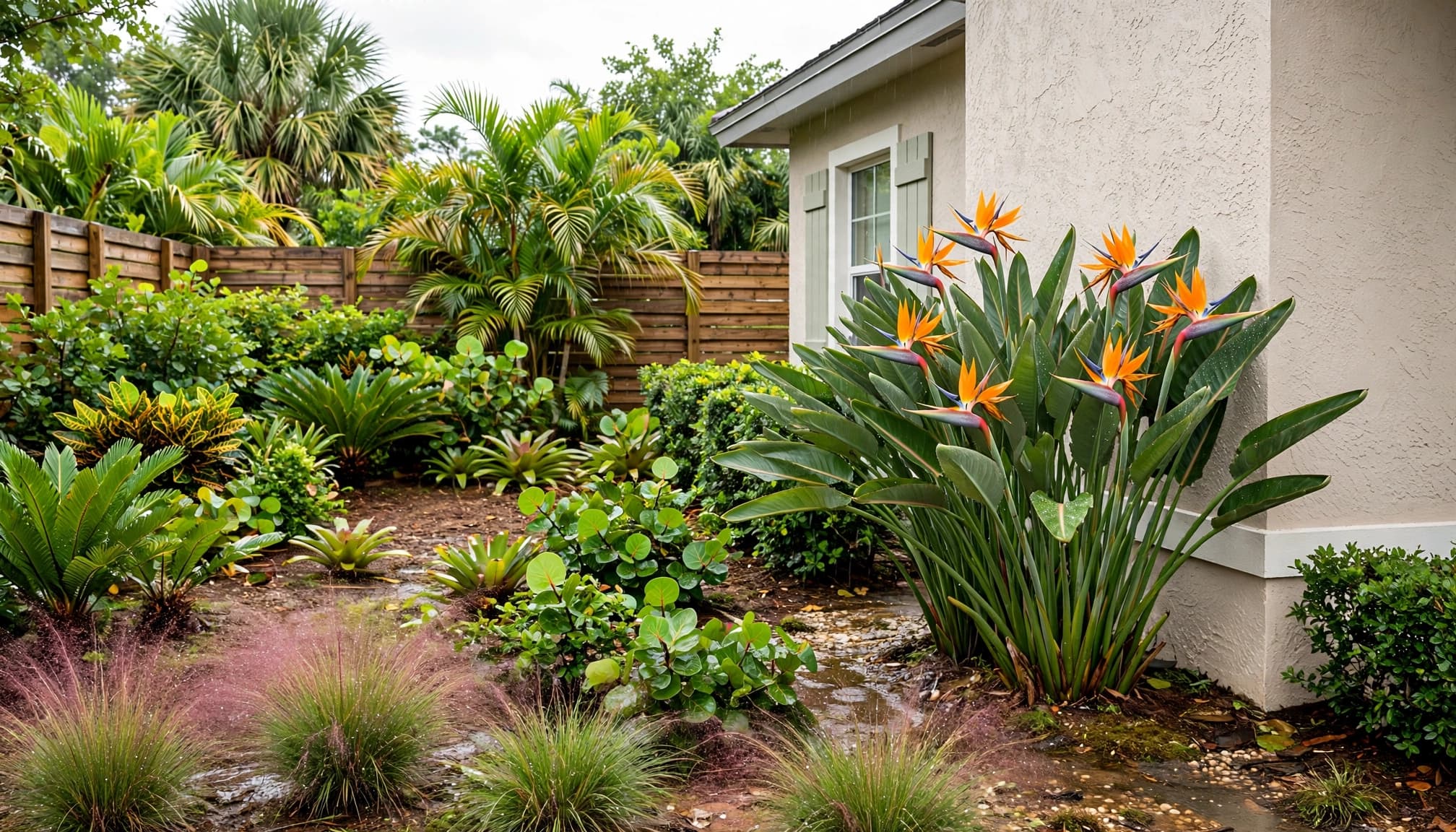
A courtyard, a bed near a fence, or a location behind other established plantings can provide more shelter than an exposed property edge. Leave enough room for air movement and maintenance access rather than squeezing the plant against a wall.
Bird of paradise can work as a tall accent, so consider its eventual size when choosing the bed. Keep leaves and stems clear of walkways, windows, irrigation equipment, and other areas where they'll be brushed or crowded.
Our guide to protecting tropical plants from Florida cold snaps has more ideas for choosing sheltered garden locations.
Plan around hard surfaces
Patios, driveways, and pool decks affect how a planting bed fits into the yard. Give the root area usable soil and drainage, and leave enough space to maintain the adjacent surface without working around crowded foliage.
A concrete company can help with a larger layout that includes a patio or planting edge. Plan the bed and hardscape together so runoff has a suitable path and the finished space leaves room for plants to grow.
Water for the Soil and the Season
A useful watering routine starts with the soil, not a fixed calendar. Southwest Florida's rainfall changes through the year, and a newly planted bird of paradise generally needs closer attention than an established one.
Adjust for rain and drainage
Before running irrigation, feel the soil below the surface near the plant. If it's still wet after rain, give the bed time to drain. During a dry spell, a slow soak around the root zone is more useful than a quick splash over the leaves.
Check more than one spot if the bed slopes or receives runoff. One side may stay damp near a downspout while another dries out faster in the sun.
Don't keep watering simply because a leaf looks worn. Instead, use the moisture in the soil and the condition of the whole plant to guide your routine.
Pay attention to new plants and irrigation
Newly installed plants need regular moisture while their roots establish. As the plant settles in, adjust the schedule to suit rainfall and the way the soil drains.
Inspect irrigation heads and emitters for leaks, blockages, and coverage problems. A damaged component can leave part of the bed dry or add water where it isn't needed.
A thin layer of mulch can help conserve soil moisture. Keep it several inches away from stems so it doesn't hold moisture directly against the plant's base. After heavy rain, replace mulch only after the soil has settled.
Prepare the Bed for Stormy Weather
Routine maintenance before storm season is easier than trying to tidy the yard when severe weather is approaching. Walk through the bed and look for loose pots, decorations, and other objects that could move in strong winds. Bring movable items inside or secure them appropriately.
Remove dead foliage with clean tools during regular maintenance. Avoid aggressive pruning immediately before a storm. Large cuts can stress plants, and the yard may be left with debris that still needs to be collected.
After a storm has passed and it's safe to go outside, inspect the planting bed. Look for displaced mulch, exposed roots, leaning plants, and soil that has washed away. Check around foundations and drainage paths as well.
If standing water remains, let the area drain before adding more irrigation. Keep mulch away from the plant's base, and clear debris that blocks water flow.
For hanging limbs, damaged large trees, or branches near a home or power line, contact a qualified professional. Those jobs need more than routine garden cleanup.
Keep the Plant Tidy Without Overpruning
You don't need to remove every divided leaf. Green foliage still contributes to the plant's appearance, and taking off too many leaves at once can leave the clump looking sparse.
When a leaf is dead or badly damaged, use clean pruning tools and remove it neatly at the base of its stalk. Make deliberate cuts, and avoid pulling on the foliage. Collect the removed material so it doesn't build up around the plant.
Step back between cuts and look at the plant's overall shape. If several leaves are showing age, you can prioritize the ones that are fully dead rather than stripping the plant in one session.
It's also worth leaving enough access around the bed for future care. A bird of paradise planted too close to a fence or path can be difficult to reach without bending or brushing its leaves. Space makes watering, inspection, and cleanup more manageable.
Design the Rest of the Yard Around the Plant
A bird of paradise looks at home in a layered garden, especially when the surrounding plants fit the same site's sun and water conditions. On exposed properties, place it deeper inside the yard and reserve the outer edge for plantings suited to more exposure.
Give neighboring shrubs enough room to reach their mature size. Crowded beds are harder to inspect, and dense foliage can make it difficult to see irrigation problems or soil movement after rain.
Plant selection should reflect the conditions in your particular bed. Our comparison of native and Florida-Friendly plants can help you plan the rest of the landscape around local sun, soil, and water conditions.
Hard surfaces need attention alongside the plants. Regular paver cleaning can remove accumulated soil and debris near a patio, while keeping mulch within the bed helps make cleanup easier.
Some homeowners choose artificial turf in a narrow side yard and save larger beds for tropical plants. If you combine the two, leave adequate planting space and consider drainage and reflected heat before deciding where the bird of paradise will go.
A Healthy Plant Matters More Than Perfect Leaves
Bird of paradise leaves can split without the whole plant being in trouble. Look at its color, stems, soil, and new growth before deciding whether it needs attention.
A sheltered location and a watering routine matched to Southwest Florida's seasons make the plant easier to care for. Give it room to grow, and let a little wear be part of its outdoor appearance.
If you'd like help planning a planting bed, we offer landscape design and installation services throughout Southwest Florida, along with free consultations and estimates.