


Florida Pusley Control in Cape Coral Lawns
Florida pusley control starts with identifying the weed and choosing a response that fits your lawn. Hand removal is an option for isolated plants, while larger patches may call for a broader lawn-care plan.
The white flowers can stand out against Cape Coral turf, but flowers alone aren't enough for a confident identification. Look at the whole plant , including its leaves and stems, before deciding what to do next.
How to Identify Florida Pusley
Florida pusley, Richardia scabra , is a low-growing broadleaf weed. Its spreading stems and small white flower clusters can give a lawn a speckled appearance.
Look at the Leaves and Stems
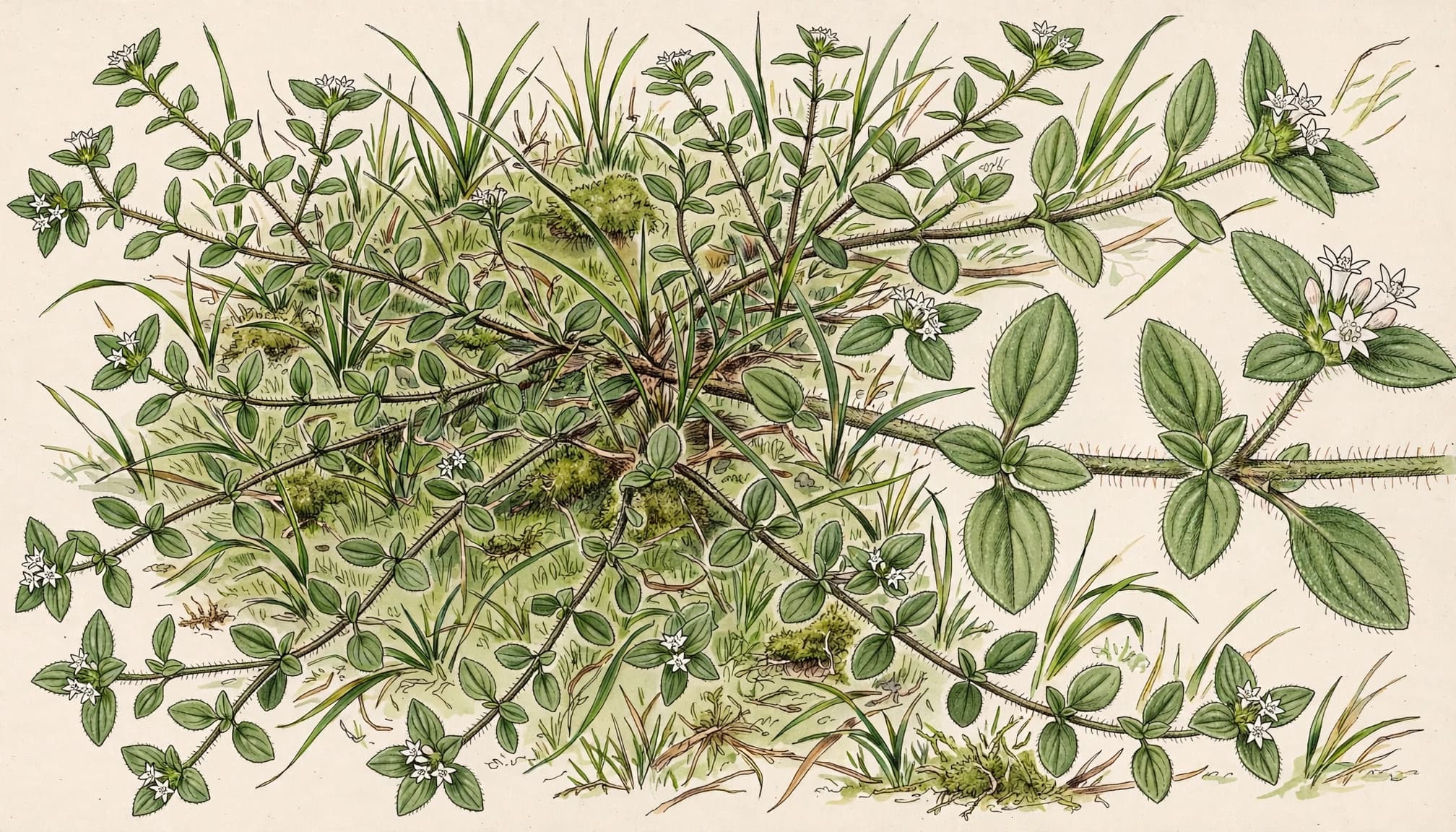
The plant has branching stems that grow close to the ground. Its leaves grow in opposite pairs along those stems, rather than alternating from side to side.
Look closely at the leaves and stems for a hairy, somewhat rough appearance. The leaves are generally oval to elongated. Together, those features help distinguish pusley from lawn grasses, which have narrow blades and a different growth pattern.
A spreading plant can overlap the surrounding turf, so follow a stem toward its center when you're inspecting it. That makes it easier to see which leaves belong to the weed and which belong to the grass.
Examine the Flowers
Florida pusley produces clusters of small, white, star-shaped flowers. The flowers can be easy to spot when several plants are present, even though the individual blooms are small.
The flower clusters are a useful starting point, but other lawn weeds have white flowers too. Pair that clue with the opposite leaves, hairy surfaces, and low, branching growth before settling on an identification.
Weeds That Can Look Like Florida Pusley
White flowers in a lawn don't automatically mean pusley. Virginia buttonweed is another broadleaf plant with opposite leaves and small white flowers. Other pusley species can also look similar, especially when plants are small or growing through thick grass.
Compare the leaves and stems rather than relying on a photo of a flower alone. A useful specimen includes a section of stem, several leaves, and any flowers present. Look at how the leaves meet the stem and whether the plant has a low, branching habit.
Grass damage can complicate the picture. A discolored or thin patch may contain weeds, but the grass itself could also have a separate problem. Chinch bugs, sod webworms, disease, and irrigation issues can all produce lawn symptoms that need different responses.
If the plant doesn't match the features above, identification help is a better next step than choosing a treatment based on flower color.
Assess the Lawn Around the Weed
When you find pusley, take a look beyond the flowers. The condition of the surrounding grass can help you decide whether you have an isolated weed to remove or a section of lawn that needs more attention.
Compare Turf Conditions
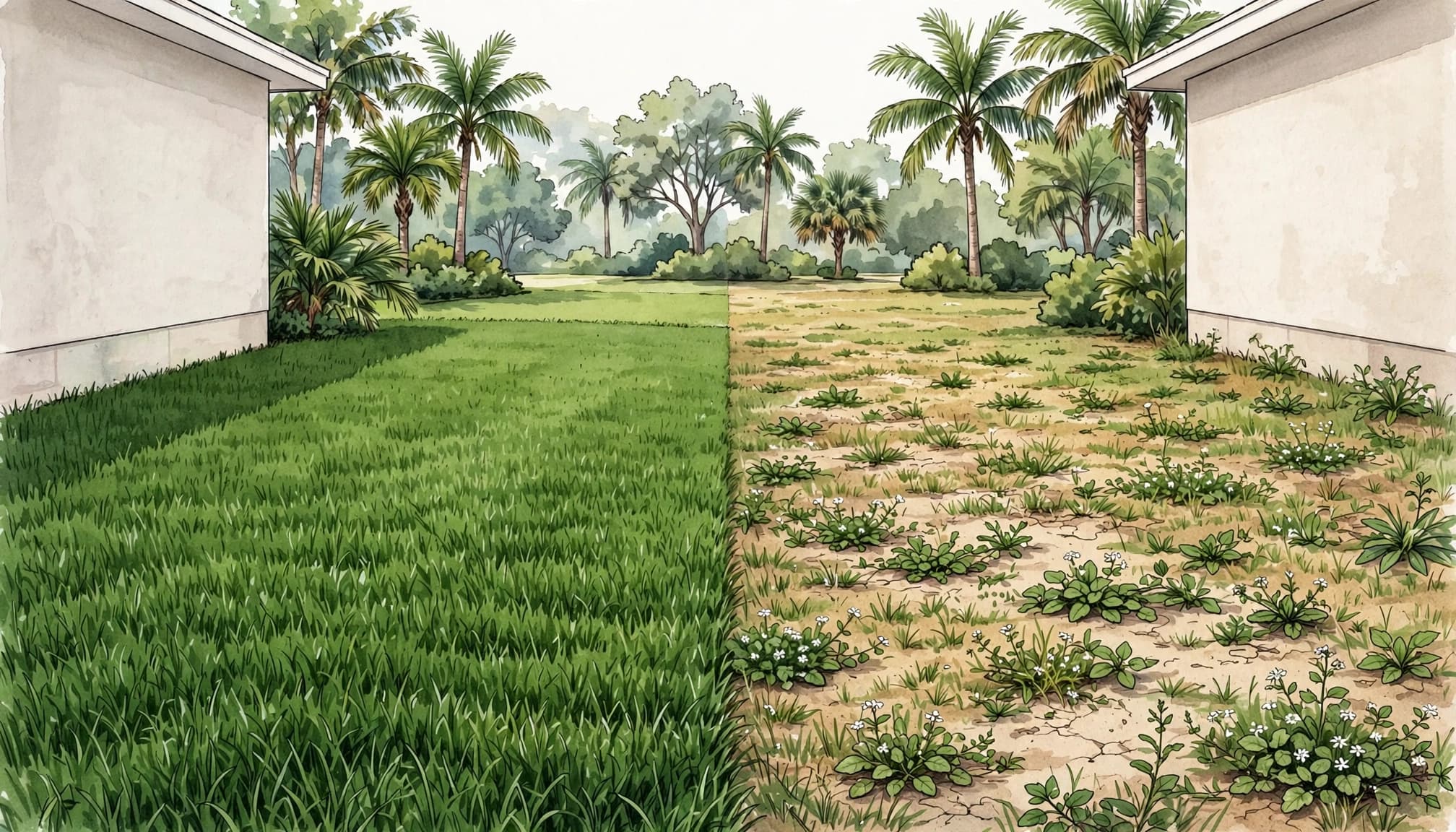
Notice whether the grass around the plant is thick or sparse. Look for exposed soil, worn areas, and patches where the turf looks different from the rest of the yard.
In Cape Coral, sandy soil and irrigation patterns are part of the picture. A narrow strip beside a driveway may get different sun and foot traffic than an open section of lawn. Likewise, grass beneath trees may have different growing conditions than grass in full sun.
Those observations help you plan the repair as well as the weed response. Removing an unwanted plant leaves you with a space that still needs attention if the surrounding turf is thin.
Look for a Separate Lawn Problem
Don't assume every brown patch has the same cause as the weed. Large patch disease, for example, can produce discolored areas in St. Augustinegrass. Sod webworm feeding and irrigation problems can also leave turf looking thin.
Look at the shape and location of the damage and how it compares with the rest of the lawn. When the grass is declining across a wider area, identifying that problem is part of deciding whether the lawn can recover or needs repair.
Options for Established Florida Pusley
Your approach depends on how much pusley is present and what else is happening in the turf. An isolated plant and a broad patch of mixed weeds don't necessarily call for the same response.
Hand Removal for Isolated Plants
Hand removal is an option when you can see individual plants among otherwise healthy grass. It lets you focus on the weed without treating the entire lawn.
After removal, pay attention to the condition of the space left behind. If the grass around it is dense and healthy, the area may need less repair work than a patch where much of the turf has already disappeared.
For a yard with many plants, consider the time involved and the condition of the grass before relying on removal alone. A lawn-care professional can help identify the plants and assess the affected area.
Plan for Larger Patches
A larger area of pusley deserves a look at the turf beneath and around it. If there is still substantial healthy grass, the plan may differ from one for an area with mostly exposed soil.
Mark the affected area in your lawn-care notes or take a photo that shows both the weeds and the surrounding grass. A later comparison can help you see whether the area is changing and whether your repair plan needs adjustment.
Choosing a Weed-Control Product
For homeowners considering a lawn herbicide, the product label is an essential part of the decision. Look for a product whose label identifies Florida pusley and the type of turf you have. St. Augustinegrass, for example, should not be treated as interchangeable with every other lawn grass.
The label also gives the directions for that product. Lawn products differ, so the instructions on one container shouldn't be assumed to apply to another. If you're unsure which grass is in your yard, identify it before choosing a product.
Be especially thoughtful when the lawn is already discolored or thin. Existing damage can make it harder to judge what the turf needs. If your grass has changed appearance following an earlier treatment, our guide to repairing herbicide damage in Cape Coral lawns covers lawn recovery.
Professional help is useful when weed identification, grass type, or the condition of the turf is unclear. The goal is to make a decision that accounts for the lawn you have, rather than choosing a product based only on the white flowers.
Lawn Care After Weed Removal
A weed-control plan should include care for the grass that remains. Your lawn's condition gives you a starting point for deciding whether routine maintenance is enough or whether a damaged area needs to be restored.
Match Maintenance to the Grass
Use a mowing routine suited to your turf variety and its condition. St. Augustinegrass and other warm-season grasses don't all have the same maintenance needs, so identify the grass before copying a neighbor's routine.
Irrigation deserves attention too. In Southwest Florida, a lawn can include areas with different sun exposure, soil conditions, and sprinkler coverage. A shaded side yard may not look or behave like the open lawn beside it.
Fertilizer is another part of the maintenance plan. Cape Coral has residential landscape fertilizer rules, including restrictions intended to protect waterways. A lawn-care plan should account for those rules as well as the grass's condition.
Keep Watching the Grass
Look at the same areas over time rather than judging the lawn from a single visit. Note whether bare spots remain open and whether neighboring turf looks healthy.
Keep weed identification separate from a diagnosis of grass damage. If the weeds are gone but the turf remains discolored, the lawn may need further attention. Conversely, a few weeds in an otherwise healthy lawn don't automatically mean the whole yard needs replacement.
Repair Bare or Thin Areas
Once you've assessed the grass, decide how much of the area needs repair. A small opening surrounded by healthy turf presents a different project from a large section where little living grass remains.
For a larger damaged area, sod may be worth considering. Match the replacement grass to the site and the lawn you want to maintain. Also look at the reason the area needs repair, including the condition of the irrigation system and the amount of sun the spot receives.
The finished lawn should work with the rest of the yard. Edges along a patio, planting bed, or driveway can be difficult to maintain if they're too narrow for your normal mowing routine. Consider those boundaries before replacing grass.
We offer sod installation in Cape Coral for homeowners planning a lawn repair or a larger outdoor project. Our team also offers artificial grass as an option for areas where a different surface makes more sense.
Consider a Different Use for Difficult Lawn Areas
Some parts of a yard are better suited to planting beds or outdoor living space than to a continuous lawn. That decision depends on how you use the area, how much light it gets, and the amount of maintenance you want.
For example, a planting bed can give a narrow or awkward lawn edge a clear boundary. Choose plants for their mature size and match them to the available sun and water. Cape Coral options mentioned in our planting guidance include coontie, muhly grass, and Simpson's stopper, each with its own space and site needs.
If you're planning a patio or walkway beside the lawn, consider how the finished edge will be maintained. Paver cleaning and regular lawn care are easier to plan when you can reach both sides of the boundary.
A redesign isn't necessary for every pusley plant. It can, however, be useful when you're already reconsidering a section of the yard. Our landscape design and installation services can help bring those decisions together.
Florida Pusley Questions
Is Every White Flower in a Lawn Florida Pusley?
No. Other broadleaf weeds have small white flowers, including Virginia buttonweed. Florida pusley identification depends on the combination of flowers, opposite leaves, hairy surfaces, and branching stems. If those details don't match, identify the plant before selecting a response.
Can I Remove Pusley Without Replacing the Lawn?
An individual plant doesn't mean the surrounding grass needs replacement. Start by assessing how much healthy turf remains. If the lawn has extensive bare areas or a separate grass problem, repair may become part of the plan. The size and condition of the affected area should guide that decision.
Should I Treat Weeds or Lawn Damage First?
Identify both problems before deciding on the work. A weed growing in a discolored patch doesn't explain every possible cause of the grass damage. When identification is uncertain, a lawn-care professional can help distinguish the weed from the condition affecting the turf.
A Clear Plan for Your Cape Coral Lawn
Florida pusley is easier to recognize when you look past its white flowers and inspect its leaves and stems. Once you've identified it, choose a response that fits the size of the affected area and the condition of the grass.
Keep the rest of the lawn in view as well. Healthy turf and a well-planned repair make your yard easier to maintain after the weeds are addressed.
If a thin area needs new sod or a different landscaping solution, contact us for a free consultation and estimate.