


Crape Myrtle Bark Scale: Signs and Treatment in Southwest Florida
Crape myrtle bark scale appears as small white or gray waxy patches on the trunks and branches of crape myrtle trees. Sticky honeydew and black sooty mold often accompany an infestation, but you'll need to find the insect to identify the cause.
For Southwest Florida homeowners, the best first step is to inspect before treating . Aphids and other problems can leave similar marks, and an unnecessary pesticide application can harm helpful insects.
Here's how to recognize the signs and decide what to do next.
What Crape Myrtle Bark Scale Looks Like
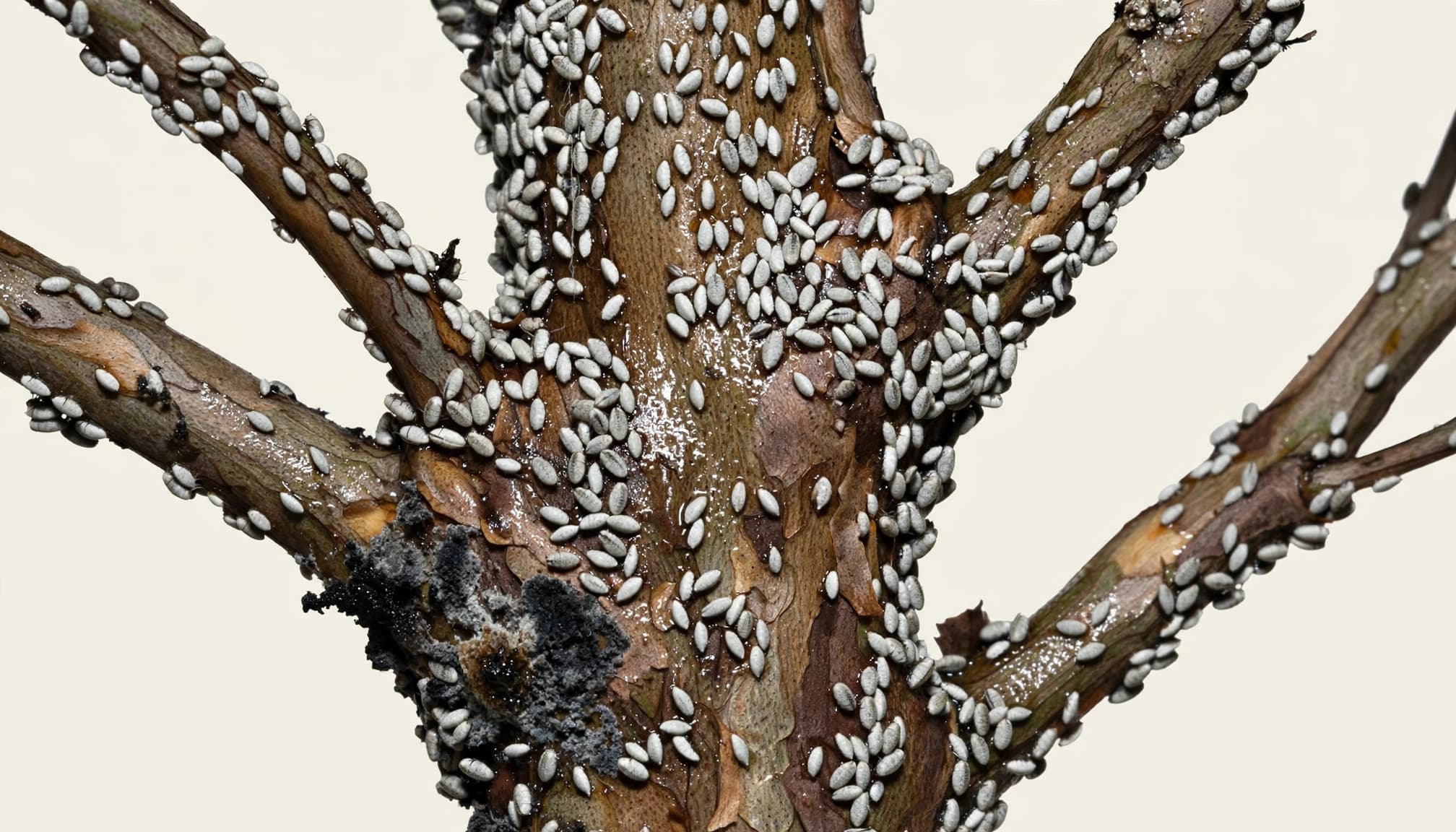
Crape myrtle bark scale is a small, sap-feeding insect known scientifically as Acanthococcus lagerstroemiae. Its white to gray covering looks felt-like or waxy and can resemble a patch of cotton on the bark.
Where to look on the tree
Start at the lower trunk and follow the main limbs upward. Look around branch junctions and rough areas of bark, then inspect smaller branches and twigs you can reach safely.
Individual scales are small, roughly 2 millimeters long or less. When many gather together, they form noticeable pale clusters. A flashlight and hand lens can help you distinguish individual insects from patches of discolored bark.
Look for live insects and sticky residue
According to UF/IFAS guidance on crape myrtle bark scale, a live scale may release pink or reddish fluid when crushed. Dead scales tend to be dry and flaky, although old coverings can remain attached after treatment.
As the insects feed, they excrete a sugary liquid called honeydew. It can coat branches, leaves, and surfaces beneath the canopy. Black sooty mold may then grow on that residue, giving the tree a dark, dirty appearance.
Distinguishing Scale From Other Tree Problems
Blackened bark doesn't automatically mean your tree has bark scale. Several common crape myrtle conditions can look alarming, but they call for different responses.
Aphids and sooty mold
Crape myrtle aphids also produce honeydew, so they can cause sticky leaves and black sooty mold. Look for these small insects on the undersides of leaves, especially on tender growth. Bark scale, by contrast, is most often noticed on woody trunks and branches.
The mold grows on the honeydew rather than feeding directly on the tree. Washing away the black coating won't solve the problem if sap-feeding insects continue to produce residue.
Peeling bark and powdery mildew
Many crape myrtles naturally shed thin pieces of bark, revealing smooth patches underneath. Normal peeling isn't the same as clusters of small, felt-like insects.
Powdery mildew can create a pale coating on leaves and new growth. It looks more like a dusting than the separate waxy bumps found on infested bark. If you're uncertain, take close photos of both the affected area and the whole tree before choosing a treatment.
What Southwest Florida Homeowners Should Know
A UF/IFAS Extension fact sheet describes crape myrtle bark scale in a residential landscape in northwest Florida. That report doesn't establish that the pest has been confirmed in Lee, Collier, or Charlotte County.
Homeowners in Fort Myers, Cape Coral, Estero, and Bonita Springs can still use the visible signs to recognize a suspicious insect. If you find a possible infestation, photograph the scale, the branch where it appears, and the entire tree. Contact your county UF/IFAS Extension office for identification and reporting guidance.
An accurate identification matters because a dirty canopy or sticky patio alone won't tell you which pest is present.
How the Pest Lives and Spreads
Crape myrtle bark scale has several life stages. Adult females produce eggs beneath their protective covering. Once those eggs hatch, the young insects, called crawlers , move to find a feeding site.
Why crawlers matter
Crawlers are tiny and mobile. After settling on suitable bark, they begin feeding and develop a waxy covering. That covering helps protect older scales, which makes an established infestation harder to address with contact treatments.
More than one generation can occur, and life stages may overlap. As a result, a tree can have crawlers and older scales at the same time.
How scale reaches another tree
Infested nursery stock and cut branches can carry scale to a new property. Crawlers can also move short distances, while wind, animals, clothing, and equipment can help transport them farther.
Inspect new crape myrtles before planting them, including the trunk and branch junctions. If a tree already has suspicious white clusters, keep it separate from other plants while you seek an identification.
Monitor the Tree Before Choosing a Treatment
A few old white coverings don't tell you how active an infestation is. Inspect the same areas over time and look for live insects, fresh honeydew, and new clusters.
Record what you find
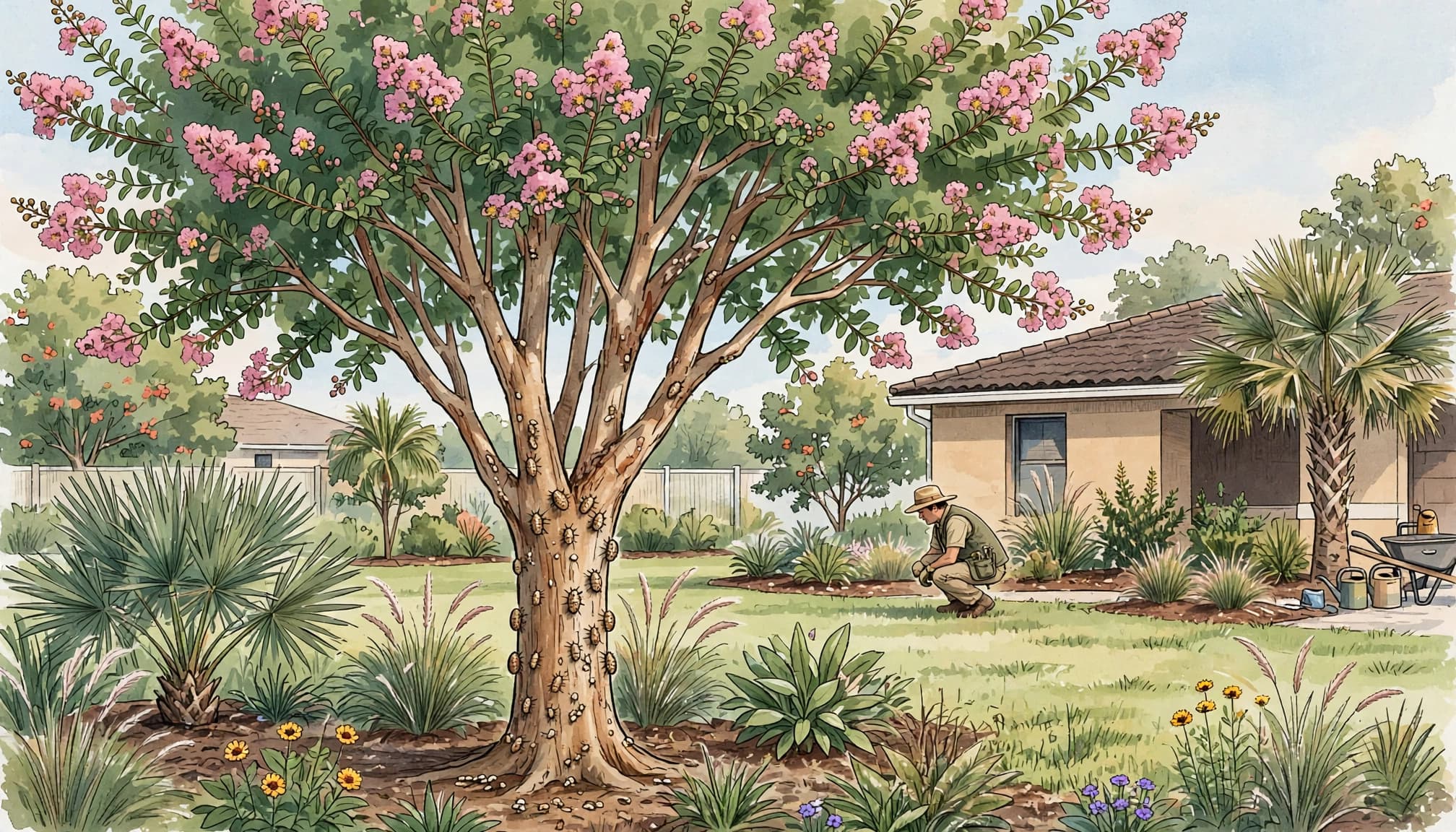
Take dated photos of the trunk, branch junctions, and affected foliage. Note whether the sticky residue is increasing and whether nearby crape myrtles show similar signs. These records help distinguish an expanding problem from old damage.
If the tree is too tall to inspect safely from the ground, avoid climbing or cutting large limbs yourself. A qualified tree-care professional can assess the upper canopy.
Watch for young crawlers
A hand lens can help you spot tiny crawlers near infested areas. Some growers also use double-sided tape around a small, accessible twig to capture moving crawlers, then examine the tape regularly and replace it as needed.
Crawler activity is more useful for treatment decisions than a date alone. Warm Southwest Florida conditions don't provide a reliable, single treatment week for every property.
Remove Scale From Reachable Bark
For a heavy infestation, UF/IFAS recommends washing the trunk and reachable limbs with a soft brush and a mild dishwashing-soap solution. Gentle scrubbing can remove many female scales and egg masses.
Work on sturdy areas you can reach from the ground. Avoid scraping deeply, using a wire brush, or blasting bark with a pressure washer. The goal is to remove insects without damaging the tree.
Keep wash water out of storm drains, canals, and ponds. If you're coordinating paver cleaning beneath the canopy, contain the rinse water as well. Sticky honeydew can also collect on artificial turf, so remove debris and residue without washing it into drainage features.
Physical removal can reduce the number of insects, but it may not reach scale high in the canopy. Continue monitoring afterward rather than assuming the wash removed every pest.
Choose and Time Treatment Carefully
A confirmed infestation doesn't always need the same response. The amount of live scale, the size of the tree, and the presence of beneficial insects all matter.
Systemic treatment options
UF/IFAS reports that systemic insecticides applied to the root zone as a soil drench or injection have shown promise against this pest. The tree takes up a systemic product through its roots, so treatment is different from washing or spraying the bark.
Older UF/IFAS guidance discusses early summer or the period before peak crawler activity as possible timing. That isn't a Southwest Florida-specific calendar date. A licensed pest professional can assess the infestation, the tree's flowering stage, and site conditions before recommending a labeled treatment.
Follow the label and protect water
Use only a product labeled for the intended ornamental site and pest, and follow its application directions. Pay attention to protective equipment, re-entry periods, weather restrictions, and instructions near water.
Keep children and pets away for the period stated on the label. Never pour leftover pesticide or rinse water into a canal, pond, irrigation ditch, or storm drain. Where a treatment requires a licensed applicator, hire one.
Protect Beneficial Insects and Pollinators
Lady beetles feed on bark scale and can help reduce populations. UF/IFAS identifies the twice-stabbed lady beetle as one predator. Its young can have a waxy appearance, so take a close look before removing every white object on a branch.
Beneficial insects may not prevent visible damage during a heavy infestation. Still, avoiding unnecessary broad-spectrum spraying gives predators a better chance to remain in the landscape.
Crape myrtle flowers also attract pollinators. UF/IFAS advises against applying insecticides while the tree is in flower. Follow all pollinator-protection directions on the label, including restrictions that apply to systemic products.
After treatment, keep looking for live scale rather than judging success by color alone. Old waxy coverings can remain on bark, and sooty mold may take time to weather away.
Reduce the Chance of Reinfestation
A healthy tree still needs monitoring, but good site care helps it tolerate stress. Maintain suitable soil moisture without leaving roots waterlogged. Keep mulch away from direct contact with the trunk, and avoid piling it against the bark.
Prune only when needed to remove dead or damaged branches or improve the tree's structure. Severe topping won't cure a scale infestation and can leave a crape myrtle with weak, unattractive regrowth.
During routine landscaping visits, ask that suspicious clusters be documented and that tools be cleaned after work on infested plants. If you leave your property for part of the year, include tree inspections in your seasonal Southwest Florida landscape maintenance plan.
For a larger planting project, our Florida-Friendly landscape design ideas can help you plan beds around each plant's light and water needs. We'll help with landscape design and irrigation work; a licensed pest professional can handle treatment when required.
Protect Your Crape Myrtle With Early Inspection
White or gray clusters on bark, sticky honeydew, and black sooty mold are signs worth investigating. Find the insect before choosing a treatment, since aphids can cause similar residue.
A gentle wash, careful monitoring, and properly timed professional treatment can all have a place in managing confirmed scale. Continue inspecting afterward and protect beneficial insects as the tree recovers.