


Florida Betony in Cape Coral Lawns: Identify and Control
Florida betony is a broadleaf weed that can return even after its visible shoots disappear. Its white, segmented underground tubers store the growth that makes control a longer project than a single mowing or spray.
For Cape Coral homeowners, the first step is to identify the plant and your grass type before choosing a treatment. That protects the lawn while you address the weed below the surface.
How to Identify Florida Betony
Florida betony, or Stachys floridana , grows in lawns and landscape beds. It's also called rattlesnake weed because its tubers resemble a rattlesnake's tail.
Look at the Leaves, Stems, and Flowers
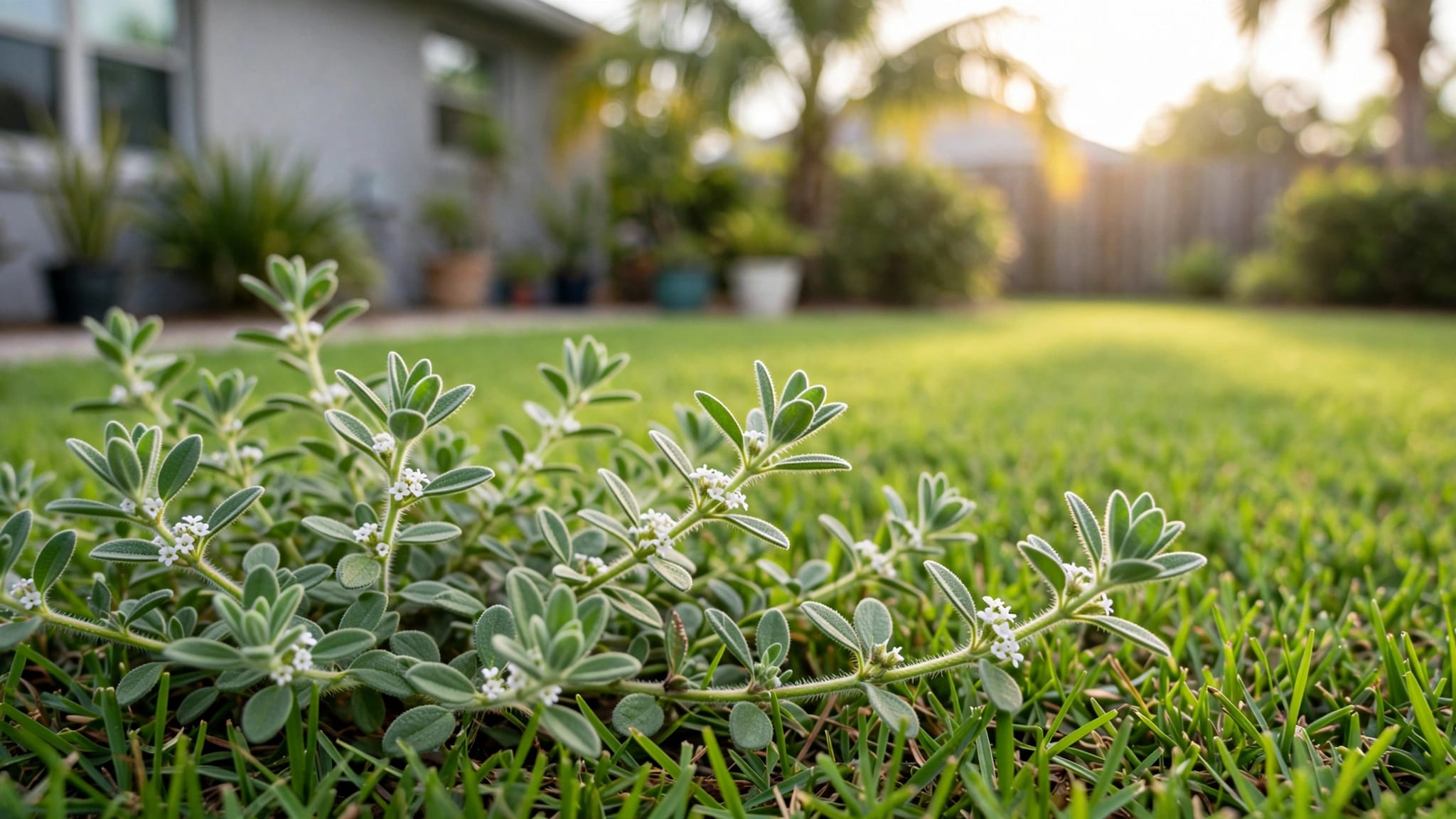
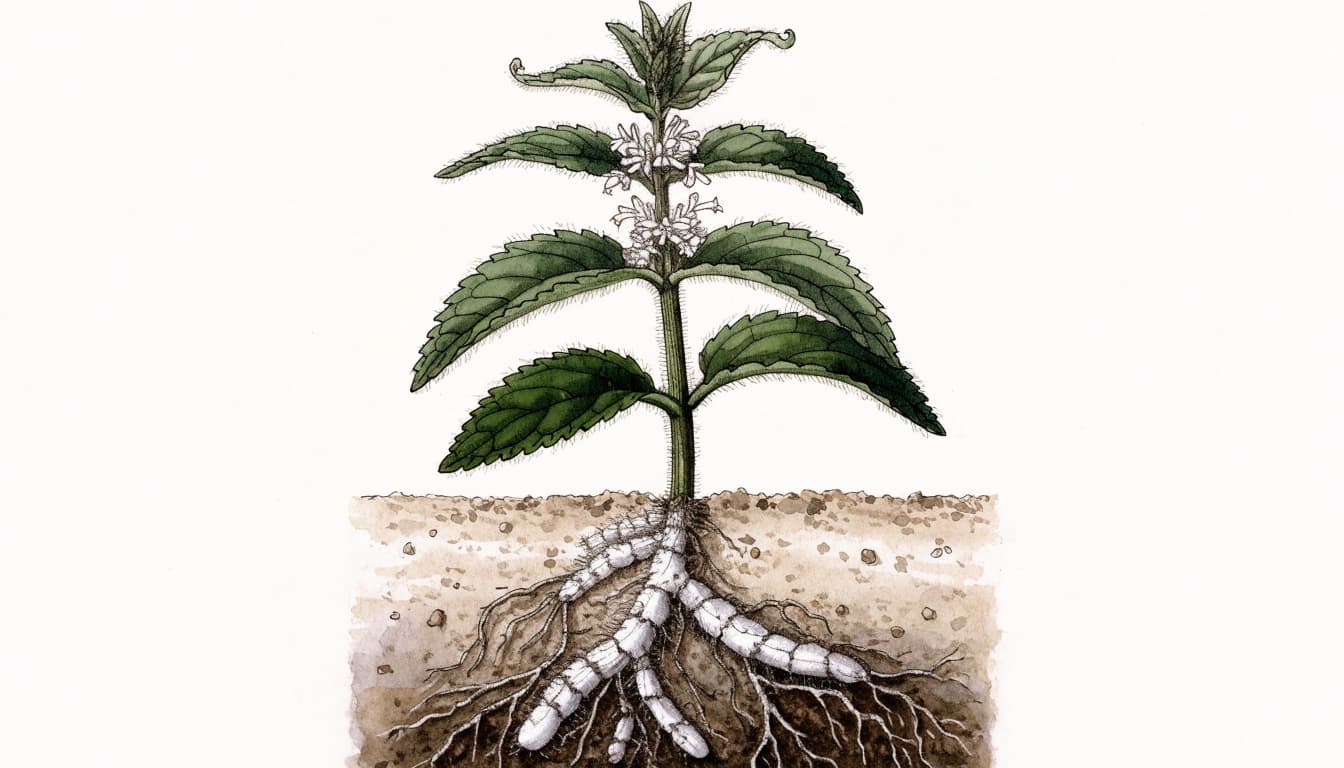
Start with the plant growing above the grass. Florida betony has square, often hairy stems and leaves that grow opposite each other. The leaves have toothed edges and can reach about 2 inches long.
When allowed to grow without mowing, stems can reach about 24 inches. The flowers are small, white to pink, sometimes with purple spots. They appear in clusters along the stems.
Mowing can remove the flowers and keep the plant short, so you may see only leafy shoots in a lawn. If the foliage looks unfamiliar, dig up a small sample rather than relying on flower color alone.
Look for the Segmented Tubers
The strongest identification clue is underground. Loosen the soil around a shoot and look for pale, segmented tubers attached to underground plant parts. Their swollen sections give them a distinctive, rattlesnake-tail appearance.
According to UF/IFAS guidance on Florida betony, the plant also spreads through underground rhizomes. Pieces left behind can produce new growth, which explains why a patch may reappear after the tops are removed.
Why It Spreads Through a Cape Coral Lawn
Florida betony is a cool-season perennial. Its shoots are generally most noticeable during the cooler part of the year, when the plant is actively growing. In warmer weather, aboveground growth may decline, but underground tubers can remain.
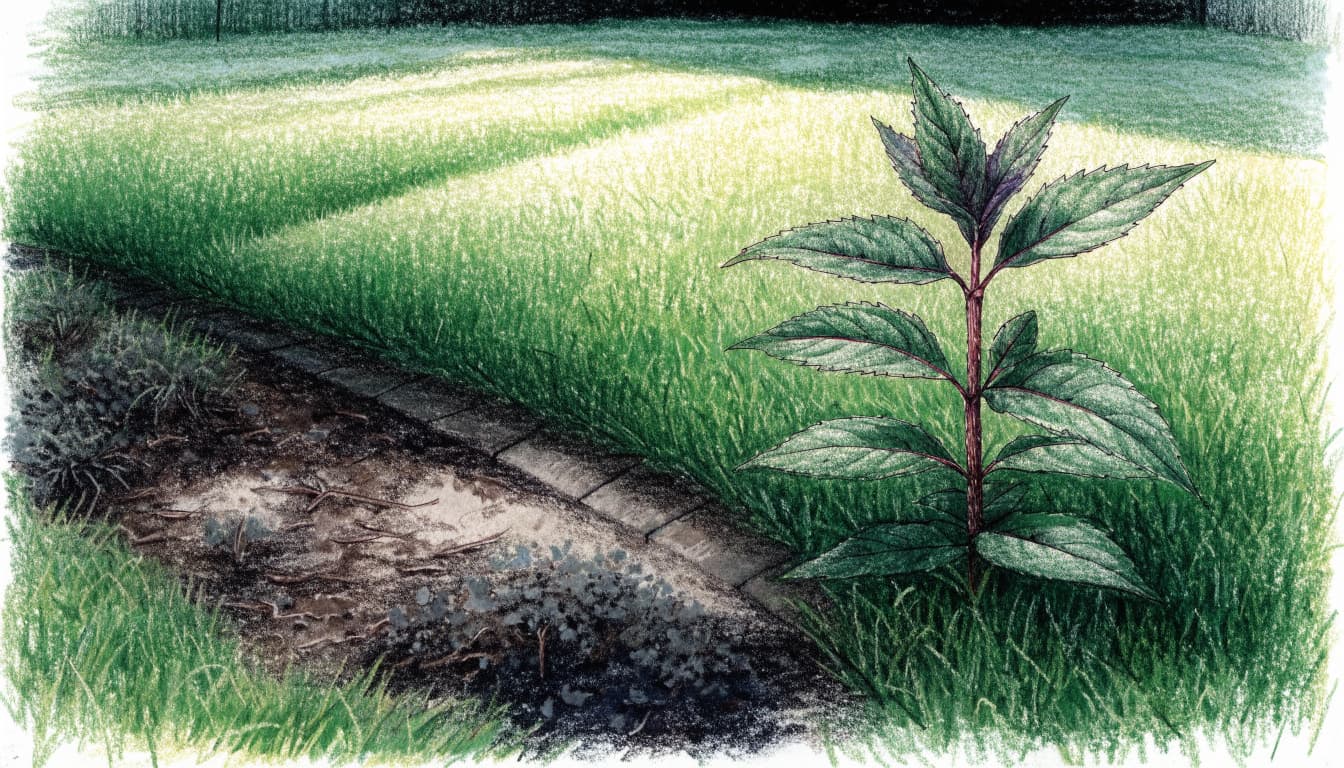
Cape Coral's mild winters give homeowners reason to watch the lawn beyond the summer growing season. Check thin areas and the edges of planting beds for clusters of opposite leaves emerging among the grass.
Movement of infested soil can also carry underground pieces into another part of the yard. That matters during grading, bed work, irrigation repairs, or sod replacement. Keep soil from an affected patch separate rather than spreading it over a clean area.
A decline in visible shoots isn't proof that the infestation is gone. Mark the area and watch it for returning growth during the next cooler season.
Dig Out Small Patches Carefully
Hand removal is practical when Florida betony is limited to a few shoots or a small patch. It also avoids exposing nearby grass and ornamentals to herbicide.
Work when the soil is moist enough to loosen without breaking into hard clumps. Use a hand trowel or small spade to lift soil around the plant, then follow the underground growth and remove the tubers and rhizomes you find. Place the material in a bag for disposal rather than leaving it on the lawn.
Pulling the stem alone usually leaves underground growth behind. Aggressive hoeing can also break that growth into pieces, so lift and inspect the soil instead of chopping through the patch.
Afterward, return the soil, repair the opening, and monitor it for new shoots. Repeat removal when they appear. Small tubers can be easy to miss, and a return visit is part of the process.
For a large infestation spread throughout established grass, digging may leave more bare soil than you can reasonably repair. In that case, a turf-labeled herbicide program may be more practical.
Treat Established Florida Betony in Turf
A selective post-emergent herbicide can be an option for a larger infestation, but the right choice depends on the grass and the product label. Treating visible growth without identifying the lawn can damage the turf you want to keep.
Match the Product to the Weed and Grass
Some products containing atrazine or combinations of 2,4-D, MCPP, and dicamba are discussed in University of Georgia Extension's Florida betony guidance. That doesn't make every product with those ingredients suitable for every Cape Coral lawn.
Use a product only when its label permits the intended site, your turf species, and the target weed. Follow its directions for rate, timing, watering, protective equipment, and any repeat application.
Treat the affected area rather than the entire yard when the label permits spot treatment and the infestation is localized. More product or an early repeat application can injure turf without solving the underground problem.
Time Treatment Around Active Growth
Post-emergent treatments need living foliage to contact or absorb the product. Look for active Florida betony growth in cooler weather rather than spraying when the weed has disappeared aboveground.
The Georgia guidance recommends seasonal applications for conditions in that state. Cape Coral's weather and turf growth differ, so those dates aren't a fixed local schedule. Follow the selected product's label and avoid treating turf under drought, heat, disease, or other stress.
Regrowth may require follow-up where the label allows it. Keep a record of the product and application date so you don't exceed the permitted rate or interval.
Choose Control for Your Grass Type
Cape Coral lawns aren't all planted with the same grass. Identifying yours matters before buying a broadleaf weed treatment.
St. Augustinegrass and Centipedegrass
St. Augustinegrass is common in Southwest Florida residential lawns. Some broadleaf herbicides can injure it, especially when applied at the wrong rate or under stressful conditions.
Centipedegrass also has sensitivity concerns with certain herbicide combinations. Don't assume a product is safe just because its container says it's for lawns. The exact grass must be an approved use on that product's label.
If the lawn contains mixed grasses or you can't identify the turf, a licensed lawn-treatment professional can help select an appropriate approach. Avoid treating recently installed or repaired sod unless the label permits it.
Zoysiagrass, Bermudagrass, and Bahiagrass
Zoysia, bermudagrass, and bahia also appear in Southwest Florida yards. Product restrictions differ among them, and some labels distinguish between actively growing and dormant turf.
For example, Georgia's atrazine guidance lists dormant bermudagrass rather than giving a blanket recommendation for bermuda in every condition. Use the directions for the actual product and lawn instead of borrowing a neighbor's treatment plan.
Where the grass type or appropriate product remains unclear, targeted digging and monitoring are safer starting points than an uncertain application.
Protect Your Lawn and Nearby Water
Cape Coral yards often sit near canals, drainage routes, or other waterways. Keep herbicides and rinse water out of those areas, and avoid applying when heavy rain or runoff could move the product off the lawn.
Follow the label's re-entry instructions for children and pets. Keep products in their original containers, and take care around desirable shrubs and flowers. A broadleaf treatment intended for turf can damage nearby landscape plants.
Avoid spraying a nonselective herbicide such as glyphosate over a lawn you want to preserve. It can injure or kill desirable grass it contacts. Also, don't assume that a product that quickly browns the leaves has controlled the underground tubers.
If grass becomes discolored after treatment, stop further applications and assess the damage. Our guide to repairing herbicide damage in Cape Coral lawns covers recovery and when turf replacement may be needed.
Prevent Regrowth With Better Lawn Care
A dense lawn gives new shoots less open space, although healthy turf alone won't remove existing tubers. Pair control with care that helps your grass fill in.
Mow for the Grass You Have
Avoid scalping the lawn to remove betony foliage. Cutting too low stresses turf and exposes more soil. Keep mower blades sharp and use the height recommended for your grass and cultivar.
Standard St. Augustine cultivars are commonly maintained around 3.5 to 4 inches. Bahia, zoysia, and bermuda have different mowing needs, so don't copy that setting without identifying your grass.
Mowing may hide the weed temporarily, but it doesn't remove its tubers. Continue checking known patches even when the lawn looks more uniform after a cut.
Adjust Water and Repair Thin Spots
Cape Coral's sandy soil can drain quickly, while low areas or uneven sprinkler coverage may stay too wet. Adjust irrigation for rainfall and the condition of the soil rather than watering a damp lawn on a fixed schedule.
Inspect heads near sidewalks, beds, and corners. A clogged or misdirected sprinkler can leave turf thin enough for weeds to establish. Likewise, heavy traffic and persistent shade can make grass slow to recover.
Don't apply extra fertilizer to force the lawn to fill in. Address the reason grass is struggling first. Our guide to Cape Coral soil problems covers sandy soil, salt, and other conditions that can affect a yard.
Plan Repairs Around the Remaining Tubers
New sod can improve a badly thinned lawn, but laying fresh grass over an active infestation doesn't remove the underground weed. Address the patch and monitor for regrowth before investing in a larger repair.
During landscaping work, keep infested soil out of clean areas. If a concrete contractor is adding a walkway or patio, coordinate grading and drainage before the final turf goes in. That reduces the chance of disturbing the finished lawn again for access or irrigation changes.
For a shaded or narrow area where natural grass repeatedly struggles, artificial turf may be worth considering. It still needs a properly prepared base and drainage plan.
We offer sod and artificial grass installation in Cape Coral for homeowners comparing repair and replacement options.
Keep Watch After Treatment
Florida betony's tubers make follow-up as important as the first treatment. A patch that looks clear at the surface can produce new shoots later, so return to the area during cooler growing conditions.
Start with accurate identification, choose a method suited to your grass, and give the lawn time to recover. Consistent monitoring helps you catch regrowth while it's still manageable.