


When to Fertilize St Augustine Grass in Southwest Florida
St Augustine grass can stay green through much of winter in Southwest Florida, but that doesn't mean it needs fertilizer every month. A lawn can look pale after heavy rain, slow down during a cool spell, or suffer from a problem that fertilizer won't fix.
Knowing when to fertilize St Augustine grass Southwest Florida lawns takes a closer look at growth, soil moisture, and local rules. The right application supports steady recovery, while a rushed application can feed runoff instead of your yard.
Understand the Growth Cycle Before Feeding Your Lawn
St Augustine grass is a warm-season turfgrass. It grows best when soil and air temperatures stay warm, so its fertilizer needs follow active growth rather than the calendar alone.
In Fort Myers, Cape Coral, Estero, and Bonita Springs, lawns may begin growing earlier than yards farther north. Still, a short cold spell can slow the grass. Fertilizing during that pause can leave nutrients unused, especially when the lawn has limited root activity.
Look for several signs that growth has resumed:
- The grass needs mowing more often.
- New runners appear along the edges of established patches.
- The lawn recovers from foot traffic within a reasonable time.
- Fresh blades fill thin areas instead of remaining dormant.
- Soil moisture is steady, but the turf still shows a clear need for nutrients.
Color alone isn't enough to guide an application. Pale grass may need nitrogen, but yellowing can also point to iron deficiency, poor drainage, compacted soil, chinch bugs, or a root disease. Adding more fertilizer without identifying the cause can make the problem worse.
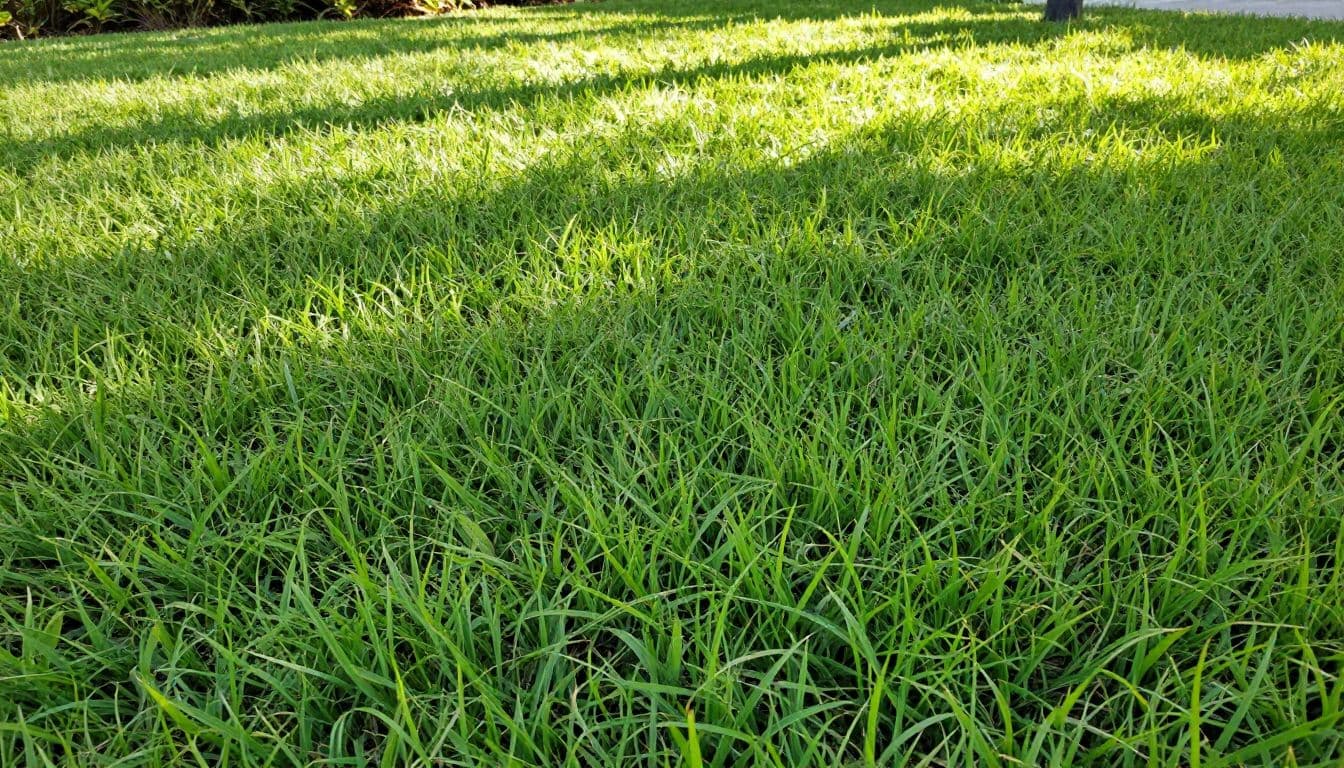
Fresh sod needs extra care. Wait until it has rooted and shows new growth before applying a regular fertilizer. If the sod lifts easily when you tug gently on it, give the roots more time to establish. A starter product may be appropriate in some installations, but the sod supplier's directions and local rules should guide that decision.
Mowing height also affects fertilizer needs. St Augustine grass generally performs better when kept around 3.5 to 4 inches tall. Cutting too low stresses the plants and can create thin areas that look like a nutrient problem.
When to fertilize St Augustine grass Southwest Florida lawns
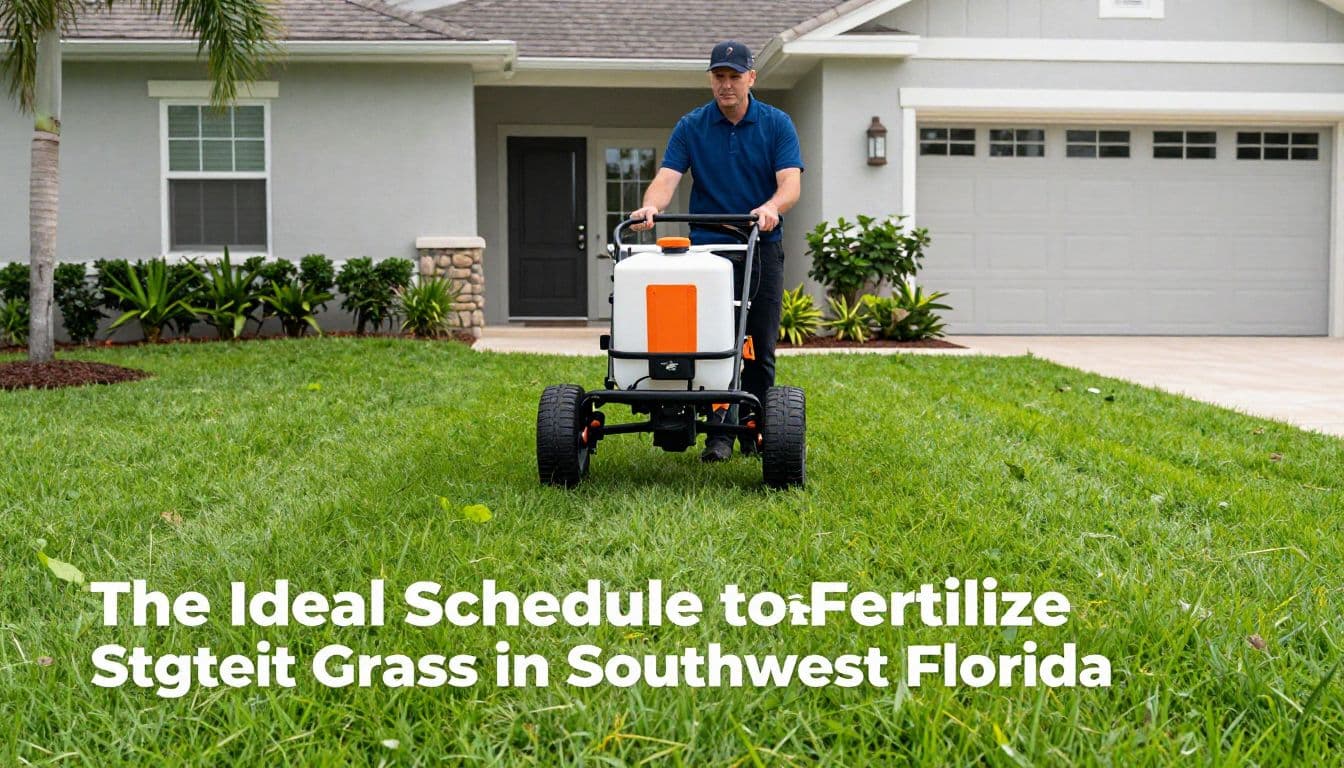
For most established lawns, the first feeding should happen after consistent spring growth begins. In Southwest Florida, that often falls in late March or April, but weather and local regulations can move the timing earlier or later.
Apply another treatment only if the grass continues to grow and needs additional nutrition. A spacing of roughly six to eight weeks is common for maintenance applications, although the product label, turf condition, and annual nitrogen limit still matter.
This seasonal guide gives you a practical starting point.
| Time of year | General approach | Main concern |
|---|---|---|
| January and February | Usually hold fertilizer unless the grass is actively growing and local rules allow it. | Cool nights reduce nutrient uptake. |
| March and April | Consider the first application after growth and mowing resume. | Avoid feeding dormant or drought-stressed turf. |
| May | Reassess the lawn before a second application. | Heavy rain can move nutrients off the property. |
| June through September | Check current county and city restrictions before applying anything. | Rainy-season runoff and fertilizer blackout periods. |
| October | Use a light, carefully timed application only if growth remains active and rules allow it. | Avoid pushing soft growth before cooler weather. |
| November and December | Most lawns need little or no fertilizer. | Growth usually slows during cooler periods. |
The same rule applies when you fertilize St Augustine grass Southwest Florida lawns in a warm winter: active growth matters more than a date printed on a calendar.
Exact timing and fertilizer restrictions vary by county or municipality. Lee, Collier, and Charlotte counties may have different rules, and individual cities can add their own requirements. If you live in Fort Myers, Cape Coral, Estero, or Bonita Springs, verify the current ordinance before applying fertilizer.
Some local rules restrict phosphorus, limit nitrogen rates, require slow-release nitrogen, establish setbacks near water, or prohibit fertilizer during part of the rainy season. Never assume a rule from one city applies to the entire region.
Choose the Right Fertilizer for Florida Turf
Read the three numbers on the fertilizer bag before spreading it. They show the percentage of nitrogen, phosphate, and potash by weight.
Nitrogen supports green leaf growth, but too much can create rapid, weak growth that needs frequent mowing. Excess nitrogen can also increase runoff risk and make certain pest or disease problems harder to manage. Potassium supports general plant function, yet it should still match the soil's needs.
Phosphorus requires special care in Florida. Many lawns already contain enough phosphorus, and local ordinances may restrict phosphorus fertilizer unless a soil test shows a need. Don't choose a phosphorus-containing product by default.
Slow-release nitrogen is often a better fit for residential turf. It feeds the grass over time and reduces the sharp growth surge that can follow a heavy application. Look for the slow-release percentage on the label, then follow the listed rate for St Augustine grass.
A fertilizer labeled 15-0-15 contains 15 percent nitrogen. As a math example, about 6.7 pounds of that product supplies 1 pound of actual nitrogen per 1,000 square feet. That calculation doesn't tell you how much your lawn should receive. Use the bag's instructions and stay within local limits.
A soil test can help separate a nutrient shortage from an irrigation or disease issue. If the lawn looks yellow while growth remains strong, an iron treatment may improve color without adding large amounts of nitrogen. Apply iron carefully because some products can stain concrete, pavers, or other hard surfaces.
For a newly installed yard, grass type also affects the maintenance plan. Homeowners can compare St Augustine with other sod varieties before committing to a replacement or expansion.
Apply Fertilizer Without Feeding Runoff
Good timing won't protect a waterway if the product leaves the lawn. Southwest Florida properties often drain toward canals, ponds, retention areas, bays, and stormwater inlets, so application technique matters.
Follow these steps each time:
- Measure the lawn area and calculate the correct product amount before filling the spreader.
- Calibrate the spreader according to the bag directions, then apply on calm, dry grass.
- Keep fertilizer away from driveways, sidewalks, pool decks, patios, pavers, and drainage channels.
- Sweep stray granules back onto the grass instead of washing them toward a drain.
- Avoid applying before a heavy rain or when standing water is present.
- Water only as the label directs, and stop if irrigation creates runoff.
A fertilizer application works only when it stays on the grass. Granules on a driveway can reach a storm drain before they ever help the lawn.
Keep fertilizer away from ponds, canals, lakes, and other water bodies. Local ordinances may require a specific no-fertilizer buffer, so check the current setback instead of relying on a general rule.
A landscaping plan should also account for drainage and irrigation. A broken sprinkler head can flood one section while leaving another dry, and compacted soil can keep water near the surface. Correcting those conditions may do more for the lawn than another bag of fertilizer.
If runoff repeatedly crosses a cracked driveway or patio, a concrete company can assess the hard surface while drainage work addresses the water path. Regular paver cleaning can remove residue, but preventing granules from reaching the surface is safer and more effective.
Know When Fertilizer Isn't the Solution
St Augustine grass often shows stress through discoloration, bare patches, or thinning. Those symptoms don't identify the cause by themselves.
Chinch bugs can damage sunny, dry areas, while gray leaf spot may appear during warm, wet weather. Take-all root rot can cause thinning and yellowing, especially when the lawn stays wet. Mowing too short, watering too often, and poor sunlight can create similar symptoms.
Inspect the lawn before feeding it. Check whether the soil feels constantly saturated, whether sprinkler coverage is even, and whether damaged blades pull away easily. Look along the boundary between healthy and weak grass for insects or irregular patterns.
Fertilizer also won't repair soil that has been compacted by construction or heavy foot traffic. Core aeration, irrigation repair, improved drainage, or a change in turf may be the better fix.
If the yard requires constant watering and still struggles, sod and artificial grass installation options may be worth comparing. Artificial turf eliminates fertilizer needs, but it still requires proper base preparation and drainage.
Conclusion
The best time to fertilize St Augustine grass in Southwest Florida is during active growth, usually after spring green-up and before the lawn slows for cooler weather. Apply only when the turf needs nutrients, use a measured slow-release product, and follow the bag label.
Local fertilizer bans and application limits can change by county or municipality, so verify current rules before spreading anything. Above all, keep fertilizer off hard surfaces and away from storm drains and water bodies. A healthy lawn depends on good timing, accurate diagnosis, and careful stewardship of the water around your home.