


Trench Drains Vs Channel Drains For Driveway Runoff
Driveway runoff has a sneaky way of showing up where you least want it. One week it's a small puddle, then after a heavy rain it's water pushing toward your garage, washing sand onto your walk, or staining the concrete.
The fix usually comes down to one question: should you install a driveway trench drain across the slab, or a channel drain that intercepts water along an edge? They sound similar, and sometimes people use the words interchangeably. However, the best choice depends on where the water is coming from, how your driveway is pitched, and what the drain has to survive (cars, debris, salt air, and Florida downpours).
What trench drains and channel drains actually do (and why driveways are tricky)
Both systems are "linear surface drains." They collect water through a grate, then send it to a solid pipe that discharges to an approved outlet. The big difference is placement and purpose .
A trench drain is most often installed across the driveway, like a shallow gutter with a grate. It cuts off sheet flow before it reaches the garage or a low spot.
A channel drain is often installed along the driveway edge (or between surfaces), where it catches runoff as it travels downhill or spills off a hard surface.
Driveways are tricky because they're wide, they carry weight, and they connect to other surfaces. That's why the drain choice should match the water path, not just the look of the grate.
If water regularly crosses the driveway and heads straight for the garage door, a drain across the slab usually solves the problem faster than edge drains.
Also remember: any linear drain needs proper slope (either built into the channel or created in the base), plus a plan for cleanouts and maintenance. Without that, even a great-looking drain can clog and overflow.
When a driveway trench drain across the slab is the better answer
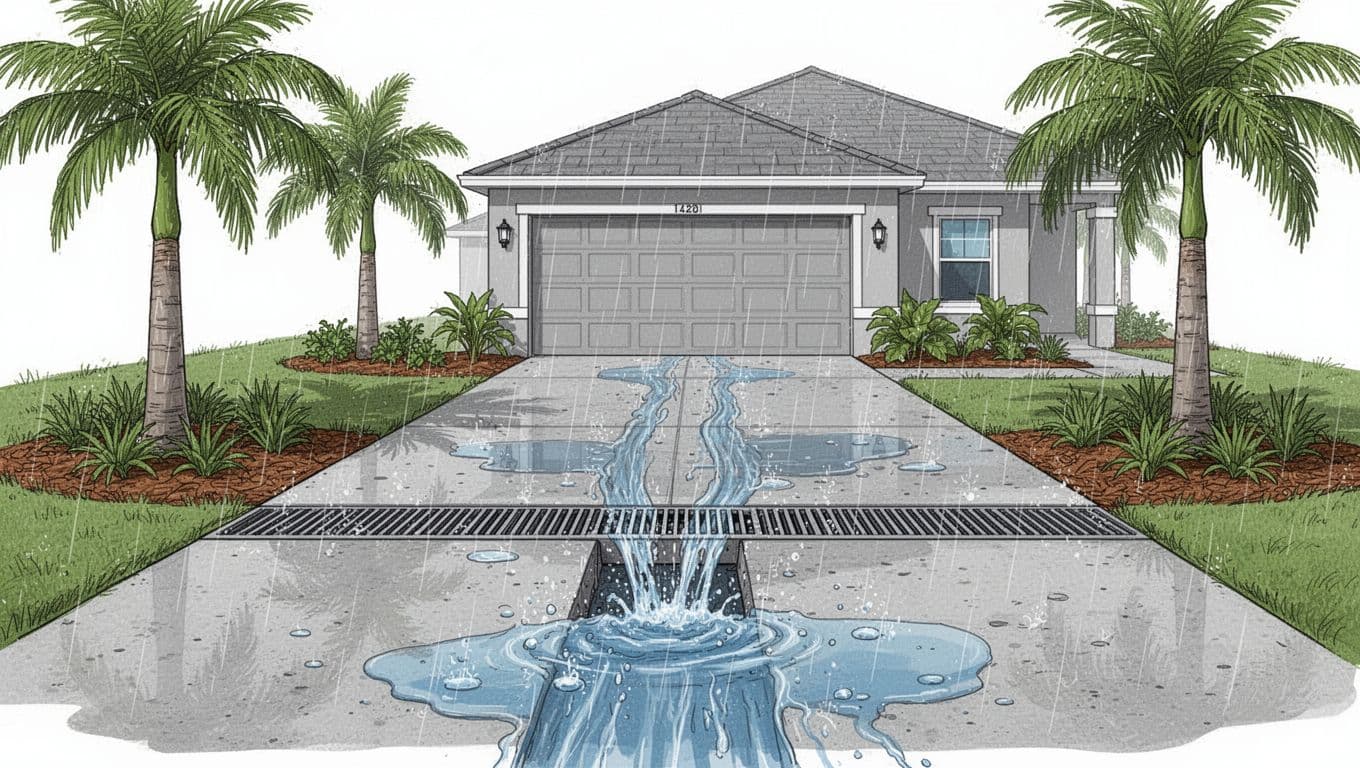 Trench drain placement near a garage where it can stop runoff before it reaches the door, created with AI.
A trench drain across the driveway is the "hard stop" option. It's ideal when you need to intercept water that would otherwise run straight into the garage, pool at the apron, or wash across a walkway.
This approach is common in Southwest Florida neighborhoods where the driveway pitch aims toward the house, or where the street sheds water back toward private property during intense storms.
A trench drain also makes sense when you're pouring new concrete or reworking a section of the slab. Cutting an existing driveway is possible, but it needs careful planning so the slab doesn't crack around the opening later. That's also why joint layout matters. If you're already coordinating concrete work, this guide on why concrete driveways need proper joints pairs well with trench drain planning.
A few practical pros to know:
- Strong interception : It captures sheet flow across the full width.
- Cleaner garage line : It reduces staining and algae at the door threshold.
- Better control : It's easier to predict where the water will go.
The tradeoff is installation complexity. A trench drain must be set at the right height, encased correctly, and tied into piping that won't settle. That's where a reliable concrete company earns its keep, because poor bedding or weak concrete at the edges can lead to spalling around the grate.
When an edge channel drain makes more sense (especially with pavers or turf)
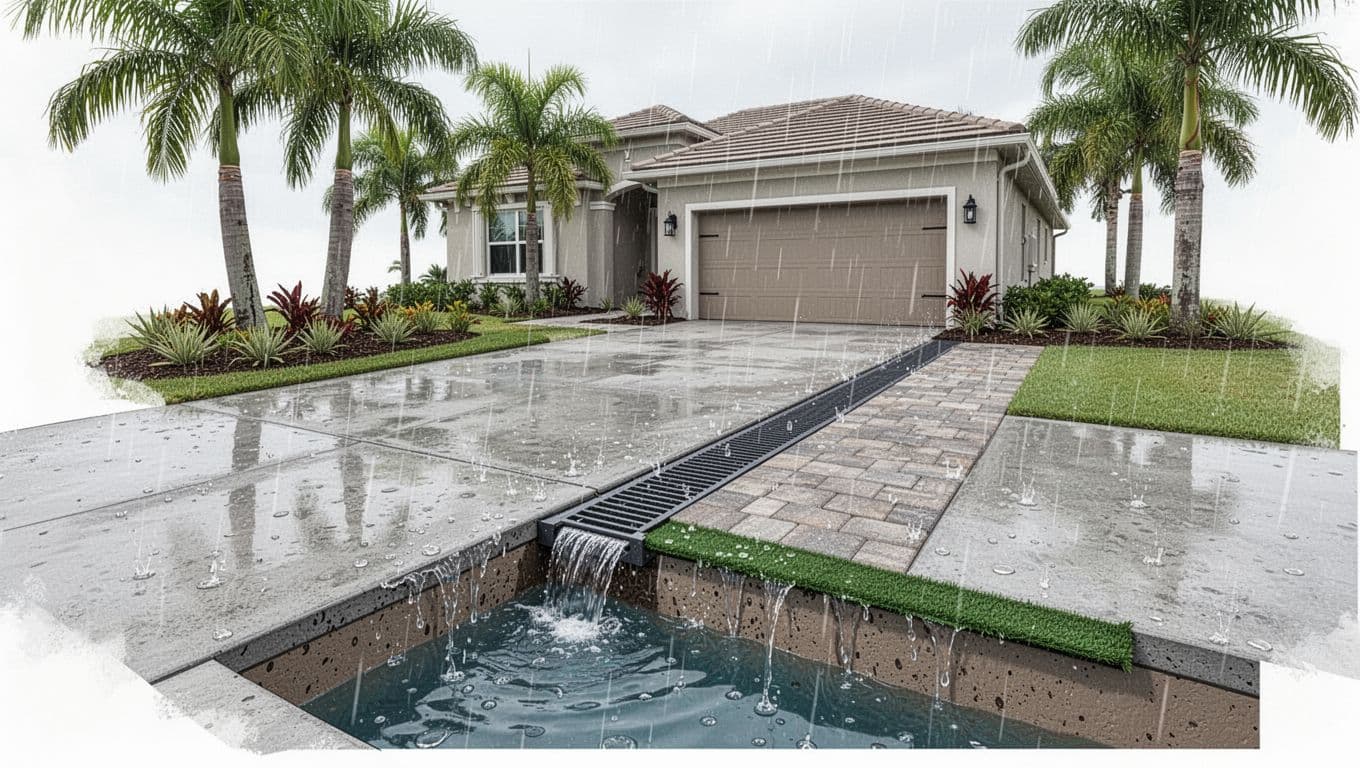 Channel drain along a driveway edge where runoff collects near adjacent surfaces, created with AI.
Channel drains shine when water travels along an edge, or when two surfaces meet and you need a "slot" to catch what runs between them.
For example, many homes have a concrete driveway beside a paver walkway, pool deck, or side yard path. In that setup, an edge channel drain can keep runoff from washing sand out of the paver joints or soaking the border beds. It also helps when you're trying to protect nearby landscaping , because constant runoff can erode mulch and expose roots.
Channel drains also pair nicely with modern yard upgrades. If you have artifical turf strips next to hardscape, edge drains help keep the base from staying soggy after storms. Turf can drain well, but it still needs a place to send water once the ground is saturated. This is where it helps to understand base prep and drainage options before you build. This breakdown of artificial turf drainage and base prep is a good reference if you're planning turf near pavement.
Maintenance is usually straightforward, but it's not "set it and forget it." Edge drains can collect sand, palm fronds, and grit. If your driveway connects to pavers, routine paver cleaning keeps that gritty mix from migrating into the grate and slowing flow.
Trench drain vs channel drain: quick comparison for homeowners
Here's a simple way to compare the two when you're deciding.
| Decision point | Trench drain across driveway | Channel drain along edge |
|---|---|---|
| Best at stopping water | Before it reaches garage or low spot | As it runs downhill along borders |
| Typical placement | Perpendicular across driveway | Parallel to driveway edge or between surfaces |
| Load concerns | Must handle vehicle traffic directly | Often shares load, still needs proper rating |
| Install difficulty | Higher, concrete cutting and precise elevation | Moderate, depends on edge conditions |
| Debris risk | Leaves and sand can collect, easy to see | Sand and grit can build up along edges |
| Works well with | Garage thresholds, steep pitches, re-pours | Pavers, turf borders, side yards, walkways |
If runoff problems go beyond the driveway surface, you might need more than a linear drain. For yards that stay wet or have low areas near the drive, a subsurface system can help move water away. In those cases, consider French drain installation for driveway protection as part of the plan.
Cost also depends on whether you're cutting existing concrete or building new. If you're budgeting a bigger driveway update, this overview of the cost of a new concrete driveway in Cape Coral helps you think about drainage as a line item, not a surprise.
Conclusion: pick the drain that matches the water path
Trench drains and channel drains both work, but they solve different problems. Choose a trench drain when you need a firm cutoff across the slab, especially near a garage. Choose a channel drain when runoff hugs an edge, or when you're protecting pavers, turf, and planting beds. Most importantly, treat drainage like part of the whole outdoor system, because good drainage protects everything you've invested in , from concrete to landscaping finishes.