


Concrete Driveway Repair vs Replacement in Cape Coral, 2026
A cracked driveway in Cape Coral can go from annoying to expensive fast. Heat, rain, and shifting soil put constant stress on concrete, so a small flaw can turn into a bigger one before long.
That leaves homeowners with a common choice, concrete driveway repair vs replacement . Repair can save money now, but replacement may save you from paying twice later.
The right call depends on how deep the damage goes, how the slab is draining, and how long you plan to stay in the home. A smart choice starts with what the driveway is telling you.
When a Concrete Driveway Repair Still Makes Sense
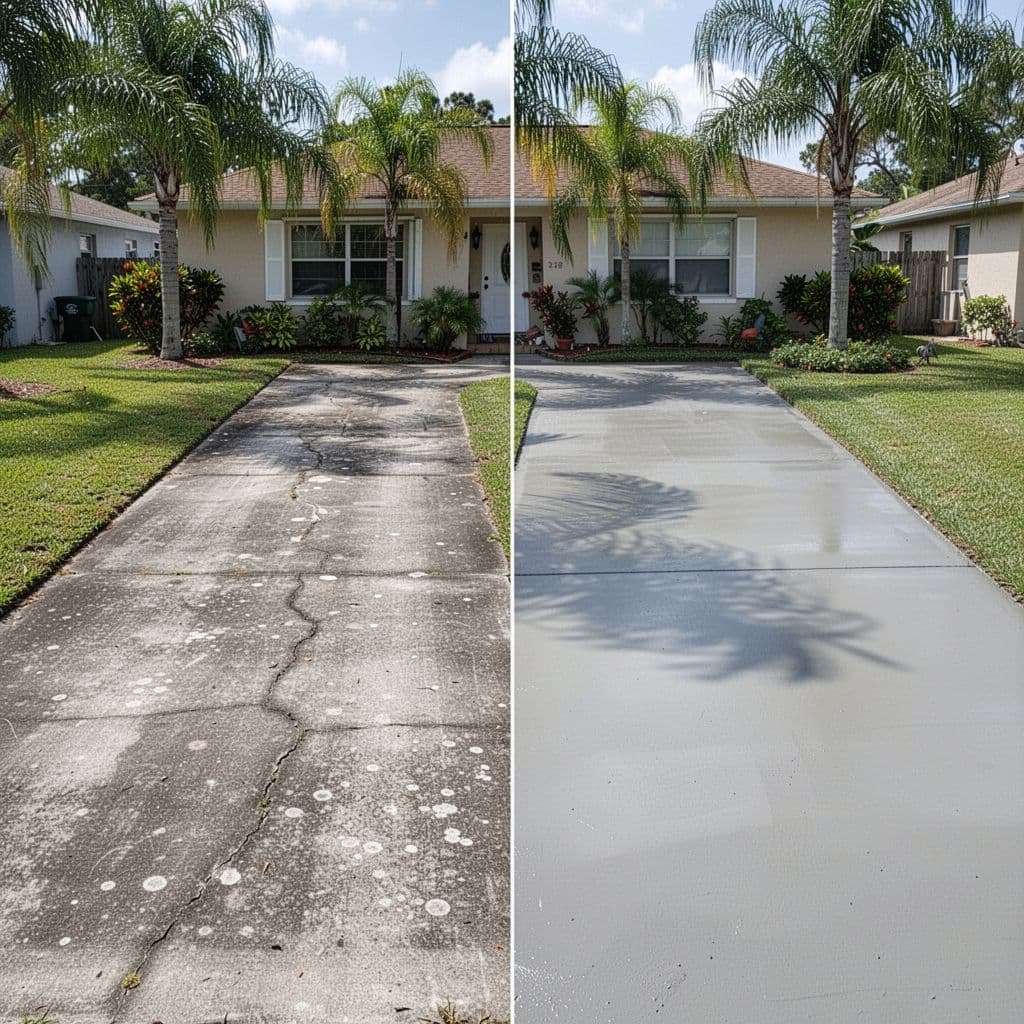
Repair is the better option when the damage stays local. Hairline cracks, a single low spot, minor surface scaling, and one broken edge are good examples.
If the slab is mostly level and still drains away from the house, repair often buys you time. That can include crack filling, patching, mudjacking, grinding a trip edge, or resurfacing a worn top layer.
Repair also works when the driveway is fairly new and the problem came from a one-time event. A small vehicle leak, one bad storm, or a settling spot near the edge may not justify a full tear-out.
This is where many homeowners make a practical choice. They fix the bad section, seal the surface, and keep the rest of the slab in service.
A repair is often the right move if:
- Cracks are narrow and not spreading across the whole slab
- The driveway has one sunken area instead of many
- The concrete is still solid under the surface
- Water runs off instead of pooling
- You need a short-term fix before a bigger remodel
Repair can also fit better with nearby landscaping work. If the driveway sits beside fresh sod, mulch beds, or artifical turf, a targeted patch may keep the project simple.
When Replacement Is the Smarter Long-Term Fix
Replacement makes more sense when the slab has widespread damage. If cracks run through most of the driveway, the concrete is breaking apart, or sections keep sinking, repairs can turn into a loop.
That loop gets costly. You patch one spot, then another opens. You level one section, then the next one settles.
If the slab is failing in more than one place, repair often becomes a short pause, not a real solution.
Replacement is usually the better call when you see several of these problems at once:
- Large cracks that run across the full width
- Repeated settlement or lifting
- Crumbling edges and broken corners
- Drainage that sends water toward the garage or front door
- Deep staining, spalling, and surface loss across most of the slab
It also makes sense when the driveway slope is wrong. In Cape Coral, poor grading can hold water against the slab after heavy rain. Once the base starts washing out, patching the top does not fix the cause.
If you want a different look, replacement opens the door to a new surface plan. Some homeowners compare concrete with pavers before they commit, and this guide on is your concrete slab suitable for pavers helps explain when that idea works and when it does not.
Cape Coral Cost Ranges for 2026
Price matters, but so does the life left in the driveway. In Cape Coral, repair is usually far cheaper than replacement, yet the gap makes sense only if the slab is still worth saving.
Here's a simple comparison based on 2026 pricing ranges.
| Option | Typical 2026 cost | Best for | Watch out for |
|---|---|---|---|
| Minor repair | $300 to $800 | Hairline cracks, small chips, one bad spot | May only delay bigger work |
| Typical repair | $300 to $3,000 | Isolated cracks, patching, leveling | Can add up if problems keep returning |
| Major repair | $600 to $5,900 | Resurfacing, lifting, larger fix areas | Still depends on the slab beneath it |
| Full replacement | $3,200 to $13,000 | Failing slabs, major cracking, poor drainage | Higher upfront cost, more time on site |
Plain concrete often runs about $5 to $8 per square foot, and tear-out can add around $1 per square foot. Actual pricing depends on driveway size, access, condition, material choice, and labor.
The takeaway is simple. If the damage is small, repair often costs much less. If the whole slab is weak, replacement may be the better value.
Why Cape Coral Weather and Drainage Change the Decision
Cape Coral weather does not treat concrete kindly. Strong sun, heavy rain, and wet soil all push the slab in different directions.
Heat expands concrete. Rain works into cracks and joints. Then the sun dries the top faster than the base, which creates stress. Over time, that cycle opens small flaws and makes them bigger.
Drainage matters just as much. If water sits near the driveway edge, the base can soften. Once that happens, the slab starts to move.
This is where yard design plays a role. A driveway that meets raised landscaping, a tight side yard, or a section of artifical turf can still trap water if the slope is wrong. Good surface drainage is not optional in Southwest Florida.
Keep an eye on these warning signs:
- Puddles stay on the driveway after a storm
- Soil washes away near the edges
- The slab moves near downspouts or irrigation heads
- Cracks return after every rainy season
If you already invest in paver cleaning, mulch refreshes, or other exterior upkeep, add driveway drainage to the same list. The hardscape around the slab affects how long it lasts.
What to Ask a Concrete Company Before You Decide
A good concrete company will look at the whole driveway, not just the visible crack. Before you choose repair or replacement, ask questions that get past the sales pitch.
- Ask what caused the damage.
A crack with a clear cause may be repairable. A crack caused by base failure usually is not. - Ask whether the slab is still level enough to save.
If the driveway has major settlement, replacement may be safer. - Ask how the drainage will change after the work.
Good concrete work should help water move away from the slab. - Ask how the repair will age in Cape Coral heat and rain.
A temporary fix should be called what it is. - Ask what the project means for nearby features.
New concrete may affect edging, irrigation, pavers, or a future patio. If you are planning a bigger update, professional paver installation and repair services may fit into the same project plan.
A reliable contractor should explain the tradeoffs in plain language. If the answer sounds vague, keep asking.
Choosing the Better Option for Your Home
Repair is the right choice when the driveway still has strong bones. It keeps costs down and solves a limited problem.
Replacement is the better investment when damage runs deep, drainage is bad, or repeated patches have already failed. In those cases, a new slab gives you a clean start and a better base.
Think about the next five to ten years, not just this season. If you want the driveway to hold up through Cape Coral weather, the slab has to match the site conditions around it.
Conclusion
A cracked driveway does not always mean you need a full tear-out. In Cape Coral, a careful repair can handle isolated damage and buy plenty of time.
Once the slab starts failing across several areas, replacement usually makes more sense. It gives you a fresh base, better drainage, and a longer-lasting result. That is the real test in driveway repair vs replacement , not just the first price tag.
The best choice is the one that fits the condition of the slab, the way water moves across your property, and how long you plan to stay put.