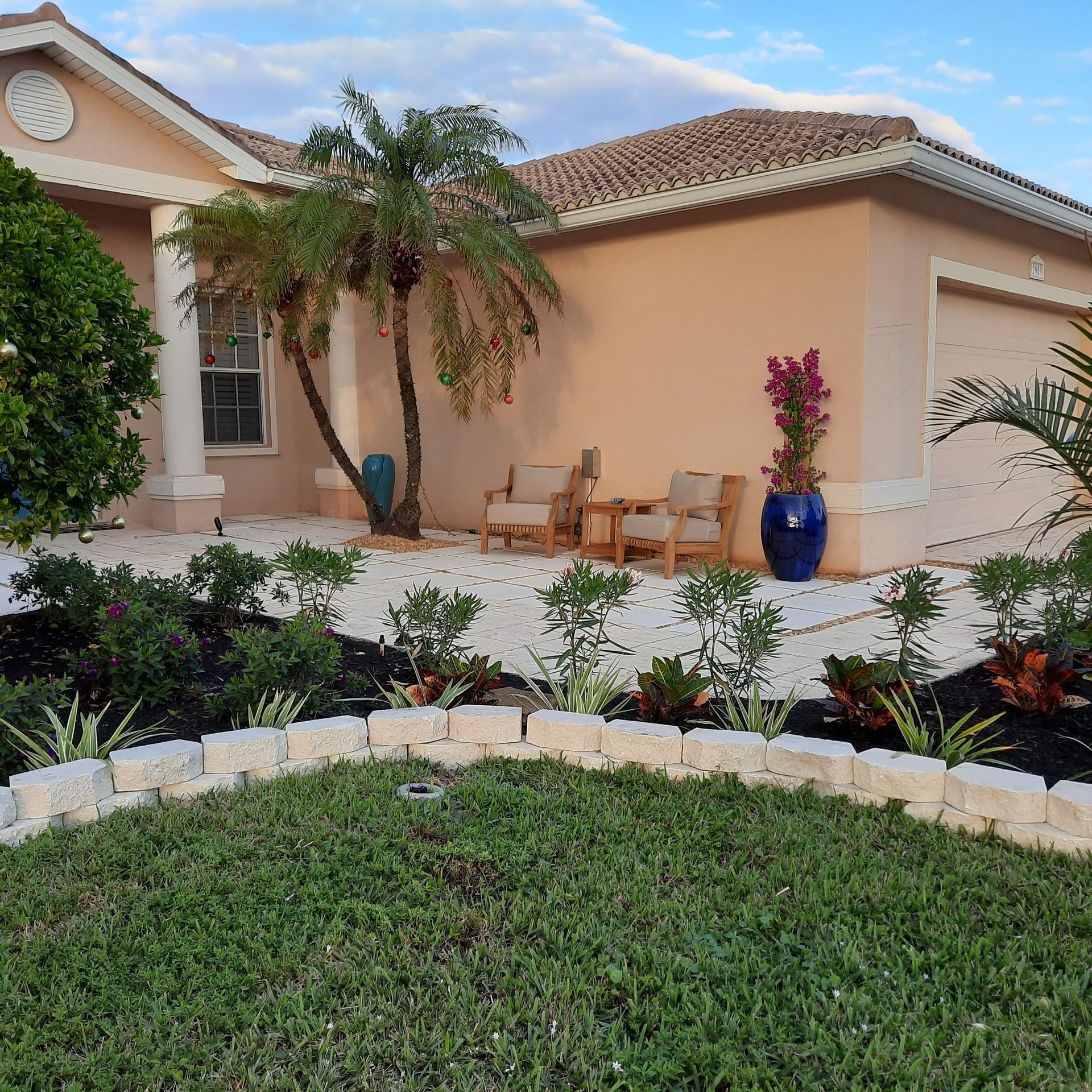



Best Low-Litter Plants for Cape Coral Pool Decks
A pool deck in Cape Coral can look spotless in the morning and messy by sunset. Wind, rain, heat, and salt all work against you, so the wrong plants turn into a daily cleanup job.
The best low-litter plants for Cape Coral pool decks keep their shape, drop less debris, and handle harsh Southwest Florida conditions. That matters even more when your deck is part of a larger landscaping plan with pavers, concrete, or a tight planting bed.
If you want a broader plant list before you narrow things down, choosing clean poolside plants for Cape Coral backyards is a helpful starting point. Then you can pick plants that look good without sending leaves, berries, or seeds into the water.
Why tidy plants matter so much around a pool
Poolside landscaping is about more than looks. Every leaf that lands on the coping, every berry that rolls across the deck, and every twig that ends up in the skimmer adds work.
In Cape Coral, that cleanup adds up fast. Humid weather can make debris stick, while summer storms push more material onto hard surfaces. Salt exposure also narrows your plant choices, because some shrubs brown out or drop leaves when they get stressed.
The best plants near a pool deck stay compact and predictable. They should also stay clear of drains, walkways, and the pool edge. That helps with safety, keeps the water cleaner, and cuts down on paver cleaning after windy days.
If you're also changing the hardscape, it helps to think about plants and surfaces together. The Cape Coral poolside landscaping cost guide gives useful context for that kind of project planning.
The best low-litter options at a glance
Here's a quick look at plants that fit Cape Coral pool decks well.
| Plant | Best use near the pool | Watch-out |
|---|---|---|
| Coontie | Small accent beds and corners | Female plants can form seeds |
| Dwarf yaupon holly | Tight hedges and screen lines | Needs pruning to stay neat |
| Dwarf clusia | Modern privacy and structure | Can crowd the deck if overgrown |
| Silver buttonwood | Coastal-style accents and screening | Needs shaping to stay clean-lined |
| Dwarf palmetto | Compact tropical look | Old fronds need regular removal |
| Society garlic | Sunny borders and edge planting | Spent flower stalks need trimming |
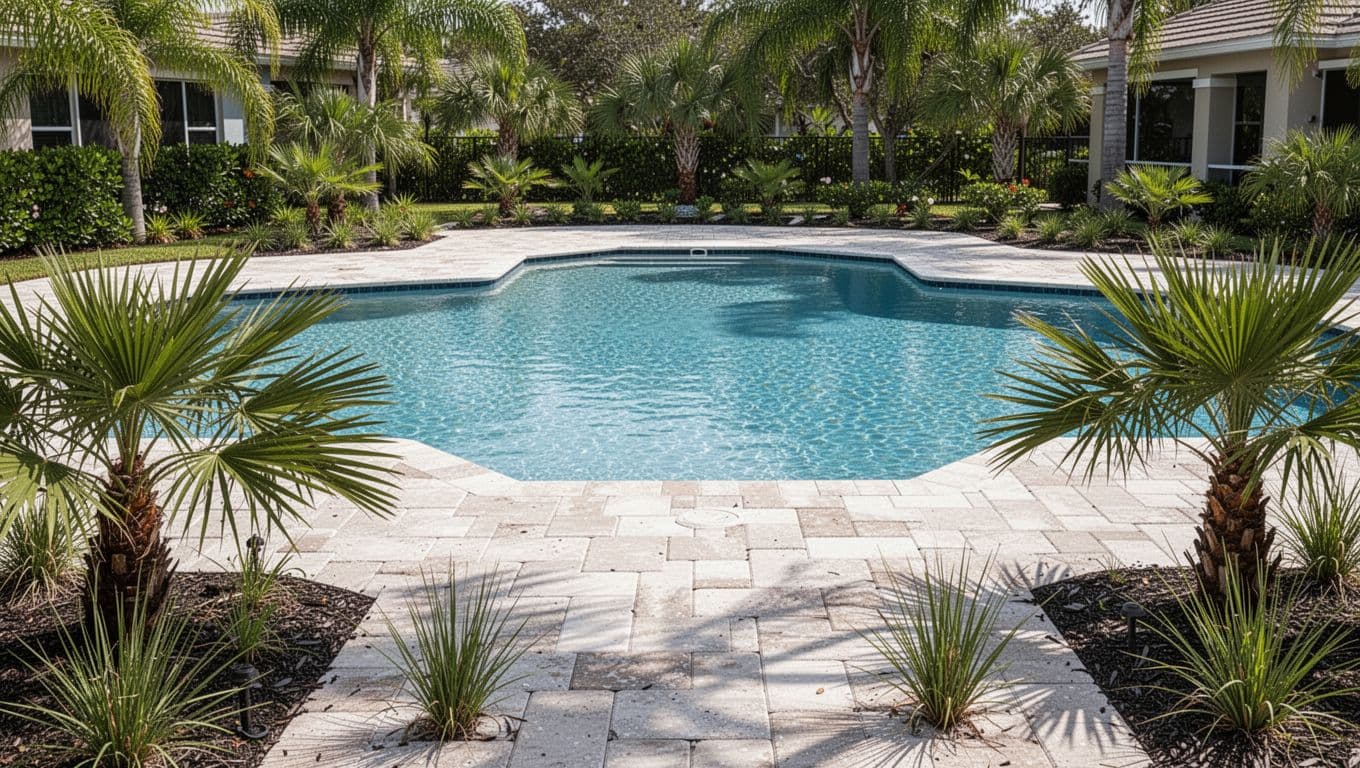
The pattern is simple. Choose plants that stay small, prune cleanly, and hold their shape without shedding much.
Coontie
Coontie is a smart Florida native for poolside landscaping. It has a low, tidy form, and its stiff fronds don't scatter like thin, feathery plants often do.
It also handles sun, heat, and salt better than many ornamental shrubs. That makes it useful near open decks where reflected heat gets intense. The main watch-out is the seed cone on female plants, so place it where fallen seed isn't a problem or choose your plant carefully.
Dwarf yaupon holly
Dwarf yaupon holly works well when you want a polished edge without a lot of cleanup. Its small leaves are easier to manage than broad, messy foliage, and it responds well to trimming.
It can form a neat hedge beside a pool deck or along a paver run. Just keep an eye on the shape, because any shrub that gets ignored will creep into the walkway sooner or later. If you want the cleanest result, choose a male plant so you avoid berry drop.
Dwarf clusia
Dwarf clusia has thick, glossy leaves that fit modern Cape Coral landscaping very well. It gives you a lush look, but it doesn't shed as much as many tropical shrubs.
That makes it a strong choice for a privacy screen near the pool, especially along a fence or property line. The watch-out is size. Give it room, then trim it before it leans into the deck or blocks a view you want to keep.
Silver buttonwood
Silver buttonwood is a coastal favorite for a reason. It handles bright sun, heat, and salt, and its small leaves keep it from becoming a leaf factory.
It can work as a shrub or a small accent tree, depending on how it's pruned. That flexibility is useful around pools, where you may want light shade without a dense canopy. Keep the shape open and tidy, though. If you let it get wild, it loses the clean look that makes it so pool-friendly.
Dwarf palmetto
Dwarf palmetto gives you a tropical feel without the mess of larger palms. It stays compact, looks natural in Southwest Florida, and fits well in smaller pool beds.
If you want a palm in a tight space, the best dwarf palms for Cape Coral pool decks guide can help you compare your options. The main watch-out is spacing. Even compact palms need room for fronds, and old leaves should be removed before they dry and snap.
Society garlic
Society garlic is a strong border plant for sunny pool areas. It stays neat, has narrow foliage, and sends up purple blooms without much debris.
It works well at the outer edge of a bed, where it can soften pavers or concrete without crowding the deck. The one thing to remember is the flower stalks. Trim them back once they fade, and the planting stays cleaner. Also, the foliage has a garlic scent when bruised, so keep it away from spots where people brush past it often.
How to design the bed so cleanup stays low
Plant choice matters, but layout matters just as much. A good pool deck bed should leave room for airflow, trimming, and sweeping. When plants sit too close to the edge, even tidy varieties become a nuisance.
Use mulch or stone that stays in place, and keep irrigation aimed away from the deck. Overspray leaves spots on concrete and pavers, and it can also push soil onto the hardscape. That means more scrubbing later, and more paver cleaning after every storm.
If the bed edge keeps spreading, a concrete company can add a cleaner border or curb. That kind of detail helps separate roots, mulch, and splash zones. Some homeowners also use a narrow strip of artifical turf where a bed is too thin for real planting, which can reduce mud and cleanup in small problem areas.
A tidy deck usually starts with a tidy edge. If the border is clear, the whole space feels easier to maintain.
Above all, avoid high-drop plants near seating areas. Skip messy fruit trees, thorny shrubs beside walkways, and anything with roots that can press into hardscaping. A little restraint here saves a lot of work later.
Conclusion
Cape Coral pool decks need plants that stay calm in tough weather and don't turn every windy afternoon into a cleanup project. That means choosing shrubs, palms, and groundcovers that are compact, salt-tough, and light on debris.
Coontie, dwarf yaupon holly, dwarf clusia, silver buttonwood, dwarf palmetto, and society garlic all bring something useful to the table. More important, they help your pool area look finished without asking for constant attention.
The best landscaping around a pool is the kind you can enjoy, not the kind you keep chasing with a skimmer.