


Tree Staking Before Southwest Florida Storms
A young tree can lean overnight after saturated sand loosens around its root ball. In Southwest Florida, heavy rain and high winds can turn a small planting problem into a damaged lawn, broken irrigation line, or blocked walkway.
Proper tree staking gives a newly planted, unstable tree temporary support while its roots take hold. However, staking every tree or tying a trunk too tightly can weaken its natural development. Start with the tree's stability, planting depth, and location before storm season arrives.
When Tree Staking Makes Sense in Southwest Florida
A tree with a solid root ball, correct planting depth, and a trunk that stands upright often doesn't need stakes. Some natural movement helps the trunk build strength.
Tree staking is useful when a recently installed tree shifts in sandy soil, has a top-heavy canopy, or sits in an exposed area where wind can push it repeatedly. It can also help a tree planted on a slope or in a spot that holds water after a downpour.
Newly planted trees need the closest check
Inspect trees planted within the last year, especially palms, shade trees, and ornamental specimens with narrow trunks. Gently press the soil beside the root ball. If the entire root mass moves, support is appropriate.
Check for these warning signs:
- The trunk leans farther after rain or strong afternoon winds.
- Soil has cracked or lifted around the base of the tree.
- The root flare is buried under mulch or washed-over sand.
- Stakes from the original installation are loose, broken, or rubbing the bark.
A sound landscape design and installation plan gives trees enough soil space and keeps them clear of hard surfaces, drainage paths, and underground utilities.
Established trees should not stay tied down
A mature tree with established roots shouldn't need staking before a storm. Adding stakes to an older tree rarely adds meaningful support, and poorly placed hardware can damage roots or create a trip hazard.
Instead, look for dead limbs, trunk decay, lifted roots, or a new lean. Those conditions call for an ISA-certified arborist, not a quick tie-down job.
Stakes hold a new root ball steady. They do not make a weak, mature tree safe in hurricane-force winds.
How to Do Tree Staking Without Damaging the Trunk
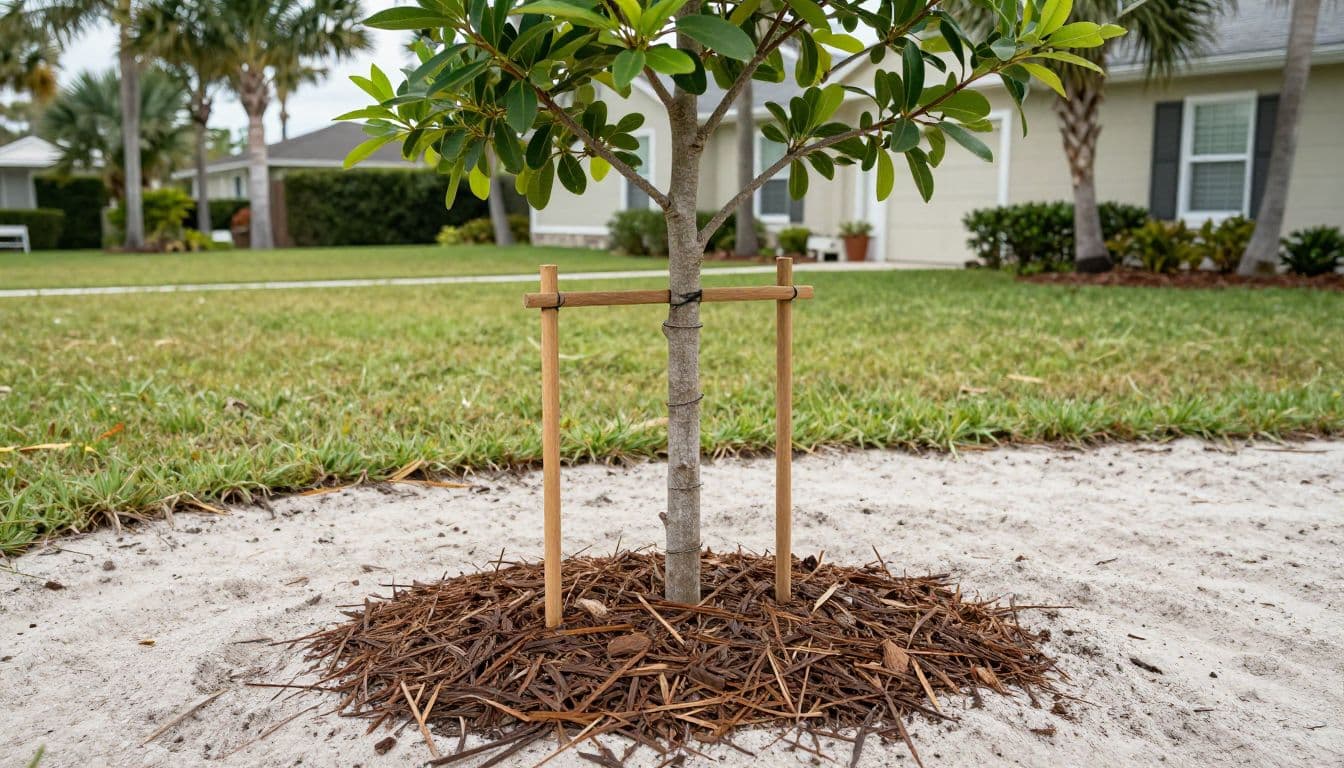
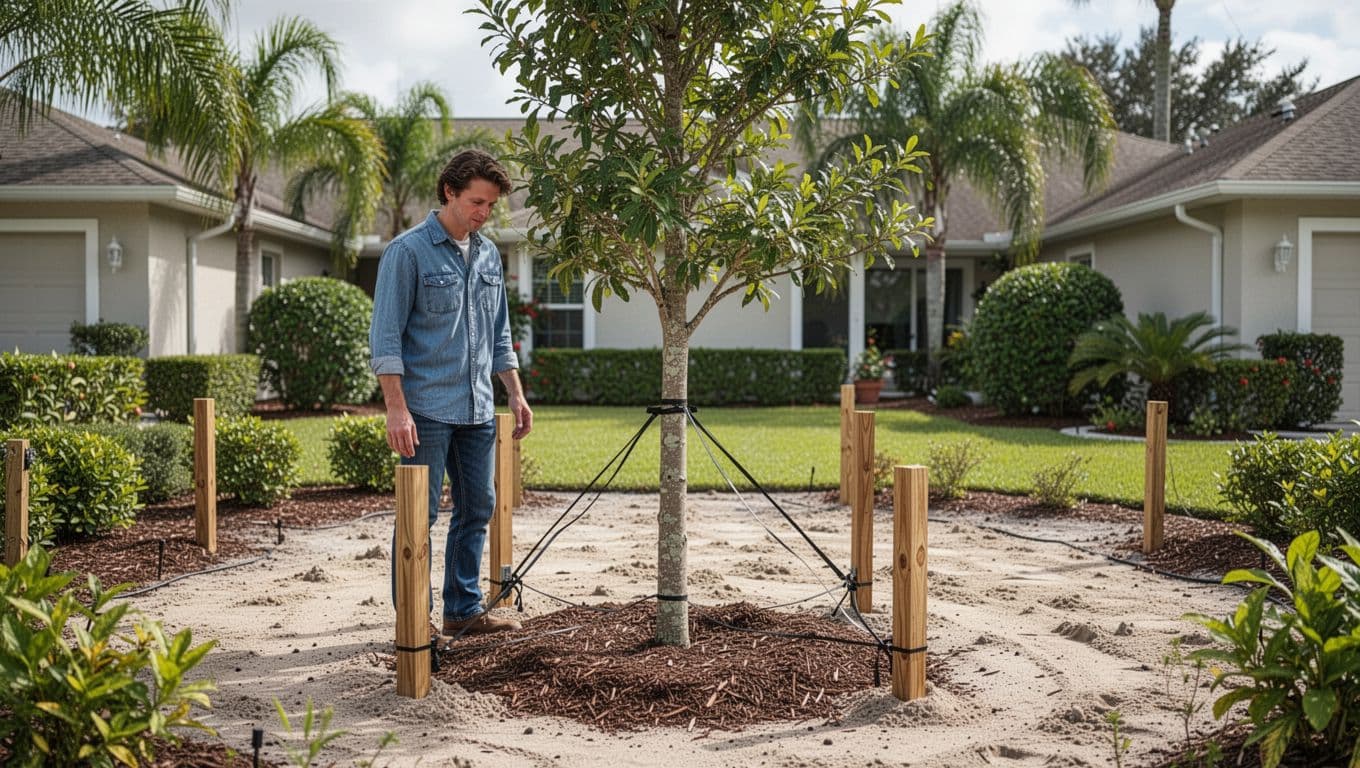
Use two sturdy stakes for most small newly planted trees. Place them outside the root ball, on opposite sides of the trunk. Driving stakes through the root ball can cut developing roots and loosen the soil you are trying to stabilize.
Set each stake firmly in the ground. In sandy soil, push or drive it deep enough that it won't wobble when you pull on it. Keep the stakes low, ideally below the lowest main branches.
Use wide, flexible ties
Choose broad arbor ties, soft webbing, or purpose-made tree straps. Secure each tie around the trunk with enough slack for slight movement. The trunk should remain upright, yet it should not feel locked in place.
Avoid rope, bare wire, bungee cords, and hose-covered wire. These materials can cut into bark as the trunk moves and grows. Check every tie after a major rain event because wet soil may let stakes shift.
For a clean setup:
- Position ties low enough to allow the upper trunk to move in the breeze.
- Keep ties flat against the bark, without twists or tight knots.
- Leave a small gap between the tie and trunk, then test for gentle sway.
- Recheck the tree after each major storm and reset only if the root ball has moved.
Protect the root zone with mulch and water
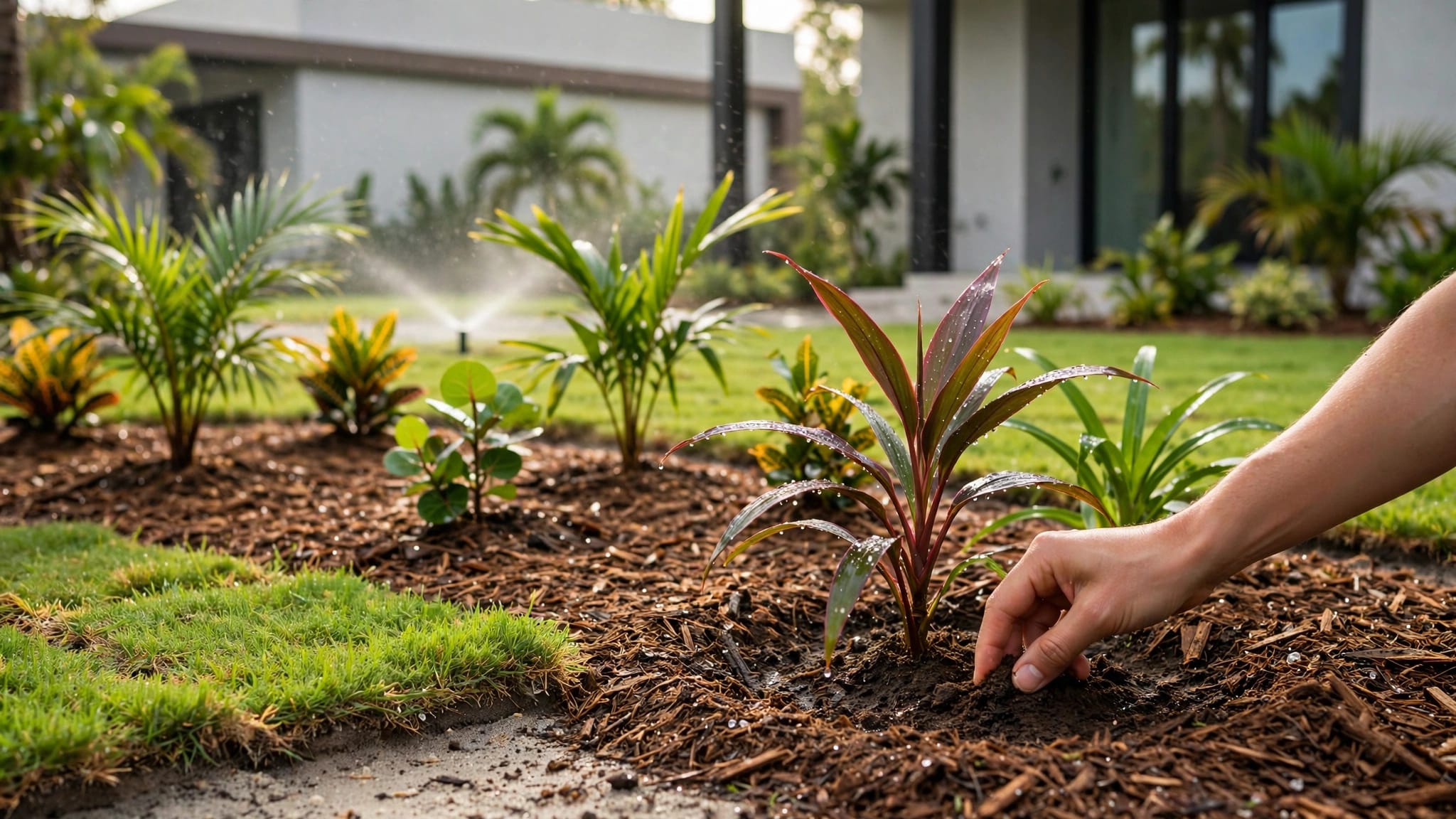
Spread mulch in a wide ring, about 2 to 3 inches deep, while leaving several inches bare around the trunk. Mulch helps moderate moisture swings in sandy soil and reduces splashing that can erode fresh backfill.
Water deeply enough to moisten the root zone, then let the soil drain. Daily shallow watering encourages surface roots, while standing water can suffocate roots. Adjust irrigation after heavy rain instead of following the usual timer without checking the ground.
Prepare the Yard Before Hurricane-Season Weather
Do your stake inspection before storms are close enough to bring lightning or strong gusts. Working around a swaying tree during dangerous weather isn't safe.
Look over the trunk, ties, stakes, and soil after every major storm. Remove broken stakes promptly. Also clear loose pots, lightweight decor, and yard debris that could strike the new tree.
Keep hardscapes and services clear
Stakes, ties, and water lines can create problems near patios and walkways. If a concrete company is scheduled to pour a border, slab, or curb, mark the tree's root zone and keep construction traffic away from it.
Likewise, postpone paver cleaning if runoff could wash mulch or sand into joints around a fresh planting bed. When artificial turf borders a tree, leave an open soil area around the trunk and avoid trapping water against the root flare.
Good landscaping accounts for stormwater, tree growth, and safe access at the same time. A young tree needs room to root, not a crowded ring of edging, artificial grass, or hardscape.
Know When to Remove Stakes or Call for Help
Remove support materials once the tree stands upright and the root ball no longer shifts. Many newly planted trees need support for about six to 12 months, but inspect the tree rather than relying only on the calendar.
Don't let temporary ties become permanent damage
Check ties at least monthly during the growing season. Loosen or remove them before they press into bark. A trunk with flattened bark, rubbing wounds, or an embedded strap needs attention right away.
Call a qualified tree professional if the tree is leaning toward a home, power line, driveway, or pool enclosure. The same applies if the soil is heaving, roots are exposed, or the trunk has cracks. Never top a tree or remove large limbs yourself before a storm.
A Strong Start Protects the Tree
Tree staking works best as temporary support for a recently planted tree in loose, wet, or windy conditions. Proper stake placement, flexible ties, and a stable root zone matter more than adding extra hardware.
Before the next storm, inspect each new planting and correct small problems early. A tree that can sway slightly while its roots stay firm has the best chance to settle into its Southwest Florida home.