


Tree Protection Cape Coral Builders Can Plan Early
A tree can suffer serious construction damage without a single mark on its trunk. Searches for tree protection Cape Coral projects often focus on visible barriers, but the largest risks usually involve roots, soil compaction, trenching, grading, and careless material storage.
Cape Coral's sandy soil, heavy rain, strong sun, and storm winds make site planning especially important. Whether you're building a patio, driveway, pool area, walkway, or new planting bed, protect the tree before equipment arrives. The steps below help property owners, builders, and contractors reduce avoidable damage.
Why Construction Harms Trees Without Touching the Trunk
Trees depend on a broad network of roots for water, nutrients, stability, and air exchange. Construction can disturb that system long before anyone notices a problem above ground.
Root damage happens below the visible work area
Excavation for footers, utilities, drainage, irrigation, and concrete can cut through structural or absorbing roots. Even shallow digging can expose roots to drying sun and wind. Changes in grade can bury roots under extra soil or leave them exposed.
Heavy trucks and equipment create another risk. Repeated traffic compresses soil, reducing the spaces that hold air and water. A tree may look healthy immediately after construction, then show wilting, early leaf drop, dead branches, or poor growth months later.
The trunk can remain untouched while the root system loses support. That makes the tree more vulnerable during heavy rain and high winds.
Storage and spills can create lasting stress
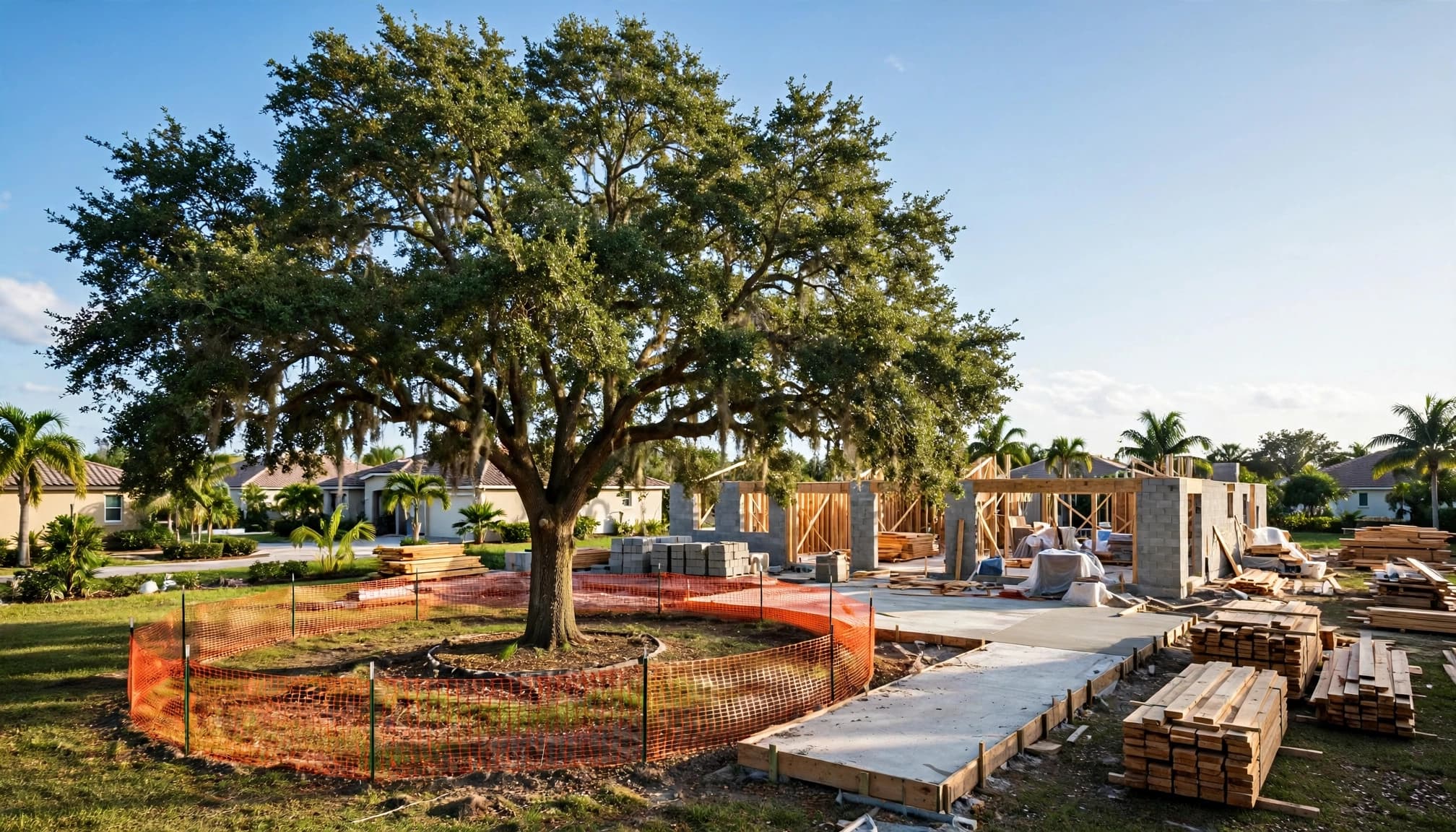
Lumber, blocks, soil, fuel, paint, concrete washout, and other materials should never be placed around an existing tree. A pile may seem temporary, but its weight can compact soil. Leaks and wash water can also harm roots and nearby planting areas.
A protective fence only works if the crew respects it. Keep dumpsters, generators, forklifts, trucks, and spoil piles outside the marked area. Make the boundary visible during the pre-construction meeting, then check it throughout the project.
A tree can lose stability through root-zone damage even when the trunk and bark look completely normal.
Protect the Root Zone Before Excavation Begins
The safest time to protect an established tree is before the first delivery or machine enters the property. Mark the work limits on the site plan and on the ground.
Mark a no-storage and no-equipment area
Walk the property with the builder, concrete crew, irrigation technician, and landscape contractor. Identify each tree that will remain, along with its surrounding soil area, canopy spread, nearby utilities, and planned access routes.
Use a sturdy, visible barrier around the area that should remain free of construction traffic. Do not rely on caution tape alone if workers or equipment could easily cross it. The barrier should communicate that the space is closed to storage, parking, washing tools, and dumping soil.
Tell every subcontractor about irrigation lines, landscape lighting, fences, drainage, and recent construction. A crew that knows the site conditions can plan around them instead of discovering problems with a bucket or trenching machine.
Adjust the layout before roots are exposed
Moving a walkway, patio edge, trench, or material staging area may protect a tree more effectively than trying to repair damage later. Review the complete plan before excavation begins, including finished grades and drainage paths.
If visible roots appear during digging, stop work in that area and ask a qualified local professional to assess the situation. Don't cut, grind, or cover roots without guidance. Keep exposed roots moist and shaded only under professional direction, since the right response depends on the tree and the site conditions.
Build a Tree-Safe Site Plan
Tree protection works best when it becomes part of the construction schedule rather than an afterthought. Include the trees in the same conversations as grading, deliveries, access, and cleanup.
Set the construction sequence before work starts
Start by confirming which trees will remain and which areas must stay undisturbed. Then schedule demolition, excavation, utility work, concrete, pavers, irrigation, and planting in an order that limits repeated traffic.
Keep heavy equipment on the same access route whenever possible. A single planned route is easier to protect than multiple shortcuts across planting areas. Use designated locations for soil, mulch, debris, and deliveries.
The Cape Coral landscape installation process can help property owners think through grading, drainage, irrigation, and hardscape coordination before installation begins.
Protect soil levels and water movement
Construction can redirect water toward a tree, away from it, or against a foundation. New slabs, curbs, pavers, and compacted drive lanes may change how rainfall moves across the lot.
Keep drainage planning connected to tree protection. Avoid burying the base of a tree with fill or allowing runoff to erode soil around exposed roots. If the project includes French drains, downspouts, or new grading, confirm where the water will discharge before work begins.
A tree also needs room for future growth. Leave open soil around the trunk and root flare instead of surrounding it with tight edging, concrete, or synthetic surfaces.
Coordinate Concrete, Pavers, Drainage, and Irrigation
Hardscape projects create some of the greatest risks for existing trees because they require excavation, compaction, forms, base material, and repeated equipment access.
Review concrete and paver routes early
A concrete company preparing a patio, driveway, border, slab, or curb should receive the tree protection plan before mobilization. Mark the root-sensitive area and identify where trucks, forms, mixing equipment, and washout will go.
Pavers may offer more flexibility than a large slab because their layout can sometimes curve around existing landscaping. That doesn't remove the need for proper base preparation or root protection, but it can help the design fit the property instead of forcing every feature into a straight line.
For larger patio or driveway work, review the company's Cape Coral concrete contractor services before choosing a layout. Discuss access, excavation, drainage, and cleanup as part of the same scope.
Coordinate irrigation and utility work
Trenching for irrigation or electrical lines can sever roots in areas that appear clear from the surface. Mark existing lines before digging, and keep new runs as far from established trees as the site allows.
Irrigation should support the tree without keeping the soil constantly saturated. Cape Coral landscape systems may use rotors, drip lines, or micro-sprayers based on plant needs. Smart controllers and rain sensors can help reduce unnecessary watering, while backflow prevention protects the potable water supply.
After the hardscape route is approved, have the irrigation plan checked against it. Future repairs become harder when lines run beneath slabs, narrow borders, or dense root areas.
Restore the Landscaping After Construction
Construction cleanup doesn't end when the final form is removed. The surrounding landscape needs inspection, repair, and careful re-establishment.
Check the tree and soil before finishing the yard
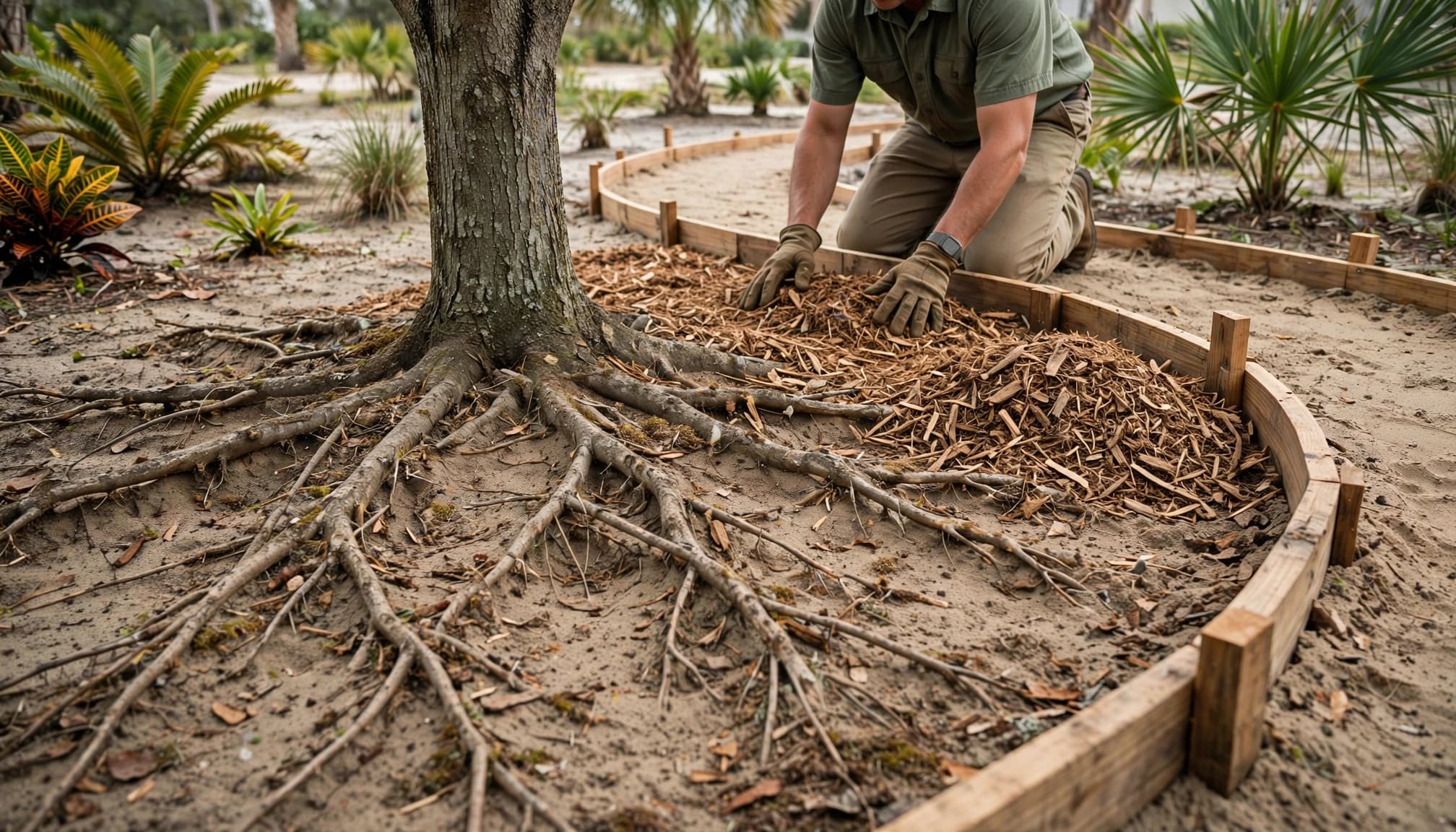
Look for exposed roots, leaning, broken branches, deep tire tracks, standing water, soil piled against the trunk, and damage to the root flare. Remove debris from the protected area by hand where possible.
Don't cover compacted soil with mulch and assume the problem is solved. Ask a qualified professional whether the soil needs loosening, aeration, amended planting soil, or a different drainage approach. Mulch can help conserve moisture, but keep it away from direct contact with the trunk.
The Cape Coral landscape design and installation team can coordinate mulch, walkways, plantings, and other landscape elements around the finished construction.
Choose nearby surfaces with the tree's future in mind
A young or established tree needs open soil, airflow, and room for roots to expand. If the finished plan includes artifical turf , leave an open planting area around the trunk and root flare. Don't trap water against the tree or bury the base under turf, edging, or decorative stone.
Natural sod, mulch, and stone each affect water movement and maintenance differently. Avoid planting beds that force future roots against a slab or narrow paver edge. If trimming leaves debris on nearby hard surfaces, schedule paver cleaning after the tree work and landscape cleanup are complete.
The company's Cape Coral paver installation and repair services may be useful when an existing walkway or patio needs to be adjusted around preserved landscaping.
When to Involve a Local Landscaping Professional
Call for professional help before work begins when a tree is mature, near a structure, close to utility lines, or located in a tight construction corridor. A qualified local professional can review the tree, root area, access plan, drainage, and proposed hardscape together.
Tall palms and trees near roofs, roads, pools, and energized utility lines require extra caution. Homeowners should avoid ladders, chainsaws, climbing spikes, and improvised ropes. Falling fronds can weigh more than they look, and a damaged or leaning trunk may be unstable.
Move vehicles, furniture, toys, and fragile decorations away from the drop zone. Keep children and pets indoors or behind a secure barrier. If the tree has a split trunk, broken limbs, or storm damage, treat it as a hazard and wait for trained assistance.
Ask for the project scope, protection measures, cleanup responsibilities, and disposal details in writing. Confirm current requirements with the City of Cape Coral or a qualified local professional before construction, especially when work involves tree removal, public areas, drainage, irrigation, or major hardscape changes.
Key Takeaways: A Tree-Safe Construction Action Plan
Use this short plan before the first day of work:
- Photograph existing trees, soil conditions, irrigation, lighting, hardscape, and nearby structures.
- Mark each tree that will remain and create a visible no-storage and no-equipment area.
- Review excavation, grading, drainage, concrete, paver, utility, and irrigation routes together.
- Keep vehicles, spoil piles, washout, fuel, lumber, and dumpsters outside the protected area.
- Stop work if roots are exposed, soil levels change unexpectedly, or equipment crosses the boundary.
- Inspect for compaction, exposed roots, standing water, trunk damage, and leaning before final cleanup.
- Confirm current City of Cape Coral requirements with the city or a qualified local professional.
FAQ About Protecting Trees During Cape Coral Construction
Can construction damage a tree without touching the trunk?
Yes. Excavation can cut roots, while equipment traffic can compact the soil around them. Grade changes, trenching, spills, and altered drainage can also create problems. Damage may appear later as reduced growth, leaf loss, dead branches, or poor stability.
How far should construction stay from an existing tree?
There isn't one safe distance for every tree or property. The needed area depends on species, size, root condition, soil, excavation depth, equipment, and the proposed work. Have a qualified local professional review the site instead of relying on a generic measurement.
Can I build a patio near an established tree?
Sometimes, but the design must account for roots, drainage, future growth, equipment access, and finished grades. A curved walkway or adjusted patio edge may reduce disturbance. Review the layout with the concrete or paver contractor before excavation starts.
What should I do if workers uncover roots?
Stop work near the exposed roots and keep machinery away. Don't cut, bury, pressure-wash, or leave them exposed without professional direction. Contact a qualified local tree or landscaping professional and confirm whether the project needs to change.
Conclusion
Protecting an existing tree during construction requires more than wrapping the trunk. The best results come from protecting the root zone, controlling equipment access, coordinating hardscape and irrigation routes, and checking soil and drainage before the project closes.
Plan the tree into the construction drawings, not around the leftover space. With clear boundaries and early coordination, Cape Coral property owners can improve their outdoor spaces while giving established trees a better chance to remain healthy for years.