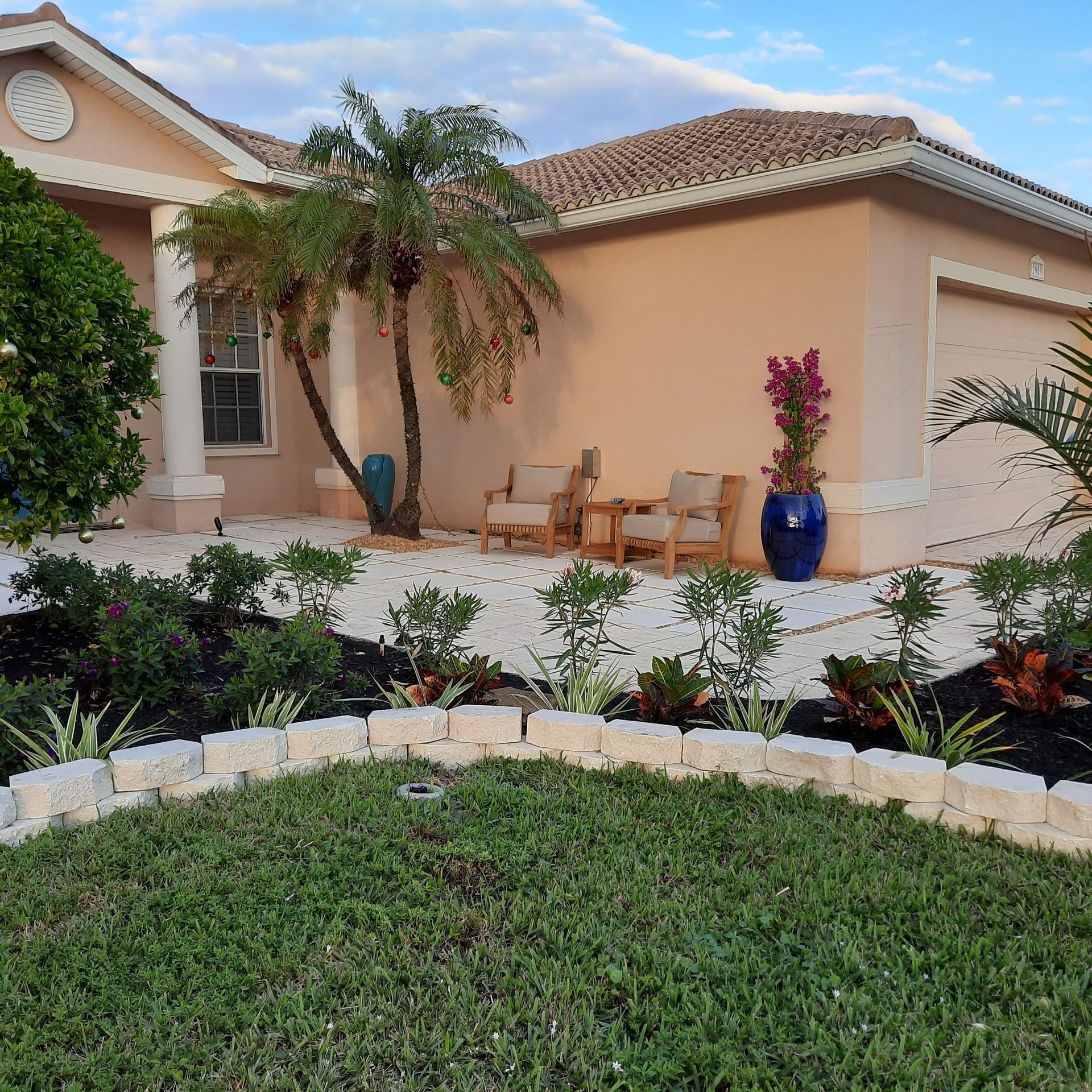



Travertine vs Shellock Pavers for Cape Coral Pool Decks
Pool decks in Cape Coral get hot, wet, and salty in the same week. That makes the choice between travertine vs shellock pavers more than a design decision.
Travertine can feel cooler underfoot and bring a soft, natural look. Shellock usually gives you a more uniform finish with a textured coastal style. The better choice depends on heat, drainage, maintenance, and how your yard is built.
If your deck sits inside a full landscaping plan, the material should work with the plants, the pool cage, and the walk paths around it. It should also fit the way you use the space every day.
What Travertine Brings to a Pool Deck
Travertine has a classic Florida look that fits Cape Coral homes well. It works around bright stucco, palm-heavy yards, and open pool areas that get strong sun all day.
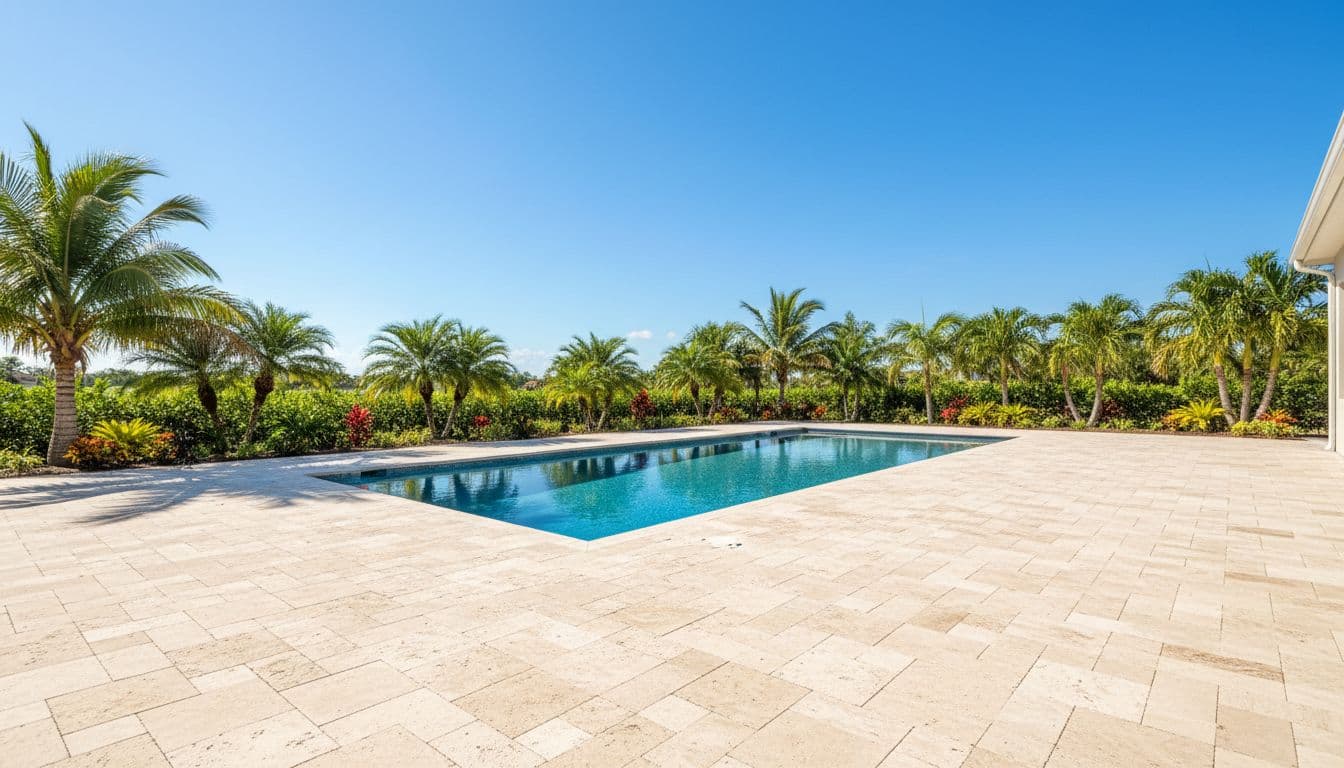
Because it is a natural stone, each piece has small differences in color and texture. That gives the deck character without looking busy. Many homeowners like that softer, less manufactured feel.
Travertine also tends to feel comfortable on bare feet in light colors. That matters when kids run between the pool and the chairs, or when you step out after a swim in July.
There are tradeoffs, though. Travertine can stain if it is not cared for, and some finishes need sealing. It can also show wear around edges if the base is not built right.
A pool deck in Cape Coral lives harder than it looks. Sun, water, and salt reach every seam.
That is why installation matters as much as the stone. Good slope, tight joints, and solid edge support all help travertine perform better over time.
What Shellock Pavers Offer in Cape Coral
Shellock pavers appeal to homeowners who want a cleaner, more uniform look. They often have a textured surface and a coastal feel that works well near water.
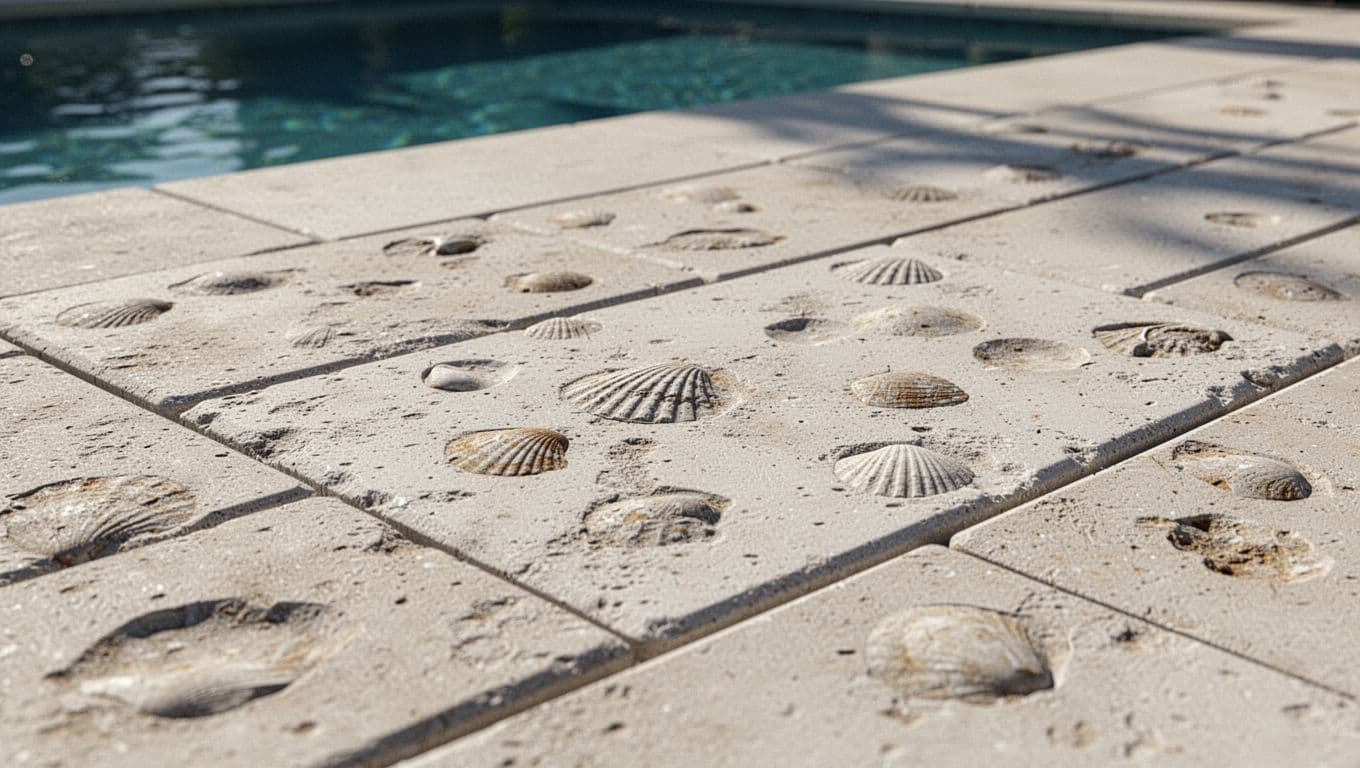
For many pool decks, that texture is a plus. Wet feet, splashing, and quick trips to the outdoor shower all call for a surface that feels stable.
Shellock also works well when you want a consistent pattern across the whole deck. Some homeowners prefer that neat finish because it keeps the yard looking organized, especially when the pool sits beside patios, seating walls, and screened areas.
Replacement can be simpler too. If one piece chips or gets marked, matching a manufactured paver is often easier than matching natural stone with its color variation.
The downside is style preference. Some people love the natural depth of travertine more than the cleaner Shellock look. Others want less variation and find Shellock easier to pair with modern homes.
Travertine vs Shellock Pavers, Side by Side
A quick comparison helps when you want the practical differences in one place.
| Factor | Travertine | Shellock pavers |
|---|---|---|
| Feel under bare feet | Often cooler in light colors | Comfortable, but finish and color matter |
| Look | Natural, varied, and classic | More uniform with a coastal texture |
| Wet traction | Good with the right finish | Good when textured and installed well |
| Maintenance | Needs more attention on stains and sealing | Usually easier to keep visually consistent |
| Repairs | Matching can be harder because of natural variation | Replacement is often simpler |
| Poolside style | Works well with soft, resort-style spaces | Fits clean, structured, and coastal designs |
| Best for | Homeowners who want natural stone character | Homeowners who want a neat, even finish |
The biggest takeaway is simple. Cape Coral heat, rain, and humidity matter more than a showroom sample. A deck that looks great indoors can feel different after a long day in the sun.
What Cape Coral Weather Does to a Pool Deck
Cape Coral weather does more than fade color. It puts pressure on the base, the joints, and the drainage plan around the pool.
Heavy rain can send water toward low spots. Then the sun bakes the deck dry again. That cycle can loosen joint sand, encourage algae, and create stains near shaded edges.
Salt air also deserves attention. Homes closer to the coast may see more buildup on the surface and around metal fixtures. That does not mean one material fails and the other wins. It means the install has to be done with care.
If your pool deck sits on old concrete, evaluating concrete slabs for pool deck renovations should come before any material choice. A concrete company or paver crew needs to check cracking, movement, and drainage before laying new stone over a weak slab.
That matters even more when the deck ties into a larger outdoor plan. Homes that mix pavers, artifical turf, and planting beds need clear edges so sand, mulch, and clippings do not end up in the joints. Good landscaping keeps the whole space cleaner and easier to use.
If the deck connects to a lanai or screen enclosure, height changes matter too. A nice-looking surface can still become a trip point if the finished level is off by too much.
Maintenance, Sealing, and Paver Cleaning
Both materials need care. The difference is usually in how that care feels.
Travertine often needs more attention if you want to keep the color even and reduce stains. Shellock pavers may hide some wear better, but they still pick up dirt, algae, and pool residue.
Regular paver cleaning helps either deck stay sharp. A light rinse after storms, plus a deeper cleaning when buildup shows up, keeps grime from settling in. Leaves, sunscreen, and soil can leave marks if they sit too long.
Sealing can also help, depending on the product and finish. A sealed surface may resist stains better, but the wrong sealer or a rushed job can cause its own problems. Follow the installer's advice instead of guessing.
Here are the habits that matter most:
- Sweep or blow debris off often.
- Rinse after heavy rain or pool parties.
- Clean shaded areas before algae spreads.
- Check joints after a wet season.
- Repair loose pieces early, before movement spreads.
Neither option is maintenance-free. Still, a well-built deck with the right slope and base will stay easier to live with than a cheap install, no matter which material you pick.
Conclusion
Cape Coral homeowners usually narrow this choice down to feel, look, and upkeep. Travertine gives you a natural stone style and a cooler barefoot feel in light colors. Shellock pavers give you a more uniform surface with a textured coastal look.
The real answer depends on how your pool area is built and how you use it each day. If the base is solid, the drainage works, and the finish matches your yard, either option can look right for years.
The deck that handles heat, rain, and daily use without constant fuss is the one that earns the win.