


Swale-Friendly Plants That Keep Drainage Open
A swale can make a yard look unfinished if the planting goes wrong. The right plants do the opposite, they hold soil, soften the edge, and keep water moving.
Choose the wrong ones, and roots, stems, and mulch can pile up where runoff needs to pass. That turns a drainage feature into a puddle trap.
The best swale-friendly plants are low, flexible, and comfortable with wet feet now and then. The rest of the landscaping should work around that rule, not against it.
Key Takeaways
- Keep the swale center open, because water needs a clear path through the lowest point.
- Choose plants with fibrous roots and light, upright growth instead of woody, dense, or floppy shrubs.
- Put most planting on the side slopes and upper edges, not in the main flow line.
- Use spacing, not mass planting, so leaves and stems do not catch debris.
- Match plant choices to climate and soil, since what works in one yard can fail in another.
What a Swale Plant Needs to Do
A swale is a drainage channel first and a design feature second. That means every plant has a job, and the job is simple, keep soil in place without narrowing the flow.
Look for plants with low height , flexible stems , and roots that knit the soil together. Fibrous roots are helpful because they grip the slope without sending thick woody roots into the channel.
Just as important, the plant should handle wet and dry cycles. A swale may sit dry for weeks, then take a hard rain in a single afternoon. Plants that hate wet soil often weaken fast, and weak plants break apart, lean over, or get replaced by weeds.
If a plant needs constant trimming to stay out of the flow line, it probably doesn't belong in the swale.
Dense shrubs are a poor fit. So are large woody plants, bamboo, and anything that creates a solid wall across the drainage path. A swale works best when the water can move through it like a hallway, not fight through a crowd.
Plant Types That Usually Work Well
The safest choices are usually low, open, and tough. They should anchor the soil, but they shouldn't build a barrier.
Sedges and rushes
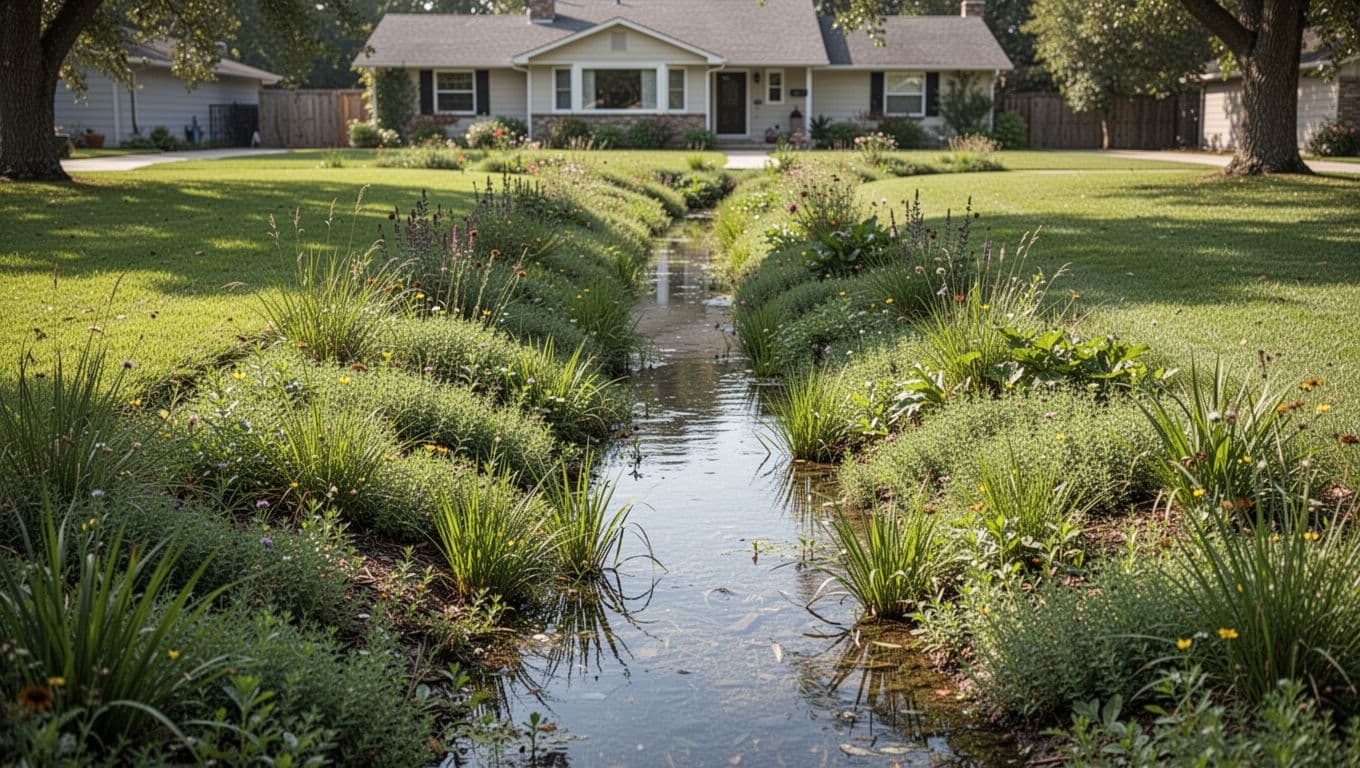
Sedges and rushes are often a strong fit because they stay slim and upright. Their growth habit leaves room for water to pass, and their roots help hold the slope together.
In many climates, sedges from the Carex family work well on wet edges. Rushes, including Juncus types, are another solid option for damp spots that dry out between storms. They don't usually form the thick, wall-like growth that causes trouble in drainage channels.
These plants work best in small groups along the side slopes. Put them where they can stabilize the soil, then let the lowest part of the swale stay open.
Fine grasses and low groundcovers
Fine-textured grasses can soften a swale without blocking it. In warm climates, light bunch grasses are often easier to manage than broad, heavy clumps. They look natural, and they usually bend with water instead of fighting it.
A grass such as muhly can work well when it is kept out of the deepest flow line and given room around each clump. That spacing matters. One plant with breathing room is helpful, while a tight row can catch leaves and slow runoff.
Low groundcovers can also work on upper slopes, especially where the soil erodes after storms. Choose types that stay low and do not spread into a thick mat. If the plant forms a carpet that traps debris, it will cause more trouble than it solves.
The right mix depends on your climate and soil. A plant that thrives in a sandy, warm yard may struggle in a shaded or heavier-soil property. That is why the best swale planting plan starts with the site, not with a shopping list.
How to Place Plants So the Swale Still Drains
Placement matters as much as plant choice. A good plant in the wrong spot can still slow the water down.
| Swale zone | Good plant style | What to avoid |
|---|---|---|
| Lowest flow line | Very low, open plants or sparse mulch | Shrubs, hedges, and thick clumps |
| Side slopes | Sedges, rushes, and fine grasses | Plants that flop into the channel |
| Upper edges | Low groundcovers and transition plantings | Dense borders that spill inward |
| Near hardscape | Light planting with clear runoff space | Woody plants and heavy root zones |
A simple rule helps here, keep the center open and build outward. The swale should read like a shallow path with planted edges, not a flower bed with a hidden drain.
Spacing also matters. Stagger plants instead of packing them tightly in a row. That leaves room for water, makes maintenance easier, and lowers the chance that leaves and mulch will pile up after a storm.
A backyard drainage and grading plan can help you place plants before you add mulch, sod, or stone. When the grade is right first, the plants only have to support the design, not fix it.
Working Around Pavers, Concrete, Sod, and Turf
Swales often run beside patios, driveways, and walkways, so the edge details matter. Good hardscape and good drainage should work together.
When a swale sits near a driveway or patio, a concrete company can help set the slab or apron height so water moves away cleanly. That keeps runoff from washing back toward the house or cutting under the edge of the concrete. The same idea applies to paver work. The edge should hold its shape, but it should not block the channel.
If your yard has pavers, keep them clean without dumping sand and debris into the swale. Paver cleaning works best when you rinse with the drainage path in mind. Strong washing toward the swale can fill the low point with grit and make the plants work harder.
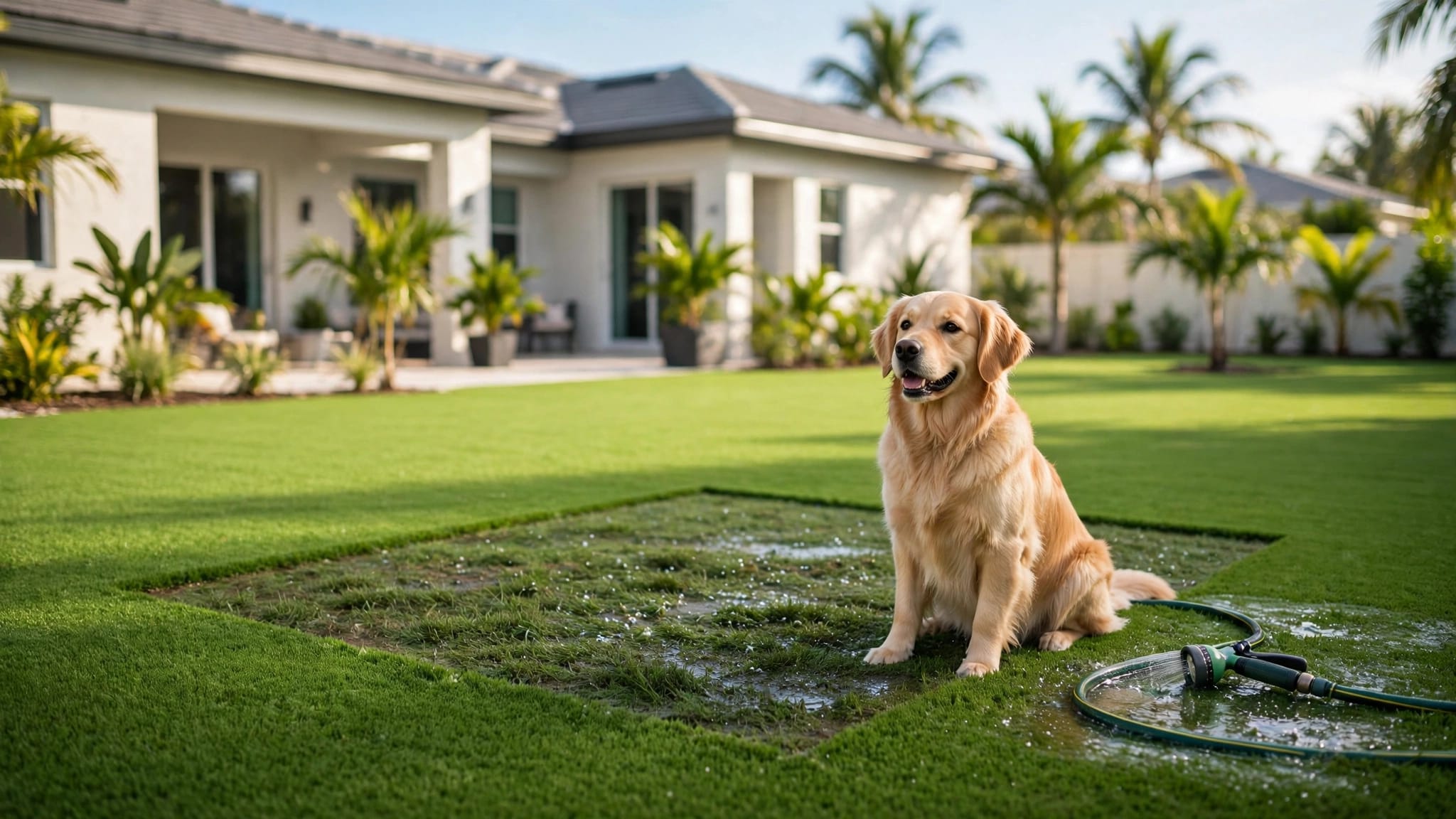
Some properties also use artifical turf near a swale, especially in narrow side yards. That can work, but only when the base drains well and the border stays open enough for runoff to leave the surface. For a closer look at base depth and drainage details, artificial turf drainage and base installation is worth reviewing before you build.
Sod can also fit beside a swale if you choose the right grass and keep the transition clean. In warm coastal areas, some homeowners compare options before they commit. Comparing sod types for Cape Coral yards can help with that decision when you want a living edge instead of a hard line.
Good landscaping around drainage is about restraint. The swale should stay functional after the plantings fill in, after the pavers settle, and after the first heavy rain.
Conclusion
A swale does not need to be bare. It needs plants that stay low, hold soil, and leave the flow line open.
When you choose swale-friendly plants with the right spacing, the drainage stays clear and the yard looks finished. That balance is the goal, whether the swale sits beside sod, pavers, concrete, or a narrow side yard.
The smartest planting plan keeps the middle open and lets the edges do the work.