


How Often to Water New Shrubs in Southwest Florida
New shrubs in Southwest Florida dry out faster than many homeowners expect. The sun is strong, the soil is sandy, and summer rain can fool you into thinking the roots got a full drink when they didn't.
If you water on a fixed schedule without checking the soil, you can miss the mark in both directions. Too little water slows establishment, and too much water keeps roots shallow and weak.
A better plan is simple, practical, and tied to what the soil is doing right now.
Key Takeaways
- Water new shrubs heavily at planting, then keep a closer eye on them for the first week.
- After the first few days, deep, infrequent watering works better than shallow daily sprinkling.
- Check soil moisture before every watering, because sand dries fast and summer storms can hide dry root zones.
- Beds near patios, driveways, or artifical turf often need better drainage, not more water.
- Once shrubs begin establishing, one or two deep waterings a week is often enough in dry weather.
A Simple Watering Schedule for New Shrubs
The first week matters most because the roots have not spread into the surrounding soil yet. At that stage, the shrub depends on the water you provide at the root ball.
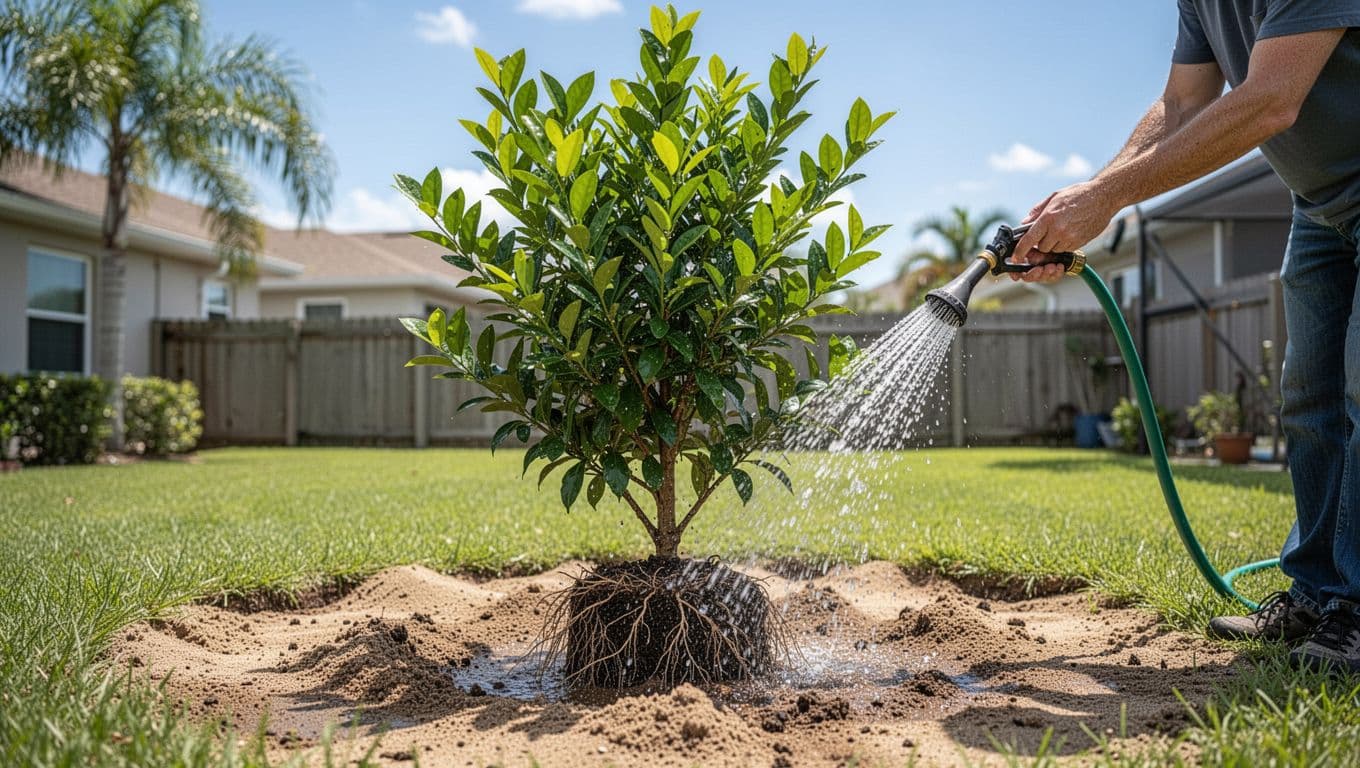
Here is a practical schedule for most newly planted shrubs in Southwest Florida.
| Stage | Usual watering rhythm | What to check |
|---|---|---|
| Day of planting | Water thoroughly once, then again if the soil settles and looks dry | The root ball and nearby soil should be evenly moist |
| First 3 to 5 days | Water daily in dry, hot weather | The top inch dries fast, but 2 inches down should stay damp |
| Weeks 2 to 4 | Water every 2 to 3 days | Skip a cycle if rain has already soaked the bed |
| Weeks 5 to 12 | Water 1 to 2 times a week, deeply | Let the surface dry a bit between waterings |
| After 3 months | Water during dry spells or extended heat | Established shrubs should need less frequent irrigation |
If the soil is still damp 2 inches down, wait. Southwest Florida heat dries the top layer fast, but the roots care about moisture below the surface.
The goal is to soak the root ball and the soil around it, not just wet the mulch. In sandy ground, that often means watering slowly so moisture can move down instead of running off.
Drip irrigation and soaker hoses work well because they put water where the roots need it. Hand watering works too, especially right after planting, as long as you water slowly and let it sink in.
What Southwest Florida Heat and Rain Do to the Soil
Southwest Florida weather changes the rhythm. Sandy soil drains quickly, so moisture moves through the bed fast. That helps roots breathe, but it also means a new shrub can dry out sooner than you expect.
Humidity slows evaporation a little, yet afternoon sun and wind still pull moisture from the leaves and topsoil. Near a driveway or patio, heat reflects back into the planting bed and dries the soil even faster. If you need help correcting slope or runoff around hard surfaces, a concrete company can be part of the solution.
Summer rain adds another twist. A quick storm can wet the mulch and leave the root zone dry underneath. After a heavy rain, check the soil before you skip the next watering or restart the timer. If water sits in the bed for hours, the issue is drainage, not a lack of irrigation.
That is where good landscaping design matters. If the bed traps water, landscape and irrigation services can help sort out the grade, the sprinklers, and the drainage path.
Beds next to pavers need attention too. Overspray can wash soil into joints, leave stains, and make paver cleaning more of a chore than it should be. If your yard includes artifical turf, keep sprinkler heads adjusted so runoff does not soak the edge of the installation or push water where it is not needed.
Signs Your Shrubs Need More or Less Water
The soil will tell you more than the calendar will.
- Leaves droop in the morning or stay curled : The shrub may need water sooner.
- Yellowing leaves, soft stems, or puddles around the base : Cut back and check drainage.
- Dry mulch on top, moist soil underneath : Wait before watering again.
- Dry soil 2 inches down, even after a recent watering : The bed needs a deeper soak.
A small trowel or even your finger works well for checking moisture. Push past the mulch and into the root zone. If the soil feels cool and slightly damp, hold off. If it feels dry and loose, it's time to water.
For property managers and homeowners with larger beds, it helps to group shrubs by exposure. Full-sun beds usually need water sooner than shaded ones. Shrubs near reflective walls, sidewalks, or fresh concrete dry out faster than shrubs tucked into protected corners. Matching the watering schedule to the site saves water and helps each plant establish at a normal pace.
Conclusion
New shrubs do best when you water with the weather, the soil, and the root zone in mind. In Southwest Florida, that usually means watering more often at first, then shifting to deep, infrequent watering as the roots settle in.
If you remember one thing, make it this: check the soil before you water, especially after rain or in sandy beds. That small habit keeps shrubs healthier than a rigid calendar ever will.