



Sprinkler Head Adjustment for Even Cape Coral Coverage
A brown strip beside a green lawn can be frustrating when you know the sprinklers are running. In Cape Coral, heat and sandy soil can make that uneven coverage show up quickly, but adding more watering time may leave the wet areas wetter. Sprinkler head adjustment starts with finding where the water lands.
Watch each zone before touching a nozzle. Then make one small change at a time and retest it. That approach helps you water the grass without soaking the sidewalk.
Check coverage one zone at a time
Run each irrigation zone manually during daylight. Let it operate long enough to see every head rise, spray, and shut off. A rotor needs time to complete its sweep; a quick glance can miss the part that reaches the road.
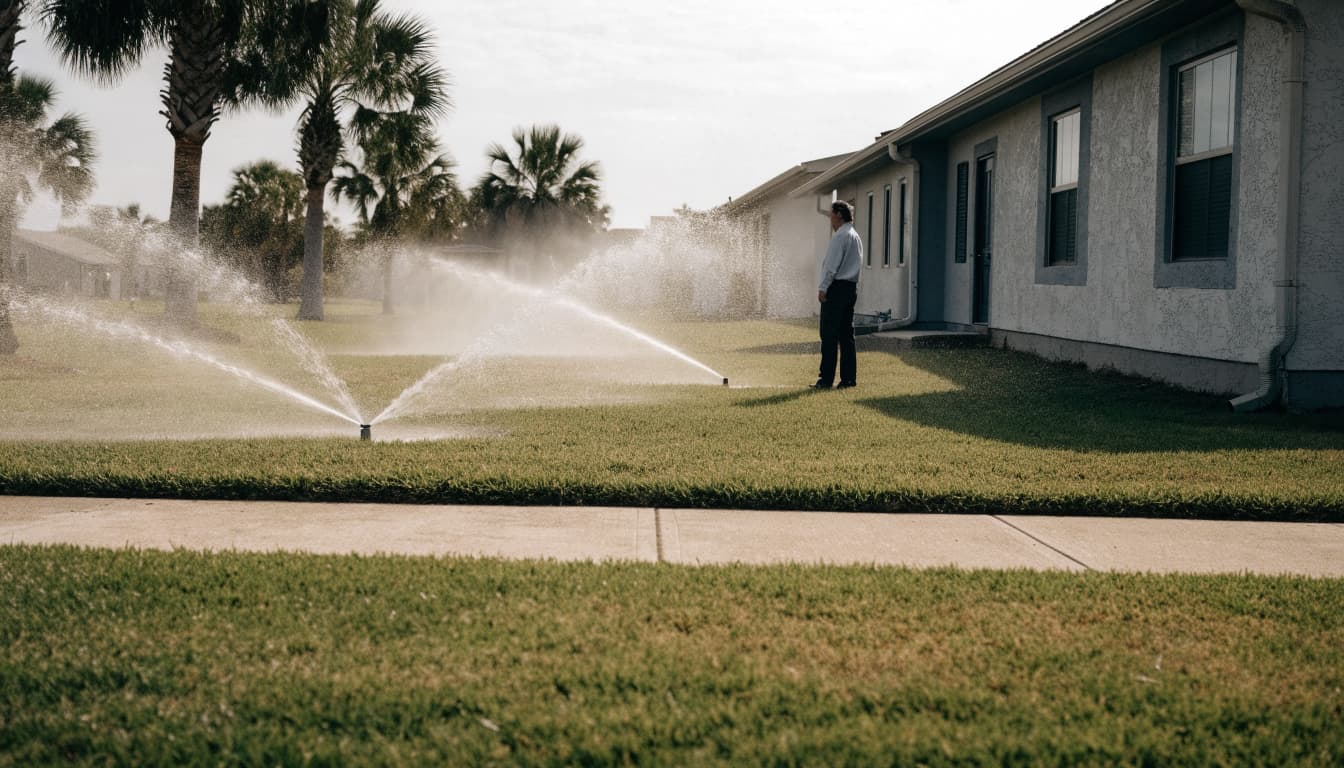
Watch the edges and the gaps
Stand clear of the spray and follow the zone's perimeter. Look for water hitting sidewalks, driveways, pavers, fences, and the street. Then check corners and narrow strips where coverage may stop short.
Nearby heads should help cover the spaces between them. If a head wets only the grass around its base while the far edge stays dry, note that pattern. Also watch for a hedge, tall grass, or mulch blocking the stream.
Record what happens before changing it
Take a photo of each problem head and note its zone. Mark dry patches and pooling areas so you can compare them after the next test. Check whether the head rises fully and whether it retracts when the zone ends.
Don't adjust several heads at once. You won't know which change fixed the problem, or which one created a new dry spot.
Prepare the head and work safely
A quick inspection can save you from adjusting a damaged part. Identify whether you're looking at a stationary spray head or a rotor that turns. Check the maker and model if they're visible, then use that head's instructions for its adjustment points.
Shut the zone off before touching the head
Turn off the affected zone at the controller and wait for pop-up heads to retract. If you need to remove a nozzle or replace a head, shut off the irrigation water supply first. Wear gloves near sharp paver edges or old fittings.
Brush loose soil and mulch away gently. Don't pry up a sprinkler with a shovel or twist a riser that resists movement. Buried pipe and fittings can break below the surface. Keep hands away from controller wiring and electrical connections.
Check height and condition first
A head buried under turf may spray into the grass instead of across it. One that leans toward a walkway may put most of its water on concrete. Look for a cracked body, damaged nozzle, missing cap, or water bubbling at the base.
Clear loose debris around an intact head without digging into the line. If the body is unstable, a fitting moves, or water keeps flowing after shutoff, stop adjusting and investigate the repair.
Sprinkler head adjustment for spray and rotor heads
Changing an arc affects where water travels. Changing reach affects how far it travels. The controls differ by head and nozzle, so make a small, reversible change using the manufacturer's directions, then run the zone again.
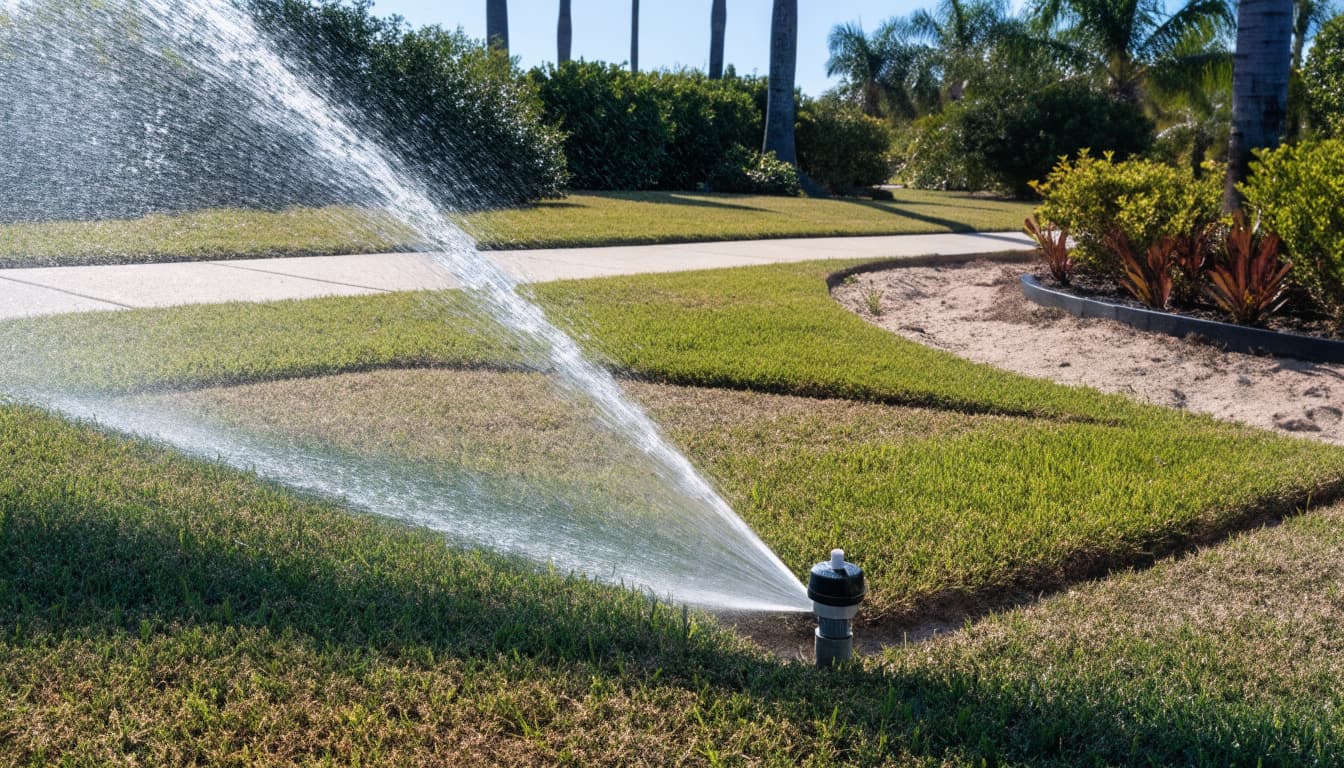
Aim stationary spray heads toward the planted area
A fixed-spray nozzle may have a preset arc, while an adjustable nozzle lets you change its spray sector. A corner often calls for a narrower pattern than an open lawn. If a full-circle nozzle waters a sidewalk as well as the grass, the nozzle itself may be wrong for that position.
With the zone off, photograph the starting position. Adjust the arc only as the nozzle instructions allow. If that pattern can't cover the grass without wetting pavement, don't keep turning it or cut the reach until the lawn edge goes dry. The head may need another nozzle or a different location.
Change rotor settings in small increments
A rotor turns through an arc, and many models have a separate way to limit distance. Locate the correct controls in its instructions before inserting a key or screwdriver. Never force an adjuster past its stop.
Change the arc slightly, turn the zone on, and watch a complete sweep. Turn it off before making the next change. If the stream still reaches the road, check for a tilted head or an unsuitable nozzle. Reducing reach too far can leave the neighboring head's coverage short of the gap between them.
Retest whether the lawn receives water evenly
After each sprinkler head adjustment, rerun the same zone under similar conditions. Check the place that was dry and the place that was too wet. A neat-looking spray pattern isn't proof that both receive comparable water.
Compare water with catch cups
Place identical, straight-sided containers across the turf zone. Include the center, edges, and problem spots, but leave cups off patios and sidewalks. Keep them upright, run the zone for a measured period, then compare the water depths.
If one area collects much less than the rest, look nearby for an obstructed head, a poor arc, or weak spray. Repeat the test for the same duration after your change. The comparison tells you more than lawn color alone, which can reflect plant or soil problems too.
More run time adds water to every part of a zone. It won't correct a dry edge beside an already-wet sprinkler.
Check the zone's start and stop
Watch whether the correct heads come on together and stop when commanded. If heads in another zone run at the same time, check controller programs for duplicate start times before blaming the nozzles.
When a zone continues spraying after its command ends, leave the heads alone. The valve or its controls may need attention. Likewise, pooling or bubbling soil calls for a leak check rather than a wider arc.
Account for Cape Coral weather and yard changes
Cape Coral's sun can dry exposed turf quickly, while wind can push fine spray past its intended edge. Sandy soil may also let water move through quickly. Those conditions make it tempting to widen every pattern, but the goal is coverage on plants and grass, not nearby pavement.
Test in conditions you can compare
Choose a relatively calm, dry period for your first test and retest. Otherwise, a windy afternoon or recent rain can make an adjustment look better or worse than it is. Once the pattern is set, observe the same zone on a breezy day for drift onto sidewalks or roads.
Look below the grass before changing the controller schedule. A brief storm can wet the surface without answering whether the root area received enough water. Conversely, a persistently damp spot may point to a leak.
Recheck heads after outdoor work
New landscaping can block a stream that once crossed open turf. Before a concrete company pours a patio or walkway, locate nearby heads and lines so the finished edge can be watered without overspray. If you're planning concrete work in Cape Coral, discuss irrigation placement before the pour.
Inspect heads beside pavers before paver cleaning or sealing, especially if a head or valve-box lid has become exposed. Artificial turf needs no lawn sprinkler coverage, although adjacent planting beds may still need irrigation. Converting a grass strip can call for a zone change rather than a smaller spray arc.
Know when an adjustment won't solve the problem
A head can't compensate for every fault in a zone. If several sprinklers spray weakly, or one area floods while the others barely run, check for a system problem before making more changes.
Separate nozzle trouble from a wider fault
One uneven spray fan may come from visible debris or a worn nozzle. Several weak heads in the same zone can indicate a valve, supply, or piping issue. Water bubbling around a head or persistent wet ground near a walkway deserves prompt attention.
Turn off the affected zone if water continues to escape. Avoid digging for a buried leak or opening live electrical connections. Note which zone fails and photograph the wet area. For a sense of how different faults are assessed, see Cape Coral irrigation repair costs; head alignment and pipe or valve repair are different jobs.
Call for help when coverage requires new hardware
A changed driveway edge or larger planting bed may leave an existing head in the wrong place. Shortening its spray can protect the hardscape today, but the remaining turf may go dry. Relocating a head, replacing a nozzle, or revising the zone can provide a lasting fix.
Professional help also makes sense when a riser twists, the ground stays wet after shutoff, or multiple heads behave differently across a zone. Share your photos and test notes so the technician can see what you've already ruled out.
Key takeaways
- Run one zone at a time and record its original pattern before adjusting anything.
- Shut the zone off before touching a head. Follow the instructions for its particular nozzle or rotor.
- Make one small change, then retest the full spray pattern and the lawn edge.
- Use catch cups to check uneven watering. A longer run time won't repair poor coverage.
- Treat leaks, weak zones, and heads that won't shut off as repair questions.
Frequently asked questions
Can I fix a dry patch by increasing the watering time?
First check whether water reaches that patch. If the nearest head is blocked or aimed away, more time may soak the surrounding grass while the patch stays dry. Run the zone, clear visible obstructions safely, and compare catch cups before changing the schedule. If coverage is even, check the soil and lawn for other causes of stress.
How often should I check sprinkler heads?
Check them when you notice dry strips, runoff, or spray on a sidewalk. A walk-through also helps after mowing damage, new planting, paver work, or a storm. Run each zone long enough to watch its full pattern, then confirm that every head stops when the controller ends the cycle.
Keep water where the lawn needs it
That brown strip beside a green lawn is a reason to inspect the pattern, not automatically add watering time. Small adjustments , followed by a full zone test, show whether you've improved coverage without sending water onto Cape Coral sidewalks and roads.
If a head can't reach the grass without soaking hardscape, a repair or layout change may be needed. Outdoor Life Pros offers landscape and irrigation services in Cape Coral for those larger fixes.