


Landscape Drainage Inspection for Southwest Florida Buyers
A tidy yard can hide the route rain takes across a property. Before you buy, a landscape drainage inspection helps you spot places where water collects, flows toward the house, or has no clear outlet.
Conditions change with recent rainfall and the season, so one sunny showing won't tell the whole story. Walk the property after rain when practical, ask about recurring problems, and get a qualified professional to assess anything a visual check can't explain. Start by following the water's likely path through the yard.
Start with a landscape drainage inspection checklist
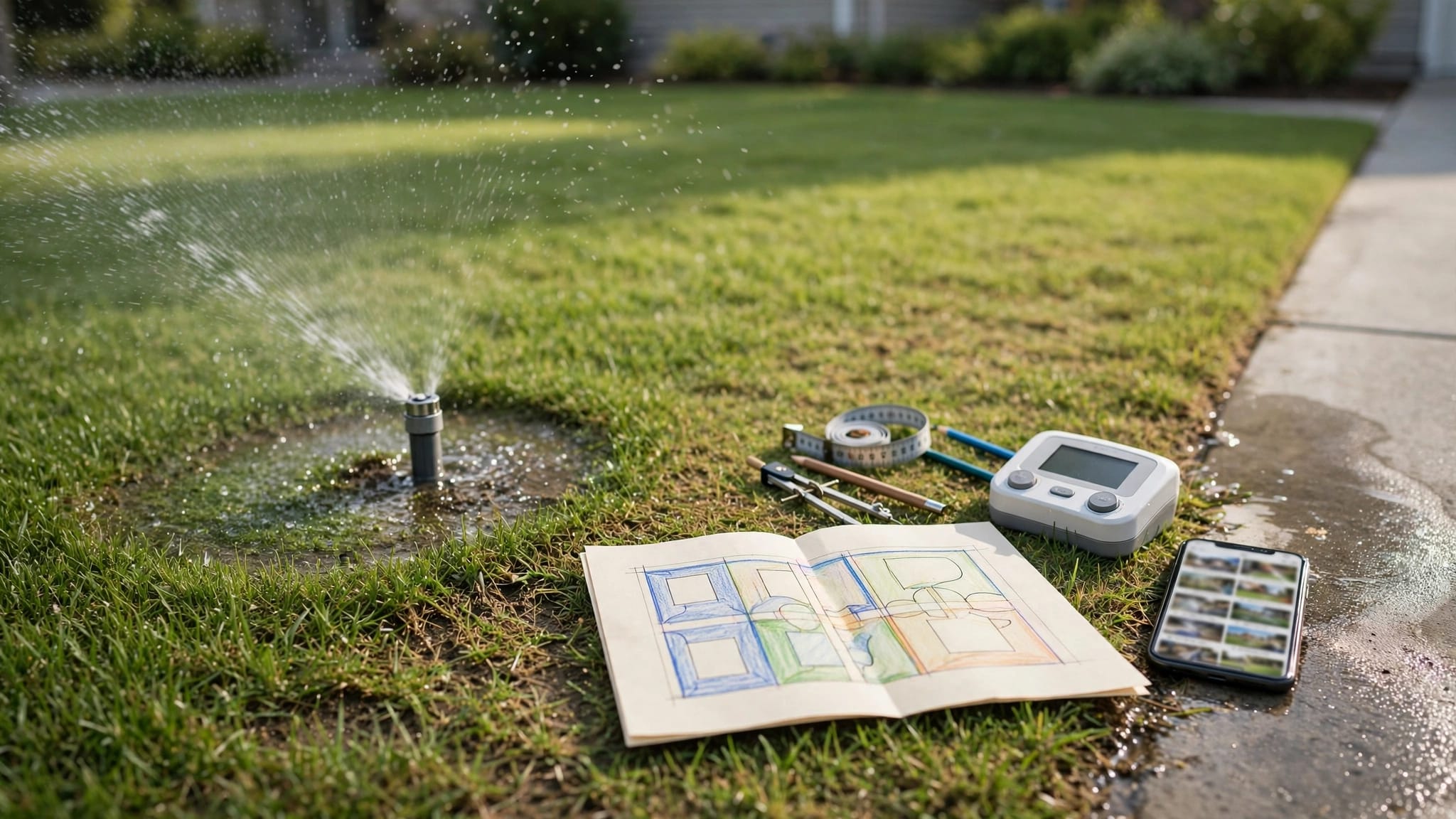
Walk the lot from the roofline toward the street and side boundaries. Bring a phone for photos, and mark each concern on a copy of the listing's property sketch if one is available.
- Look for low spots, soggy soil, or water marks beside the house.
- Follow each downspout to its outlet or visible discharge point.
- Check whether planting beds or mulch block water's path.
- Find swales, catch basins, cleanouts, and pop-up emitters.
- Watch for pooling or settling beside patios, walkways, and driveways.
- Note worn turf, washed soil, and exposed roots along runoff paths.
- Ask where irrigation runs and whether wet areas persist between watering cycles.
- Photograph anything you want a contractor or inspector to review.
These observations help you ask better questions. They don't establish that a buried pipe works or that the yard will drain well during every storm.
See how the yard behaves after rain
A recent shower can reveal details that disappear on a dry day. If you can arrange a second visit, note how much rain fell recently and whether the ground was already wet.
Separate brief puddles from recurring wet spots
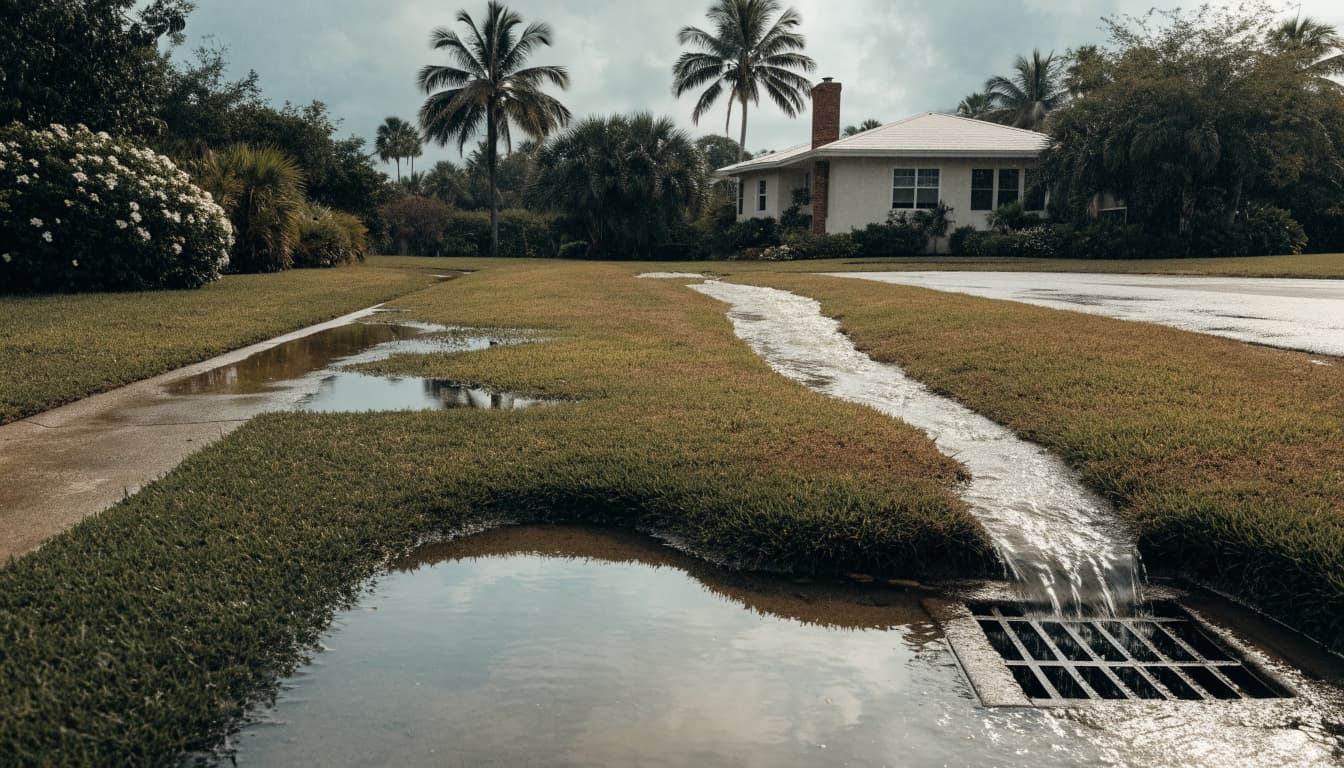
Look first beside the slab, at door thresholds, near a screen enclosure, and where the lawn meets a patio. Standing water in these locations deserves follow-up, especially if you also see stained walls, washed mulch, or soft ground.
A puddle after a heavy downpour doesn't prove the yard has a lasting problem. Ask how often it appears and how long it stays. A small, repeated wet patch after ordinary showers may be more informative than a larger puddle seen once.
Track where runoff goes
Watch the direction water travels across driveways and grass. Does it move away from the house toward a visible swale or outlet? Or does it cross a walkway and collect against a wall?
Photograph the flow path from several angles. If you visit during a dry spell, ask the seller for photos taken after storms. Don't treat an absence of puddles during a dry showing as proof that the drainage works.
Follow roof runoff to a visible outlet
Roof water can concentrate at one corner of a home. Follow its path before assuming the surrounding lawn can absorb it.
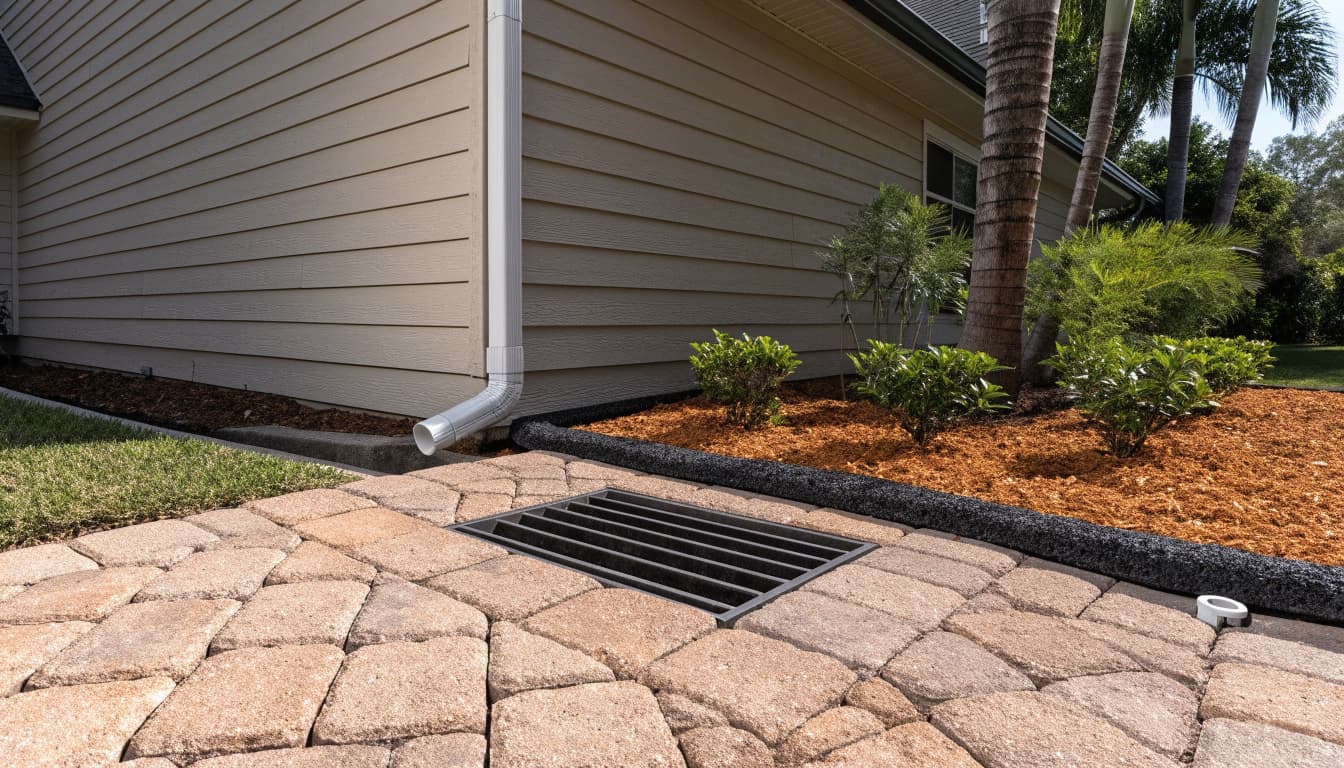
Inspect gutters and downspouts from the ground
Look for disconnected elbows, crushed extensions, overflowing gutters, and erosion beneath a discharge point. Leaves can clog an elbow, while a downspout that empties beside the wall can saturate that small area.
If the pipe disappears underground, ask where it ends and whether the owner knows of a cleanout. Don't climb onto the roof or open buried piping during a showing.
Check the destination, not just the pipe
A downspout extension is useful only if it sends water to a suitable place. Look for a visible outlet, such as a pop-up emitter, and check whether mulch or soil covers it. Also note whether runoff appears to head toward a neighbor's property.
A controlled hose test can help, but only with the seller's permission and suitable conditions. Stop if water backs up or moves toward the home. A qualified drainage professional can investigate a buried line that you can't trace visually.
Find the swales, basins, and discharge points
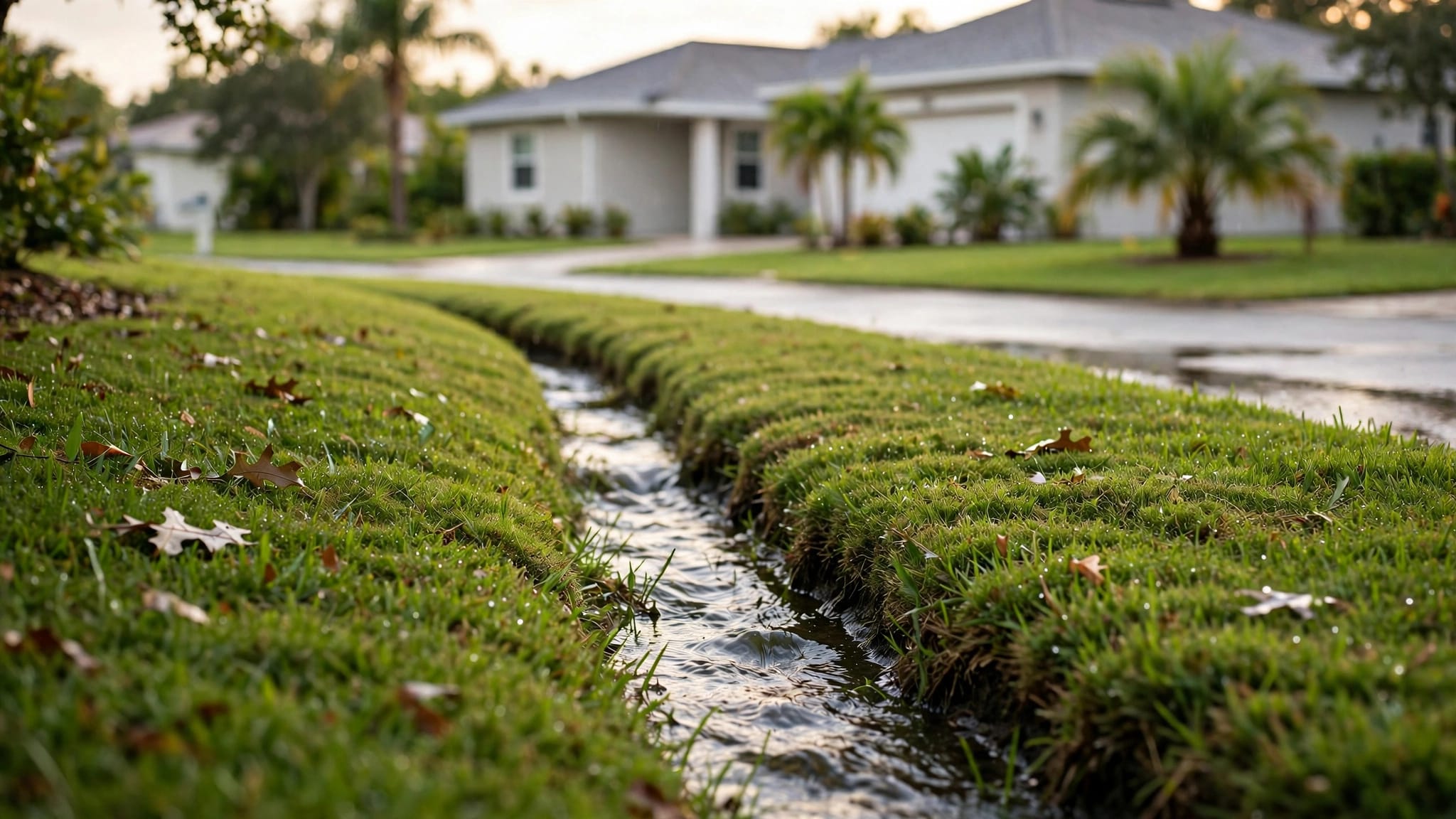
The shallow dip along a side yard may be an intentional swale. Fresh sod, edging, or a raised planting bed can interrupt its flow, so compare the yard's shape with the outlets you can see.
Keep surface routes open
Walk the swale toward its apparent destination without stepping onto neighboring land. Look for soil piles, dense roots, landscape edging, or a newly built feature that creates a dam. After rain, note whether water moves through or sits at one obstruction.
Don't fill a low channel simply because it looks uneven. If its purpose is unclear, ask a drainage professional to identify the intended route before changing the grade.
Look inside what you can see
Catch-basin grates and pop-up emitters collect leaves, sand, and mulch. Check whether you can locate them and whether debris covers their openings. Don't remove fixed covers or reach into a drain on a property you don't own.
Outdoor Life Pros describes French drain systems for standing water as gravel-filled trenches with perforated pipe. A visible grate or strip of gravel, however, won't tell you whether an existing buried system is clear or where it discharges.
Examine patios, pavers, and concrete
A clean surface can still send runoff toward the wrong place. Stand at each edge and look for water marks, displaced joint sand, settling, and gaps where the paving meets the house.
Check paver edges and low spots
Shifting pavers near a pool deck, driveway, or walkway may point to an issue beneath the surface. Notice whether the adjoining lawn is lower than the paving and whether runoff washes soil away from the edge.
Paver cleaning can remove surface stains, but it won't correct a low area that holds water. If the surface has settled, ask about paver repair and re-leveling rather than assuming cleaning or sealing will address the cause.
Watch where concrete sheds water
Inspect driveways, slabs, and paths where they meet the house, garage, or screen enclosure. Repeated puddling at a doorway or visible runoff toward the wall calls for a closer look.
Repairs may involve the surrounding grade as well as the concrete itself. A concrete company can assess a damaged surface, but ask how any proposed change will move water before agreeing to the work.
Look beneath the landscaping's finished appearance
Fresh mulch and new sod can make a yard look complete while covering drain openings or changes in grade. Inspect bed borders and low areas closely, especially if outdoor work was done recently.
Check beds, sod, and artificial turf
Mulch piled around an outlet can restrict flow after a storm. Look for washed patches that show where runoff has already traveled. In sod, note persistently soft areas, bare strips, and places where soil meets the house wall.
Artificial turf also needs somewhere for water to go. Ask what lies beneath it and where runoff leaves the area, particularly if its edge meets a patio or enclosed space. For a planned refresh, landscape design and installation should account for existing drainage routes.
Distinguish irrigation problems from rain problems
A wet patch isn't always storm runoff. With the seller's permission, ask to see the irrigation system run and look for a broken head, overspray onto paving, or water surfacing where a line may leak.
Ask whether the controller has a working rain sensor and whether recent landscaping or paving changed sprinkler coverage. Note the location and timing of a wet spot before deciding what caused it.
Ask about the yard's history, not just today's condition
A showing captures one moment. The seller's account, repair records, and photos can help you learn whether the same area gets wet repeatedly.
Ask direct questions about recurring water
Ask where water collects during heavy rain and how long it usually remains. Find out whether water has entered the house, garage, or screen enclosure, and whether anyone has altered the lot's grade.
Also ask about past drain cleaning, downspout extensions, French drain installation, irrigation leaks, and repairs to settled paving. Request invoices, plans, or photographs when available. A previous repair isn't automatically a concern; an unexplained recurrence deserves investigation.
Check what recent work may have changed
A new patio, planting bed, fence, or irrigation repair can change surface flow or cover an outlet. Ask when the work happened and whether anyone checked drainage afterward.
If the home belongs to a community with shared drainage features, ask which areas the owner maintains and which the association maintains. Confirm the answer through the relevant documents rather than assuming a roadside swale or basin belongs to the seller.
Turn visible concerns into informed follow-up
Before you commit to a repair idea, write down where the water appears, what happened during the visit, and what remains unknown. Share your photos with your home inspector and, when warranted, a qualified landscape or drainage professional.
Get a site-specific assessment
A professional can examine grade, trace accessible drainage components, and discuss a suitable discharge route. Ask for a written description of the problem and proposed work. That matters more than choosing a French drain or channel drain based on a puddle alone.
For settled concrete, ask a Cape Coral concrete contractor to assess the surface and its drainage. If an estimate involves excavation, confirm utility-locating and any applicable approval requirements before work starts.
Keep the purchase decision grounded
A visual check can't predict every storm. Compare what you observed with the seller's answers, inspection findings, and any specialist assessment you obtain before your purchase deadlines.
If a concern remains unresolved, ask for the information needed to evaluate it. Don't assume a fresh landscape finish has corrected a recurring water problem.
Key takeaways
- Inspect after rain when practical, because recent weather and season affect what you'll see.
- Trace water from the roof and paved areas to a visible, suitable outlet.
- Ask about recurring puddles, past repairs, and changes to the yard's grade.
- Bring persistent wet spots, blocked routes, or unexplained buried drains to a qualified professional.
Frequently asked questions
Can I check drainage during a dry-season showing?
Yes, but focus on clues you can verify: downspout outlets, blocked swales, settling pavers, and stains near walls. Ask for storm photos and a second visit after rain if practical. A dry yard on one day doesn't establish how it handles repeated showers.
Should I run a hose into a drain during the showing?
Only with permission, and don't test a system when the area is already saturated. Use gentle flow and watch the outlet if it's visible. Stop if water backs up or heads toward the house. A hose test can't establish how a buried system will perform in a major storm.
Does every low spot need a French drain?
No. Some low areas form part of an intended surface drainage route. Others may relate to a blocked outlet, irrigation leak, or settled paving. Identify where water should go before selecting a repair.
A clearer picture before you buy
A beautiful yard tells you little about its drainage until you follow the water's path. Observe, ask, and verify where runoff goes, especially after rain.
When the route isn't clear or a problem keeps returning, a qualified professional can help you understand the property before you make a purchase decision.