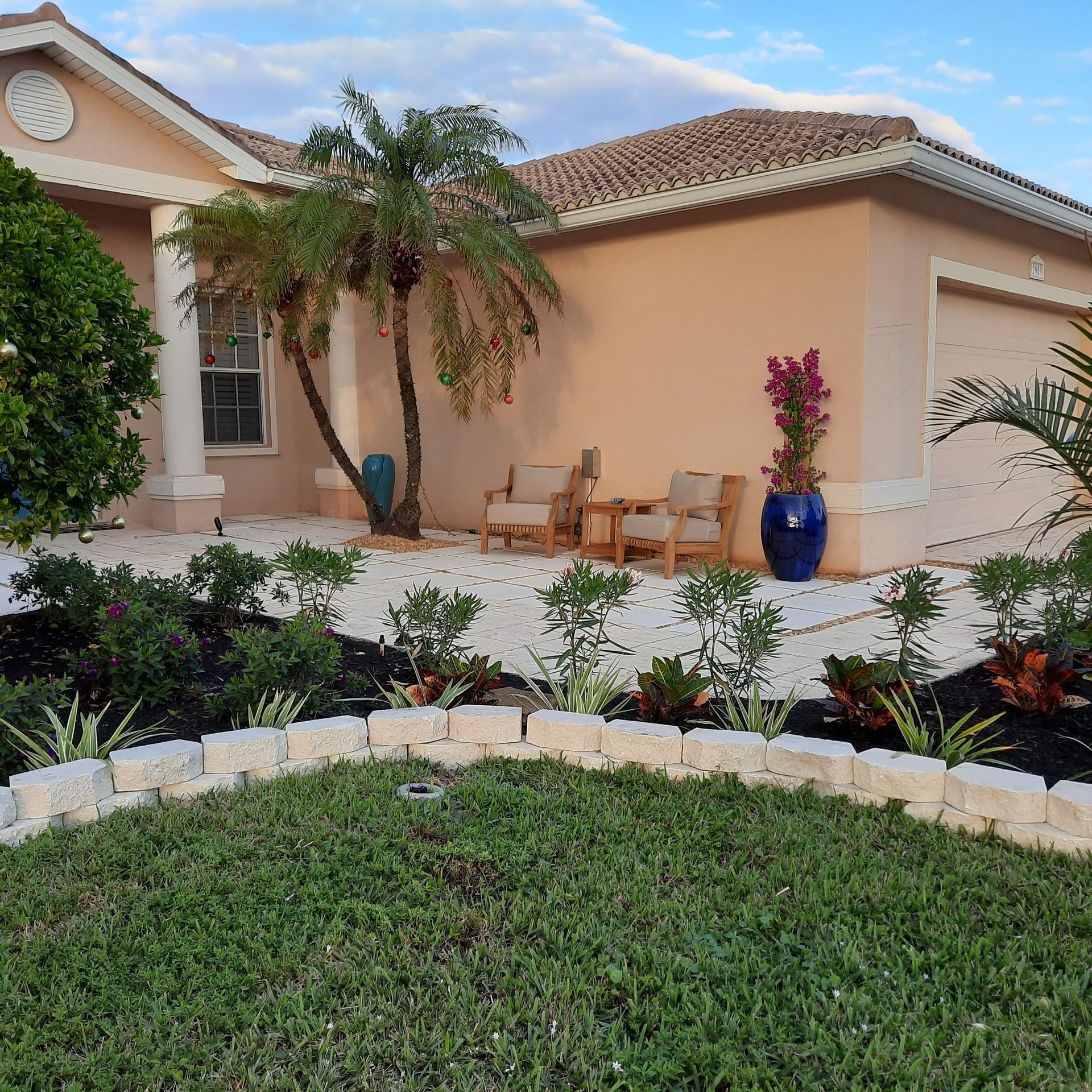



Solar vs Low-Voltage Landscape Lighting in Cape Coral
Choosing cape coral landscape lighting comes down to more than looks. Cape Coral sun, summer storms, salt air, and thick shade all affect how long lights last and how well they shine.
Solar fixtures can seem like the easy answer at first. Low-voltage systems take more planning, but they usually give steadier light and longer service life.
If you're updating landscaping, pavers, or a patio at the same time, the lighting choice should fit the whole yard, not fight it.
Why Cape Coral weather changes the call
Cape Coral gives solar lights a fair shot because the area gets strong sun for much of the year. Still, that sun is only part of the story.
Summer rain can fill panels with grime, while humidity and salt exposure can wear down cheap parts fast. After a storm, a fixture that worked fine last week may look weak or uneven. Shade from palms, rooflines, and screened lanais also cuts solar output more than many homeowners expect.
Bright sun helps solar fixtures, but steady night light depends on stored power.
Low-voltage lighting handles local conditions better because its output doesn't depend on how much sun the panel collected that day. That matters on cloudy stretches and in yards with mixed shade. It also helps when you want the same look every night, not a brighter beam one week and a dim one the next.
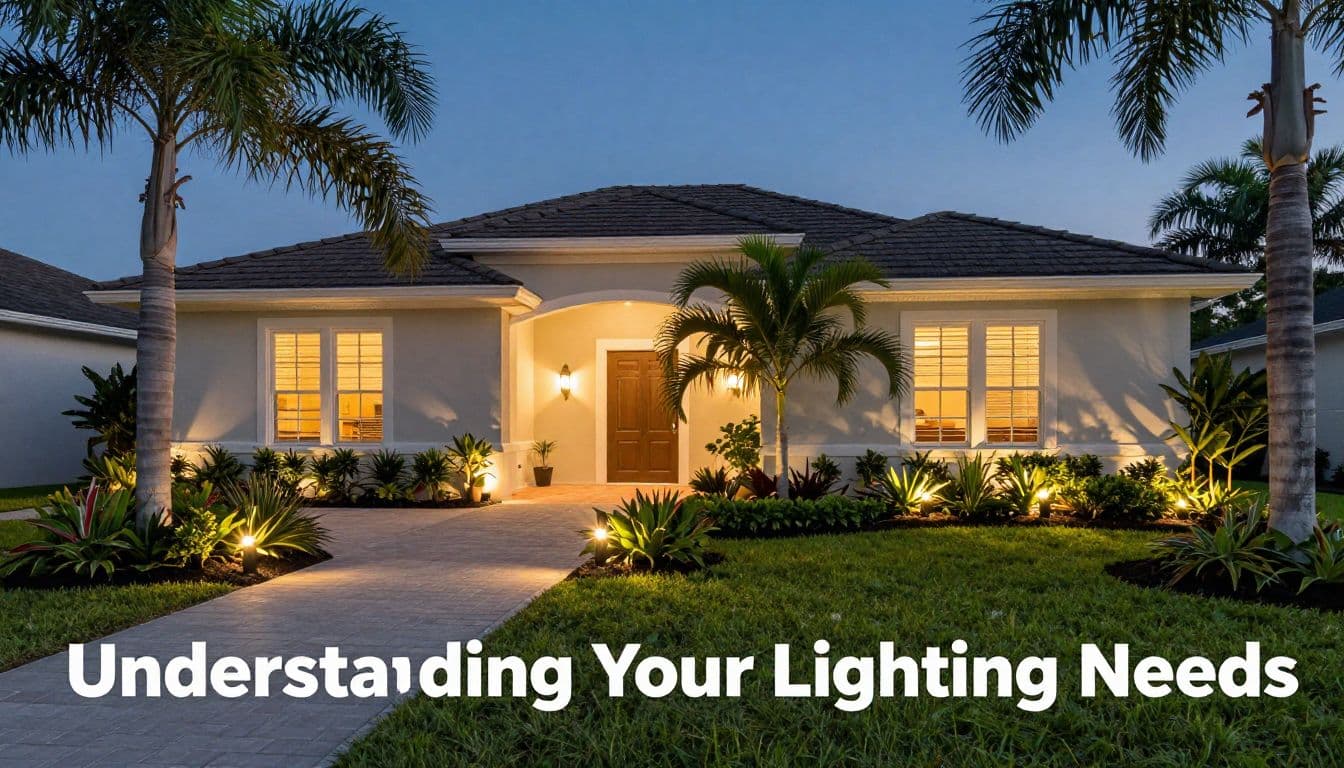
Solar landscape lighting in Cape Coral
Solar lighting works best when the panel gets direct, open sun for many hours. That makes it a simple fit for some front beds, open walk edges, mailbox areas, and decorative accents. There's no trenching, no transformer, and no wiring run through the yard.
That convenience matters. If you want a quick upgrade with a lower upfront price, solar can get lights in place fast. It also makes sense for homeowners who like to change the layout often or who want lights in a few isolated spots.
The tradeoff shows up at night. Solar lights often dim as the battery ages, and that happens faster in hot weather. Summer storms can leave them undercharged for days. In shaded yards, the lights may never reach full brightness.
Cheap housings can also corrode faster near the coast. That means the lowest-cost option can become the most annoying one after a year or two.
Maintenance stays simple, but it still exists. Panels need cleaning, batteries need replacement, and fixtures need checking after storms. If you already keep up with paver cleaning, you can handle solar upkeep too, but the light level still depends on the day's sun.
Solar can work well around artifical turf in open areas, since the space is usually easy to access and free of thick plant cover. It can also work for accent lighting where you care more about glow than strong path light. For a full yard plan, our outdoor living transformation services can help tie lighting, planting, and hardscape layout together.
Low-voltage lighting for steadier results
Low-voltage landscape lighting uses a transformer and direct wiring, usually with LED fixtures. Once it's installed, the system gives you more control over brightness, beam angle, and placement.
That control matters in Cape Coral yards. Pathways, front entries, steps, pool decks, and driveway edges need dependable light, not just a soft glow. Low-voltage systems stay consistent through cloudy weather, shade, and long humid stretches. They also handle security and curb appeal better because the light pattern is even and predictable.
The upfront cost is higher. Installation takes more labor, and the design needs to be planned well. Still, the system usually lasts longer and gives a better return for the parts of the yard you use every night.
Low-voltage lighting also fits better when you're already changing the hardscape. If a concrete company is already pouring a new patio or driveway, the lighting layout can be planned before the slab is sealed. That makes the whole project cleaner and easier to finish. For larger patio or driveway work, professional concrete contractors in Cape Coral can coordinate the surface and lighting plan so the final look feels intentional.
This option is also easier to match with landscaping that changes over time. New shrubs, taller palms, and seasonal beds don't affect the fixture's power source the way they do with solar. If the yard is mature and shaded, wired lighting usually wins without much debate.
Solar vs low-voltage at a glance
A side-by-side look makes the choice easier.
| Factor | Solar Lighting | Low-Voltage Lighting |
|---|---|---|
| Upfront cost | Lower | Higher |
| Brightness | Varies with charge | More consistent |
| Shade tolerance | Poor to fair | Strong |
| Storm recovery | Can take time to recharge | Returns to normal right away |
| Maintenance | Panel cleaning, battery swaps | Occasional bulb or fixture checks |
| Best use | Decorative accents, open sunny spots | Paths, entries, driveways, long-term curb appeal |
The main takeaway is simple. Solar works when convenience matters most. Low-voltage works when you want dependable performance and a cleaner finish.
Which option fits your yard
The best choice often depends on where the lights go, not just how they look in a brochure.
- Front beds with full sun often do well with solar accent lights. The panels get the charge they need, and the softer output can still look attractive.
- Side yards, covered entries, and shaded beds usually need low-voltage fixtures. These areas rarely give solar enough direct light.
- Driveways, steps, and walk paths are better served by wired lighting. Safety matters more here than low installation cost.
- Yards with artifical turf, pavers, or open concrete pads can go either way, but low-voltage tends to look more polished around hard edges.
- Homes with frequent landscaping changes may benefit from a few solar lights now and a wired plan later.
If your yard includes regular paver cleaning, wired lighting can help the surface look finished at night because the brightness stays steady. Solar can still work on clean, open borders, but it does less for darker hardscape areas.
The real question is how you use the yard after sunset. If you want a little glow near a garden bed, solar may be enough. If you want the front walk, patio, and entry to feel safe and finished, low-voltage usually gives better results.
Conclusion
Cape Coral's sun makes solar lighting tempting, but the local climate also tests every fixture. Heat, humidity, salt air, and stormy weeks all favor systems that hold a charge and keep working without much drama.
Solar makes sense for open, sunny spots, accent lighting, and smaller projects where ease matters more than output. Low-voltage is the better long-term investment for entries, paths, driveways, and shaded yards. A hybrid setup often fits best when one part of the property gets strong sun and another needs reliable light every night.
The best choice is the one that matches your yard's real conditions, not just its daytime appearance.