


Cape Coral Pollinator Plants for a Neat Front Yard
Cape Coral yards face strong sun, sandy soil, and enough humidity to make sloppy plant choices stand out fast. The right pollinator plants can still give you color, movement, and bees without turning the front yard into a tangle.
A tidy pollinator bed depends on plants with a clear shape, modest size, and bloom cycles that don't leave big gaps. Good landscaping in Southwest Florida also needs strong edging, a clean mulch line, and a layout that fits the house.
If you want the front yard to feel finished instead of overgrown, the plant list matters as much as the design. The best choices hold their form and stay easy to trim.
What makes a pollinator plant look neat in Cape Coral
A front yard works best when the plant list follows the same rules as the rest of the property, keep the line clean, keep the scale right, and avoid plants that sprawl across walks. In Cape Coral, that also means choosing flowers that handle heat, salt spray, and quick-draining sand without constant rescue work.
Pollinators care about bloom, not perfect symmetry. Homeowners care about curb appeal, so the sweet spot is a plant with a neat mound, upright stems, or a clipped hedge shape. If you want help matching those traits to the rest of your Cape Coral landscape services, start with the space you actually have, not the space you wish you had.
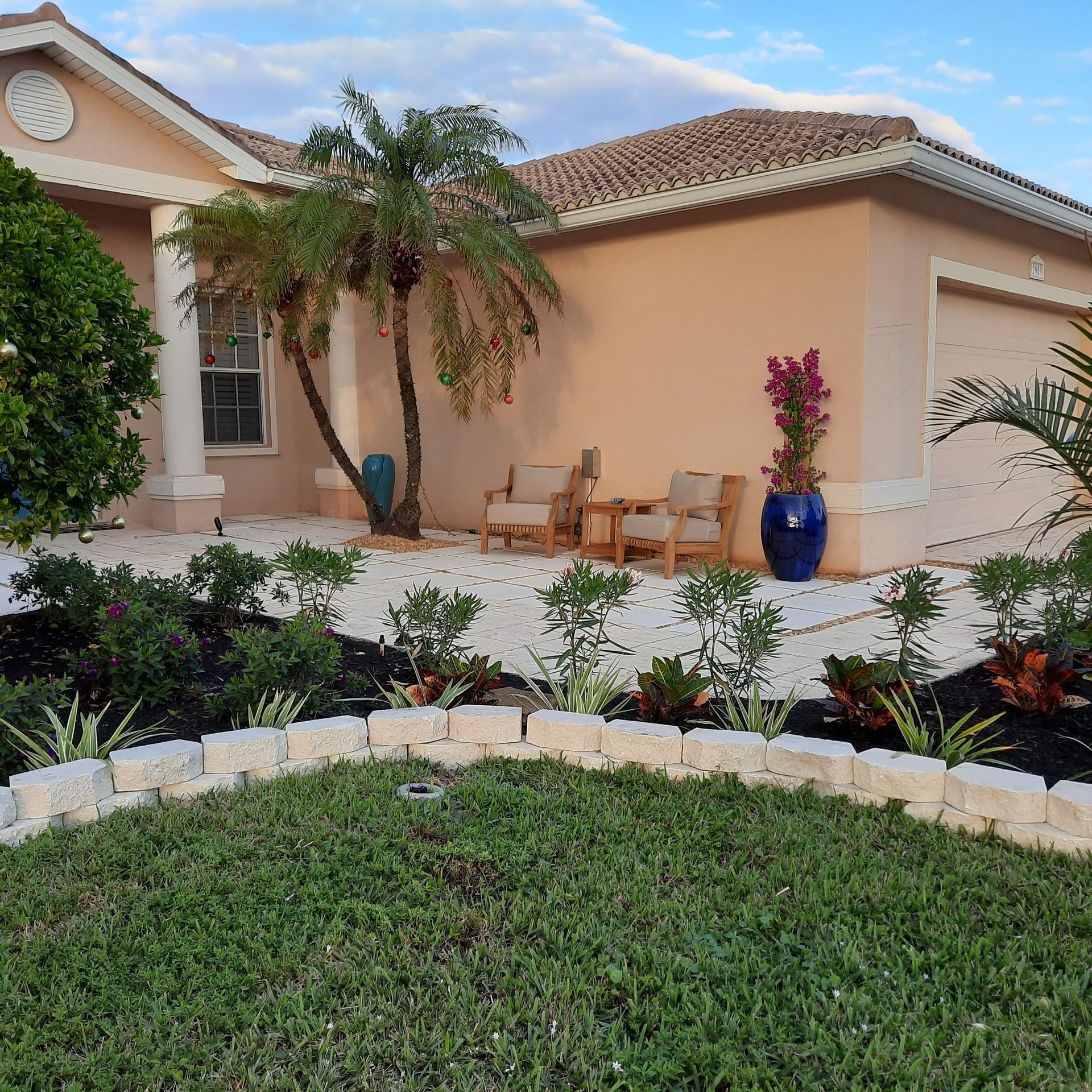
Beds near the street look calmer when the plants repeat in small groups. That pattern feels intentional, and it makes pruning easier. A clean edge, a fresh layer of mulch, and a simple irrigation plan can do as much for curb appeal as the flowers themselves.
The cleanest pollinator beds in Cape Coral are the ones that look planned, even when the flowers are doing the work.
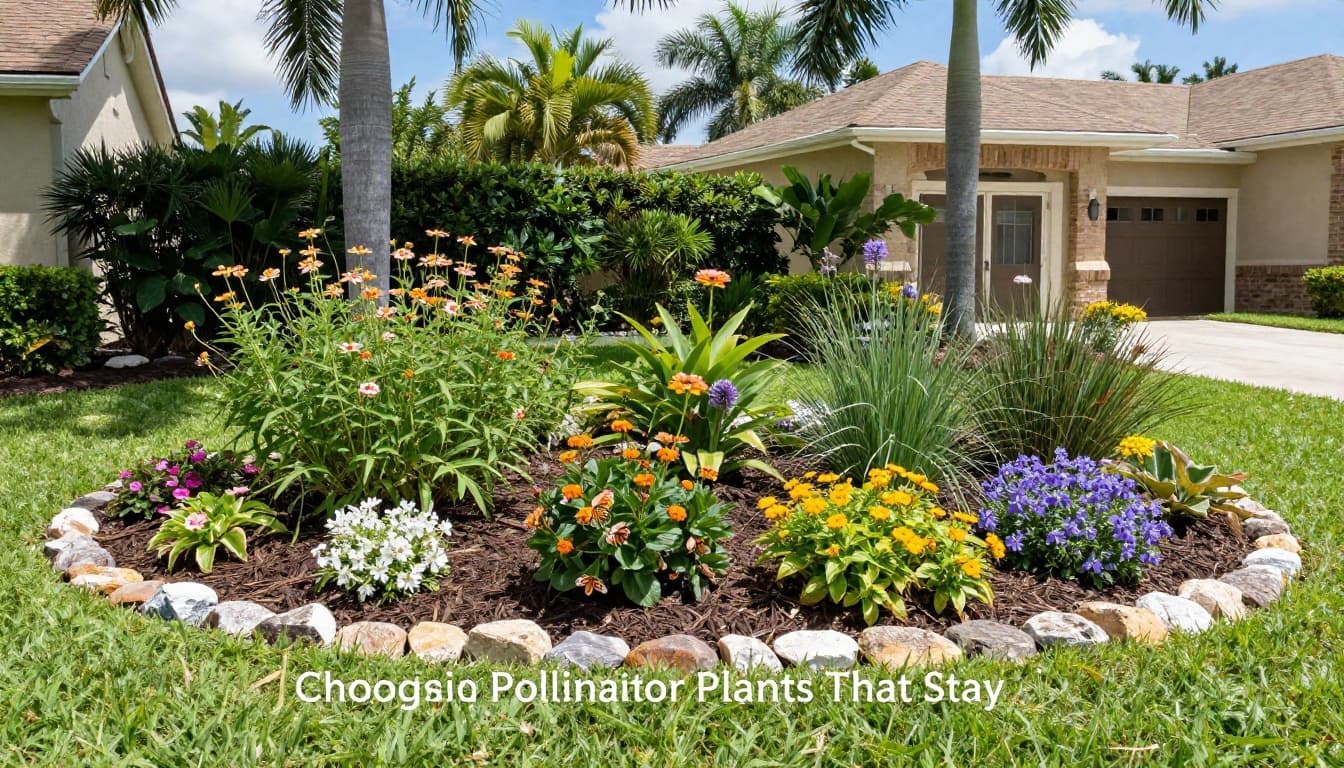
The Cape Coral pollinator plants that stay neat
These plants suit sunny front yards because they feed pollinators and keep a predictable shape. That mix matters when the goal is a clean look from the curb.
| Plant | Pollinator draw | Why it stays neat |
|---|---|---|
| Dwarf pentas | Butterflies, bees, and hummingbirds | Compact mound, easy to deadhead |
| Compact firebush | Hummingbirds and butterflies | Upright shape, responds well to pruning |
| Simpson's stopper | Native bees and small pollinators | Dense leaves, easy hedge form |
| Blue porterweed | Butterflies and bees | Long bloom, can be cut back cleanly |
| Dwarf Walter's viburnum | Bees and small pollinators | Evergreen structure, low litter |
| Blue daze | Bees | Low profile, soft border plant |
| Society garlic | Bees | Clumping habit, tidy leaves |
Dwarf pentas
Dwarf pentas is one of the easiest wins for a sunny Cape Coral front yard. Butterflies and hummingbirds work the flowers for months, and the plant stays in a compact mound that fits along a front walk or under a window. It doesn't throw out long runners or bulky stems, so the bed keeps its shape. A quick trim after a bloom flush keeps it full. In sandy soil, give it mulch and regular water until it settles in, then it stays easy.
Compact firebush
Firebush brings color fast, and hummingbirds notice it right away. The trick for a front yard is choosing a compact form or pruning it after bloom so it doesn't crowd the bed. Once shaped, it gives you upright stems, bright flowers, and a shrub that reads clean from the street. Butterflies use the bloom too, which gives the plant more value than a plain accent shrub. It looks lively in heat, yet still fits a neat front-yard plan.
Simpson's stopper
This native shrub stays calm even when the rest of the yard needs attention. Bees visit the small white flowers, and the evergreen leaves hold a polished outline through most of the year. It works well as a foundation plant or low hedge, which helps a front yard look organized. Light pruning keeps the shape tight. It also sheds less visual clutter than many showy shrubs, so the bed looks fresh longer. That matters when the yard sits close to a driveway or entry path.
Blue porterweed
Blue porterweed earns its spot because butterflies love it, and the flowers keep coming in warm weather. It can look loose if you let it, so place it where you can trim it back without trouble. Regular cuts keep the plant rounded and full. That gives you a lively pollinator magnet without a floppy front bed. It pairs well with lower plants, since the flower spikes add height without taking over the whole space. In a small yard, that balance is a big plus.
Dwarf Walter's viburnum
Dwarf Walter's viburnum is one of the easiest ways to get structure and flowers in the same plant. The spring blooms feed small pollinators, and the dense evergreen body holds a clean line along the house or driveway. It responds well to light shearing, so you can keep it boxy or soft, depending on the look you want. Best of all, it doesn't dump a lot of debris into the bed. That keeps maintenance low and the front yard looking cared for.
Blue daze
Blue daze works well where you want color low to the ground. Bees use the open blooms, and the plant stays short enough to edge a bed or soften a paver border. It spreads, but in a controlled way that usually reads as neat rather than messy. Give it sun and decent drainage, and it fills in without climbing over everything around it. That makes it a strong choice near a mailbox, a curb, or a short front path. It also softens hard edges from stone or concrete.
Society garlic
Society garlic is a tidy clumper, which makes it useful in narrow front yards. The purple flowers bring in bees, while the thin leaves create a clean line that fits modern and classic landscaping alike. It handles heat well and doesn't drop much mess, so the bed stays presentable between trims. Use it in a row or repeat it near an entry bed, and it gives the front yard a simple rhythm that feels finished. It is also easy to tuck beside other low plants.
Keep the front yard crisp without losing pollinator value
The plant list matters, but the frame matters too. A neat front yard looks finished when the edge lines are clear and the hard surfaces are clean. That is why plant selection, mulch, irrigation, and borders all need to work together.
If you're planning a full refresh, landscape design and installation in Cape Coral can help match plant size with edging, spacing, and drainage before the first hole is dug. That keeps the yard from looking crowded six months later.
A few simple habits make the bed hold its shape:
- Trim after bloom, then stop once the outline looks even.
- Keep mulch off stems so the base of each plant stays dry.
- Wash pavers often, since fresh paver cleaning makes the whole front yard read as sharper.
- If a concrete company is adding edging or a small border, keep the line simple and easy to sweep.
- Use artifical turf only where grass keeps failing, such as a narrow strip beside a sunny walk.
Those small choices matter because they stop the yard from drifting into a mixed-up look. A bed with the right plants, a clean edge, and a few hardscape details feels intentional. It also makes the flowering plants stand out instead of getting lost.
A front yard can be both tidy and full of life
A neat pollinator yard in Cape Coral comes down to shape, scale, and smart repetition. Compact bloomers, light pruning, and clean borders give you color without clutter.
Choose plants that fit the site, not plants that fight it. When the beds stay orderly, the pollinators get what they want, and the front yard still looks like it belongs to the home.