


Paver Thickness Guide For Cape Coral Driveways And Patios
A paver project can look perfect on day one, then start shifting after the first rainy season. In Cape Coral, that's usually not a paver problem. It's a base and drainage problem.
This guide breaks down paver thickness for driveways, patios, and pool decks, with simple rules of thumb for 60mm vs 80mm. You'll also get base prep targets that match Florida conditions, so your pavers stay flat, tight, and stable for years.
Why Cape Coral pavers fail (and why thickness isn't the whole story)
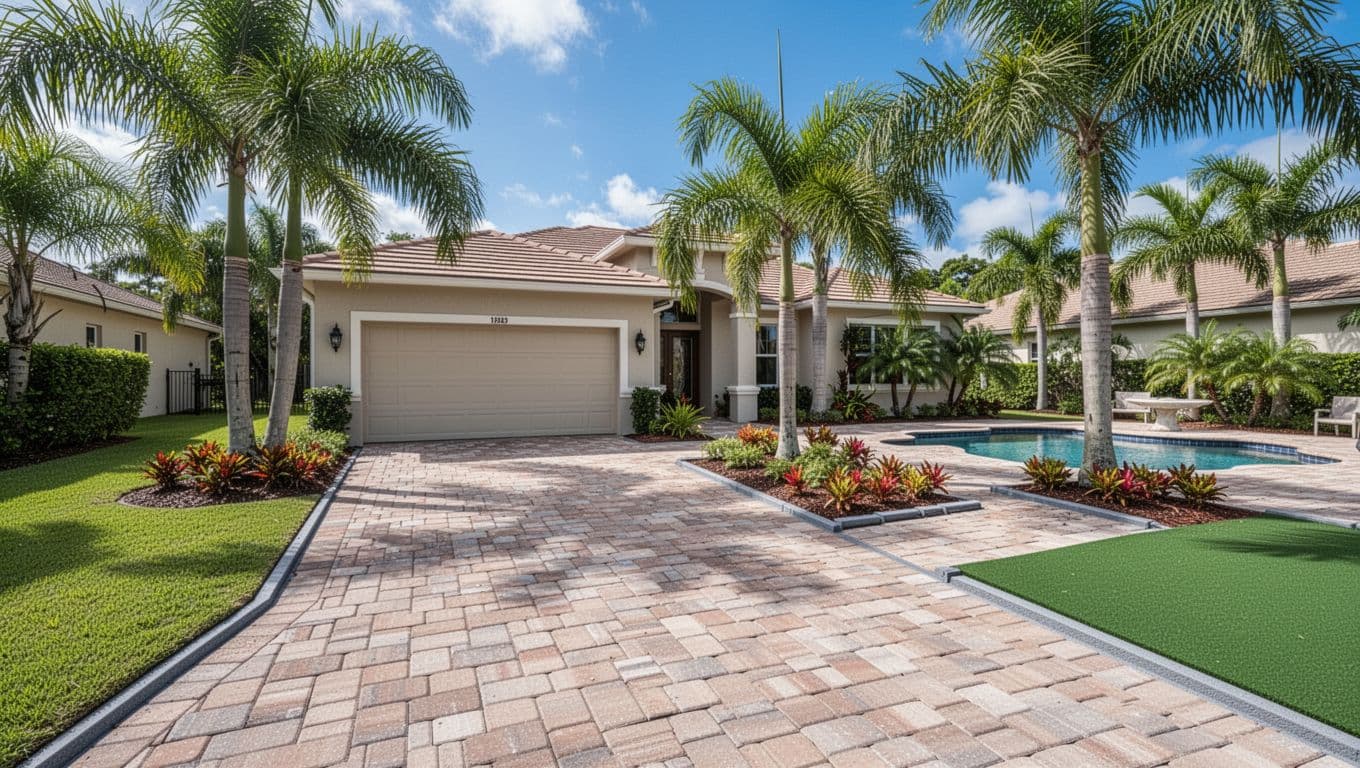 Typical Cape Coral layout with driveway, patio, and pool areas that often need different paver thickness and base depth, created with AI.
Cape Coral soils are often sandy, and heavy storms can move water fast. If water runs under pavers or sits in low spots, it carries sand away and softens the subgrade. That's when you see settling, rocking corners, and "waves" in the surface.
Here's the key idea: paver thickness helps resist bending and breakage , but it can't make up for a weak foundation. Industry guidance commonly points homeowners to ASTM C936 pavers and Interlocking Concrete Pavement Institute (ICPI) methods for base, bedding, and tolerances. Those standards focus heavily on what's below the pavers, because that's what controls long-term performance.
A Cape Coral paver build usually has five working layers:
- Pavers (typically 60mm or 80mm)
- Bedding sand (about 1 inch, screeded)
- Compacted aggregate base (depth depends on traffic)
- Separator fabric (geotextile, when soils are soft or sandy)
- Compacted subgrade (native soil, shaped for slope)
If you remember one thing, remember this: most paver failures are drainage and compaction failures , not a "wrong paver thickness" failure.
Because of that, thickness decisions should always come with base decisions. If you want a local team that builds and fixes these systems every week, start with Paver Installation & Repair Cape Coral.
60mm vs 80mm pavers in Cape Coral: what to use, and how to build the base
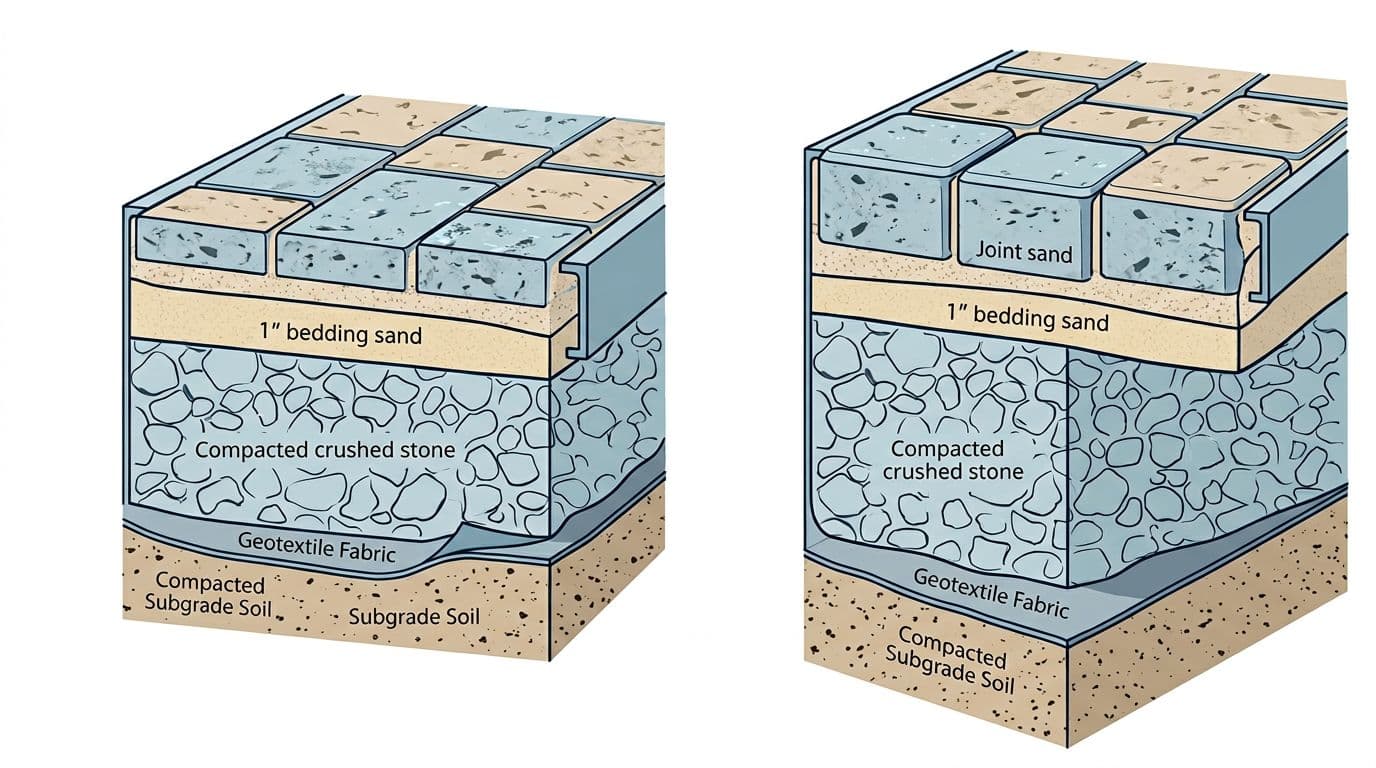 Cross-section view of typical patio vs driveway paver thickness and base layers, created with AI.
Use this quick table as your starting point. It assumes standard interlocking concrete pavers that meet ASTM C936.
| Area in Cape Coral | Recommended paver thickness | Typical base build (standard system) | Notes that matter most |
|---|---|---|---|
| Patio, walkway, lanai edge | 60mm (2 3/8 in.) | 4 to 6 in. compacted crushed stone base + 1 in. bedding sand | Best for foot traffic and furniture |
| Residential driveway (cars, light trucks) | 80mm (3 1/8 in.) | 6 to 8 in. compacted crushed stone base + 1 in. bedding sand | Handles turning loads and braking |
| Areas that may see service trucks | 80mm (minimum) | Often 8+ in. base, site-specific | Thickness helps, base matters more |
| Permeable pavers (patio or drive) | 80mm (common) | 6 to 18 in. open-graded stone layers (no bedding sand) | Built for infiltration and storage |
Base prep rules of thumb (Cape Coral friendly)
Compaction: Compact the subgrade and each base lift. Many specs target about 98 percent Standard Proctor (ASTM D698). On sandy soils, moisture control matters. Slightly damp compacts better than bone dry sand.
Base material type: For standard systems, use a well-graded crushed stone base (often sold as road base or DOT base). For permeable systems, use open-graded stone (clean, angular rock) so water can move through voids.
Typical depth ranges:
Patios usually perform well with 4 to 6 inches
of compacted base. Driveways usually need 6 to 8 inches
. If your subgrade is soft, go thicker.
Geotextile use: If you've got loose sand, organics, or you're rebuilding an area that already settled, a geotextile separator can help keep base stone from migrating into the soil. It's cheap insurance when conditions call for it.
Edge restraints: Always include a solid edge restraint (plastic, aluminum, concrete curb, or a mortared edge). Edges are where spread starts, especially on driveways.
Drainage slope: Build a consistent slope, commonly 1 to 2 percent away from the home . In other words, about 1/8 to 1/4 inch per foot. The base should carry that slope, not just the pavers.
If you're also comparing hardscape options with a slab, talk to a Concrete Contractor Cape Coral. A good concrete company will still focus on subgrade and drainage first, just like pavers.
A simple decision process, plus the failure modes it prevents
Choosing paver thickness gets easier when you follow the load path. Think of it like a mattress on a bed frame. A thicker mattress helps, but a broken frame still sags.
Step-by-step: pick thickness and base the practical way
- Define traffic and turning. Patios are mostly static loads, driveways see turning and braking. Turning forces push pavers sideways.
- Decide 60mm vs 80mm. Use 60mm for patios and walkways, use 80mm for driveways and any spot that sees vehicles.
- Confirm your base depth range. Start at 4 to 6 inches for patios, 6 to 8 inches for driveways, then add depth if the soil is weak.
- Plan separation and edges. Use geotextile when the soil is unstable or very sandy, then lock everything in with edge restraint.
- Set drainage before you set pavers. Shape and compact the subgrade and base to slope, then screed bedding sand thin and consistent.
- Finish joints and compact properly. Compact pavers with a plate compactor and sweep jointing sand until joints stay full.
Common Cape Coral failure modes (and how thickness plus base fixes them)
- Rutting in driveways: Usually from thin base or poor compaction. Use 80mm pavers and a deeper, well-compacted base to spread wheel loads.
- Settling or low spots: Often erosion from water movement. Correct slope, add drainage where needed, and consider geotextile to stabilize layers.
- Rocking corners (teeter-totter pavers): Bedding sand gets disturbed or base isn't flat. Keep bedding around 1 inch and compact the base in lifts.
- Edge spread and pattern creep: Missing or weak edge restraint. A strong edge plus good compaction keeps lines tight.
If your surface already shifted, the fix is usually a lift-and-reset with base repair, not a full replacement. For budgeting, see Paver Repair Costs in Cape Coral.
Permeable vs standard systems, plus pool deck notes
Permeable pavers can be a smart Cape Coral choice because they manage stormwater at the surface. The tradeoff is the base is different. You typically skip bedding sand and use open-graded stone layers designed to store and infiltrate water. Many installers still choose 80mm for permeable areas, especially if vehicles are involved.
Pool decks deserve special attention. You want good traction when wet, plus comfort in the sun.
For pool areas, choose a slip-resistant surface and lighter colors when possible, because dark pavers can feel hot on bare feet.
Also keep joints maintained. Regular paver cleaning helps prevent algae film near screened enclosures and shady waterlines. If your design mixes pavers with landscaping, plan transitions so mulch and sand don't wash onto the deck. When homeowners add artifical turf next to pavers, a solid edging detail helps keep infill where it belongs.
Conclusion
In Cape Coral, the right paver thickness is simple: 60mm for patios and walkways, 80mm for driveways. The lasting results come from the base, compaction, and drainage details you can't see once the job is done. If you build the foundation right, the surface stays smooth, safe, and easy to maintain. When you're ready, get your site evaluated and make thickness and base choices together, not separately.