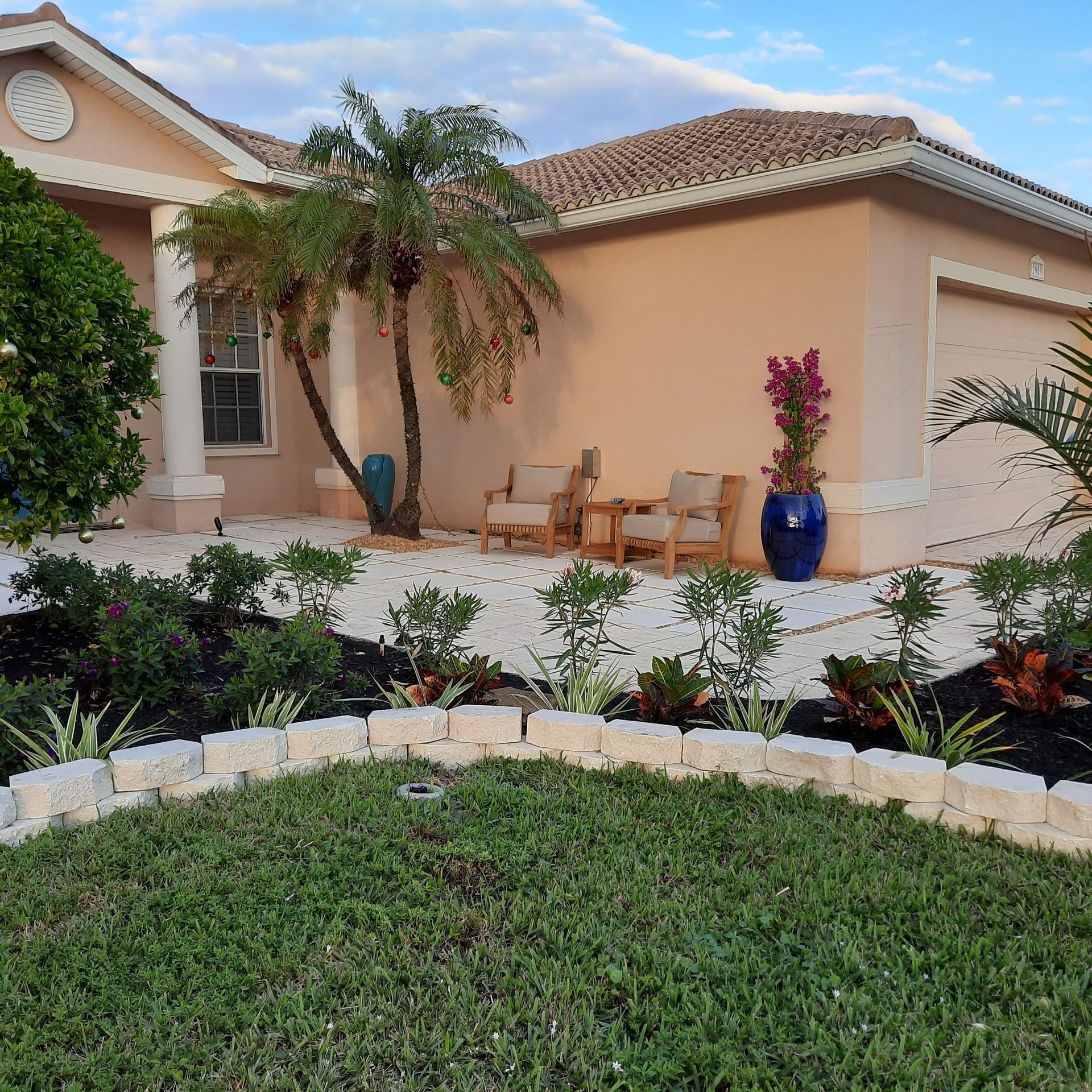



Cape Coral Patio Trees That Stay Gentle on Hardscapes
A patio tree can make a backyard feel finished, but the wrong one can start a slow fight with your pavers and slab. In Cape Coral, root spread, salt, wind, and heavy litter all matter.
Cape Coral patio trees need to do more than look good in the nursery. They need to stay in scale, play nice with concrete, and leave enough room for chairs, grills, and easy cleanup.
If you are planning landscaping around a new patio, or working with a concrete company on a fresh pour, tree choice should come first. The best options are the ones that grow well without turning your hardscape into a repair job.
What makes a patio tree safe near concrete and pavers
Size matters, but size alone does not tell the whole story. A compact tree with a dense canopy can still crowd a patio, while a larger tree with a narrow form may fit better in the right spot.
Root behavior matters more than looks. Trees that send roots shallow and wide can lift pavers, stress edges, and make cracks worse over time.
For tight corners, small landscape trees for Cape Coral usually work better than broad shade trees. They give you filtered shade without claiming the whole yard.
Look for slow to moderate growth, a clean trunk, and a mature width you can live with. Also think about leaf drop, berries, and flowers, because every bit that lands on the patio becomes extra work.
Good landscaping near hardscapes should leave room for mowers, hose access, and paver cleaning. A tree that looks small in a pot can double or triple its spread before you know it.
No patio tree is root-proof. The goal is a tree that fits the space and has room to grow without pushing against it.
Small patios usually benefit from an open canopy and a tidy shape. A thick wall of foliage can make the space feel boxed in, especially near a pool cage or grill area. Meanwhile, a tree that stays upright and manageable keeps sight lines clear and makes the patio feel larger.
Cape Coral patio trees that stay manageable
Small ornamentals usually give the best mix of shape and control. They are easier to prune, simpler to place, and less likely to overpower a patio seating area.
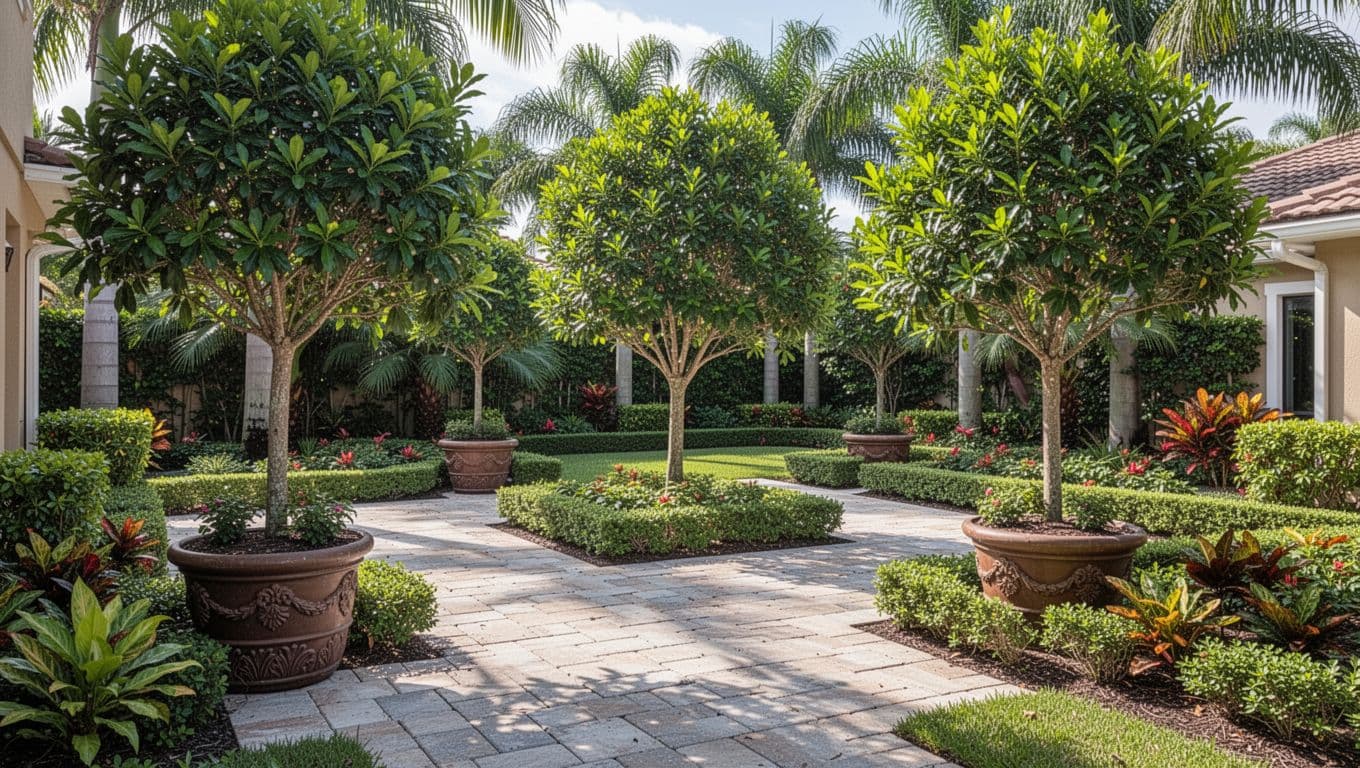
These choices are not magic, but they are commonly used because they stay manageable when planted with enough space.
| Tree | Why it works near a patio | Watch-outs |
|---|---|---|
| Little Gem magnolia | Compact evergreen form, glossy leaves, and a polished look that fits modern patios | Needs pruning to keep its shape, and flowers plus leaves will still drop |
| Simpson's stopper | Native, salt-friendly, and neat when trained as a small tree | Slow growth means patience, and berries can add cleanup |
| Crape myrtle | Bright summer color and a smaller crown than many shade trees | Needs full sun, seed pods and peeling bark add cleanup, and topping ruins the form |
| Dwarf yaupon holly | Dense, hardy, and easy to shape for tight spaces | Female plants can drop berries, and regular trimming keeps it balanced |
| Sweetbay magnolia | Graceful shape with lighter shade and a softer look | Usually needs more room than the others, and flowers can litter the patio |
A table like this helps narrow the field, but the best choice still depends on your space. A tree that is perfect beside a wide pool deck may feel oversized next to a narrow slab.
If you want more shade, place one tree farther from the patio instead of squeezing several into the edge bed. That keeps the space open and gives the canopy room to spread without pressing into the hardscape.
Small ornamentals usually beat large shade trees right beside a patio. Shade trees can still work, but they belong at the outer edge of the yard, where roots and branches have room to settle.
Trees that are risky near patios, pools, and driveways
Some trees belong farther out in the yard. They may look beautiful at first, but their roots, size, or mess factor can overwhelm a small patio fast.
A few traits should make you pause:
- Broad surface roots that rise near pavement
- Heavy fruit or seed drop that stains pavers
- Brittle wood that breaks in wind
- Fast growth that turns pruning into a chore
Ficus is the classic problem tree near hardscapes because the roots are persistent and hard to manage. Large tropical shade trees can also outgrow a patio zone and force constant pruning.
Royal poinciana gives beautiful color, but it needs real space. Its limbs and surface roots can become a headache if it sits too close to a patio or driveway.
Salt tolerance helps in Cape Coral, but it does not cancel out poor form. A tree can handle coastal air and still be the wrong fit beside a pool deck.
Fruit-bearing trees can create slippery spots and stains. That matters if you want less time on paver cleaning and more time using the patio.
Storm resilience counts as well. Trees with weak branch structure can shed limbs during summer weather, which turns a pretty canopy into cleanup work.
If a tree needs hard pruning every few months to stay small, it may not be the right patio choice. A tree should hold its shape without turning into a constant project.
Planting and care that protect the hardscape
Even a good tree needs the right setup. Planting depth, water, and pruning habits matter as much as species choice.
Give the trunk enough breathing room, and keep the root zone out of the slab's splash line. If a concrete company is building or repairing the patio, share the tree plan early so the edge details fit the planting bed.
Mulch helps hold moisture, but don't pile it against the trunk. That invites rot and hides the root flare.
Drip irrigation should wet the root zone, not wash across the concrete. A steady soak near the roots works better than frequent splashing that keeps the patio wet.
A tree that stays shaped is easier on patios than one forced into a severe haircut every season. Light pruning helps keep the crown balanced and reduces the chance of broken limbs during wind.
A good patio tree should make the space easier to use, not harder to clean.
Think about the debris pattern before you plant. Leaves, berries, and petals can stain pavers, block drainage, and make furniture feel dusty fast. That also affects paver cleaning schedules after storms.
The same idea applies around artifical turf. Debris sits on top of the surface, so a tree with light litter and a tidy canopy is easier to live with there.
Spacing matters too. A tree planted too close to the slab may look fine for a year or two, then crowd the edge once roots and branches fill out. Leave room for the mature tree, not the one in the nursery pot.
If your patio sits beside a driveway, walkway, or retaining edge, think about the whole hardscape together. One well-placed tree is easier to maintain than three small ones packed into a tight strip.
The right fit keeps the patio usable
The best Cape Coral patio trees are compact, salt-tolerant, and easy to manage. They also stay in scale, shed less mess, and leave room for proper spacing.
A patio should feel open and easy to use, not squeezed in by roots and branches. When the tree, pavers, and concrete all work together, the space stays comfortable for years.
The safest choice is rarely the biggest tree on the lot. It is the one that fits the patio first and grows into that fit with time.