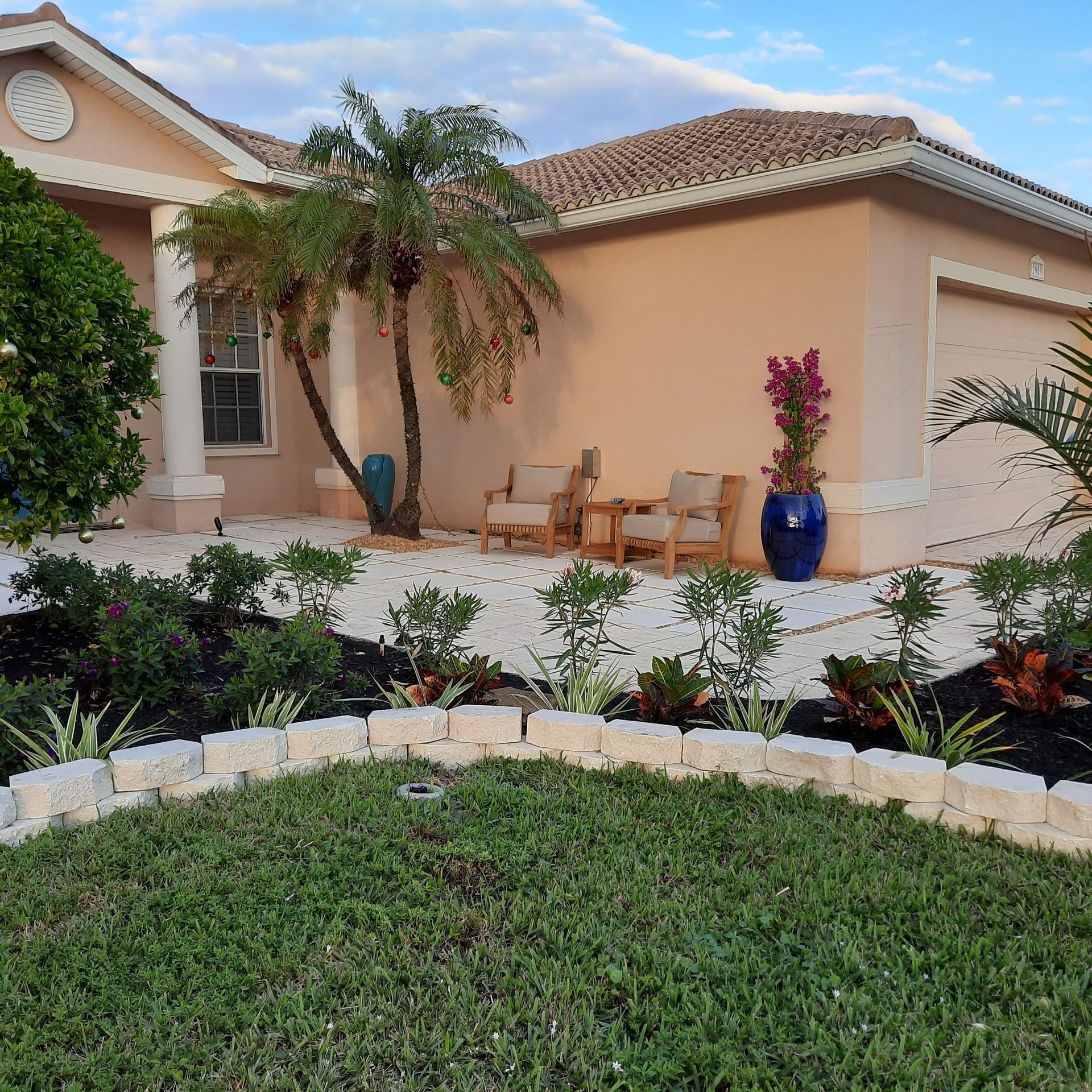



Cape Coral Tree Removal Cost: 2026 Homeowner Guide
A tree that starts leaning toward a pool cage, roof, or power line can turn into an expensive problem fast.
For most homeowners, Cape Coral tree removal cost depends less on the tree's name than its height, access, condition, and location. A simple backyard removal may stay within a modest budget, while a large tree over a structure can require specialized rigging, equipment, and a larger crew.
Knowing what changes the price helps you compare estimates without choosing based on the lowest number alone.
Cape Coral Tree Removal Cost: 2026 Price Ranges
In 2026, a straightforward small-tree removal in Cape Coral often starts around $300 to $800. Medium trees and difficult yards raise the total quickly. Large trees, storm-damaged trunks, and removals near homes or canal edges can cost several thousand dollars.
These ranges offer a realistic starting point, not a guaranteed final price. A contractor needs to inspect the tree and the property before quoting the job.
| Tree or service | Common Cape Coral planning range | What usually affects the price |
|---|---|---|
| Small tree, under 25 feet | $300 to $800 | Open access, simple drop zone, limited debris |
| Medium tree, about 25 to 50 feet | $800 to $2,500 | Tree shape, proximity to structures, hauling |
| Large tree, over 50 feet | $2,500 to $8,000+ | Crane work, rigging, utility lines, tight access |
| Stump grinding | $100 to $400 per stump | Diameter, roots, access for equipment |
| Emergency removal | Often higher than scheduled work | Storm conditions, urgency, crew availability |
Some local pricing snapshots place a basic standing tree under 30 feet near $370 to $475. However, those lower figures often exclude storm damage, stump grinding, difficult access, permit-related work, and trees near power lines.
A quote for a simple removal is not a reliable price for a tree hanging over a roof, pool cage, fence, or canal-side yard.
Tree Size Is Only the Starting Point
Height matters because a taller tree takes longer to dismantle safely. Yet a short, heavy tree in a narrow side yard can cost more than a taller tree with wide-open access.
A written estimate should explain the crew's removal method, where debris will go, and whether the price covers final cleanup.
Trunk diameter and wood weight
A thick trunk means more cutting, heavier sections, and more hauling. Dense hardwood also adds labor because crews cannot safely make the same cuts used on lighter material.
Palm removals can vary widely, too. A clean palm in an open front yard is simpler than one with decaying fronds above a screen enclosure or close to a roofline.
Cape Coral access challenges
Cape Coral lots often have pool cages, paver patios, waterfront edges, narrow gates, and established planting beds. Equipment may not fit through a side yard, so workers may need to carry sections out by hand or lower them with ropes.
Canal access can complicate the plan. Contractors must protect the bank, prevent debris from entering the water, and work around limited staging space. Trees near overhead lines also require extra safety measures. Call the utility provider if limbs are touching or threatening electrical lines.
Conditions That Push Removal Costs Higher
A healthy tree in an open lawn gives a crew room to work. Dead, split, or storm-damaged trees create a different job because their weight can shift without warning.
Cape Coral's rainy season and hurricane threats also affect scheduling. After a major storm, demand rises, crews book quickly, and emergency dispatch work carries a higher price.
Trees near structures and hardscape
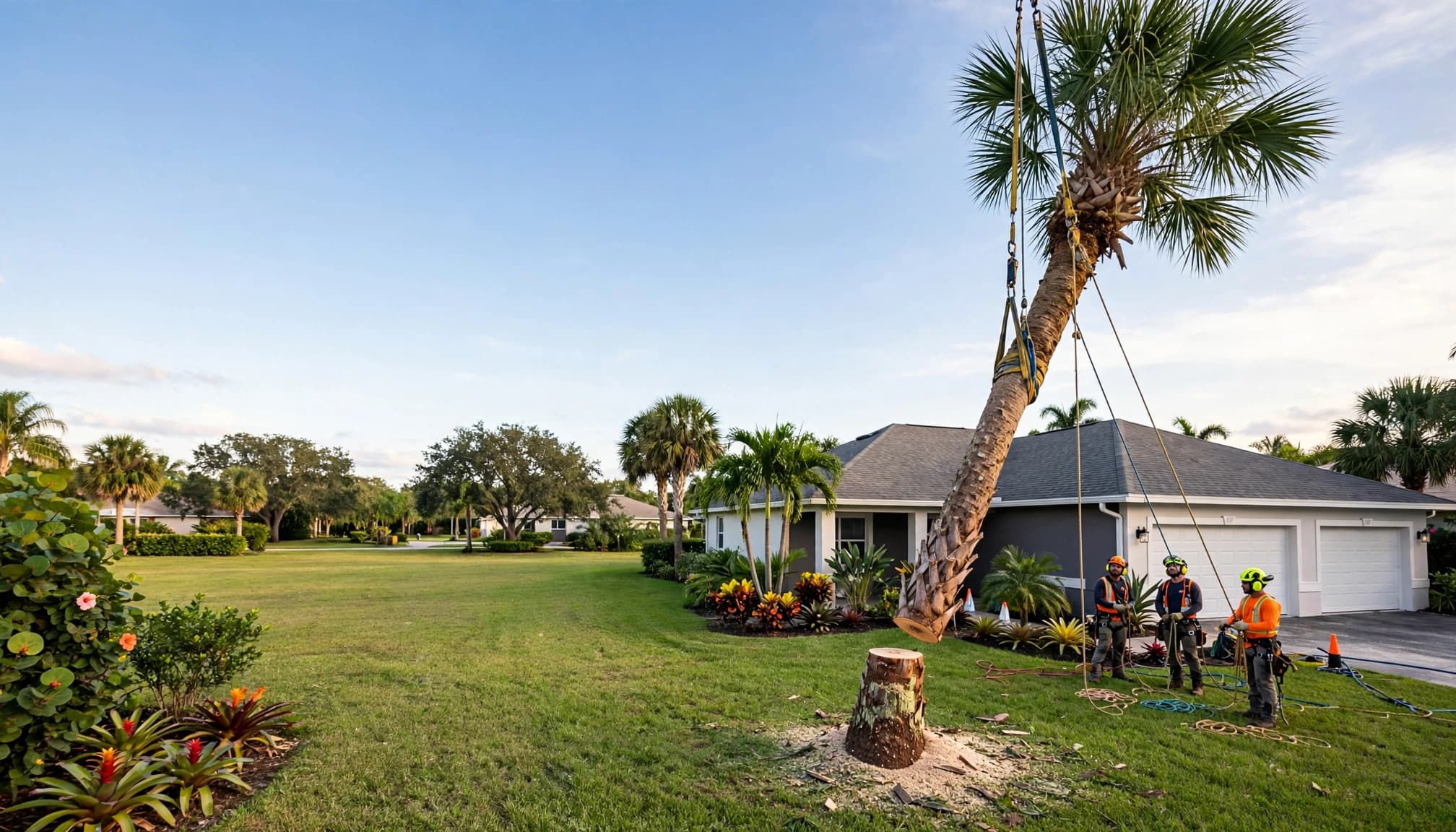
A tree over a home, lanai, pool cage, driveway, or shed usually needs sectional removal. The crew cuts manageable pieces, then lowers them with ropes rather than dropping them into the yard.
That careful work costs more, but it helps avoid damage to pavers, irrigation lines, fencing, and outdoor lighting. If a driveway or patio must be protected or repaired afterward, coordinate the work with a Cape Coral concrete contractor before crews arrive.
Disease, decay, and storm damage
Decay makes a tree unpredictable. Hollow areas, loose root plates, hanging limbs, and termite damage can limit where arborists place ropes or climb.
Emergency removal has a local average near $845, though the actual bill can be much higher for a dangerous tree after a storm. If there is an immediate threat to people or structures, prioritize safety and documentation over price shopping.
For hazardous trees, ask whether the contractor recommends an inspection by an ISA Certified Arborist. Written documentation can also help when insurance or local rules apply.
Stump Grinding, Haul-Off, and Cleanup Costs
Tree removal and stump removal are usually separate line items. Removing the visible trunk does not stop the stump from taking up planting space, attracting pests, or creating an obstacle for lawn care.
Stump grinding commonly costs $100 to $400 in Southwest Florida. Some companies charge by diameter, with local estimates near $3 per inch. Large surface roots, tight gates, and buried irrigation lines can increase the price.
Decide how you will use the cleared area
Grinding below grade works well if you plan to add sod, mulch, stone, or a new planting bed. Full stump extraction costs more because it disturbs more soil and roots.
Do not plant a new tree directly over fresh grindings. The material settles as it decomposes, and the old root zone can limit healthy new growth. A different location usually gives the replacement tree a better start.
Confirm the debris plan
Ask whether the estimate includes cutting, loading, haul-off, raking, and disposal fees. Firewood splitting, chip delivery, and log removal may be optional services.
Cleanup details matter when the tree stands beside a patio or driveway. Equipment can spread sawdust and soil across hardscape, so schedule paver cleaning only after the tree crew and any repair work are finished.
Check Cape Coral Requirements Before Cutting
Cape Coral has historically treated ordinary residential tree trimming and single-tree removal differently than broad vegetation clearing. Still, homeowners should never assume every tree can come down without a review.
Rules can change, and a home's development approval, HOA rules, easement location, canal frontage, or protected vegetation may affect the project. Verify current requirements directly with the City of Cape Coral before work begins.
Easements and right-of-way trees need extra care
A tree near the street may sit within a city right-of-way or roadway easement, even if it appears to be part of the front yard. City code language addresses maintenance of vegetation in those areas, but that does not give a homeowner blanket authority to remove a tree.
Mark property lines before signing a removal contract. If the tree straddles a neighbor's boundary, get written agreement first.
Documentation helps after storm damage
Florida law addresses hazardous trees, but documentation rules can depend on the situation and local requirements. When a tree is damaged, leaning, or threatening a structure, photographs and an arborist report create a useful record.
Ask your contractor for proof of general liability insurance and workers' compensation coverage. A written, insured contractor estimate protects you far better than an informal cash price.
How to Compare Tree Removal Estimates
Get at least three written estimates for any job near a house, pool cage, utility line, or waterway. A low bid may exclude the very work that protects your property.
Each estimate should state the tree count, removal method, cleanup scope, stump option, total price, and projected schedule. It should also identify who handles permits or documentation if needed.
Look beyond the headline price
Two bids can differ by $1,000 because one crew plans to climb and lower every limb, while another assumes it can drop sections into the yard. The lower figure may be reasonable on an open lot. It is not comparable if your tree hangs over a screened lanai.
Ask direct questions before approving the work:
- Does the quoted price include debris hauling, raking, and disposal?
- Will the crew protect pavers, irrigation heads, fencing, and nearby plant beds?
- Is stump grinding included, and how far below grade will it go?
- What insurance does the company carry, and can it provide current proof?
- Are emergency fees, crane charges, or utility coordination separate costs?
Cape Coral tree removal cost is easier to manage when the scope is complete on paper. Verbal assurances disappear when cleanup, restoration, or unexpected access issues arise.
Restore the Yard After the Tree Is Gone
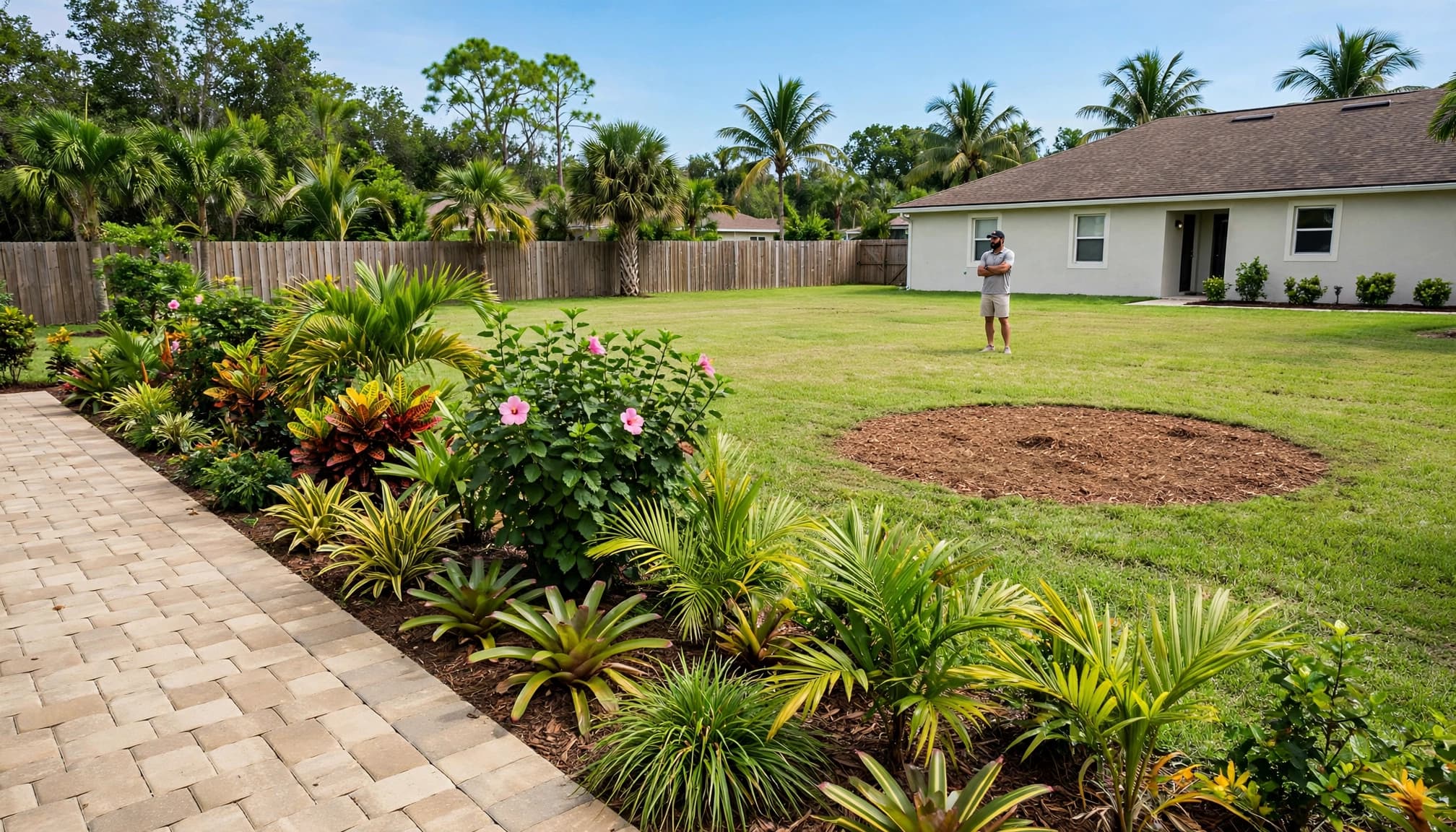
Tree removal changes more than the view. It can expose a sunny area, alter drainage, leave bare soil, and reveal damage that the canopy once hid.
Before installing new material, inspect the grade around the cleared space. Heavy summer rain can wash loose soil toward a patio, driveway, or foundation. A gentle slope away from the house helps move water where it belongs.
Rebuild beds with drainage in mind
Cape Coral's sandy soil drains quickly in some areas, yet low spots and high water tables can still leave water standing after storms. Do not bury roots or fill a stump hole with loose mulch alone.
A thoughtful landscaping plan can replace the removed tree with lower-growing palms, shrubs, stone, lighting, or a manageable ornamental tree. For a larger refresh, Cape Coral landscape design and installation can tie the cleared area into the rest of the property.
Coordinate hardscape and turf work
If removal equipment crosses a patio or driveway, inspect the surface before and after the work. Settling, cracked edging, and washed-out joint sand should be repaired before cosmetic cleaning or sealing.
Homeowners planning artificial turf should complete tree removal, drainage work, and hardscape repairs first. Fresh turf can be damaged by stump grinders, hauling equipment, and soil restoration. Artificial grass installation in Cape Coral works best on a stable, properly graded base.
A Smarter Way to Budget for Tree Removal
The right number is not the cheapest estimate. It is the price that covers safe removal, clear cleanup terms, proper insurance, and the real conditions of your lot.
Budget for stump work and yard restoration when they matter to your plans. Most importantly, verify current local requirements and get written estimates before a saw touches the tree. A careful removal protects both your home and the outdoor space you build next.