


Best Cape Coral Plants to Hide Utility Boxes
Utility boxes can drag down a front yard fast. One plain cabinet can make a well-kept home look unfinished.
The right Cape Coral plants soften that view without turning the space into a jungle. In Southwest Florida, that means heat-tough shrubs, sandy soil tolerance, and enough evergreen cover to hide the box year-round.
The best choices also stay manageable, because nothing ruins a clean screen faster than a shrub that swallows the panel. Good landscaping hides the box, keeps access open, and fits the rest of the yard.
What Utility Boxes Need from Plants in Cape Coral
Before you pick a plant, think about the job. A utility box needs a screen that stays neat, leaves access, and survives open sun. Cape Coral yards add reflected heat from pavement, fast-draining sand, and occasional salt on windy days. That means a pretty plant alone is not enough. It needs structure.
Evergreen coverage matters most. If the plant goes bare after pruning or during a cool spell, the box shows through. A useful screen also has a growth habit you can control. Upright shrubs work near tight spots. Wider shrubs fit larger beds. Layered plantings can hide the bottom of the box first, then soften the top with a taller shrub.
Distance matters as much as plant choice. A compact shrub placed too close will still hide the box for a season, then crowd it. On the other hand, a plant with open branching may look fine at first and never give real screening. Aim for a shrub that fits the mature width of the bed, not the size it had in the nursery pot.
The goal is not to bury the box. It is to frame it. Leave clear space so the panel door can open and a worker can reach the controls. Check for overhead lines before you plant anything that wants to grow tall.
Many homeowners pair this kind of plan with professional landscaping and paver services when they want the bed, edging, and walkways to feel connected.
The Best Cape Coral Plants for Hiding Utility Boxes
These are the Cape Coral plants that show up most often in smart screening beds.
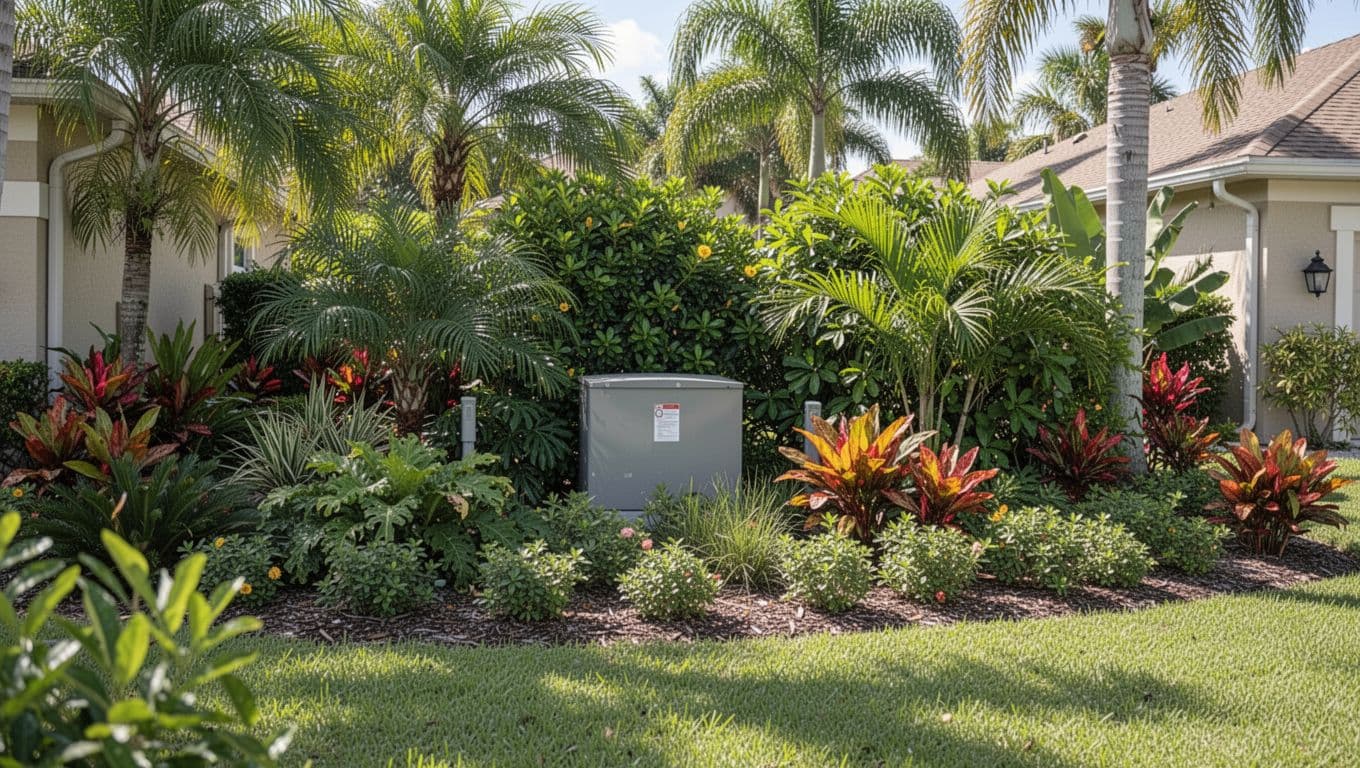
Here's a quick look at the plants that fit this job best.
| Plant | Mature size | Best use | Why it works |
|---|---|---|---|
| Simpson's stopper | 6 to 12 ft tall, 4 to 8 ft wide | Hedge or layered screen | Dense evergreen foliage, good shape, and easy pruning. |
| Dwarf yaupon holly | 4 to 6 ft tall, 4 to 5 ft wide | Small hedge | Tight growth, evergreen coverage, and low maintenance. |
| Cocoplum | 6 to 12 ft tall, 6 to 10 ft wide | Full screen | Broad leaves and strong coverage in sun and heat. |
| Dwarf clusia | 4 to 8 ft tall, 4 to 6 ft wide | Accent or small screen | Thick leaves, bold shape, and solid year-round cover. |
| Walter's viburnum | 6 to 10 ft tall, 4 to 6 ft wide | Hedge | Dense branching and a clean, simple outline. |
| Wax myrtle | 6 to 12 ft tall, 6 to 10 ft wide | Loose screen | Fast fill for larger beds, with a natural look. |
| Coontie | 2 to 4 ft tall, 3 to 5 ft wide | Front layer | Low evergreen texture that pairs well with taller shrubs. |
| Dwarf ixora | 3 to 5 ft tall, 3 to 5 ft wide | Accent in sheltered beds | Compact form and color, but it needs more attention. |
Simpson's stopper, dwarf yaupon holly, and cocoplum are the safest starting points for most front yards. They give solid evergreen coverage without looking stiff.
Sun-blasted front yards usually do best with the densest evergreens. Simpson's stopper and cocoplum bring the most privacy. Dwarf yaupon holly gives a tighter, cleaner shape if the bed is small. Walter's viburnum and wax myrtle can fill a wider space, but they need more room to spread.
Coontie and dwarf ixora work as supporting plants, which keeps the screen from looking flat. If the box sits near a street or open lot, that layered look matters. The front plant softens the base. The taller shrub does the hiding.
If you want a little color, tuck dwarf ixora in front of the screen, not in place of it. That keeps the utility box covered while the bed still feels lively.
How to Plant Without Blocking Access
Start with the box, then build the bed around it. That sounds obvious, but many planting problems begin when the shrubs go in first and the access plan comes later. Leave enough open room for the door to swing, the meter to be read, and the crew to work without bending through branches.
Give the box room to open and breathe. A plant that looks perfect on day one can become a problem by year two.
Keep tall shrubs away from the path of overhead lines. Anything that reaches into wires will need hard pruning later, and that usually looks worse than a smaller plant would have in the first place. Use lower plants near the front edge and taller ones a step back. A layered bed often looks best with one tall shrub behind and two lower plants in front.
Call before you dig, especially if the box sits near buried lines or irrigation pipes. A little planning now keeps roots, sleeves, and electrical service from getting tangled later.
If the whole front yard needs a reset, custom landscape design and installation can place the shrubs, mulch, and edging in the right spots the first time. That matters when the bed also has to match a driveway, walkway, or entry path.
Hardscape helps too. A concrete company can add a neat border, curb, or small pad near the bed, which keeps soil from spreading and gives the whole area a finished look. It also makes trimming easier, because the edge stays clear.
Keeping the Screen Neat Through Rain and Heat
Cape Coral weather pushes plants hard. Summer rain brings fast growth, then heat and sun dry everything out again. That is why low-maintenance landscaping works best when the plants fit the space from the start. A shrub that needs constant rescue trimming is not a good screen.
Mulch helps keep the soil cooler and slows weeds, but don't pile it against stems. Give irrigation heads room to water the root zone, not the utility box itself. A little care here saves a lot of cleanup later.
After the first season, pay attention to shape, not just size. Trim the top lightly, keep the sides tapered, and remove any branches that lean into the box. That preserves light and airflow, which matters in humid weather. It also keeps the screen from turning into a wall.
If the utility box sits beside pavers, regular paver cleaning keeps the whole corner sharp. Dirty edges, weeds in the joints, and stained sand can make a good planting bed look tired. A stone border can also help define the space, especially where the bed meets a sidewalk or driveway.
Some homes have a narrow side strip where grass never performs well. In that case, artifical turf can make more sense than forcing a thin lawn beside the screen. The shrubs do the hiding, and the ground stays simple to maintain.
Conclusion
The best utility-box screen is the one that looks calm all year and still leaves access when someone needs it. In Cape Coral, that means choosing Cape Coral plants with evergreen coverage, controlled width, and enough toughness for sun, sand, and salt.
Start with shrubs like Simpson's stopper, dwarf yaupon holly, or cocoplum, then layer lower plants where the bed needs softness. Keep the box reachable, and the whole yard will look cleaner instead of crowded. That kind of landscaping makes the utility box fade into the background, which is exactly the point.